Can Cats Wear Clothes: Essential Answers and Practical Guidance
A sweater on a cat may look adorable, but a cute photo does not always mean the garment is comfortable or safe. Many cats dislike the sensation of fabric, the restriction around their legs, or the loss of easy access to grooming. Others may tolerate a simple shirt for a short time, especially after surgery or in a chilly indoor environment.
So, can cats wear clothes without harm? Usually, cats do not need clothing, and some should not wear it at all. Still, limited clothing can be appropriate in specific situations when the fit, fabric, temperature, and cat’s behavior are carefully considered.
I’ll explain when clothing may help, when it creates unnecessary risk, how to introduce it gradually, what to look for in a safe garment, and when a veterinarian should make the decision. The goal is not to dress every cat, but to help you make a practical choice based on comfort and health.
Can Cats Wear Clothes Safely?
Yes, some cats can wear clothes safely for short, supervised periods. However, tolerance varies widely. A calm cat may walk normally in a lightweight shirt, while another may freeze, struggle, bite at the fabric, or become highly distressed within seconds.
Clothing is safest when it serves a clear purpose, fits correctly, does not interfere with movement or breathing, and is removed as soon as the cat shows discomfort. A cat should never be forced to wear an outfit for appearance, social media photos, or a costume if the garment causes fear or physical restriction.
Most healthy, fur-covered indoor cats already have effective natural insulation. Their coat, skin, and normal behavior help regulate body temperature. Adding a layer may provide little benefit and can create problems such as overheating, tangled fur, snagging, or reduced mobility.
My practical answer is simple: clothing can be acceptable as a temporary tool, but it should not become a routine accessory unless a cat clearly tolerates it and there is a genuine reason to use it.
Why Most Cats Do Not Need Clothes
A cat’s coat is designed to protect the skin and help manage heat. Fur does not work exactly like a human jacket, but it provides insulation and supports normal temperature regulation. Healthy cats also choose warm or cool resting places, change their body position, and groom themselves.
Clothing can interfere with several normal feline behaviors:
- Grooming: A shirt or sweater may block access to the coat and skin. Cats can become frustrated if they cannot clean themselves normally.
- Movement: Tight armholes, sleeves, or leg openings can alter a cat’s stride, jumping ability, and balance.
- Communication: Cats use posture, fur position, and body movement to communicate. A garment can limit those signals or make a cat feel exposed.
- Temperature control: A covered cat may become too warm, particularly in a heated home or during active play.
- Skin and coat health: Moisture, trapped debris, and friction under fabric can cause irritation or matting.
These concerns do not mean every item of clothing is automatically dangerous. They explain why clothing should be evaluated as a situational product rather than a normal requirement for cats.
Situations Where Cat Clothing May Help
There are limited circumstances in which a veterinarian, groomer, or knowledgeable owner may consider clothing useful. The purpose should always be specific and temporary.
After surgery or a medical procedure
A recovery shirt may help cover an incision and reduce access to a healing area. Some cats strongly dislike an Elizabethan collar, often called a cone, and a veterinarian may approve a surgical recovery garment as an alternative. However, a shirt is not automatically suitable for every incision.
The garment must not rub the wound, trap moisture, hide swelling, or prevent regular inspection. If the cat can still lick, chew, or scratch the affected area through or around the garment, it is not providing reliable protection. I would follow the veterinary clinic’s instructions rather than choosing a product based only on appearance.
Hairless or sparsely coated cats
Hairless cats may feel cooler than heavily coated cats, especially in air-conditioned rooms or during colder weather. A soft, lightweight layer can sometimes provide comfort. Even then, the cat’s behavior matters more than the breed label.
A hairless cat may prefer a warm bed, blanket, heated pad designed for pets, or a warmer room instead of clothing. If clothing is used, I would check the skin frequently because friction and trapped moisture may be more noticeable without a dense coat.
Temporary protection from environmental conditions
A light layer might be considered for a brief trip in a cold carrier or a supervised transition between a warm home and a vehicle. It should not replace safe temperature management. A carrier cover, climate-controlled car, and appropriate indoor temperature are often better solutions.
Outdoor clothing presents additional hazards. Loose fabric can catch on branches, fences, or other objects. A cat wearing a garment outdoors may also be less able to escape, climb, or defend itself. I would not allow a clothed cat to roam outside unsupervised.
Behavioral or comfort-related circumstances
Some cats accept clothing because they were introduced to it gradually, while others appear calmer with gentle body coverage. That response is individual and should not be assumed. A garment that seems calming at first may still cause overheating, hidden anxiety, or restricted grooming.
If a cat suddenly needs clothing because of excessive licking, skin disease, anxiety, or a wound, the underlying issue deserves attention. Clothing may protect the skin temporarily, but it does not diagnose or resolve the cause.
When Cats Should Not Wear Clothes
Clothing is a poor choice when a cat shows significant distress, has a breathing problem, is overheated, or cannot move normally. It is also inappropriate when the garment hides a worsening medical condition.
Remove clothing immediately if a cat:
- pants, breathes rapidly, drools, or seems unusually hot;
- falls, stumbles, walks stiffly, or cannot jump as usual;
- struggles repeatedly, rolls in panic, or tries to escape the garment;
- bites, pulls, or claws at the fabric continuously;
- hunches, freezes, hides, or becomes unusually withdrawn;
- develops redness, hair loss, damp fur, swelling, or sores beneath the clothing;
- cannot reach food, water, a litter box, or a comfortable resting position;
- cannot groom normally for an extended period.
These are stress signals as well as possible signs of physical discomfort. A cat does not need to vocalize loudly for clothing to be a problem. Freezing or becoming very still can indicate fear rather than acceptance.
Do not dress a cat during warm weather, vigorous activity, or a stressful event such as travel unless a veterinarian has given a specific reason. Avoid clothing on a cat with an open wound unless the veterinary team has recommended a suitable recovery garment.
How to Choose Safe Cat Clothing
If clothing is appropriate, the design should be simple, lightweight, breathable, and easy to remove. I would prioritize function over decoration and avoid any garment with dangling parts or complicated fasteners.
Fit and sizing
A safe garment should sit close enough to stay in place but loose enough to allow normal breathing, swallowing, walking, sitting, and grooming. It should not press into the neck, armpits, abdomen, or surgical area.
Measure according to the manufacturer’s instructions, usually around the chest and along the back. Weight alone is not a reliable sizing method because cats with the same weight may have very different body shapes.
After putting the item on, check whether you can comfortably slide a finger between the fabric and the cat’s body at the neck and other snug areas. That check does not replace observation. A garment may technically fit but still restrict a particular cat’s shoulders or legs.
Fabric and construction
Choose smooth, breathable fabric without rough seams that rub the skin. Lightweight cotton or another soft, washable material may work better than heavy knit fabric. The garment should be clean and completely dry before use.
Inspect the item for:
- loose threads that could wrap around toes or claws;
- buttons, beads, bells, bows, or decorations that could be chewed off;
- zippers or closures positioned against the skin;
- long ties, straps, or elastic that could snag;
- stiff material that limits the shoulders or hips;
- openings that could allow a paw to become trapped.
Costumes with hats, masks, capes, or face coverings deserve special caution. Anything near the eyes, nose, or mouth can obstruct vision or breathing. I would avoid clothing that covers the face entirely or depends on a tight strap around the head.
Purpose-built garments
Recovery shirts made for cats generally offer a better starting point than baby clothes or improvised fabric. Human clothing may have openings, seams, and proportions that do not match feline anatomy. It can also be too loose around the legs or too tight across the chest.
Even a purpose-built product still requires supervision. Labels such as “pet safe” do not guarantee that the item will suit an individual cat, incision, body shape, or medical condition.
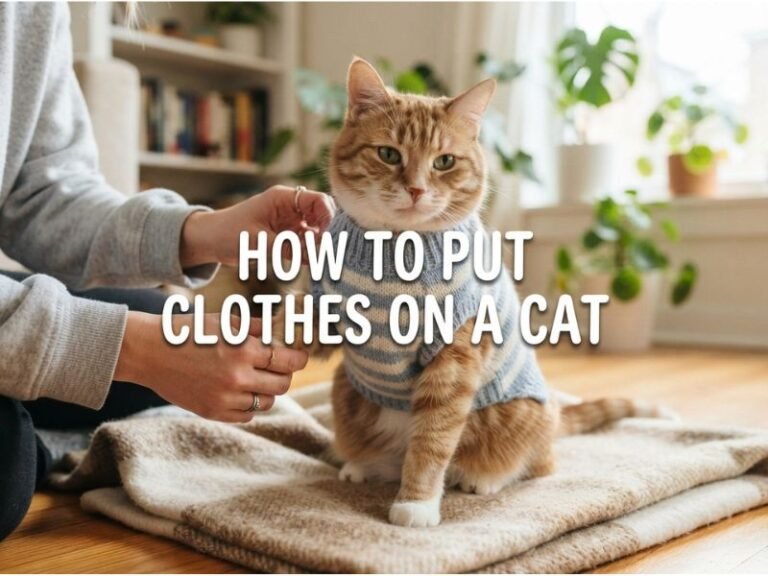
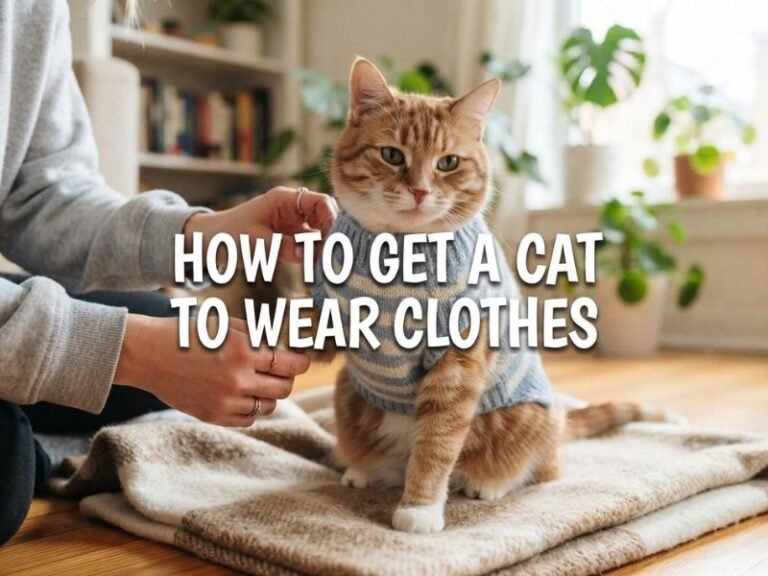
How to Introduce Clothing Gradually
Putting a shirt on a cat without preparation can create a negative association. A slower introduction gives the cat a chance to investigate the garment and allows you to notice discomfort before the item is fully worn.
- Let the cat inspect the garment. Place it near a favorite resting area for a short time. Do not push it toward the face or use it to block the cat’s path.
- Pair the item with something positive. A treat, meal, play session, or calm affection can help the cat associate the garment with a pleasant moment.
- Touch the body briefly. Gently place the fabric against the back or side, then remove it. Stop if the cat becomes tense or tries to leave.
- Put it on for only a moment. Use a calm setting and avoid holding the cat in place. Reward relaxed behavior, then remove the garment before distress begins.
- Increase time slowly. If the cat remains comfortable, add short intervals over several sessions. There is no need to reach a long wearing period.
- Observe movement. Let the cat walk on a safe floor without stairs, high furniture, or access to outdoor hazards.
Never use treats to distract a cat from severe distress or to keep the animal in clothing that it is actively trying to escape. The goal is calm tolerance, not forced compliance.
A cat that repeatedly resists after gentle introductions may be communicating a clear preference. I would respect that preference unless a veterinarian has identified a medical need for clothing and provided a different plan.
How Long Can a Cat Wear Clothes?
There is no universal safe time limit because the answer depends on the garment, room temperature, cat, and reason for use. A healthy cat wearing a light shirt for a brief supervised period has a different risk profile from a cat wearing a recovery garment for several days.
Check the cat shortly after the garment is put on and continue checking at regular intervals. Look under the fabric for heat, dampness, redness, pressure marks, or trapped litter. Confirm that the cat is drinking, eating, using the litter box, resting comfortably, and grooming as much as the garment permits.
Remove the garment for breaks whenever the medical instructions allow it. Breaks can support grooming, skin inspection, and comfort. For a postoperative cat, ask the veterinarian how long the incision can safely remain uncovered and whether supervision is required during breaks.
Do not leave a clothed cat unattended overnight, alone in a carrier, or in a home where the garment could catch on furniture. If clothing is necessary while you are away, ask the veterinary team about a safer protective alternative and the level of supervision required.
Clothing Alternatives for Warmth and Protection
Clothing is not always the best way to solve the problem behind the request. If a cat seems cold, I would first improve the environment rather than immediately adding fabric to the body.
- Provide a warm, draft-free bed away from doors and cold floors.
- Offer several resting places so the cat can choose the preferred temperature.
- Use pet-specific heating equipment exactly as directed and prevent direct prolonged contact with excessive heat.
- Keep the cat indoors during cold or wet weather.
- Use a secure carrier and climate-controlled vehicle for transportation.
- Ask a veterinarian about skin protection, wound care, or parasite control instead of improvising a garment.
A soft blanket or enclosed bed may allow a cat to regulate comfort more easily than a fitted sweater. For postoperative protection, a properly selected recovery suit or veterinary-approved cone may be safer than an ordinary shirt. The right alternative depends on whether the need involves temperature, licking, scratching, travel, or a diagnosed condition.
Common Mistakes to Avoid
Dressing for appearance alone
Costumes can be harmless for a relaxed cat if they are used briefly and under direct supervision, but visual appeal should not outweigh welfare. If the cat seems uncomfortable, the photo or celebration is not a sufficient reason to continue.
Assuming stillness means comfort
A cat that stops moving may be frightened or overwhelmed. Look at the entire body: flattened ears, tense muscles, dilated pupils, tucked posture, rapid breathing, and avoidance can all indicate distress.
Using human infant clothing without checking it
Baby clothes can contain snaps, tight openings, loose fabric, and leg holes that do not suit cats. If someone uses a human garment temporarily, it must be closely inspected, modified only safely, and monitored continuously. A cat-specific item is generally easier to evaluate.
Leaving the garment on during play
Running, climbing, and jumping increase the chance of snagging and overheating. A cat may also become caught on a toy or scratcher. Quiet, floor-level activity is safer during any initial trial.
Covering a medical problem instead of treating it
A recovery shirt may protect an incision, but it does not replace pain management, wound checks, treatment for allergies, or evaluation of compulsive licking. Contact a veterinarian if a cat persistently licks, scratches, loses fur, develops skin changes, or seems painful.
When to Contact a Veterinarian
Ask a veterinarian before using clothing for a cat recovering from surgery, dealing with a wound, or showing signs of skin irritation. Professional guidance is especially important if the garment will cover an incision, drain, bandage, rash, or medication site.
Seek prompt veterinary help if a clothed cat has trouble breathing, appears weak, collapses, feels unusually hot, or cannot walk normally after the garment is removed. Contact the clinic if clothing causes persistent redness, swelling, bleeding, discharge, or a sudden change in behavior.
A veterinarian can also help distinguish true cold sensitivity from illness. A cat that seeks warmth constantly, shivers, loses weight, becomes lethargic, or changes eating habits may need a health evaluation rather than an extra layer.
FAQ: Can Cats Wear Clothes?
Can cats wear shirts safely?
Some cats can wear a lightweight, well-fitting shirt safely for a short, supervised period. The shirt should not restrict breathing, walking, grooming, or access to food and water. Remove it at the first sign of distress, overheating, or skin irritation.
Do cats need sweaters in cold weather?
Most healthy indoor cats do not need sweaters because their coats and indoor environments usually provide adequate warmth. Hairless, sparsely coated, elderly, or medically fragile cats may have different needs. A warm bed and a stable indoor temperature are often preferable, and a veterinarian can advise on unusual cold sensitivity.
Can cats wear clothes after surgery?
They may be able to wear a veterinary-approved recovery garment after surgery, but the correct choice depends on the incision and the cat’s behavior. The garment must allow regular wound inspection and prevent licking without rubbing or trapping moisture. Follow the surgeon’s instructions rather than using a generic outfit.
How do I know if my cat hates clothes?
Common signs include freezing, hiding, crouching, flattened ears, tense muscles, repeated biting at the fabric, attempts to escape, unusual vocalization, rapid breathing, or refusal to walk. Some cats show distress quietly, so a lack of vocalization does not prove comfort.
Can a cat sleep while wearing clothes?
I would not allow a cat to sleep unattended in ordinary clothing. Fabric can shift, snag, become damp, or hide skin irritation. If a recovery garment must remain on during sleep, follow the veterinarian’s specific instructions and inspect the cat and garment regularly.
Can cats wear clothes outside?
Outdoor clothing creates risks from snagging, overheating, restricted movement, and reduced ability to escape danger. A cat should not roam outside in clothing. For brief transportation, use a secure carrier and supervise the cat continuously.
Are cat costumes safe?
A simple costume may be safe for a calm cat for a very brief supervised moment if it does not cover the face, restrict movement, or contain chewable decorations. Many costumes are better avoided because they prioritize appearance over comfort. Remove the costume immediately if the cat resists or shows stress.
What should a cat wear after being spayed or neutered?
The veterinarian may recommend a cone, recovery suit, or another protective method depending on the procedure and the cat’s tendency to lick. Do not assume a standard shirt will protect the incision. Ask the clinic which option fits the surgical site and how it should be monitored.
Conclusion
So, can cats wear clothes? Some can, but clothing should be occasional, purposeful, properly fitted, and closely supervised. Most cats do not need everyday outfits, and a cat that shows fear, overheating, restricted movement, or skin irritation should not be dressed. I would choose environmental warmth or veterinary guidance before treating clothing as a default solution. A comfortable, healthy cat matters more than a fashionable appearance.