Do Cats Like Wearing Clothes: What to Know and Why It Matters
A tiny sweater can make a cat look adorable, but a cute photo does not necessarily mean the cat is comfortable. Some cats tolerate clothing for a short period, while others become frightened, frustrated, or physically restricted as soon as fabric touches their bodies. So, do cats like wearing clothes, or are they simply putting up with something their owners want?
The honest answer depends on the individual cat, the garment, the reason for using it, and how the cat responds. I’ll explain the most common reactions, how to recognize comfort or distress, when clothing may be medically useful, and how to introduce it as safely as possible.
My goal is not to discourage every use of cat clothing. A carefully chosen recovery suit or warm layer can serve a legitimate purpose. The important distinction is between clothing that supports a cat’s health and clothing that creates unnecessary stress.
Do cats like wearing clothes?
Most cats do not naturally enjoy wearing clothes in the way people enjoy choosing an outfit. Cats are highly aware of pressure, texture, temperature, and movement across their skin. Clothing can feel unfamiliar and may interfere with grooming, walking, jumping, stretching, or communicating through body language.
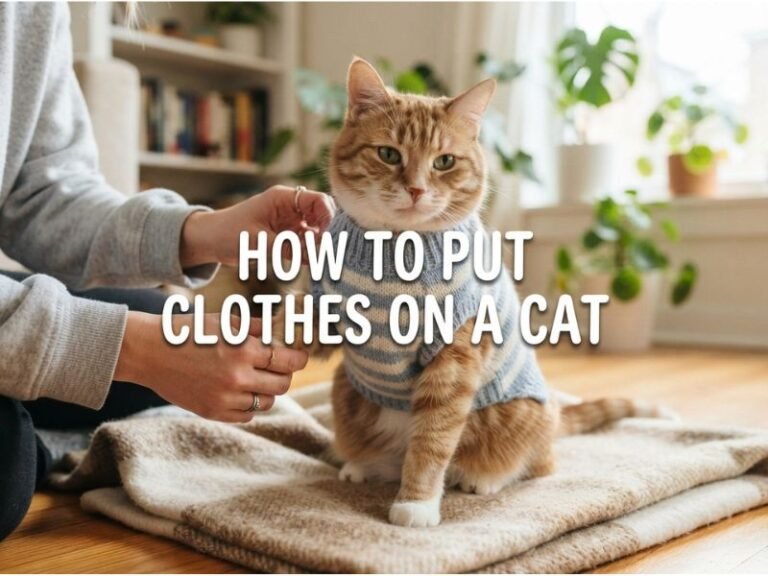
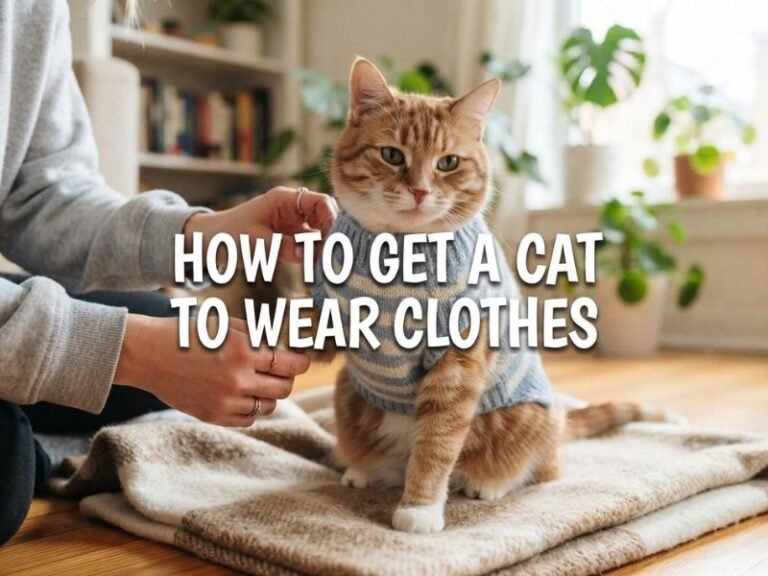
Some cats accept clothing calmly, especially if they were introduced to it gradually. A relaxed cat may walk normally, continue eating, groom normally, and settle down while wearing a lightweight garment. That behavior suggests tolerance or comfort, although it does not prove the cat actively likes the clothing.
Other cats react immediately. They may freeze, crouch, walk backward, bite at the fabric, hide, shake their legs, or try repeatedly to remove the garment. Those behaviors indicate that the clothing is causing discomfort, stress, confusion, or restriction. In that situation, I would remove it rather than assuming the cat will eventually adjust.
A cat’s reaction matters more than appearance. A garment can fit correctly by human standards and still feel intolerable to the cat wearing it.
Why clothing can feel uncomfortable to cats
Cats rely on free movement and sensitive skin to navigate their environment. Clothing changes the way their bodies receive information and respond to movement. Several factors can make a shirt, sweater, costume, or harness-like garment difficult to tolerate.
Restricted movement
A poorly designed garment may limit the shoulders, hips, neck, or legs. Even slight restriction can affect a cat’s ability to jump, climb, land, stretch, or retreat quickly. Cats may also feel vulnerable if clothing prevents them from moving in their usual quiet, controlled way.
Unfamiliar texture and pressure
Fabric touching the back, belly, legs, or tail area can be startling. Seams, tags, elastic, zippers, Velcro, and decorative pieces may rub the skin or pull fur. Tight clothing can create constant pressure, while loose clothing may shift, twist, or catch on furniture.
Interference with grooming
Grooming is normal maintenance and an important calming behavior for cats. Clothing can block access to the fur, trap moisture, mat long hair, or frustrate a cat that wants to clean itself. A cat that cannot groom comfortably may become increasingly agitated.
Heat and poor ventilation
Fur already provides insulation. Adding a thick layer can cause overheating, particularly indoors, in warm weather, or for cats with dense coats. A cat may not be able to communicate rising body temperature clearly, so owners need to watch for rapid breathing, weakness, excessive restlessness, or unusual lethargy.
Reduced body-language signals
Cats communicate with posture, fur position, tail movement, and overall body orientation. Clothing can obscure some of these signals. It may also make a cat feel less able to defend itself or escape, which can increase fear in an unfamiliar setting.
How to tell if a cat is comfortable in clothes
The safest way to evaluate clothing is to observe the cat before, during, and after wearing it. Comfort should look like ordinary behavior, not passive immobility. A cat that stays perfectly still may be relaxed, but it may also be frightened or overwhelmed.
Signs of possible acceptance
- Walking with a normal stride
- Using the litter box normally
- Eating, drinking, and resting as usual
- Stretching, sitting, and lying down without difficulty
- Grooming accessible areas normally
- Showing relaxed ears, normal pupils, and a loose body posture
- Choosing to remain near familiar people rather than hiding
Even with these signs, I would keep clothing use brief at first. Cats can become uncomfortable gradually, especially if the material traps heat or begins rubbing after movement.
Signs of stress or discomfort
- Freezing, crouching, or walking unusually low
- Repeatedly biting, licking, scratching, or pulling at the garment
- Walking backward or falling over
- Hiding, running away, or refusing to move
- Flattened ears, a tucked tail, wide pupils, or tense muscles
- Growling, hissing, swatting, or sudden irritability
- Fast breathing, drooling, weakness, or signs of overheating
- Loss of appetite or unusual litter box behavior after wearing clothing
These are not behaviors I would ignore or punish. They are communication. Remove the garment calmly, allow the cat to decompress, and check the skin for redness, hair pulling, moisture, or pressure marks.
When cat clothing may be useful
Clothing can have a practical role when a veterinarian recommends it or when it solves a specific problem without creating a larger one. The purpose should be clear before putting anything on a cat.
Post-surgery recovery
A **recovery suit** may help protect an incision or prevent a cat from licking stitches. Some cats strongly dislike an Elizabethan collar, so a veterinary-approved suit can be an alternative for certain procedures. It is not automatically suitable for every incision, however. The design must provide enough access for wound checks, bathroom use, and proper ventilation.
I would follow the veterinarian’s instructions about the garment, cleaning, replacement, and how often the incision should be inspected. If the suit becomes damp, dirty, tight, or damaged, it needs attention immediately.
Hair loss or skin protection
A cat with extensive hair loss, a skin condition, or a healing wound may need temporary protection from scratching or environmental irritation. Clothing can sometimes reduce access to a treated area, but it can also trap heat and moisture or worsen certain skin problems.
Because skin disease has many possible causes, clothing should not replace diagnosis. A veterinarian can determine whether the cat needs medication, a protective covering, a different fabric, or no clothing at all.
Cold-weather support
Hairless cats and cats with very thin coats may become cold more easily than heavily coated cats. A soft, lightweight layer can help in limited situations, such as a chilly home or brief supervised travel. The room temperature, the cat’s health, the garment’s thickness, and the cat’s own behavior all matter.
Clothing is not the only way to provide warmth. A draft-free resting area, insulated bed, blanket, and controlled indoor temperature may offer warmth without restricting movement.
Temporary protection during travel
Clothing generally does not replace a secure carrier. For travel, a sturdy carrier with good ventilation is safer than relying on a sweater or costume to control a cat. If a cat wears a recovery suit or light layer during transport, the garment should not interfere with breathing, identification, carrier ventilation, or the cat’s ability to settle.
When cats should not wear clothes
Clothing is usually a poor choice when the cat is visibly distressed, overheated, ill, or unable to move naturally. It may also be inappropriate if the garment covers a wound that needs frequent observation or prevents normal bathroom use.
Never leave a cat unsupervised in clothing that could catch on furniture, become tangled, or restrict the neck or legs. Outdoor access creates additional risks because fabric can snag on branches, fences, or other objects. A dressed cat may also have difficulty escaping a threat.
Use extra caution with kittens, senior cats, cats with mobility problems, overweight cats, cats with respiratory disease, and cats that have a history of anxiety. Their tolerance for heat, restriction, or stress may be lower.
If a cat develops breathing difficulty, collapse, extreme weakness, blue or pale gums, or severe distress, remove the clothing and seek urgent veterinary care. A garment should never be used to conceal a worsening medical problem.
Choosing safe clothing for a cat
If clothing is necessary or the cat has demonstrated genuine tolerance, the design matters. I would choose function, fit, and safety over decoration every time.
Look for a proper fit
The garment should lie flat without squeezing the neck, chest, belly, legs, or tail base. A cat should be able to walk, sit, lie down, stretch, and use the litter box normally. It should not drag on the floor or leave loose areas that can catch on objects.
Check the fit under the front legs and around the shoulders. These areas move constantly and are common sites for rubbing. The cat should not show indentations, swelling, hair breakage, or red skin after wearing the item.
Choose simple, breathable materials
Soft, lightweight, breathable fabric is usually more appropriate than thick, heavy, scratchy, or stiff material. Avoid rough seams, dangling ribbons, beads, bells, buttons, and other pieces that can be chewed off or swallowed.
Fabric should be clean and free from strong fragrances, loose threads, and harsh residues. Washable material is especially important for recovery clothing because the garment may come into contact with medication, bodily fluids, or litter.
Avoid pressure on the neck
Clothing should never function like a tight collar or compress the throat. The neck opening must allow comfortable breathing and swallowing. If the design shifts toward the face or neck, remove it immediately.
Check bathroom access
A cat needs unobstructed access to urinate and defecate. A suit that covers the rear area may become soiled or prevent normal elimination. Any garment used after surgery should be checked frequently for cleanliness and fit.
Inspect the garment regularly
Look for stretched openings, loose threads, damaged closures, damp spots, and areas where the fabric has twisted. A garment that was safe on the first day may become unsafe after washing or repeated use.
How to introduce clothing gradually
For a cat that needs a recovery suit or warm layer, gradual introduction can reduce fear. I would avoid putting the garment on for the first time during an already stressful event, such as a veterinary visit or car ride, unless a medical situation requires it.
- Let the cat see and smell it. Place the garment near a resting area without forcing contact. Allow the cat to investigate at its own pace.
- Pair it with something positive. Use calm praise, a favorite treat, or a familiar activity while the garment is nearby. The goal is to make the object predictable rather than threatening.
- Touch briefly. Gently let the fabric touch the cat’s back or side for a moment, then remove it. Stop if the cat becomes tense or tries to escape.
- Put it on for a very short period. Start with only a few minutes in a quiet room. Watch walking, breathing, posture, and attempts to remove the garment.
- Increase time slowly. Extend the session only when the cat remains comfortable. If distress appears, take the garment off and return to an easier step later.
- Use supervision. Stay nearby every time until the cat has shown consistent, relaxed tolerance and the garment has proven safe.
Do not force a cat into clothing, chase it around the house, or punish resistance. Those actions can create a lasting association between the garment and fear. A cat that cannot tolerate a nonessential item should not be required to wear it.
Common mistakes cat owners make
Choosing appearance over function
Costumes with hats, capes, stiff collars, hanging decorations, or restrictive sleeves may look appealing but can create unnecessary hazards. The more pieces a garment has, the more opportunities exist for snagging, chewing, overheating, or impaired movement.
Assuming stillness means relaxation
A motionless cat may be experiencing a fear response. Check the entire body rather than focusing on whether the cat is running away. Tense muscles, flattened ears, wide eyes, and a tucked tail suggest discomfort even if the cat has stopped moving.
Leaving clothing on too long
Extended wear increases the chance of overheating, matting, skin irritation, contamination, and frustration. Even a tolerant cat should have regular breaks unless a veterinarian has given specific instructions for continuous use.
Ignoring grooming and skin condition
Owners should remove the garment as directed to inspect the coat and skin. Watch for redness, swelling, damp fur, sores, pressure marks, or unusual odor. Long-haired cats may need more frequent checks because tangles and trapped moisture can develop beneath fabric.
Using clothing instead of veterinary advice
A shirt does not treat infection, pain, parasites, allergies, anxiety, or a temperature problem. If the cat needs clothing because of licking, scratching, hair loss, or a wound, the underlying issue deserves professional evaluation.
Alternatives to dressing a cat
Many reasons people consider clothing can be addressed with a less intrusive option. A warm bed or heated pad designed for pets may provide comfort without covering the body. A quiet room, secure carrier, pheromone product recommended for cats, or environmental adjustment may reduce stress more effectively than a costume.
For incision protection, a veterinarian may recommend an Elizabethan collar, inflatable collar, recovery suit, bandage, or another method depending on the surgical site. No single option works for every cat or every wound.
For cold sensitivity, improve the indoor environment before reaching for clothing. Keep the cat away from drafts, provide a thick resting surface, and monitor behavior. Shivering, weakness, confusion, or persistent cold-seeking behavior may warrant veterinary advice rather than an improvised sweater.
For photographs, short supervised sessions are safer than all-day wear. I would use a familiar room, a simple garment if the cat tolerates it, and stop immediately if the cat shows stress. A natural photo of a comfortable cat is better than a perfect picture produced through fear.
Do cats get used to wearing clothes?
Some cats become more tolerant with slow, positive introduction. Others never accept clothing comfortably, and that response should be respected. Habituation is not guaranteed, especially if the garment is uncomfortable, the cat has already had a frightening experience, or the clothing is worn for long periods.
Getting used to an item does not mean every garment is safe. A cat may tolerate one lightweight recovery suit but reject a thick sweater. It may also accept clothing indoors and become distressed while walking, traveling, or encountering unfamiliar people.
Evaluate the cat each time. Changes in illness, age, pain, skin condition, temperature, and stress can change tolerance. A previously calm cat may need a different solution later.
FAQ about cats wearing clothes
Do cats like wearing clothes, or do they only tolerate them?
Most cats tolerate clothing rather than actively enjoy it. A few may remain relaxed in a properly fitted garment, but the best evidence is normal behavior: comfortable movement, eating, resting, grooming, and no signs of fear or irritation. A cat that freezes or struggles is not comfortably accepting the clothing.
Is it cruel to put clothes on a cat?
Clothing is not automatically cruel, but forcing a distressed cat to wear it is harmful and unnecessary unless a veterinarian has identified a medical need. A practical garment used briefly, fitted correctly, and accepted by the cat can be reasonable. Fashion clothing that causes fear, overheating, or restricted movement should be removed.
Can cats sleep in clothes?
Only under specific veterinary guidance should a cat sleep in clothing for an extended period. Sleeping unsupervised increases the risk of overheating, entanglement, skin irritation, and missed signs of distress. If a recovery garment must remain on, inspect it regularly and follow the veterinarian’s instructions.
How long can a cat wear a sweater?
There is no universal safe time because it depends on the cat, fabric, temperature, fit, and purpose. Start with a short supervised session and remove the sweater at the first sign of discomfort. A cat should receive regular breaks, and thick sweaters should not be used in warm environments.
What should I do if my cat hates wearing clothes?
Remove the garment calmly and let the cat return to a familiar space. Check for rubbing, tightness, trapped fur, or overheating. If clothing is medically necessary, contact the veterinarian about a different design or protective option. Do not punish, restrain, or repeatedly force the cat to wear a nonessential item.
Are clothes safe for hairless cats?
Hairless cats may benefit from limited protection in a cool environment, but clothing can still cause overheating, skin irritation, and restricted movement. Use a lightweight, breathable garment only when needed, supervise closely, and provide environmental warmth as an alternative. A veterinarian can advise on a cat with unusual cold sensitivity or skin problems.
Can clothing stop a cat from licking a wound?
A veterinary recovery suit may reduce access to some wounds, but it is not suitable for every location or procedure. The garment must not rub the wound, trap moisture, or prevent inspection. Follow the veterinarian’s instructions and use a different protective method if the cat can still reach the area or becomes distressed.
Conclusion
So, do cats like wearing clothes? Most do not seek out clothing, although some cats can calmly tolerate a simple, well-fitted garment for a short, supervised period. I would judge the decision by the cat’s behavior, physical comfort, and medical needs—not by how attractive the outfit looks. If the clothing restricts movement, causes stress, traps heat, or serves no real purpose, leaving the cat un dressed is usually the kinder and safer choice.