Why Do Cats Hate Wearing Clothes: Clear Answers and Key Facts
A cat may tolerate a blanket sleep in a sunny window and still react dramatically to a sweater or costume That contrast can make clothing seem harmless to.
So, why do cats hate wearing clothes? The answer is usually a combination of unfamiliar sensations, restricted movement, stress, heat, and interference with normal behaviors. I’ll explain the most common reasons, show how to recognize genuine distress, and outline when clothing is useful, unsafe, or best avoided.
Not every cat reacts the same way. Some accept a properly fitted garment after gradual training, while others remain frightened or uncomfortable. The important decision is not whether a cat looks cute in an outfit, but whether the clothing serves a real purpose without compromising comfort or safety.
Why do cats hate wearing clothes?
Most cats dislike clothing because it changes several things at once how their fur feels how their limbs move how heat leaves the body and how easily they.
Cats are not being stubborn or spiteful when they freeze, pull at fabric, hide, or try to remove a shirt. Those behaviors often communicate discomfort or anxiety. A cat that appears calm may still be stressed if it becomes unusually still, tense, quiet, or disconnected from normal activity.
Some cats dislike clothing immediately because the sensation is unfamiliar. Others tolerate it briefly but become distressed after walking, grooming, using the litter box, or trying to jump. The reaction depends on the individual cat, the garment’s design, the reason for wearing it, and the way the cat was introduced to it.
How clothing affects a cat’s body
It interferes with natural movement
Cats use their shoulders, spine, hips, legs, and tail with exceptional coordination. They stretch, twist, crouch, climb, jump, and land by making constant small adjustments. Clothing can pull across the chest, press around the neck, catch near the legs, or limit the flexibility of the back.
A shirt that seems loose enough while a cat is standing may become restrictive when the cat crouches or jumps. Sleeves can alter paw placement, while a tight opening can make breathing or swallowing uncomfortable. Even a lightweight garment may feel significant to a cat that normally has nothing touching its body except its own coat.
Restricted movement can also reduce confidence. A cat may hesitate before jumping onto furniture, walk with an unusual high-stepping motion, or remain in one place because normal movement no longer feels predictable. That is not a harmless fashion preference; it can increase the risk of falls and injuries.
It changes tactile information from the fur
A cat’s coat is more than insulation. Fur and skin provide information about touch, air movement, and contact with nearby objects. Fabric creates constant pressure and friction over areas that are usually exposed to subtle changes in the environment.
Seams, tags, elastic, Velcro, and rough fabric may be particularly irritating. Cats can be sensitive to small changes in texture, and a garment may shift as the animal moves. A shirt that feels acceptable at first can become annoying when it bunches under the front legs or rubs against the armpits.
Some clothing also creates static electricity or traps loose hair. These sensations may lead to scratching, biting at the fabric, shaking, or repeated attempts to escape the garment.
It can make a cat too warm
Fur already provides insulation, and cats regulate body temperature through behavior, blood flow, and grooming. Adding a layer can trap heat, especially in a warm room, under direct sunlight, or during active play.
Overheating may show up as restlessness rapid breathing excessive grooming drooling weakness or a desire to move to a cool surface Panting is not normal casual behavior for.
Hairless cats and cats with medical hair loss may have different temperature needs, but that does not make every sweater appropriate. Indoor temperature, sunlight, activity level, skin condition, and the garment’s material all matter. A veterinarian can help determine whether clothing is actually needed.
It disrupts grooming
Grooming is a major part of feline behavior. Cats use it to clean the coat, distribute natural oils, regulate comfort, and maintain a familiar body routine. Clothing blocks access to some areas and can make normal licking or scratching awkward.
A cat may become frustrated if it cannot groom the chest, belly, shoulders, or legs. Some cats respond by grooming exposed areas excessively. Others may stop grooming normally while the garment is on, which can be a sign that the clothing is causing more trouble than benefit.
Clothing can also become damp, dirty, or matted with fur. Moisture held against the skin may cause irritation, and hidden skin problems can be harder to notice. Any garment used for a medical reason should be removed or checked according to veterinary instructions.
Stress, fear, and loss of control
Cats are sensitive to changes that affect their ability to control their bodies and surroundings. A garment may produce a trapped sensation, particularly if it is put on quickly, fastened tightly, or removed while the cat is struggling.
Stress is not always loud. A frightened cat may hiss, swat, bite, or run, but it may also crouch low, flatten its ears, hold its tail close, avoid eye contact, or become unusually motionless. Freezing is not proof that a cat accepts the clothing. It can be a fear response.
I pay attention to the cat’s behavior before, during, and after dressing. If the cat hides for a long time, avoids handling, stops eating, or behaves differently after the garment comes off, the experience may have been too stressful. Repeated forced dressing can make future handling, medication, grooming, or veterinary care more difficult.
Why some cats react more strongly
- Temperament: Cautious or easily startled cats may need more time to accept any new sensation.
- Past experiences: A cat that has been restrained or handled roughly may associate clothing with loss of control.
- Age: Kittens may adapt more readily, but their bodies change quickly and clothing can become tight without notice.
- Health: Pain, skin irritation, arthritis, or illness can make contact with fabric especially unpleasant.
- Previous clothing: A bad experience with a tight or noisy garment may influence reactions to every later garment.
- Environment: Loud sounds, unfamiliar people, or other pets can intensify the stress of dressing.
Clothing can interfere with communication and safety
Cats communicate through posture, movement, scent, and body positioning. Clothing can hide visual signals such as raised fur, back posture, and skin movement. A shirt may also change how another animal interprets the cat’s body language.
This matters in homes with multiple pets A cat wearing an unfamiliar garment may look or smell different to another cat increasing hesitation or conflict Fabric can pick up detergent perfume outdoor odors or the scent of another animal Because scent is central to.
Safety is another concern. Loose fabric may snag on furniture, cat trees, crates, or door hardware. Ties and dangling pieces can become chewing hazards. A cat may catch a leg in an opening or become unable to move normally after the garment shifts.
For that reason, I would not leave a cat unattended in clothing unless a veterinarian has specifically directed it and the garment is designed for that purpose. Even then, frequent checks are important.
When clothing may be medically useful
Clothing is sometimes appropriate because it protects a wound, reduces access to stitches, covers a skin treatment, or provides an alternative to an Elizabethan collar. A recovery suit may be recommended after surgery or for a specific dermatological condition. In these cases, the goal is protection—not appearance.
A veterinarian should determine whether clothing is suitable and how long it should remain on. The correct design depends on the location of the wound, the cat’s size, the material, and whether the cat can urinate, defecate, breathe, move, and groom safely.
Medical clothing has limitations. A recovery suit can become wet or contaminated, conceal swelling or discharge, and cause rubbing if it does not fit correctly. It may also fail to stop a determined cat from reaching an incision. I would follow the clinic’s instructions rather than assuming a general-purpose pet shirt is a safe substitute.
Situations that may need professional advice
- A surgical incision, drain, bandage, or skin lesion needs protection.
- A veterinarian has prescribed clothing for a skin condition or allergy.
- A hairless or sparsely coated cat seems unusually cold.
- A cat has a medical condition that affects temperature regulation.
- The cat becomes distressed but must wear a garment for recovery.
- The garment causes redness, swelling, dampness, or hair loss.
In these situations, a veterinary team can suggest alternatives such as a properly fitted recovery suit, a protective collar, environmental temperature changes, or a different wound-management plan.
Do cats ever like wearing clothes?
Yes. A small number of cats tolerate or even appear comfortable in clothing, especially when the garment is soft, lightweight, correctly fitted, and introduced slowly. Individual preference matters. A cat that stays relaxed, walks normally, grooms normally, eats, uses the litter box, and returns to regular behavior may be coping well.
Still, apparent tolerance should be evaluated carefully. Some cats become still because they are uncertain or frightened. I look for relaxed muscles, ordinary movement, normal ear position, and the ability to choose where to go. A cat that cannot move away, jump, groom, or settle comfortably is not demonstrating genuine acceptance.
A cat’s acceptance can also change. It may tolerate a garment for five minutes but dislike it after an hour. It may accept a recovery suit but reject a costume with stiff decorations. It may tolerate clothing in a cool room but overheat in a warm one.
How to introduce clothing safely
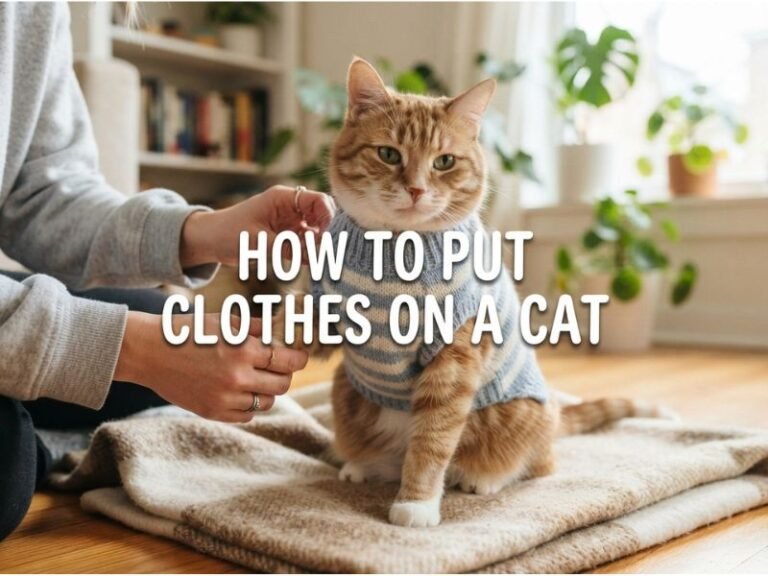
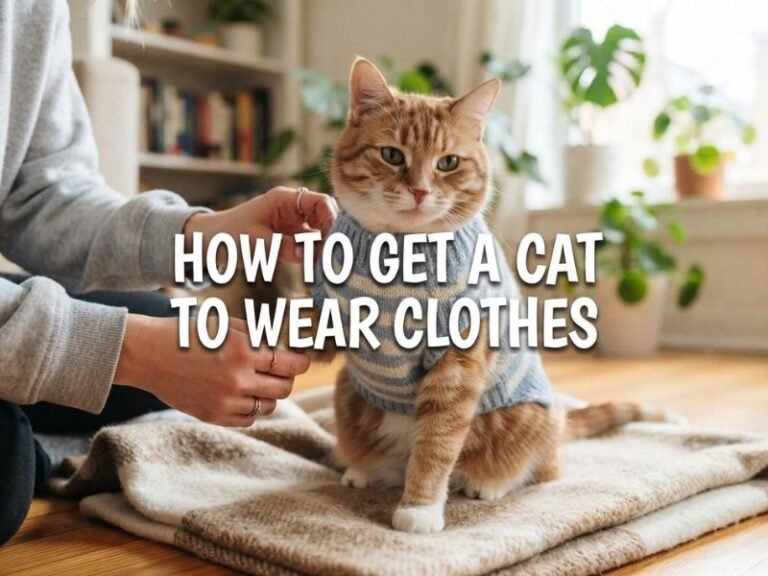
If clothing is necessary, gradual introduction is safer than putting it on for a long period all at once. I would begin by placing the garment near the cat’s resting area so the cat can investigate it without pressure. A calm cat may sniff it, walk away, and return later.
A gradual introduction process
- Choose a simple garment. Select a soft, breathable item without dangling parts, hard decorations, tight elastic, or loose threads. The design should allow normal breathing, walking, toileting, and movement.
- Let the cat inspect it. Place the garment nearby and allow voluntary investigation. Avoid chasing the cat with it or rubbing it over the face.
- Pair it with something positive. Offer a favorite treat or calm praise when the cat remains relaxed near the garment. The reward should support comfort, not force cooperation.
- Touch briefly. Gently touch the garment to the shoulder or side for a moment, then remove it. Stop if the cat shows fear, irritation, or attempts to escape.
- Put it on for a very short period. Start with a brief trial while supervising closely. Keep the cat in a safe, familiar room rather than placing it near stairs or outdoor hazards.
- Observe movement. Check walking, sitting, jumping, grooming, breathing, and litter-box access. Remove the garment if the cat struggles or behaves unusually.
- Increase time only when relaxed. Extend the duration slowly, never assuming that one successful trial means the cat is ready for several hours.
Do not use treats to distract a cat from obvious distress or hold the cat down while fastening the garment. That approach can create a stronger negative association. A cat should not need to be overpowered for a nonessential outfit.
Signs to stop immediately
- Open-mouth breathing, panting, coughing, or difficulty breathing
- Repeated biting, clawing, or twisting at the garment
- Flattened ears, a tucked tail, rigid posture, or frantic attempts to flee
- Loss of balance, inability to walk normally, or repeated falling
- Drooling, vomiting, weakness, or collapse
- Skin redness, swelling, chafing, or wetness under the fabric
Emergency signs such as severe breathing difficulty, collapse, or extreme weakness require prompt veterinary care. Removing the clothing is appropriate, but it should not delay urgent treatment when the cat appears seriously ill.
How to choose a safer garment
If a garment is necessary, fit matters more than appearance. The fabric should be breathable and soft, with enough room for ordinary movement but not so loose that the cat can catch a paw or become tangled. It should not press on the throat, restrict the chest, or pull across the shoulders.
Check the garment under the front legs, around the neck, across the belly, and near the tail. Look for signs of rubbing after a short trial. A cat should be able to use the litter box without fabric becoming soiled or obstructive.
I would avoid costumes with small detachable decorations, strings, bells, feathers, buttons, or long ties. These features may become choking or swallowing hazards. Loud crinkly materials can also increase fear, particularly in a cat that is already uncomfortable.
Washable fabric is practical for medical use, but detergent and fragrance can bother sensitive cats. Unscented products are generally a safer choice. The garment should be clean and completely dry before use.
Common mistakes cat owners make
Assuming stillness means comfort
A cat that stops moving may be frightened rather than content. I would assess the entire body, including muscle tension, ears, eyes, tail, breathing, and willingness to move. Relaxed behavior is more meaningful than simply remaining quiet.
Prioritizing photos over welfare
A costume may look amusing for a photograph, but a short photo session is not automatically harmless. Repeated handling, restraint, bright lights, unfamiliar people, and clothing can combine into a stressful event. If the cat shows distress, the photo is not worth continuing.
Using human clothing
Human shirts, baby clothes, socks, and accessories may have openings or proportions that do not suit a cat. They can restrict the neck, trap a leg, cover the tail, or interfere with elimination. A pet garment is not automatically safe either, but human clothing deserves particular caution.
Leaving a dressed cat alone
Unsupervised clothing creates risks that may not be visible immediately. The fabric can shift, catch, become wet, or cause overheating. A cat may also chew and swallow a piece of the garment. Supervision is especially important during the first trials and whenever the garment is used for medical recovery.
Ignoring a change in behavior
Persistent hiding, refusal to eat, litter-box changes, aggression, or excessive grooming should not be dismissed as a clothing preference. These signs may reflect stress, pain, skin irritation, or another health issue. If behavior does not return to normal after the garment is removed, a veterinarian should evaluate the cat.
Alternatives to dressing a cat
Most cats do not need clothing for ordinary indoor life. If the concern is warmth, I would first improve the environment with a comfortable bed, a draft-free resting place, safe bedding, and an appropriate indoor temperature. A cat can then choose whether to move closer to or farther from the warmth.
If the concern is sun exposure, shade and window management may be more comfortable than fabric. If the concern is a wound, the veterinarian may recommend a recovery suit or collar specifically selected for that injury. If the concern is shedding, regular brushing and veterinary guidance are more suitable than a full-body garment.
For outdoor cats, clothing does not replace basic safety measures. Identification, parasite prevention, supervision, and protection from extreme weather matter more. A garment can snag on branches or fencing, become wet, and reduce the cat’s ability to escape. In many cases, keeping the cat indoors during dangerous weather is the safer choice.
FAQ: Why do cats hate wearing clothes?
Why does my cat freeze when I put clothes on?
Freezing can indicate fear, confusion, or a feeling of being unable to move normally. It does not necessarily mean the cat is comfortable. Remove the garment if the cat remains rigid, has flattened ears, hides, or shows other stress signals.
Why does my cat walk backward in a shirt?
Walking backward may be an attempt to escape pressure around the chest, shoulders, neck, or legs. The fabric may also alter the cat’s balance or body awareness. Remove the shirt and check for tight openings, twisted fabric, or trapped limbs.
Can clothes make a cat anxious?
Yes. Clothing can create anxiety by restricting movement, adding unfamiliar touch, blocking grooming, trapping heat, and reducing a cat’s sense of control. Anxiety may appear as hiding, vocalizing, aggression, freezing, excessive grooming, or refusal to eat.
Should I force my cat to wear clothes?
Nonessential clothing should not be forced. If a veterinarian requires a garment for medical protection, ask the veterinary team how to improve fit, introduce it gradually, and manage distress. A different garment or alternative protection may be safer.
How long can a cat wear a recovery suit?
There is no universal safe duration. It depends on the cat, the suit, the medical problem, the fit, the temperature, and the veterinarian’s instructions. Check the skin, incision, fabric, breathing, mobility, and toileting regularly, and remove the suit when instructed for cleaning or examination.
Do hairless cats need sweaters?
Some hairless cats may become cold more easily, but a sweater is not automatically necessary. The cat’s environment, skin condition, activity, and behavior should guide the decision. A veterinarian can recommend safe temperature management and clothing if needed.
Is it normal for a cat to hate a costume but tolerate a recovery suit?
Yes. A medical recovery suit may fit smoothly and serve a protective purpose, while a costume may be bulky, noisy, decorative, or restrictive. Cats respond to the garment’s specific texture, fit, weight, and effect on movement—not simply to the idea of clothing.
Conclusion
The clearest answer to why do cats hate wearing clothes is that clothing can interfere with movement grooming temperature control sensory comfort and a cat s sense of.