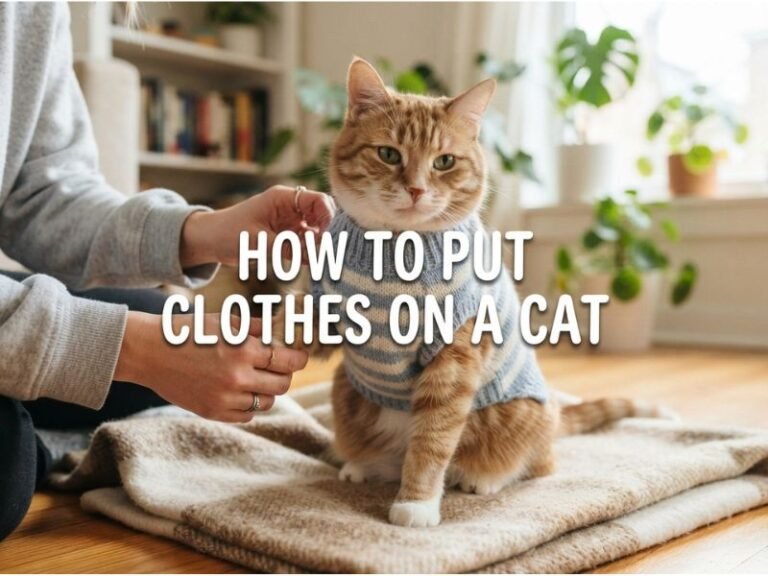
How to Get a Cat to Wear Clothes: A Practical Step-by-Step Guide
A cat can look perfectly content in a sweater one moment and turn into a determined escape artist the next. Clothing changes the way a cat moves, feels, grooms, and reads the world, so putting on a shirt is not simply a matter of slipping fabric over the body.
If you are searching for how to get a cat to wear clothes, the safest answer is gradual training, careful clothing selection, and close attention to your cat’s behavior. I would never treat clothing as mandatory for a cat that is frightened, overheated, or physically uncomfortable.
This guide explains when clothing may be useful, how to introduce it step by step, which garments are safest, what warning signs mean “take it off,” and how to decide whether your cat should wear clothes at all.
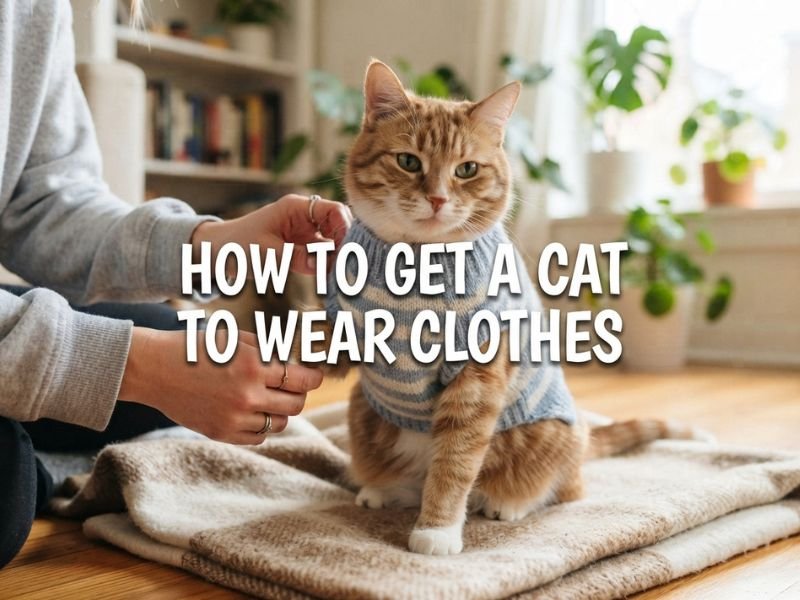
Should cats wear clothes?
Most healthy cats do not need clothing indoors. Their coats provide natural insulation, and many cats find the sensation of fabric restrictive or unfamiliar. Clothing can also interfere with grooming, jumping, hiding, and normal communication through body language.
There are limited situations in which a veterinarian may recommend a garment. A recovery suit can protect a surgical incision, reduce access to a wound, or replace an Elizabethan collar in some cases. Hairless cats may need extra protection from cold, sun, or rough surfaces, although environmental changes are usually preferable to clothing. A thin shirt may also provide short-term coverage for a skin condition if a veterinarian approves it.
Costumes and decorative outfits are different. They are usually for a brief photo or event rather than a health need. I would place comfort and safety above appearance every time. If a cat is persistently trying to remove an outfit, freezing in place, hiding, vocalizing, or breathing differently, the clothing is not worth keeping on.
How to get a cat to wear clothes safely
The basic method is desensitization: expose the cat to the garment in small, positive steps instead of forcing a complete outfit immediately. A cat should learn that clothing predicts calm experiences, treats, play, or affection—not restraint and panic.
Progress varies by temperament. A confident cat may accept a soft garment after several brief sessions, while a cautious cat may need days or weeks. Some cats never become comfortable wearing clothes, and that is a valid outcome. Training should stop before fear becomes intense.
1. Choose a calm starting point
Begin when your cat is relaxed but awake. After a nap or a quiet play session can work well, provided the cat is not overstimulated. Avoid starting during a busy household moment, immediately after a stressful event, or when the cat is hungry, ill, or trying to retreat.
Use a familiar room with doors and windows secured. Remove hazards that could catch on a garment, such as exposed hooks, narrow gaps, or rough furniture. Keep high-value treats nearby, but do not use food to lure a frightened cat into clothing.
2. Let your cat investigate the garment
Place the garment several feet away and allow your cat to approach it voluntarily. Do not drape it over the cat or wave it near the face. Reward calm behaviors such as looking at the fabric, sniffing it, walking past it, or sitting near it.
Repeat this exercise until the garment seems uninteresting. You can move it gradually closer during later sessions. If your cat leaves, crouches, swats, or watches the garment intensely, increase the distance and make the next session easier.
A useful training principle is to change only one thing at a time. First, make the garment familiar. Later, introduce touch. After that, practice wearing it for a few seconds. Combining every new sensation at once makes it harder to identify what caused distress.
3. Pair gentle touch with rewards
Before putting on clothing, practice touching the body areas the garment will cover. Briefly touch a shoulder, side, chest, or back, then offer a reward and stop. Avoid grabbing legs, tail, or head unless the design specifically requires handling those areas.
For a shirt, you might touch the shoulder for one second, reward, and release. In another session, touch both shoulders. Later, rest the garment against the back without fastening it. The cat should remain able to move away throughout this process.
Watch for subtle discomfort. A cat does not need to hiss or bite to communicate that a session is too difficult. Flattened ears, a tense body, rapid tail flicking, widened pupils, lip licking, sudden grooming, and refusal of treats can all signal stress.
4. Start with the easiest garment
The first garment should be lightweight, soft, flexible, and free of dangling decorations. A simple recovery shirt or sleeveless vest may be easier than a sweater with sleeves. Avoid anything stiff, noisy, tight, heavily scented, or covered with buttons, beads, bells, strings, or loose trim.
Lay the garment flat and allow your cat to sniff it again. If the design has a large opening, practice placing it briefly against the shoulder or back. Reward calm behavior, then remove it. The goal is not to get the entire garment on during the first attempt.
5. Put it on in small stages
Follow the manufacturer’s instructions for the particular garment, especially if it is a medical recovery suit. Work slowly and keep the cat’s body supported without pinning it down. If the garment goes over the head, make sure the opening is wide enough and never force the head through a tight neck hole.
For a basic shirt, a gradual sequence may look like this:
- Touch the garment to the shoulder and reward calmness.
- Rest it over the back for one or two seconds, then remove it.
- Place the garment on without fastening every closure, if the design allows it.
- Fasten only the minimum needed to keep it secure.
- Offer a reward while the cat stands or walks normally.
- Remove the garment before the cat becomes distressed.
Do not rush because the cat appears still. Some cats freeze when frightened rather than accepting the clothing. A motionless posture, low body, tucked limbs, or fixed stare is not necessarily relaxation.
6. Build wearing time slowly
Start with a very short interval—sometimes only a few seconds. Remove the garment while the cat is still calm, then end with something pleasant. In later sessions, increase the time in small increments rather than jumping from seconds to an hour.
During early practice, keep the cat on the floor in a familiar area. Watch walking, sitting, grooming, jumping, and litter box access. Never leave a newly dressed cat unattended. Clothing can catch on furniture, restrict movement, or become twisted around a limb.
If your cat struggles, do not punish, scold, or hold the garment in place. Calmly remove it and return to an easier step at the next session. A setback usually means the training progressed too quickly, not that the cat is being stubborn.
How to choose safe cat clothing
Fit and construction matter more than style. A safe garment should allow normal breathing, movement, grooming of uncovered areas, and bathroom use. It should stay in place without compressing the neck, chest, abdomen, legs, or tail.
Check the fit
Follow the brand’s measurement chart rather than guessing from weight alone. Measure the cat according to the manufacturer’s directions, usually around the chest and along the back. A garment that is too small can restrict breathing or movement; one that is too large can snag, slide, or allow a leg to become trapped.
Check the neck opening with particular care. It should not press against the throat or cause coughing, gagging, noisy breathing, or repeated attempts to scratch at the collar area. Fasteners should lie flat and should not dig into the skin.
After dressing the cat, inspect the armpits, chest, belly, and inner legs for rubbing. Cats with long fur may hide pressure points until the garment is removed, so inspect the skin afterward as well.
Prefer simple, breathable materials
Soft cotton or another breathable, flexible fabric is often more comfortable than thick, rigid, or heat-trapping material. The right choice depends on the purpose, the room temperature, the cat’s coat, and veterinary instructions.
Avoid garments with loose threads, detachable parts, elastic bands, drawstrings, zippers near the skin, and small decorations that could be swallowed. Do not use human baby clothing unless it has been carefully assessed for fit and hazards; the openings and proportions may not suit a cat’s body.
Consider the purpose
A medical recovery garment should be selected with veterinary guidance because incision placement and treatment plans differ. A garment intended for warmth should be light enough to prevent overheating. A costume should be especially simple and used only briefly under direct supervision.
Clothing is not a substitute for a warm room, shade, safe bedding, wound care, or professional treatment. If a cat needs protection because of illness, surgery, hair loss, or extreme sensitivity, the underlying reason deserves attention too.
Signs a cat is comfortable or stressed
Behavior gives better information than appearance. A cat that walks normally, accepts treats, responds to familiar sounds, grooms normally, and settles in a natural posture may be tolerating the garment. Even then, continue supervising and check the fit.
Stress can be obvious or quiet. Remove the clothing promptly if you notice:
- Repeated biting, pulling, scratching, or twisting at the garment
- Flattened ears, a tucked body, a puffed coat, or a low crouch
- Hiding, freezing, rapid tail lashing, or persistent attempts to escape
- Hissing, growling, yowling, swatting, or sudden aggression
- Refusal of normally appealing treats after clothing is introduced
- Fast breathing, open-mouth breathing, weakness, or loss of coordination
- Repeated licking or chewing at one area of the body
Open-mouth breathing, marked weakness, blue or pale gums, collapse, or severe breathing difficulty requires immediate veterinary attention. Remove the garment if doing so is safe, reduce stress, and contact a veterinarian or emergency clinic.
Do not assume a cat will adapt simply because the clothing is needed for a photo. If discomfort continues after removal, check the skin and movement, and seek veterinary advice when appropriate.
How long can a cat wear clothes?
There is no single safe duration for every cat or garment. Time depends on the cat’s tolerance, the fabric, temperature, activity level, purpose, and fit. A healthy cat wearing a costume for a brief supervised photo has different needs from a cat wearing a veterinary recovery suit after surgery.
For training, use short sessions and remove the garment before distress begins. During necessary medical use, follow the veterinarian’s directions and the product instructions. Ask specifically when the garment should be removed for inspection, cleaning, exercise, sleep, or litter box use.
Check the cat frequently for heat, dampness, chafing, swelling, or a garment that has shifted. Keep water available. A dressed cat should not be placed near a heater, in direct sun, or in a hot car. Never leave clothing on a cat in a crate or room without supervision unless a veterinarian has given clear instructions for that exact situation.
Special situations that need extra care
After surgery or injury
A recovery suit can protect an incision, but the design must match the surgical site. Some cats can still reach a wound through an opening or damage the garment with persistent chewing. Inspect the incision as directed and contact the veterinary practice if it becomes red, swollen, wet, separated, or painful.
Do not apply a garment over a wound unless the veterinarian has approved it. A fabric layer can trap moisture, rub sensitive tissue, or hide changes that need prompt treatment.
Hairless or sparsely coated cats
Hairless cats may be more sensitive to temperature and sunlight, but clothing is only one possible solution. Indoor temperature control, soft bedding, shade, and veterinary advice may be safer or more effective. Monitor for overheating because a cat with little fur can still become too warm in a thick garment.
Cats with skin disease
Skin irritation, allergies, parasites, and infections require diagnosis rather than concealment. Clothing can worsen moisture and friction or prevent a cat from grooming normally. Follow the veterinarian’s treatment plan and ask whether a protective garment is appropriate.
Senior, overweight, or mobility-limited cats
A garment can make movement more difficult for cats with arthritis, weakness, reduced flexibility, or excess weight. Check whether the cat can reach the litter box, lie down, stand up, and groom after dressing. If those basic activities become harder, clothing may not be suitable.
Common mistakes to avoid
Forcing the garment on
Physical restraint may get clothing onto the cat, but it can create fear and defensive behavior. It also increases the chance of scratches, bites, twisted limbs, or a poorly positioned garment. If the cat resists strongly, stop and change the training plan.
Starting with a complicated costume
Hats, capes, sleeves, shoes, and decorative accessories add unfamiliar sensations and safety risks. Begin with one simple garment, and skip accessories unless a veterinarian has a specific reason for them.
Ignoring a frozen cat
Stillness is often mistaken for cooperation. A frightened cat may become rigid and silent. Look for a loose posture, ordinary movement, normal breathing, and willingness to engage rather than judging success by the absence of struggle.
Leaving clothing on without supervision
Even a well-fitted garment can shift during play, grooming, or jumping. Supervision is especially important during the first sessions and whenever the design is new. Remove the garment if you cannot actively monitor the cat.
Using clothing to solve every problem
A sweater will not fix a cold room, and a shirt will not reliably stop a cat from reaching every wound. Environmental changes, veterinary treatment, nail care, behavior support, or an approved protective collar may be more appropriate.
When to stop training
Stop immediately if your cat shows panic, breathing changes, injury, or escalating aggression. For milder resistance, remove the garment and allow the cat to decompress in a quiet space. Do not restart the same session after the cat has become highly distressed.
Training should also end if the cat repeatedly refuses food, hides for a long time afterward, avoids the handler, or shows a lasting change in behavior. These signs suggest that the experience is costing more than the clothing is worth.
If clothing is medically necessary but your cat cannot tolerate it, contact the veterinarian rather than continuing to force the garment. The clinic may recommend a different design, a protective collar, environmental management, or another treatment option.
FAQ: How to get a cat to wear clothes
What is the fastest way to get a cat to wear clothes?
There is no reliable safe shortcut. The fastest appropriate method is to introduce the garment gradually: allow investigation, reward calm behavior, practice brief touches, put the garment on for seconds, and increase duration only when the cat remains relaxed. Forcing it may be faster initially but can create fear and make future handling harder.
How can I get my cat to wear a shirt without fighting?
Choose a soft, correctly sized shirt, introduce it outside the cat’s body, and use short sessions. Handle the shoulders and back gently before dressing. Keep the cat’s feet on a stable surface, avoid chasing, and remove the shirt at the first clear sign of distress. If fighting continues, the cat may not be a good candidate for clothing.
Why does my cat freeze when I put clothes on?
Freezing can indicate fear, confusion, or discomfort rather than acceptance. Check for a crouched body, flattened ears, wide pupils, tense muscles, and refusal of treats. Remove the garment and return to an earlier training step. A cat should move, breathe, and respond normally before wearing clothing for longer.
Can I leave clothes on my cat overnight?
Do not leave ordinary clothing on overnight without veterinary instruction. A garment may shift, snag, overheat the cat, interfere with grooming, or hide skin irritation. If a recovery suit must stay on during sleep, follow the veterinarian’s specific directions and inspect the cat and garment regularly.
Should I put clothes on a cat that hates them?
Usually not, unless clothing is medically necessary and a veterinarian has recommended it. A cat that persistently hides, bites the garment, vocalizes, or becomes distressed is communicating that the outfit is unacceptable. Ask the veterinary team about safer alternatives instead of repeatedly forcing exposure.
How do I know if cat clothes are too tight?
Look for restricted breathing, coughing, gagging, difficulty walking, shortened steps, skin indentations, redness, swelling, or repeated attempts to pull at the garment. Check the chest, neck, armpits, belly, and inner legs after removal. If the fit is questionable, take it off and do not reuse it until the sizing problem is resolved.
Can treats train a cat to wear clothes?
Yes, treats can create a positive association when the cat is already calm. Reward the cat for looking at, sniffing, touching, and briefly wearing the garment. Do not use treats to distract a frightened cat while forcing clothing on. The reward should support voluntary, relaxed participation.
Conclusion
The safest way to learn how to get a cat to wear clothes is to proceed slowly, choose a simple and well-fitted garment, reward calm behavior, and stop at the first meaningful sign of discomfort. Clothing should serve a clear purpose, never compromise breathing or movement, and never replace veterinary care. If your cat remains unhappy after patient training, respecting that boundary is the responsible choice.