How to Groom a Long-Haired Cat: Practical Steps and Helpful Tips
A long-haired cat can look perfectly polished one day and develop tight tangles behind the ears or under the legs the next. A brushing session that starts as routine care may then turn into pulling, scratching, and a cat that refuses to come near the comb.
The difference usually is not a special trick. It is the order of the grooming steps, the tools used, and the way the coat is handled. Learning how to groom a long-haired cat can help you prevent painful mats, recognize skin problems early, and make grooming a predictable part of your cat’s routine.
I’ll explain how to prepare, brush through different parts of the coat, handle mats safely, decide when bathing or professional grooming is appropriate, and make the process easier for a nervous or resistant cat.
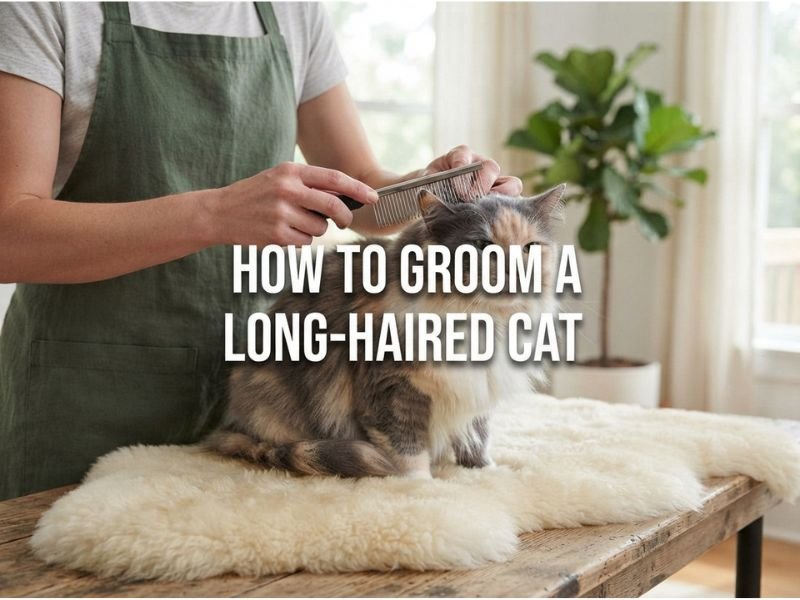
Why Long-Haired Cats Need Regular Grooming
Long fur traps loose hair, dander, dirt, plant material, and moisture more readily than short fur. As the cat moves, sheds, sleeps, and uses the litter box, loose hairs can twist together. Friction makes tangles especially common in the armpits, behind the ears, around the collar, on the belly, and beneath the tail.
Regular grooming removes loose hair before it forms a mat. It also spreads natural skin oils through the coat, keeps the fur more comfortable, and gives you a chance to inspect the skin. A grooming session can reveal fleas, scabs, redness, swelling, unusual lumps, or a sore area that might otherwise stay hidden beneath dense fur.
Matting is more than a cosmetic problem. A tight mat can pull continuously on the skin, trap moisture, restrict movement, and hide irritation or parasites. Severe mats may cause painful skin damage when they are pulled apart. For that reason, grooming should focus on comfort and coat health rather than simply making the cat look fluffy.
Gather the Right Grooming Tools
The best setup is simple. I recommend placing every tool within reach before bringing the cat to the grooming area so the session does not stop while you search for something.
- Wide-tooth metal comb: Useful for finding tangles and checking whether the coat is clean through to the skin.
- Slicker brush: A brush with fine, angled pins that removes loose hair and helps loosen small tangles when used gently.
- Soft bristle brush: Helpful for finishing the coat and making the final strokes pleasant.
- Mat splitter or mat rake: Use only with caution and only for appropriate, small tangles. These tools have sharp edges and can injure skin.
- Cat nail clippers: Useful if your cat’s nails need trimming before grooming.
- Pet-safe detangling spray: Choose a product labeled for cats, and follow its directions. Avoid human hair products.
- Towels: Keep several nearby for wiping paws, cleaning a small mess, or drying a damp coat.
- High-value treats: Small treats can create a positive association with handling.
Avoid using scissors to cut out a mat. Cat skin is loose, thin, and easy to pull into a tangle without realizing it. Scissors can cut skin along with the hair, particularly when a mat lies flat against the body. If a mat cannot be loosened safely, a veterinarian or experienced cat groomer should remove it with appropriate equipment.
Prepare Your Cat and Grooming Area
Choose a quiet, well-lit location with a stable surface. A nonslip towel on a table, counter, or floor can help your cat feel secure. Keep the room comfortably warm, especially if a large amount of fur may be removed or if bathing is involved.
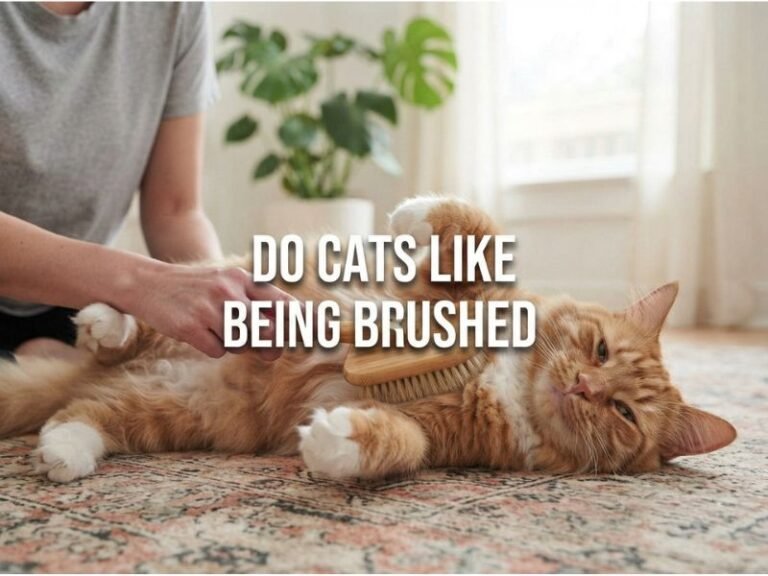
Do not begin immediately after a stressful event, a vigorous play session, or a large meal. Let your cat settle first. I prefer starting with a few calm strokes using my hand, followed by a treat, before showing the brush. This helps the cat understand that the tool does not automatically mean restraint or discomfort.
For a cat that is new to grooming, divide the introduction into small steps:
- Let the cat sniff the comb or brush.
- Touch the shoulder or back with the tool without brushing.
- Give a treat and pause.
- Make one or two gentle strokes in the direction of hair growth.
- Stop while the cat is still relatively calm.
Short sessions are more productive than a long struggle. A young kitten may tolerate only a minute or two at first. An adult cat with a history of painful mats may need several days of calm handling before you can brush the entire body.
How to Groom a Long-Haired Cat Step by Step
1. Check the coat with your hands
Before brushing, run your fingertips lightly over the coat. Feel for rough patches, dense clumps, scabs, moisture, or areas where the skin seems tender. Look behind the ears, under the front legs, around the hind legs, and beneath the tail.
A visual inspection alone can miss a mat because the top layer of fur may hide a compact tangle close to the skin. If your cat reacts sharply to one area, do not assume the problem is simply stubbornness. Pain, inflammation, or a wound may be present.
2. Start at an easy, low-sensitivity area
Begin on the shoulders or upper back rather than the belly, tail, or legs. Brush in the direction the fur naturally lies, using light strokes. Keep the brush parallel to the body instead of pressing the pins directly into the skin.
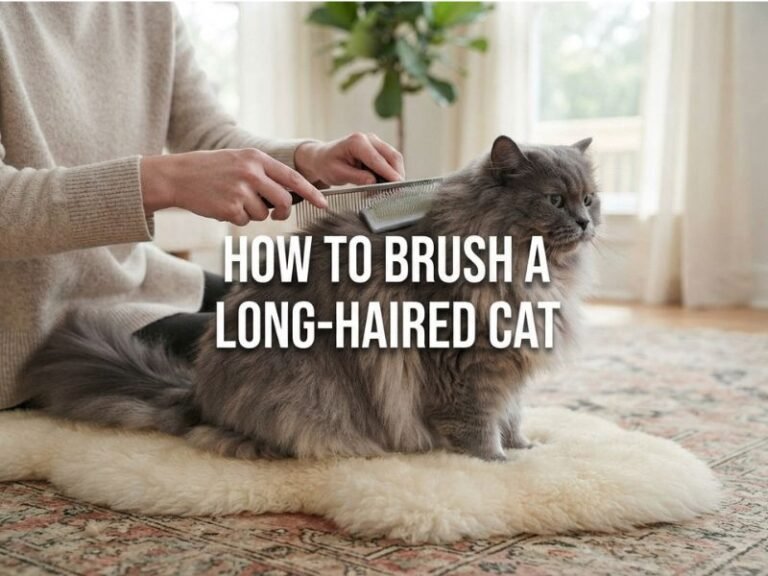
After several strokes, use the metal comb to check the area. If the comb passes smoothly from the surface toward the skin, move to the next section. If it catches, return to that small tangle rather than brushing harder.
3. Work in small sections
Part the coat with your fingers and groom one section at a time. For a dense coat, I recommend beginning near the skin with a few gentle strokes and then finishing from the outer layer. This approach is sometimes called line brushing. It reduces the chance of leaving hidden tangles underneath a smooth-looking surface.
Use your free hand to support the fur near the skin. That limits the pulling sensation when the brush reaches a knot. Brush only a small area before checking it with the comb. If your cat shifts position, allow a brief pause instead of holding the body still by force.
4. Handle sensitive areas carefully
Behind the ears, the neck, armpits, belly, inner thighs, and tail often need extra patience. The skin is delicate, the fur may be fine or curly, and movement creates friction.
For the belly, let the cat stand or lie in a natural position whenever possible. Do not force the cat onto its back simply to reach the fur. Support a paw only if your cat accepts that handling, and release it when the cat shows discomfort.
Use short strokes around the tail. Some cats dislike tail handling, and a tail can be injured if it is pulled. Hold the fur near a tangle to reduce tension, but never tug the tail itself.
5. Comb the face and ears with extra care
Use a small, soft brush or a comb with rounded tips near the face. Keep grooming tools away from the eyes, nostrils, mouth, and ear canal. Do not insert a comb or cotton swab into the ear.
For fur behind the ears, separate small sections with your fingers and work from the outer edge of a tangle inward. If the area is tightly matted or the skin looks red, stop and arrange professional help. A cat may scratch or bite when an ear mat is painful.
6. Finish with a gentle brush and reward
Once the coat is tangle-free, make a few soft finishing strokes. Offer a treat, calm praise, or a favorite activity. End the session before your cat becomes highly agitated. A positive ending matters because cats remember the overall experience, not only the final appearance of the coat.
How to Remove Small Mats Safely
First determine whether the tangle is a loose knot or a tight mat attached close to the skin. A small, loose knot may respond to your fingers, a comb, and a cat-safe detangling product. A dense mat that does not move when you gently separate the hair should not be forced.
For a minor tangle place your fingers between the mat and the skin if you can do so safely Hold the fur at the base to reduce pulling.
Do not rake repeatedly over the same spot until the skin becomes irritated. Do not pull a mat upward from the skin, and do not use oil, cornstarch, or household products without veterinary guidance. Some substances can be irritating or dangerous if the cat licks them.
A mat should be professionally removed when it is large, tight, widespread, wet, foul-smelling, close to the skin, or located in a sensitive area. A veterinarian may be the best choice if the skin underneath appears damaged or if the cat cannot be safely handled while awake.
Recognize When a Mat Needs Professional Help
Professional grooming or veterinary care is appropriate if you notice any of the following:
- The mat is firmly attached to the skin.
- Several large mats cover the body.
- The skin beneath the mat is red, bleeding, moist, swollen, or has an odor.
- Your cat cries, bites, scratches, or repeatedly tries to escape when you touch the area.
- You cannot tell where the mat ends and the skin begins.
- The cat is elderly, obese, arthritic, ill, or unable to groom normally.
- The coat is contaminated with feces, urine, chemicals, or an unknown substance.
A professional may clip the coat with electric clippers rather than attempt to brush out painful matting. Severe cases sometimes require veterinary sedation because forcing the process can cause injury and create a lasting fear of grooming. Sedation is not a routine solution for ordinary brushing, but a veterinarian can determine what is safest for a severely matted or distressed cat.
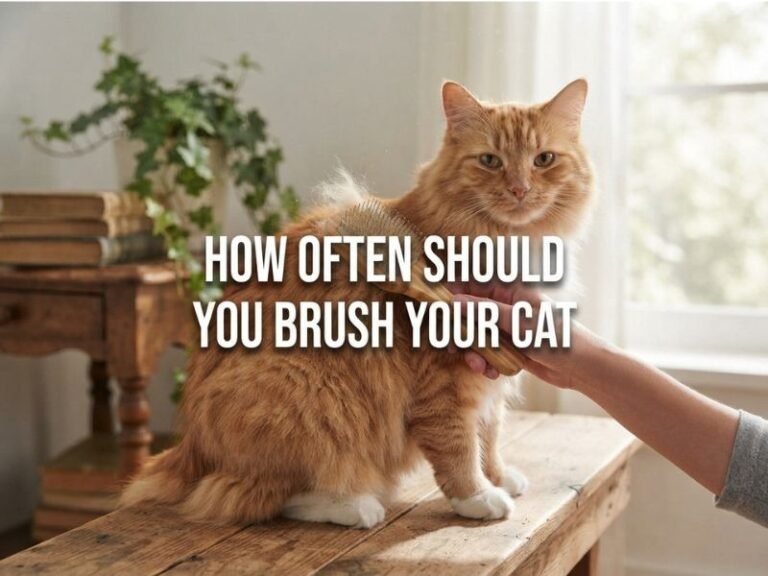
How Often Should a Long-Haired Cat Be Groomed?
Many long-haired cats benefit from brief brushing every day or every other day. Some coats remain manageable with several sessions per week, while very dense, fine, curly, or easily matted coats may need daily attention. The right schedule depends on coat texture, shedding, age, activity level, and how effectively your cat grooms itself.
A short daily session is often easier than an occasional intensive session. I would rather see a cat receive five calm minutes regularly than endure one difficult grooming marathon every few weeks.
Increase attention during heavy shedding periods, after outdoor activity, and when the cat’s health or mobility changes. Check the coat more often if the cat has gained weight, developed arthritis, or stopped grooming certain areas. A sudden decline in self-grooming can signal pain or illness and deserves veterinary attention.
Do Long-Haired Cats Need Baths?
Most healthy cats do not need frequent baths because they maintain much of their own cleanliness. Brushing usually removes loose fur and surface debris without the stress of immersion. Bathing may be useful if a veterinarian recommends it, if the coat is contaminated, or if a cat cannot clean itself effectively.
Brush out tangles before a bath. Water can tighten mats and make them much harder to remove. Prepare cat-specific shampoo, several towels, a nonslip mat, and lukewarm water before starting. Never use human shampoo, dish soap, essential oils, or flea products not labeled for cats.
Keep water out of the eyes and ears Rinse thoroughly because leftover shampoo can irritate the skin and may be swallowed during later grooming Towel-dry the coat and keep the cat warm until it is completely dry A hair dryer may frighten some cats if one is used choose a.
If a substance such as paint, adhesive, antifreeze, or a chemical has contaminated the coat, do not rely on ordinary bathing advice. Prevent licking and contact a veterinarian or animal poison service promptly for product-specific instructions.
Trim Nails and Sanitary Fur Carefully
Nail trimming can make grooming safer, but it is separate from brushing. Press the toe gently to extend the claw and cut only the translucent tip. The pink inner area, called the quick, contains blood vessels and nerves. Cutting it can cause pain and bleeding.
Some long-haired cats need limited trimming around the rear to keep feces from catching in the coat. This area is sensitive and easy to injure, so a professional groomer or veterinarian should handle trimming if the cat moves suddenly. Do not shave the entire coat simply to avoid brushing unless a veterinary professional recommends it for a medical reason.
A cat’s coat provides insulation and skin protection. Shaving can expose the skin to sunburn, temperature changes, scratches, and accidental cuts. It also does not solve the underlying problem if the cat is frightened by handling or if the grooming schedule remains inconsistent.
Make Grooming Easier for a Resistant Cat
Resistance usually communicates fear, discomfort, overstimulation, or a history of unpleasant handling. Punishment, yelling, and physical restraint can make the reaction stronger. Instead, shorten the session and identify the point at which the cat begins to tense up.
Watch for warning signs such as a rapidly switching tail, flattened ears, dilated pupils, skin twitching, growling, repeated attempts to leave, or sudden grooming of another body part. These signals mean the session should pause. Waiting until the cat swats or bites makes the next session more difficult.
Use a predictable sequence: approach, touch, brush briefly, reward, and stop. Practice handling one body area at a time. For example, one session may focus only on the shoulders, while the next introduces a few strokes near the hind leg. Gradually increase duration as the cat remains relaxed.
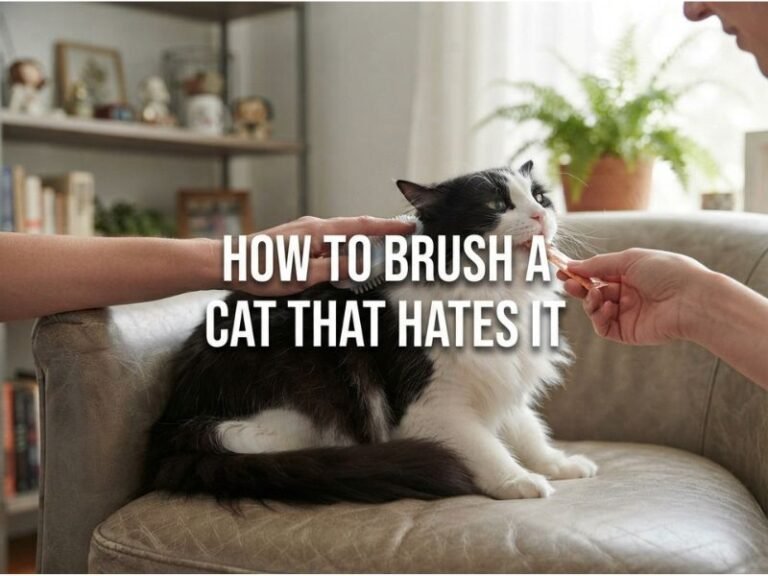
Some cats tolerate brushing better while standing on the floor, sitting beside their owner, or resting on a familiar blanket. A second person can offer treats, but should not pin the cat down. If the cat becomes unsafe to handle, stop and consult a veterinary behavior professional or experienced cat groomer.
Common Grooming Mistakes to Avoid
- Brushing only the top layer: A smooth surface can hide mats close to the skin. Check each section with a comb.
- Using force: Pulling through knots can hurt the cat and damage trust.
- Cutting mats with scissors: Loose skin can rise into the mat and be cut accidentally.
- Starting with the most sensitive area: Begin on the back or shoulder so the cat can settle.
- Waiting until the coat is visibly tangled: Prevention is more comfortable than removing established mats.
- Ignoring the skin: Redness, odor, sores, or parasites require more than cosmetic grooming.
- Using products made for people: Human shampoos and fragrances may irritate cats or be unsafe when licked.
- Continuing after distress begins: A short successful session is better than completing the entire coat while the cat panics.
- Assuming every bald patch is from grooming: Hair loss can have medical causes and should be evaluated when it is new or expanding.
FAQ About Grooming a Long-Haired Cat
How long should a long-haired cat grooming session last?
There is no universal time limit. A calm cat may tolerate 10 to 15 minutes, while a kitten or anxious adult may need sessions lasting only one to five minutes. Stop when the cat begins showing stress, and build duration gradually. The goal is a comfortable, repeatable routine rather than finishing the entire coat in one sitting.
Should I brush a long-haired cat before or after a bath?
Brush before a bath to remove loose fur and small tangles. Water can tighten existing mats, so bathing a tangled coat may make the problem worse. After the bath, dry the coat carefully and comb it again only when the cat is comfortable and the fur is no longer soaking wet.
What is the best brush for a long-haired cat?
A slicker brush and a wide-tooth metal comb are a useful combination for many long-haired cats. The slicker brush removes loose surface fur, while the comb checks the coat down to the skin. Tool choice still depends on the individual coat, and a brush should never be used with enough pressure to scrape or irritate the skin.
Can I shave a matted long-haired cat at home?
Home shaving is risky when mats are tight or widespread because cat skin can be pulled into the mat and cut by clippers. A professional groomer may safely clip mild cases, while a veterinarian should assess painful, extensive, or infected matting. Do not use scissors to remove mats.
How do I groom a long-haired cat that hates brushing?
Start with brief handling and rewards before introducing full brushing. Use a calm area, begin on a non-sensitive body part, and stop at the first signs of escalating stress. If the cat reacts as though grooming is painful, arrange a veterinary examination. Fear caused by pain will not improve through repeated forced brushing.
Why does my long-haired cat still develop mats after brushing?
Mats can form when brushing does not reach the undercoat, when sensitive areas are skipped, or when the coat is especially dense or fine. Use section-by-section line brushing and confirm each area with a comb. If mats appear suddenly or the cat has stopped grooming itself, consider an underlying health or mobility problem.
Is professional grooming necessary for every long-haired cat?
No. Many cats can be maintained at home with regular brushing and occasional nail care. Professional help becomes valuable for severe matting, difficult coat texture, unsafe behavior, mobility limitations, or owners who cannot safely reach sensitive areas. Veterinary care is more appropriate when the skin is injured or the cat may need sedation.
Conclusion
The safest approach to how to groom a long-haired cat is gradual gentle and consistent inspect the coat brush in small sections use a comb to check beneath.