How Often Should You Brush Your Cat: Complete Guide and Facts
By the time loose fur collects on your couch, your cat may already be swallowing more hair than usual during self-grooming. A short-haired cat can look perfectly tidy while still benefiting from regular brushing, and a long-haired cat can develop a hidden mat close to the skin in only a few days.
So, how often should you brush your cat? The answer depends mainly on coat length, density, shedding, skin health, and your cat’s tolerance for handling. A useful routine should remove loose hair without making grooming stressful or irritating.
I’ll explain recommended schedules by coat type, how to choose and use grooming tools, what changes during shedding season, and which signs mean brushing is no longer a simple home-care task. By the end, you should be able to create a realistic routine for your own cat.
How often should you brush your cat?
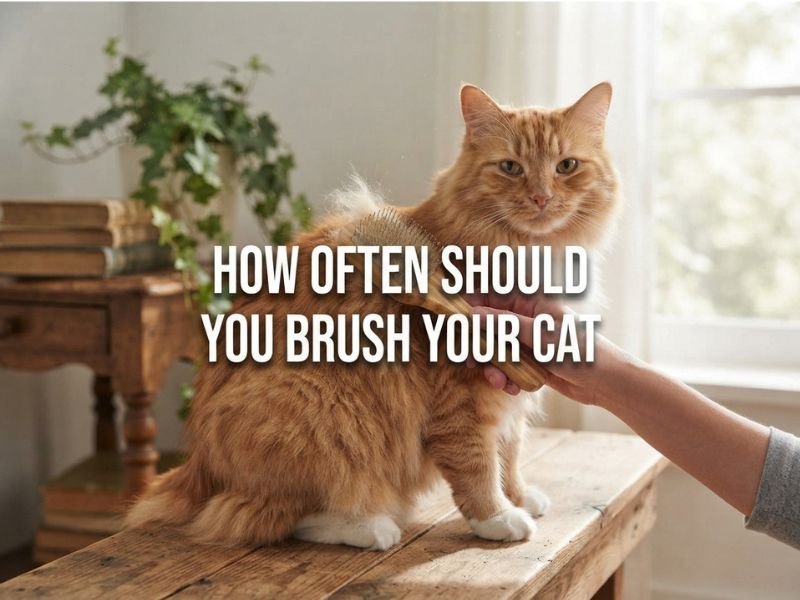
Most cats benefit from brushing at least once or twice a week. Short-haired cats often do well with weekly brushing, while medium-haired and long-haired cats usually need brushing several times a week. Cats with very dense, fine, or easily tangled coats may need brief daily sessions.
| Cat or coat type | Typical brushing schedule | Why the schedule may change |
|---|---|---|
| Short-haired cat | Once a week | Brush more often during heavy shedding or if the cat sheds substantially |
| Medium-haired cat | Two to three times a week | Increase frequency if the coat tangles or develops undercoat buildup |
| Long-haired cat | Daily or every other day | Daily attention helps prevent mats, especially around the armpits, belly, legs, and tail |
| Very dense or plush coat | Several short sessions each week or daily | Thick undercoats can trap loose hair close to the skin |
| Senior, overweight, or mobility-limited cat | As often as needed to maintain a clean, mat-free coat | These cats may groom less effectively on their own |
These are starting points rather than strict rules. If your cat remains mat-free and comfortable with one weekly session, there may be no reason to brush every day. If you find small tangles after two days, the routine needs to be more frequent even if your cat has a relatively short coat.
What determines a cat’s brushing schedule?
Coat length is the easiest factor to notice, but it is not the only one. Two cats with the same apparent hair length can need very different grooming routines.
Coat length and texture
Long hair creates more opportunities for strands to twist together. Fine, silky hair may knot quickly, while a thick, plush coat can hold a large amount of loose undercoat. Curly or unusually textured coats may also require specialized grooming advice.
Short hair generally sheds away from the skin more easily, but some short-haired cats have dense undercoats. A sleek top layer does not always indicate a low-maintenance coat.
Shedding patterns
Many indoor cats shed throughout the year because artificial lighting and stable indoor temperatures affect their seasonal coat cycle. Shedding may still become heavier in spring and fall. During these periods, adding an extra brushing session can reduce loose hair and help you notice skin problems sooner.
Age and mobility
Kittens may need gentle, brief introductions rather than a full grooming routine. Older cats, overweight cats, and cats with arthritis may have difficulty reaching the back, hips, or hindquarters. A cat that once maintained its coat independently may need more frequent help later in life.
Health and grooming habits
Skin allergies, parasites, pain, dental disease, obesity, and other medical conditions can change grooming behavior. A cat that suddenly stops grooming, develops greasy fur, or becomes unusually tangled should not simply be brushed more aggressively. The underlying cause may need veterinary attention.
Why regular brushing matters
Brushing removes loose fur before your cat can swallow as much of it during self-grooming. It can reduce—but cannot completely prevent—hairballs. Hairballs that occur frequently, cause repeated vomiting, or are accompanied by coughing, constipation, poor appetite, or lethargy deserve a veterinary discussion.
Regular grooming also helps prevent mats. A mat is a compacted knot of hair that pulls on the skin and can hide redness, wounds, moisture, or parasites. Mats often begin in places that are easy to miss, including behind the ears, under the front legs, around the collar area, along the belly, and near the hind legs.
A brushing routine gives me another practical benefit: it makes changes easier to spot. While grooming, I can look for fleas or flea dirt, scabs, dandruff, bald patches, swelling, and sensitive areas. Brushing should not replace a veterinary examination, but it can help reveal a problem earlier.
Routine handling may also make necessary care less difficult. A cat that calmly accepts gentle contact around the feet, ears, tail, and body may be easier to examine, trim, or transport. The goal is not to force cooperation; it is to build predictable, comfortable experiences.
How to brush a cat correctly
The best brushing session is calm, gentle, and short enough to end before your cat becomes overwhelmed. A five-minute session that your cat accepts is more useful than a twenty-minute struggle.
- Choose a quiet time. Brush when your cat is relaxed, not immediately after an exciting play session or when the household is noisy.
- Let your cat inspect the tool. Place the brush nearby and allow sniffing before touching the coat with it.
- Start with an easy area. The shoulders, back, or cheeks may be less sensitive than the belly, tail, or legs.
- Use light strokes. Follow the direction of hair growth at first. Avoid pressing hard or repeatedly scraping the same patch.
- Check the brush often. Remove collected fur so the tool continues to move smoothly.
- Pause before resistance becomes a struggle. Offer praise or a small treat if your cat enjoys food rewards.
- Inspect the coat afterward. Feel gently for remaining tangles and check common trouble spots.
For long-haired cats, divide the coat into sections rather than trying to brush the whole body at once. Work from one side to the other and include the chest, belly, legs, tail, and area behind the ears when your cat allows it.
Brushing with the direction of the coat
Brushing with the direction of hair growth is usually the most comfortable starting method. It lifts loose fur and smooths the surface without pulling as much. A comb can then help you check whether the hair is clear all the way to the skin.
Some professional grooming techniques use careful brushing against the direction of growth to reach an undercoat, but this can feel uncomfortable if done forcefully. I would use that approach only gently and only if the cat remains relaxed.
Handling small tangles
Do not yank a knot. Hold the hair close to the skin so pulling does not transfer directly to your cat, then work at the outer edge of the tangle with a suitable comb or mat-splitting tool. Stop if the area is tight, painful, large, or attached closely to the skin.
Never use household scissors to cut a mat from a cat’s coat. Cat skin is flexible and can be drawn into the knot, making it easy to cut accidentally. A veterinarian or experienced feline groomer can remove severe mats more safely.
Choosing the right grooming tools
No single brush is ideal for every cat. Tool selection should match the coat and the cat’s comfort level.
Rubber grooming brush
A rubber brush or grooming mitt can work well for short-haired cats. It lifts loose fur, provides gentle contact, and is often less intimidating than a metal tool. It may not reach deeply enough through a thick long coat.
Bristle brush
A soft bristle brush can smooth the outer coat and remove surface hair. It is often useful as a finishing tool, especially for cats that dislike more rigid brushes. Bristles alone may not remove dense undercoat or prevent long-hair tangles.
Slicker brush
A slicker brush has fine angled pins designed to separate hair and remove loose undercoat. It can be effective for medium- and long-haired cats, but excessive pressure can scratch the skin. Choose a cat-specific model and use light strokes.
Metal comb
A metal comb is useful for checking the coat close to the skin. Wide-spaced teeth can help with longer hair, while narrower teeth may catch smaller tangles or flea dirt. A comb should glide through the coat rather than snag repeatedly.
Undercoat rake and de-shedding tools
These tools can remove substantial loose undercoat, but more removal is not always better. Overuse may break hair or irritate the skin. Follow the product instructions and avoid treating a de-shedding tool as a daily replacement for gentle brushing.
I would avoid harsh tools marketed as a complete solution for every shedding cat. A tool that removes a dramatic amount of hair may also cause discomfort if used too often or too forcefully.
Brushing short-haired cats
A short-haired cat often needs brushing about once a week, although a shedding-heavy cat may benefit from two or three sessions. A rubber brush, soft bristle brush, or fine-toothed comb is usually enough for routine care.
Use slow strokes over the back, sides, chest, and neck. Pay attention to the base of the tail and the hips, where loose hair can collect. Short-haired cats rarely need aggressive de-shedding, and frequent hard brushing can irritate the skin without improving coat health.
If your short-haired cat produces many hairballs, sheds heavily, or has a dense undercoat, increase the schedule gradually. Watch the skin for redness and stop if the cat becomes uncomfortable.
Brushing medium-haired and long-haired cats
Medium-haired cats commonly need brushing two or three times a week. Long-haired cats often need daily brushing or at least every-other-day grooming to prevent tangles. The key is consistency: a small amount of maintenance is easier and more comfortable than removing a large mat later.
Start with a slicker brush or another suitable tool to separate loose hair, then use a metal comb to check the coat. The comb should reach from the outer hair toward the skin without getting stuck. If it stops at a particular location, investigate that area rather than brushing over it repeatedly.
Long-haired cats need special attention around the armpits, collar, belly, inner thighs, rump, and tail. These areas experience movement and friction, so they can mat faster than the back.
For cats with a very thick coat, daily sessions may be easier if divided into two or three small grooming periods. A cat does not need to sit through one complete body treatment every time. One session can focus on the chest and shoulders, while another handles the sides and hindquarters.
How to make brushing less stressful
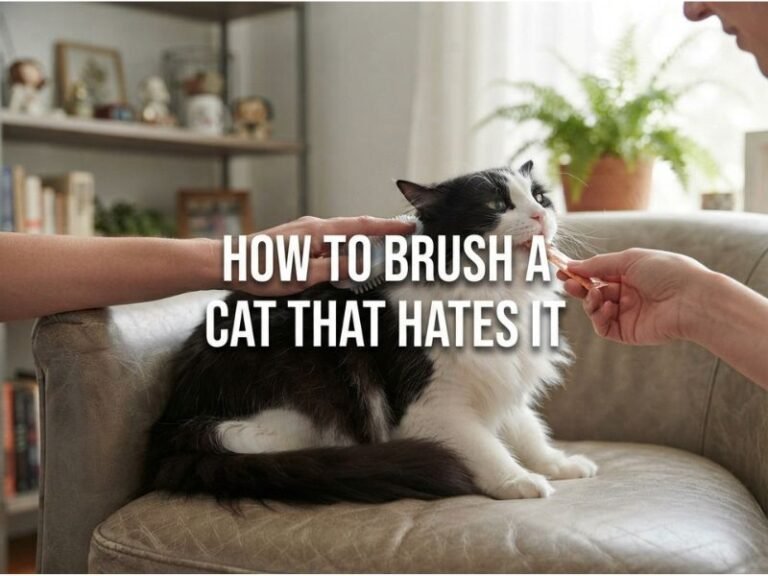
Many cats dislike grooming because of pulling, restraint, unfamiliar tools, or a previous painful experience. I would treat resistance as information rather than disobedience. The routine may be too long, the tool may be wrong, or a hidden mat may be hurting the cat.
Use gradual desensitization
Begin by touching your cat briefly, showing the brush, and rewarding calm behavior. On another attempt, make one or two strokes and stop. Slowly increase the number of strokes over several sessions.
Keep the first sessions focused on success. If your cat walks away, let the session end when possible. Chasing or pinning the cat can make future grooming harder and may create fear around the brush.
Watch body language
Flattened ears, tail lashing, skin twitching, growling, repeated attempts to escape, and sudden swatting indicate rising stress. Some cats tolerate brushing only when attention stays on the back and shoulders. Others prefer being groomed while standing rather than lying down.
Give breaks before these signals escalate. A calm pause is more productive than insisting on finishing every section.
Make the setting predictable
Use the same quiet location and similar sequence each time. Place a towel under the cat if a slippery floor makes the cat tense. Keep treats nearby if food rewards are appropriate, but do not use them to distract a cat from painful brushing.
Common brushing mistakes
- Brushing only when the coat looks messy: Hidden tangles may form before they are visible.
- Using human hairbrushes: They may not reach the cat’s coat properly and can pull unevenly.
- Pressing too hard: Metal pins can scratch skin, particularly on thin-coated or sensitive cats.
- Ignoring the underside: The belly, legs, and armpits often mat sooner than the back.
- Trying to remove severe mats at home: Cutting or pulling can injure the skin.
- Using scented products without veterinary guidance: Cats may lick residues, and fragrances can irritate some animals.
- Assuming more brushing is always better: Over-brushing can cause skin irritation, broken hair, or grooming aversion.
- Forcing a full session: Stress can make the next session more difficult.
Another mistake is judging success only by the amount of fur in the brush. A successful session leaves the cat comfortable, the coat free of manageable tangles, and the skin undisturbed. A large pile of removed hair is not automatically evidence of better grooming.
When brushing is not enough
Contact a veterinarian if your cat develops sudden matting, stops grooming, has persistent dandruff, shows bald patches, scratches intensely, or reacts painfully to normal touch. Skin infections, allergies, parasites, pain, and other medical conditions can affect the coat.
Arrange professional help for extensive mats, tight mats near the skin, or a cat that cannot be handled safely at home. A veterinarian may recommend sedation for severe mat removal if the procedure would otherwise cause significant pain or fear.
Seek prompt veterinary care for a cat that is repeatedly vomiting, struggling to pass stool, refusing food, having trouble breathing, or acting lethargic after hairball-related symptoms. Brushing can reduce swallowed hair, but it cannot treat an intestinal blockage or another illness.
Seasonal brushing changes
During heavy shedding periods, increase brushing gradually rather than suddenly turning a weekly routine into a long daily session. Add one brief session, monitor the coat and skin, and adjust from there.
Indoor cats may shed steadily year-round, so calendar seasons are only a rough guide. Your cat’s actual coat condition matters more. If the brush collects more hair, the coat feels dense, or loose fur appears around the home, an extra session may be useful.
Do not shave a healthy cat simply to reduce shedding without discussing it with a veterinary professional. A cat’s coat provides insulation and skin protection, and shaving does not eliminate the underlying cause of shedding. It also does not guarantee that mats will not return.
FAQ about cat brushing frequency
How often should I brush a short-haired cat?
Brush a short-haired cat about once a week as a starting point. Increase to two or three times weekly during heavy shedding or if your cat develops hairballs, visible loose fur, or small tangles.
How often should I brush a long-haired cat?
Most long-haired cats need daily brushing or brushing every other day. Daily grooming is especially helpful for coats that mat easily or cats that cannot groom difficult areas effectively.
Can I brush my cat every day?
Yes, daily brushing is appropriate for many long-haired or heavy-shedding cats if the sessions are gentle and the skin remains healthy. Daily brushing is not necessary for every short-haired cat, and excessive pressure can cause irritation.
Should I brush my cat more during shedding season?
Usually, yes. Add an extra short session when your cat is shedding heavily. The best schedule depends on the amount of loose hair, coat density, and whether the cat develops tangles or hairballs.
How long should a cat-brushing session last?
A session may last a few minutes for a short-haired cat and longer for a cooperative long-haired cat. Short, frequent sessions are generally better than one exhausting session. Stop before your cat becomes distressed.
Why does my cat still get mats after regular brushing?
Mats can form despite brushing if the coat is very dense, the tool does not reach the undercoat, certain body areas are skipped, or a health problem affects grooming. Check behind the ears, armpits, belly, hind legs, and tail, and ask a professional for help with persistent mats.
Should I brush a kitten?
Yes, gentle early handling can help a kitten become comfortable with grooming. Keep sessions very brief, use a soft tool, avoid pulling, and reward calm behavior. The goal is to create a positive association rather than remove a large amount of hair.
What should I do if my cat hates being brushed?
Reduce the session to one or two gentle strokes, change the tool or body area, and reward calm behavior. Never force brushing through severe resistance. If the reaction is sudden or seems painful, have your cat examined for mats or a medical problem.
Conclusion
The right answer to how often should you brush your cat depends on the coat and the individual cat, but weekly brushing is a reasonable starting point for many short-haired cats, while long-haired cats generally need daily or every-other-day care. I would keep sessions gentle, check the skin and hidden areas regularly, increase brushing during heavy shedding, and seek professional or veterinary help for painful mats or sudden coat changes. A consistent, comfortable routine protects the coat while helping your cat stay relaxed during grooming.