How to Measure a Dog’s Height: A Practical Step-by-Step Guide
A dog s height is easy to misjudge by eye especially when a fluffy coat lowered head or uneven posture changes the silhouette An incorrect measurement can lead to the wrong crate size inaccurate.
The reliable measurement is taken from the floor to the highest point of the shoulders, called the withers. I’ll explain how to find that point, position a dog correctly, choose a measuring method, and record the result in inches or centimeters.
If you need to learn how to measure a dog’s height for a crate, show requirement, health record, adoption profile, or simple growth check, the process is straightforward once the dog is standing naturally on a level surface.
How to measure a dog’s height accurately
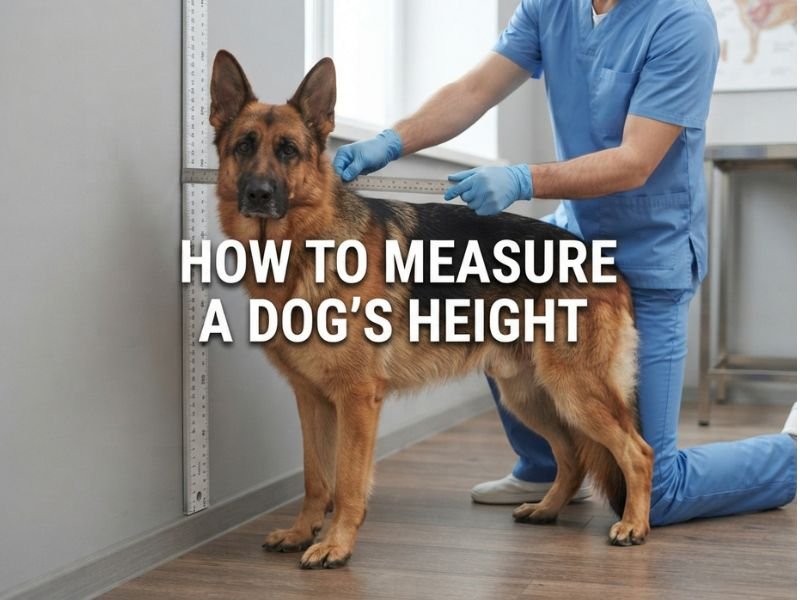
Measure a dog s height from the ground directly upward to the top of the withers while the dog is standing Do not measure to the top of.
For the most dependable result position the dog on a hard level floor with all four feet supporting the body Keep the head in a neutral position avoid.
A single quick measurement can be useful, but taking two or three measurements and recording the closest consistent results helps reveal handling or posture errors.
What dog height means
In dog measurements, height at the withers means the vertical distance between the ground and the highest point of the shoulder area. This point is used because it is more consistent than the top of the head, which can move significantly with the dog’s posture.
Finding the withers
Run your hand gently from the back of the dog’s neck toward the shoulders. You should feel a change in the structure where the neck joins the upper back. The highest point of this area, usually above the shoulder blades, is the withers.
On a short-haired dog, the location may be easy to see and feel. On a long-haired or heavily coated dog, part the hair with your fingers and feel for the underlying structure instead of measuring to the outer coat.
The withers are not always the most obvious bump. A dog may raise or lower its neck, and the shoulder blades may shift slightly with movement. That is why a calm, natural standing position matters.
Height versus length
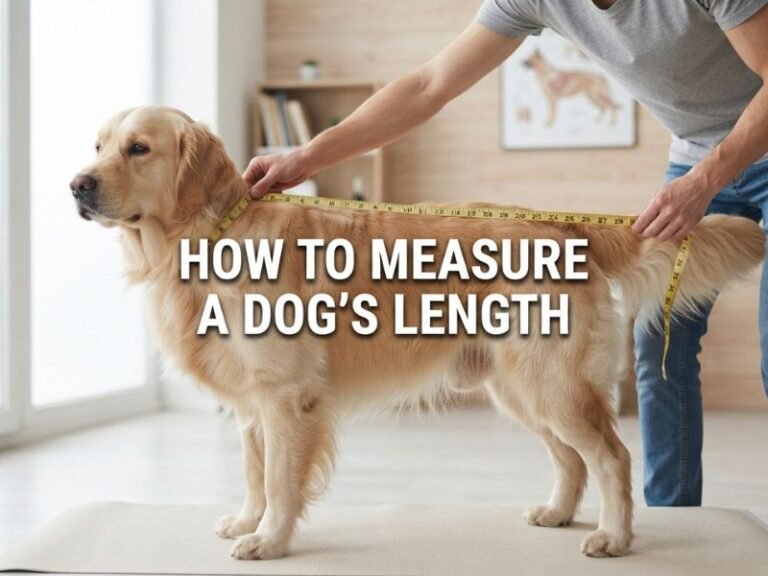
Height is measured vertically from the floor to the withers Body length is a separate measurement usually taken from the front of the chest or shoulder area to.
This distinction matters when selecting a crate, measuring for clothing, completing a veterinary form, or comparing body proportions. A crate must accommodate length and turning space, not height alone. If a seller lists only “dog size,” check which measurement the product actually uses.
What you need before measuring
I recommend gathering the measuring tools first so the dog does not have to stand still while you search for supplies. Most households can get an accurate result with ordinary items.
- A level, hard floor such as tile, wood, or concrete
- A tape measure, yardstick, or rigid ruler
- A flat object with a straight edge, such as a hardcover book or thin piece of cardboard
- A pencil or removable marker for marking a wall
- A helper and a few small treats, if the dog moves or becomes distracted
- Paper or a phone for recording the result
A rigid measuring stick is convenient, but it is not essential. A tape measure works well when it is held vertically and kept reasonably straight. If the tape bends around the dog’s body or angles away from the floor, the reading can be wrong.
Choose a calm location with enough room for the dog to stand comfortably. Avoid thick carpet, soft bedding, or sloped surfaces. These can change foot placement and make the reference point less precise.
Step-by-step method for measuring a dog’s height
1. Let the dog settle
Give the dog a moment to relax before taking the measurement. Excitement can cause a dog to crouch, stretch, spread the front feet, or bounce between positions. A familiar room is often easier than a busy unfamiliar area.
Keep treats nearby, but use them to reward calm standing rather than pulling the dog’s head sharply upward. The goal is a natural posture, not an exaggerated pose.
2. Place the dog on a level surface
Stand the dog on a firm level floor The front feet should point generally forward and the rear feet should rest naturally beneath or slightly behind the hips.
Make sure all four feet are on the same surface. If one foot is on a rug edge or a raised mat, the body may tilt and alter the result.
3. Position the body naturally
Ask a helper to stand in front of the dog and keep its attention at eye level The head should face forward with the neck relaxed Do not.
For a cooperative dog, I would place the front legs roughly beneath the shoulders and allow the hind legs to settle naturally. Avoid pulling the legs into a rigid stance. A comfortable, balanced posture is usually more repeatable than a forced pose.
4. Locate the highest point of the withers
Use your fingers to find the top of the shoulder area On a furry dog separate the coat so you are identifying the body rather than the hair.
If you are unsure, gently move your hand over the area while the dog remains standing. The correct point is typically just behind the base of the neck, where the upper shoulder region rises above the back.
5. Create a horizontal reference
Place a hardcover book carpenter s square or other flat object against the wall so its lower edge touches the withers Keep the object level and perpendicular to.
Do not press hard into the dog’s coat or body. Compression can make the result slightly smaller, while a tilted object can make it larger or smaller depending on the angle.
6. Measure from the floor to the mark
Move the dog away if you marked the wall, then measure from the floor straight up to the mark. Keep the tape or ruler vertical. Record the result in inches, centimeters, or both.
If you use a measuring stick directly beside the dog, read the point level with the withers. Have the helper confirm that the dog has not shifted while you take the reading.
7. Repeat the measurement
Lower the dog’s head, let it relax, and repeat the process. If the measurements differ, check the feet, floor, tape angle, and withers location before choosing a result. Two similar readings are more useful than one unusually high or low number.
For a home record, rounding to the nearest quarter inch or half centimeter is usually practical. For an official competition, registration, or veterinary requirement, follow the organization’s specific instructions instead of assuming that ordinary home rounding is acceptable.
Three practical ways to measure height
The best method depends on the dog’s size, cooperation, and the tools available. Each approach uses the same reference point: the floor to the withers.
Wall-and-book method
This is the most accessible home method. Stand the dog beside a wall, place a flat book across the withers, mark the wall, and measure the mark afterward.
- It is inexpensive and easy to repeat.
- The wall helps keep the reference vertical.
- A helper can focus on the dog while another person marks the wall.
- The book must be level and should not compress the coat excessively.
Leave a small gap between the dog and the wall if necessary. The dog should not lean against the wall, since leaning can change posture and make the shoulder point harder to identify.
Tape-measure method
With a flexible tape measure, have the dog stand still while one person identifies the withers and another measures vertically to the floor. This can work well for a large dog, but the tape should not follow the dog’s body or angle diagonally.
If the dog is tall, measure from the floor to a mark made at the withers rather than trying to hold the tape and identify the point at the same time. A straight edge or helper makes this method more reliable.
Height-measuring stick
A veterinary or grooming height stick has a vertical ruler and a sliding horizontal arm. Place the vertical portion beside the dog, adjust the arm until it rests level with the withers, and read the scale.
This tool is useful for repeated measurements, large dogs, breeders, groomers, and anyone who needs consistent records. It still requires correct posture and accurate identification of the withers; a specialized tool cannot correct a poorly positioned dog.
How posture and coat affect the result
Posture is one of the biggest sources of variation. A dog that is sitting, crouching, stretching forward, or standing with the front legs too far apart may appear shorter or taller than it actually is.
The head position also matters. Raising the head can change the neck and shoulder line, while lowering it can shift the dog’s weight forward. Keep the head at a comfortable, neutral level rather than using a treat to create an exaggerated pose.
Coat length can create a visible difference, particularly in a dog with a dense ruff or thick shoulder hair. Measure the underlying body where possible. Do not flatten the coat aggressively, because the pressure may alter the contact point and make the reading inconsistent.
Breed body structure can make the withers less obvious. Some dogs have a pronounced shoulder ridge; others have a smoother transition from neck to back. Feeling for the skeletal landmark is more dependable than choosing the highest-looking area of the fur.
Measuring puppies and growing dogs
A puppy’s height changes as the skeleton develops, so a measurement is a snapshot rather than a permanent description. Record the puppy’s age, date, surface, and height each time. That context makes later comparisons more meaningful.
Young puppies may not stand still long enough for a perfect measurement. I would prioritize a calm, safe posture over forcing the puppy into position. Take several brief attempts, reward cooperation, and use the most consistent readings rather than chasing a single exact number.
Measure at similar times and in similar conditions if the purpose is to track growth. Differences in floor surface, posture, coat, and handling can look like growth when they are really measurement variation.
For a puppy’s future adult size, height alone is not a guarantee. Genetics, breed type, nutrition, health, and individual development all influence growth. A home height record can show change over time, but it cannot predict adult size with certainty.
Why an accurate height measurement matters
Crate and kennel selection
Height helps determine whether a dog can stand comfortably inside a crate but it should not be the only measurement Measure the dog s body length and width.
For a crate, measure the dog in its normal standing posture rather than adding height from an upright head or alert ears. Then compare the measurements with the manufacturer’s interior dimensions, not only the advertised crate label such as “large” or “extra-large.”
Breed standards and show information
Many breed standards describe height at the withers but the exact measuring procedure can vary by organization or event A home measurement can help you understand a dog.
If the result affects eligibility or registration, check the relevant organization’s rules. Some procedures account for the dog’s age, stance, equipment, or measurement tolerance.
Veterinary and care records
Height can add useful context to a dog’s body measurements, growth history, and general physical description. A veterinarian may also need weight, body condition, body length, or other information, so height should not be treated as a substitute for a professional assessment.
Clothing, mobility gear, and home setup
Height may help when choosing a raised feeder, ramp, car barrier, or other equipment, but manufacturers often require additional measurements. For clothing and harnesses, chest girth, neck size, and back length are usually more important than height.
Common measurement mistakes
- Measuring to the head: Head position and ear carriage vary too much for a dependable height measurement.
- Measuring to the ears: Ears can be upright, folded, cropped, or relaxed, so they are not part of standard height.
- Using an uneven surface: Sloped pavement, thick carpet, and soft beds can change foot placement.
- Allowing the dog to sit: A sitting dog does not provide a valid standing height.
- Holding the tape at an angle: A diagonal line measures more than the true vertical distance.
- Measuring the coat instead of the body: Thick fur can add visible height that is not part of the skeletal measurement.
- Stretching the neck: Pulling a collar or lifting a treat can alter posture and shoulder position.
- Measuring only once: One reading may reflect a step, lean, or shifting stance.
- Comparing different tools without noting them: A wall mark, flexible tape, and height stick may produce slightly different readings.
- Confusing height with crate size: A crate must account for length, width, and comfortable movement as well as height.
How to measure a difficult or uncooperative dog
Some dogs dislike being touched around the shoulders or become nervous beside a wall. In that situation, forcing the measurement can create fear and produce a poor result. I would break the process into smaller steps and reward calm behavior.
First, reward the dog for standing on the selected surface. Next, briefly touch the shoulder area. Then introduce the book, ruler, or measuring stick without placing it on the dog. Once the dog accepts each step, take a quick measurement.
A helper can hold the leash loosely while another person handles the measuring tool. Avoid tightening the leash or pulling the dog into position. A loose leash preserves a more natural stance and reduces the risk of neck extension.
If the dog will not stand still take photographs from the side while it is standing naturally and use a visible reference object of known height This is.
For a fearful painful elderly or mobility-limited dog stop if the process causes distress A veterinarian groomer trainer or experienced handler may be able to help with safer.
Recording and converting the result
Write down the date, dog’s age, measurement, unit, and method. A useful record might say: “April 10, standing on tile, wall-and-book method, 22.5 inches at the withers.” This prevents later confusion between height, length, and an estimate.
To convert inches to centimeters, multiply the inch measurement by 2.54. To convert centimeters to inches, divide the centimeter measurement by 2.54. For example, a dog measuring 20 inches at the withers is approximately 50.8 centimeters tall.
Use the unit requested by the form, organization, or product manufacturer. If no unit is specified, recording both inches and centimeters makes the information easier to use later.
Frequently asked questions
Where exactly do I measure a dog’s height?
Measure vertically from the floor to the highest point of the withers where the neck meets the shoulders Do not measure to the top of the head ears.
Should a dog’s head be up or down during measurement?
The head should remain in a neutral, comfortable position, facing forward. Do not pull the head upward or force the neck downward. An exaggerated head position can change the dog’s balance and make the height measurement less consistent.
Can I measure my dog while it is sitting?
No. A sitting dog does not provide a standard standing height. Wait until the dog is standing naturally with all four feet on the floor. If the dog repeatedly sits, have a helper hold its attention forward and reward brief standing periods.
Is measuring to the top of the ears ever correct?
Not for standard dog height. Ear position varies with breed, alertness, cropping, and mood. The withers provide the consistent anatomical reference used for height measurements.
How accurate is the wall-and-book method?
The wall-and-book method can provide a useful home measurement when the floor is level, the dog stands naturally, and the book is horizontal. Its accuracy depends on finding the withers and keeping the reference straight. Repeat the measurement to confirm the result.
What if my dog has very long or thick fur?
Part the fur and locate the highest point of the shoulder structure underneath Rest the flat object gently against that point without pressing deeply into the coat If.
Do I measure a puppy differently from an adult dog?
The reference point is the same: floor to the withers while standing. Puppies are simply harder to position and are still growing. Take several calm measurements, record the date and age, and avoid treating one reading as a prediction of final adult height.
What is the difference between dog height and dog length?
Dog height is the vertical distance from the floor to the withers Dog length is a horizontal body measurement commonly taken from the front of the chest or.
Why do my two measurements differ?
Differences commonly result from a changed stance, head position, tape angle, uneven floor, coat thickness, or an incorrect withers location. Let the dog relax, check the feet, and repeat the process. A pair of closely matching measurements is more trustworthy than a single reading.
Do official dog shows use the same home method?
The basic reference is generally the withers, but official organizations may specify equipment, stance, timing, and acceptable procedures. A home measurement is useful for an estimate, while an official result must follow the rules of the organization conducting the measurement.
Conclusion
The most reliable way to learn how to measure a dog’s height is to place the dog naturally on a level surface and measure straight from the floor.