How to Brush a Cat That Hates It: A Practical Step-by-Step Guide
A cat that swats, hides, growls, or bites during grooming is usually communicating discomfort rather than being “bad.” Brushing can feel threatening when a cat is unsure of the tool, sensitive in certain areas, or already dealing with mats, pain, or a stressful handling history.
The safest way to learn how to brush a cat that hates it is to stop treating brushing as a single chore. I recommend breaking it into small, predictable steps that teach the cat that the brush does not always lead to restraint or discomfort. The process below explains how to choose equipment, identify warning signs, build cooperation, handle mats, and know when a veterinarian or professional groomer should take over.
Why Some Cats Hate Brushing
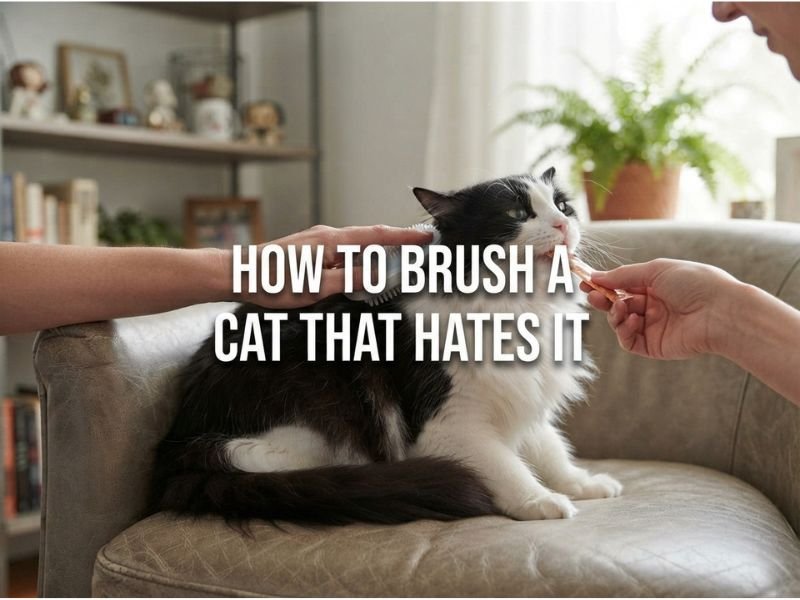
A cat may resist brushing for several different reasons, and the reason matters. A long-haired cat with painful tangles may react to the brush because each stroke pulls the skin. Another cat may dislike the sound or sensation of a slicker brush, while a short-haired cat may simply have no positive history with grooming.
Common causes of brushing resistance include:
- Painful mats or tangles that pull at the skin.
- Skin irritation, fleas, allergies, wounds, or inflammation.
- Arthritis or another condition that makes handling uncomfortable.
- Fear of restraint, unfamiliar tools, or sudden movement.
- Overstimulation, especially around the belly, legs, tail, and hips.
- A previous grooming experience that involved force or accidental pulling.
Breed and coat type also affect the experience. Long, dense, or curly coats generally need more frequent grooming and can mat quickly. Short-haired cats often need less brushing, but they can still dislike it if the tool scratches or if brushing continues after they have signaled “stop.”
I would not assume that a dramatic reaction is purely behavioral. If a cat that previously tolerated brushing suddenly becomes aggressive, arrange a veterinary examination before trying to train through it. A sudden change can point to pain or illness.
Safety Comes Before a Smooth Coat
Do not force a frightened cat through a full grooming session. Holding a cat down, chasing it with a brush, or continuing while it hisses can increase fear and make future sessions harder. It also raises the risk of scratches, bites, and coat damage.
Stop immediately if the cat shows escalating stress, such as:
- Flattened ears, a tucked body, or a rapidly lashing tail.
- Growling, hissing, repeated swatting, or attempts to escape.
- Dilated pupils, fast breathing, trembling, or freezing in place.
- Skin twitching, sudden biting, or intense licking at the brushed area.
A brief warning signal is useful information. I prefer to end the session while the cat is still manageable rather than wait for a bite. Give the cat space, remove the brush, and try again later at an easier step.
Never give a cat a human sedative, pain reliever, or calming medication without veterinary direction. If grooming is medically necessary and the cat cannot safely cooperate, a veterinarian can discuss appropriate handling, sedation, or treatment options.
Choose a Brush the Cat Can Tolerate
The best brush is not necessarily the one marketed for the cat’s coat. It is the tool that removes loose hair without scratching, snagging, or creating excessive pressure.
Useful brush options
- Rubber grooming mitt: A gentle starting option for cats that dislike rigid tools. It collects loose hair while feeling more like petting.
- Soft-bristle brush: Often suitable for short-haired cats and early desensitization.
- Metal comb: Helpful for checking for small tangles and working through parts of a longer coat. Rounded, smooth teeth are preferable.
- Slicker brush: Useful for some medium- and long-haired coats, but the pins can feel sharp if pressed too hard.
- Undercoat tool: Best used carefully and only when appropriate for the coat. Repeated aggressive use can irritate skin and remove too much hair.
For a nervous cat, I usually start with the least intense tool that can still make contact comfortably. A grooming mitt or soft brush may be a training tool even if a comb will eventually be needed for coat maintenance.
Inspect the brush before each use. Bent pins, rough edges, broken teeth, or trapped hair can make an otherwise good tool painful. Avoid scissors near the skin. Cat mats can pull the skin upward, making it easy to cut skin accidentally. Clippers and severe mats are best handled by a trained professional.
How to Brush a Cat That Hates It: A Gradual Process
The goal is not to complete a grooming job on the first attempt. The goal is to change the cat’s prediction from “the brush causes trouble” to “the brush appears briefly, nothing painful happens, and good things follow.” I recommend progressing only when the cat remains relaxed at the current step.
1. Check the coat and the cat’s health
Before training, look over the coat in good light. Check for mats, scabs, redness, fleas, bald patches, swelling, discharge, or a painful reaction to touch. Run your eyes over the neck, armpits, belly, groin, rump, and behind the ears because these areas commonly tangle.
If you find large mats, skin that looks irritated, or a cat that reacts strongly to gentle touch, pause home brushing. A veterinarian can identify medical problems, and a professional groomer can remove difficult mats more safely.
2. Pick a calm time and location
Choose a quiet room with a stable surface and an easy escape route. Avoid starting when the cat is hungry, highly energetic, hiding, or already upset. A naturally sleepy period may be easier, but do not wake or corner the cat for grooming.
Have the brush and small treats ready before inviting the cat over. Keep the first sessions short enough that the cat does not feel trapped. I would rather end after ten successful seconds than push for five stressful minutes.
3. Create a positive association with the brush
Place the brush on the floor several feet away and let the cat notice it without pressure. Reward calm looking, sniffing, or walking near it. Pick up the brush, offer a treat, and put it down. Repeat until the tool itself no longer predicts restraint.
Do not wave the brush toward the face or follow the cat with it. The cat should be able to move away. Choice is important because voluntary approach builds confidence more effectively than forced exposure.
4. Start with a familiar touch
Use your hand to pet an area the cat already enjoys, such as the cheek, shoulder, or upper back. After a few comfortable strokes, briefly touch the same area with the back of the brush or a very soft section. Reward immediately, then stop.
At this stage, the brush may touch the coat without making a full stroke. The cat is learning that contact is brief and predictable. If the cat stiffens, flicks the tail, or turns sharply toward the tool, return to hand petting or end the session.
5. Add one gentle stroke
Once the cat accepts brief contact, make one slow stroke in the direction the hair grows. Follow it with a treat or another reward the cat values. Wait before attempting a second stroke.
Keep the brush flat and use light pressure. Brushing from the skin outward with force can tug on the roots, especially where loose hair or small tangles are present. Avoid repeatedly brushing the same spot during early sessions.
6. Increase duration slowly
Add only a few seconds or one or two strokes at a time. A useful progression might be one touch, one stroke, two strokes, a small section, and eventually a short grooming session. The correct pace depends on the cat, not on a calendar.
Reward during the process rather than waiting until the end. For some cats, a lickable treat, food puzzle, or spoon of wet food can keep the experience positive. Make sure the reward does not require the cat to be held in place.
7. Introduce new body areas carefully
Most cats have preferred and disliked areas. Move from easy locations to more sensitive ones. The shoulders and upper back are often simpler starting points than the belly, feet, tail, or hind legs.
Use a separate training stage for each difficult area. For example, touch the side of a hind leg with your hand, reward, and stop. Later, touch it with the brush. Do not suddenly lift a paw or roll the cat onto its back to reach the belly.
8. End while the cat is still successful
Finish after a calm response, even if the coat is not completely brushed. Offer a final reward and allow the cat to leave. Ending predictably helps preserve trust and gives the next session a better starting point.
Several short sessions each week are usually more productive than one long session that ends in fear. For a cat with a dense coat, the long-term aim is frequent maintenance, but the training phase should remain brief and manageable.
How to Handle Mats and Tangles
A mat is a compacted section of hair that can pull continuously on the skin. Small, loose tangles may sometimes be separated with a comb, but a tight mat should not be treated as an ordinary brushing problem.
For a small, loose tangle
- Hold the coat close to the skin without squeezing the skin itself. This reduces pulling.
- Use your fingers to loosen the outer edges of the tangle.
- Work from the ends of the hair toward the skin with a wide-toothed comb.
- Use tiny movements and stop if the cat shows discomfort.
Do not yank through a knot. Do not spray human hair products onto the coat, and do not use oils or detanglers unless a veterinarian or groomer confirms that the product is safe for cats.
For tight or widespread mats
Large mats, mats close to the skin, and mats in sensitive areas should be evaluated by a veterinarian or experienced cat groomer. The skin beneath a mat may be inflamed, wounded, infected, or thinner than expected. A professional can use appropriate clippers and handling methods.
Never use household scissors to cut a mat off a cat. The skin often rises into the tangled hair, and a sudden movement can cause a serious laceration. If the cat is aggressive because the mat hurts, attempting removal at home can harm both the cat and the person handling it.
Rewards and Handling Techniques That Help
Rewards work best when they are immediate, small, and genuinely valuable to the individual cat. Some cats prefer a soft treat, while others respond better to wet food, play, praise, or access to a favorite resting place.
I recommend pairing one calm grooming action with one reward. For example, touch the shoulder with the brush, offer a treat, and pause. This makes the timing clear. If treats are used continuously, watch portion sizes and account for them in the cat’s daily diet.
A non-slip mat can make the grooming surface feel more secure. Keep one hand available to steady the coat or offer gentle support, but avoid gripping the neck, pinning the body, or restraining the legs unless a trained professional is directing the handling.
Some cats tolerate brushing better while standing on the floor than on a table. Others prefer a lap, provided they can leave. I would test the cat’s comfort without trapping it and keep the environment quiet. A familiar towel may provide traction, but it should never be wrapped tightly around the body as a home restraint method.
Common Mistakes That Make Brushing Worse
Starting with the worst area
Beginning with a belly, tail, or severely matted patch creates a difficult first lesson. Start with a comfortable area and build a history of easy interactions before approaching sensitive locations.
Brushing too hard or too fast
Fast, forceful strokes can scratch the skin and pull loose hair. Slow movement and light pressure are safer. If the brush cannot pass through the coat gently, the coat may need a different tool or professional attention.
Using one brush for every coat
A short-haired cat may need only a soft brush or grooming mitt, while a long-haired cat may require a comb and more regular maintenance. A tool that works for one coat can be uncomfortable or ineffective on another.
Ignoring early body language
A tail flick or skin twitch is often an early request for a pause. Waiting for a hiss teaches the cat that subtle signals do not work. Responding early helps prevent escalation.
Trying to finish the entire cat
Complete coverage is not the right goal during training. One comfortable area is a successful session. I would prioritize trust and repeatability over a perfectly groomed coat on a single day.
Chasing the cat with the brush
Following a cat under furniture or around the room turns the brush into a threat. Put the tool away, let the cat settle, and restart later with a less demanding step.
How Often Should a Resistant Cat Be Brushed?
The ideal schedule depends on coat length, density, shedding, age, activity, and the cat’s ability to groom independently. Long-haired and heavily coated cats generally need more frequent attention because tangles can form quickly. Short-haired cats may need only occasional brushing to remove loose hair and check the skin.
For a cat that strongly resists grooming, training sessions can occur frequently but should remain very short. A few calm repetitions are more useful than an exhausting session. Once the cat accepts brushing, increase maintenance gradually and inspect commonly matted areas between sessions.
Older, overweight, arthritic, or ill cats may need extra help because they cannot reach every part of the coat. However, those same cats may be more sensitive to handling. If grooming appears painful, address the underlying health issue rather than simply increasing brushing frequency.
When a Veterinarian or Groomer Should Help
Professional help is appropriate when the coat is severely matted, the cat cannot be handled safely, or brushing reveals a health concern. A veterinarian should assess persistent pain, skin lesions, hair loss, excessive scratching, repeated biting, or a sudden change in grooming tolerance.
Ask a professional groomer about their experience with cats, especially fearful or aggressive cats. A suitable groomer should explain the planned handling approach, avoid unnecessary force, and tell you when veterinary support is needed.
Veterinary involvement may be necessary for a cat that requires sedation for safe mat removal or treatment. Sedation is not a shortcut for ordinary training, but it can be the safest option when a painful coat condition or severe fear makes home grooming dangerous. The veterinarian should make that decision after considering the cat’s health.
FAQ: Brushing a Cat That Hates It
How can I brush a cat that attacks the brush?
Stop using the brush during the attack and do not punish the cat. Start again later by placing the brush at a distance, rewarding calm behavior, and gradually bringing it closer. If the cat reacts even to gentle touch, have a veterinarian check for pain before continuing.
Should I hold my cat still while brushing?
Use only gentle support that keeps the cat stable and allows an easy retreat. Do not pin the cat down, hold the scruff, or force the legs into position. Restraint can increase fear and may provoke a bite.
What is the gentlest brush for a cat that hates grooming?
A rubber grooming mitt or soft-bristle brush is often a reasonable starting point because it produces less scratching and pulling than a stiff tool. The best choice still depends on the coat and the cat’s reaction. Test the tool with one brief touch rather than assuming the cat will tolerate it.
How do I brush a cat with mats if the cat will not cooperate?
Do not cut mats with scissors or forcefully comb tight knots. Small, loose tangles may be loosened from the ends with a comb while supporting the coat near the skin. Tight, extensive, or painful mats should be removed by a veterinarian or qualified cat groomer.
Can treats teach a cat to tolerate brushing?
Yes, treats can create a positive association when they are delivered immediately after calm contact or a gentle stroke. They do not make it safe to ignore fear or pain. Keep sessions brief and stop before the cat becomes distressed.
How long should a brushing session last?
For a highly resistant cat, begin with seconds rather than minutes. End after a calm response and gradually add time over multiple sessions. A short, successful session is better than brushing until the cat struggles.
Why does my cat tolerate petting but not brushing?
A brush can create pressure, noise, static, snagging, or a different sensation from a hand. Petting also lets the cat control the interaction more easily. Start by pairing the brush with familiar petting and use a softer tool with less pressure.
What should I do if my cat bites me during grooming?
Stop immediately, give the cat space, and wash any bite thoroughly. Cat bites can become infected, particularly if the skin is punctured, so seek medical advice promptly for a deep bite, increasing redness, swelling, pain, drainage, or fever. Reassess the grooming plan with a veterinarian or behavior professional.
Conclusion
Learning how to brush a cat that hates it starts with safety, a suitable tool, and very small steps. I recommend checking for pain or mats first, rewarding calm behavior, beginning with one gentle stroke, and ending before the cat feels trapped. With patience, many cats can learn to accept routine grooming; when fear, pain, or severe mats make home care unsafe, professional help is the kinder and safer choice.