How to Brush a Long-Haired Cat: Practical Steps and Helpful Tips
A neglected coat can turn from soft and manageable to painful in a surprisingly short time. Loose fur collects around the legs, belly, and armpits, while small tangles tighten against the skin. If brushing becomes a struggle, a cat may begin hiding, scratching, or avoiding touch altogether.
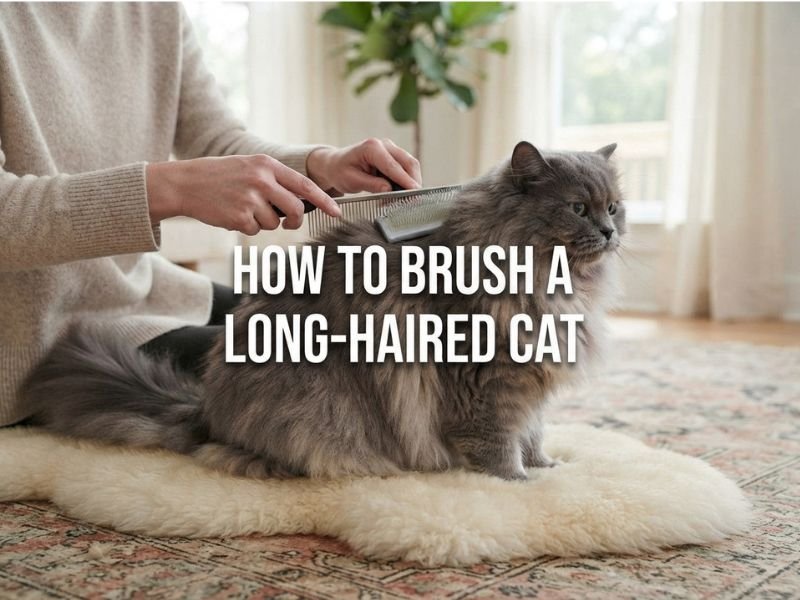
Learning how to brush a long-haired cat carefully helps prevent mats, reduce swallowed fur, and make grooming less stressful. The goal is not to rush through every strand in one session. I recommend using the right tool, working in small sections, and stopping before your cat becomes overwhelmed.
Below, I explain how to prepare, which brush to choose, how to handle sensitive areas and mats, how often to groom, and when a veterinarian or professional groomer should take over.
Why Long-Haired Cats Need Regular Brushing
Long-haired cats have more coat volume and longer individual hairs than short-haired cats. Loose hairs can remain trapped in the coat instead of falling away naturally. Friction then causes neighboring hairs to twist together, creating tangles and eventually mats.
A mat is a compacted mass of fur that can pull on the skin with every movement. Large mats may hide redness, moisture, wounds, fleas, or other skin problems. Mats are especially common behind the ears, under the front legs, around the collar area, on the chest, across the belly, and near the hind legs.
Routine brushing can help you:
- Remove loose undercoat and surface debris.
- Find tangles, parasites, skin changes, or sore areas early.
- Reduce the amount of fur a cat swallows while self-grooming.
- Limit hairballs for some cats, although brushing cannot prevent every hairball.
- Keep the coat separated, airy, and easier to inspect.
- Build a predictable handling routine that may make nail trims and veterinary examinations easier.
Brushing does not replace veterinary care. It also does not mean every cat needs an aggressive de-shedding session. The safest routine depends on the cat’s coat type, age, health, tolerance, and current condition.
Choose the Right Grooming Tools
A small set of suitable tools is usually more useful than a large collection of specialized products. I would begin with a wide-toothed comb, a gentle slicker brush, and a soft bristle brush. Keep treats nearby and use a stable surface with good lighting.
Wide-toothed comb
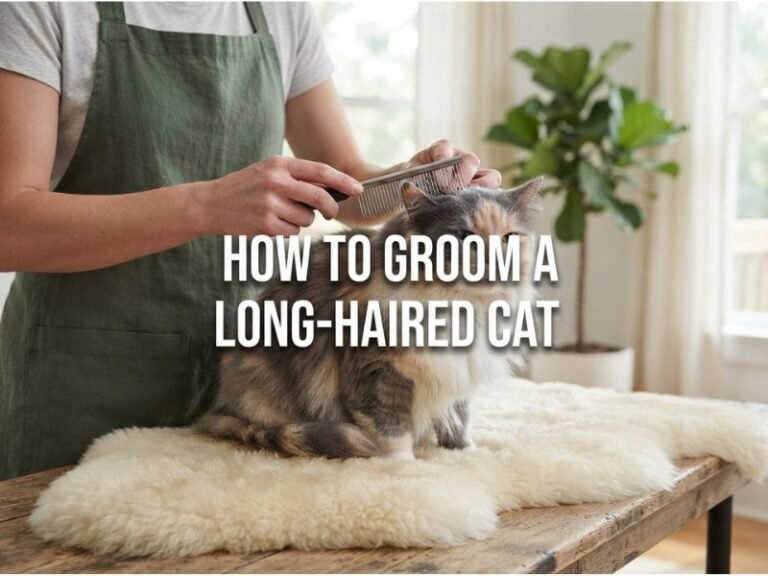
A metal comb with widely spaced teeth is helpful for checking whether the coat is actually tangle-free. It can reach through longer fur more predictably than a soft brush. Use it gently, especially over the skin and in areas where the coat is thin.
Slicker brush
A slicker brush has fine, angled pins and can lift loose fur and separate mild tangles. Choose a cat-sized brush with flexible or rounded-tipped pins. Pressing hard with a stiff slicker can scratch the skin, break hair, or make brushing painful.
Soft bristle brush
A soft bristle brush is useful for finishing the coat and removing surface hair. Many cats tolerate it well, so it can be a good introductory tool. It is not usually enough to work through dense undercoat or serious tangles by itself.
Other useful supplies
- A towel or nonslip mat for the grooming surface.
- Small, high-value treats for calm cooperation.
- A spray bottle only if it contains plain water and is used to lightly dampen your fingers or the coat—not to startle the cat.
- A bright lamp or natural light for inspecting the skin.
- Cat-safe grooming wipes for occasional surface dirt, if your veterinarian approves the product.
Avoid scissors near the skin. A cat can move suddenly, and a tight mat may pull the skin upward into the cutting path. Avoid human hair brushes, harsh detangling products, and dog products that contain ingredients unsafe for cats. If a mat cannot be separated easily with your fingers and a comb, professional clipping is safer.
Prepare Your Cat Before Brushing
Brushing works best when the cat is calm, alert, and not already trying to escape. Pick a quiet room away from loud appliances, children, or other pets. A familiar chair, countertop with a nonslip mat, or floor area can work, provided you can maintain control without restraining the cat forcefully.
Let your cat investigate the tools before using them. Place a brush nearby, offer a treat, and allow a few minutes of relaxed contact. I prefer starting with a brief touch from my hand, followed by a treat, before introducing the brush. This helps the cat associate grooming with predictable, low-pressure interaction.
Do not begin immediately after a stressful event, vigorous play session, or meal if your cat dislikes handling at those times. Watch the body language. A relaxed cat may have a loose posture, normal breathing, forward or neutral ears, and a gently moving tail. Warning signs include flattened ears, a rapidly flicking tail, tense muscles, growling, hissing, swatting, or repeated attempts to leave.
End the session while the cat is still coping. A one-minute successful session is more useful than a fifteen-minute struggle that makes future brushing harder.
How to Brush a Long-Haired Cat: Step-by-Step
1. Start in an easy, comfortable area
Begin where your cat already accepts touch, such as the shoulders, back, or side of the neck. Avoid starting with the belly, tail, feet, or a visible mat. Use slow strokes in the direction the fur grows, and keep the brush light enough that it does not drag the skin.
After a few strokes, pause and offer a small treat. If your cat remains relaxed, continue for a little longer. I would rather cover one calm section thoroughly than force a complete grooming session in one attempt.
2. Separate the coat into small sections
Long fur can hide tangles beneath the surface, so work methodically. Use your fingers or the end of a comb to part the hair into sections about an inch or two wide. Hold the hair close to the skin with one hand and brush the outer portion with the other. This reduces pulling at the roots.
Brush from the skin outward in short, controlled strokes. Do not repeatedly skim only the top layer. Once a section feels smooth, pass a wide-toothed comb through it. If the comb catches, stop and investigate rather than pulling through resistance.
3. Work from the easier coat to the more sensitive areas
Move gradually from the back and shoulders to the sides, chest, hindquarters, and legs. Save the belly, armpits, tail, and feet for later because these areas are often more sensitive. Some cats accept only a few strokes in those locations, and that can be normal.
Keep one hand available to steady the body without pinning it down. If your cat shifts position, allow the movement when possible. A cat that feels trapped may resist more strongly, and sudden resistance increases the risk of a scratch or painful tug.
4. Use the comb to check your work
After using the slicker brush, run the wide-toothed comb through the section. The comb should pass from the coat toward the ends without catching. For a dense coat, repeat the process in layers: separate a small amount of hair, brush it, then check it with the comb.
Do not assume that a smooth-looking surface means the entire coat is clear. The undercoat can tangle close to the skin, particularly during seasonal shedding. A gentle comb-through is one of the best ways to find hidden knots before they become mats.
5. Finish with a calm reward
Stop before your cat becomes restless. Give a treat, praise in a voice your cat likes, and put the tools away. A consistent ending makes the next session easier to predict. If your cat walks away calmly, let the session be over instead of calling the cat back for “just one more spot.”
How to Brush Sensitive Areas
Behind the ears
The fine hair behind the ears can knot quickly. Support the ear gently without folding or pulling it. Use your fingers to feel for small tangles, then work at the ends of the hair with a comb. Keep strokes brief, since the area is sensitive and the skin is delicate.
Armpits and chest
The front legs rub against the body, making the armpits a common matting area. Lift the leg only as far as your cat comfortably allows. Hold the fur near the skin to reduce tension, and use small strokes from the tips toward the outer edge of the coat. Never force the leg into an unusual position.
Belly
Many cats dislike belly grooming because it exposes a vulnerable part of the body. Brush only when your cat is relaxed and positioned voluntarily. A few gentle strokes at a time may be enough. If the belly is heavily tangled, painful, or impossible to reach safely, a groomer or veterinarian should handle it.
Hind legs and tail
Fur around the thighs, hocks, and base of the tail can collect litter, feces, and oil. Inspect these areas regularly. Brush the tail from the base toward the tip only when your cat accepts it, supporting the hair rather than yanking through it. If debris is stuck to the fur, do not pull; soften or remove it according to veterinary guidance.
How to Handle Tangles and Mats
A small, loose tangle may be manageable at home. First, separate the surrounding hair so you can see the knot. Hold the fur between the mat and the skin, then use your fingers to loosen the outer edges. Work from the ends toward the roots with a comb, using tiny movements rather than long, forceful pulls.
A cat-safe detangling product may help with some minor knots, but read the label carefully and avoid products containing essential oils or ingredients not approved for cats. Never saturate the coat with a product your cat could ingest while grooming.
Stop home treatment if the mat is tight, broad, close to the skin, wet, dirty, inflamed, or causing pain. Also stop if your cat becomes distressed. Tight mats may need electric clippers used by a trained professional. Scissors are particularly dangerous because cat skin can be pulled into a mat and cut without warning.
Do not bathe a severely matted cat before removing the mats. Water can tighten compacted fur and make the problem more difficult. A veterinarian may be needed if the cat has painful skin, embedded debris, parasites, wounds, or extensive matting that requires sedation for safe removal.
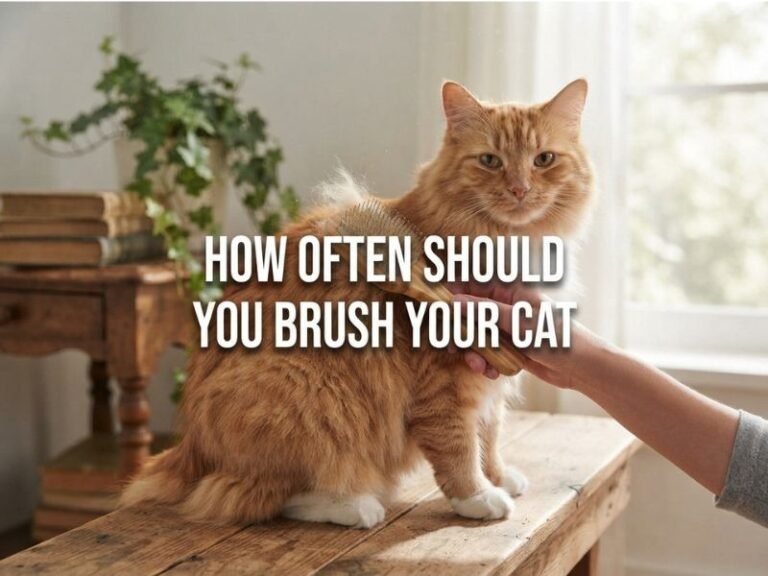
How Often Should a Long-Haired Cat Be Brushed?
Many long-haired cats benefit from brushing daily or every other day, especially when the coat is dense or the cat is shedding heavily. Cats with a finer, less dense coat may stay comfortable with several sessions per week. The correct schedule is the one that keeps the comb moving through the coat without resistance.
Increase attention during periods of heavier shedding, but do not respond by pressing harder or using a de-shedding tool aggressively. More frequent gentle sessions are usually preferable to occasional, intense grooming. A cat that mats easily may need a short daily routine focused on problem areas.
Use the coat itself as feedback. If you find new tangles between sessions, brush more often or inspect hidden areas more carefully. If the skin looks irritated, the cat resists touch, or the coat becomes thin from excessive brushing, reduce pressure and ask a veterinary professional for advice.
| Coat or situation | Practical starting schedule |
|---|---|
| Fine, flowing long coat | Several gentle sessions each week |
| Dense undercoat or frequent matting | Daily inspection and regular brushing |
| Heavy seasonal shedding | Shorter sessions more often |
| Existing widespread mats | Professional assessment before a normal routine |
Common Brushing Mistakes to Avoid
- Starting with a difficult area: Beginning at the belly or a painful mat can make the cat distrust every future session.
- Pulling through resistance: A brush should not be used like a rake. Stop when it catches and identify the tangle.
- Using too much pressure: The skin of a cat is delicate, and repeated scraping can cause irritation or tiny injuries.
- Brushing only the visible topcoat: Hidden undercoat can mat close to the skin even when the surface looks neat.
- Trying to finish at any cost: Stress and restraint can create defensive behavior and make grooming unsafe.
- Cutting mats with household scissors: This can cause serious skin lacerations.
- Ignoring sudden coat changes: New matting, greasy fur, dandruff, excessive licking, or bald spots may signal a medical problem.
- Using human or dog grooming products casually: Cats may ingest residue, and some ingredients are not safe for feline use.
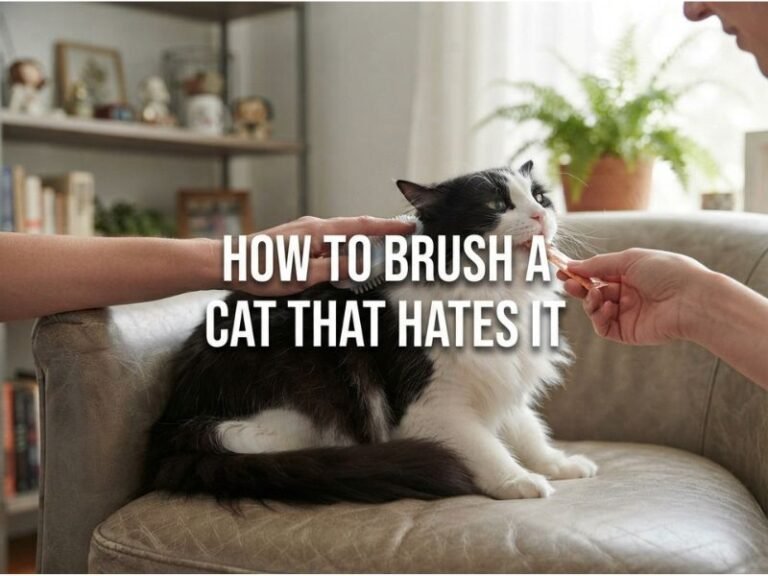
Helping a Cat That Hates Brushing
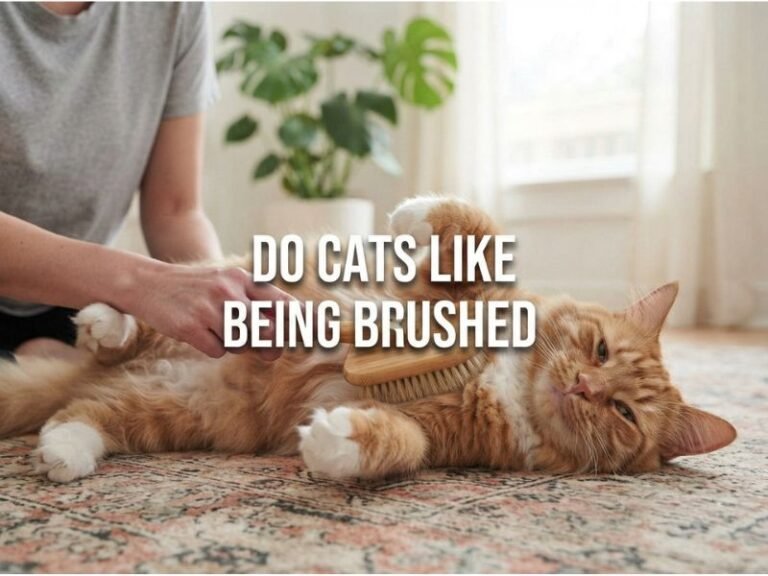
A strong reaction does not always mean the cat can never be groomed. It may mean the sessions are too long, the tool is uncomfortable, or the cat has learned that brushing predicts restraint. Reset the routine with very small steps.
- Place the brush nearby without touching your cat.
- Reward calm behavior with a treat.
- Touch the shoulder with the back of the brush.
- Give another reward and stop.
- Gradually increase to one or two normal strokes.
Repeat each step until your cat appears comfortable before advancing. Keep your voice calm and movements predictable. Some cats prefer brushing while standing, while others tolerate it on a lap or beside a favorite resting spot.
If your cat bites, scratches, panics, or shows pain, do not continue the training session. A veterinarian can check for arthritis, skin disease, wounds, or other conditions that make handling uncomfortable. A professional behavior consultant may also help with severe grooming fear.
When to Call a Veterinarian or Groomer
Professional help is appropriate when mats cover a large area, sit tightly against the skin, or cannot be loosened without force. It is also important when the skin underneath is red, bleeding, swollen, moist, foul-smelling, or obviously painful.
Ask a veterinarian about unexplained changes such as sudden poor grooming, repeated scratching, excessive licking, bald patches, dandruff, greasy fur, or frequent hairballs. A cat that stops grooming may be experiencing pain, reduced mobility, dental disease, obesity-related difficulty reaching the coat, or another health issue.
A qualified cat groomer can remove mats safely and suggest a maintenance schedule. For a severely matted or highly distressed cat, veterinary supervision may be safer than attempting removal at home. Never give a sedative or calming medication unless it was prescribed specifically for your cat and used exactly as directed.
Frequently Asked Questions
Should I brush a long-haired cat wet or dry?
Brush the coat dry in most situations. Wetting a matted coat can tighten the knots and make them harder to remove. If a small loose tangle needs help, a cat-safe product or slightly damp fingers may be appropriate, but extensive matting should be assessed by a professional.
Should I use a slicker brush or a comb first?
A common approach is to use a gentle slicker brush to lift loose hair and separate mild tangles, then use a wide-toothed comb to check the coat. For a very fine coat or a sensitive cat, start with the comb or a soft bristle brush. The best sequence is the one that removes hair without pulling or irritating the skin.
How can I tell if a tangle is too severe to brush out?
A tangle is too severe for routine home brushing if it is tight against the skin, broad, painful, wet, dirty, inflamed, or resistant to gentle finger separation. If your cat reacts strongly or you cannot see where the skin ends and the mat begins, stop and contact a groomer or veterinarian.
Can I cut a mat out with scissors?
No. Cat skin can become tightly folded into a mat, and a sudden movement can lead to a deep cut. Electric clippers used by a trained professional are safer. Do not attempt to cut close to the skin with household scissors.
How long should a brushing session last?
There is no required number of minutes. A calm, short session is better than a long stressful one. Start with a few strokes and gradually increase the time as your cat accepts the routine. Some cats need several brief sessions to cover the entire coat.
Why does my long-haired cat still get mats after brushing?
Mats can form when brushing does not reach the undercoat, when the schedule is too infrequent, or when friction causes tangles in areas such as the armpits and hindquarters. Medical problems, reduced mobility, obesity, and a cat’s inability to groom effectively can also contribute. Check hidden areas with a comb and ask a veterinarian about sudden or persistent matting.
Is daily brushing necessary for every long-haired cat?
No. Coat density, hair texture, shedding, age, health, and matting tendency all matter. Some cats need daily attention, while others remain comfortable with several sessions per week. Regular comb checks will show whether the schedule is working.
Conclusion
The safest approach to how to brush a long-haired cat is gentle, gradual, and consistent: choose suitable tools, work in small sections, check the undercoat with a comb, and stop before grooming becomes a fight. Minor tangles may respond to careful home care, but painful or extensive mats belong with a veterinarian or qualified groomer. A calm routine protects the coat while preserving your cat’s trust.