To protect a dog’s injured paw, gently clean the area, control minor bleeding, cover it with an appropriate nonstick dressing when needed, keep the dressing clean and dry, restrict activity, and monitor the paw closely. Deep wounds, severe bleeding, suspected fractures, embedded objects, significant swelling, or worsening pain require veterinary care.
For dog owners in the United States, a minor paw injury can often be protected temporarily with basic first-aid supplies while you arrange veterinary advice. A paw injury can become worse when a dog repeatedly licks it, walks on a damaged pad, or gets a dressing wet and dirty. Protection should therefore focus on preventing contamination and additional trauma without making the bandage tight.
The right approach depends on the injury. A superficial scrape is different from a puncture wound, torn nail, deep cut, burn, or suspected fracture. If you cannot confidently determine that the injury is minor, veterinary assessment is the safer choice.
Source: i5.walmartimages.com
Assess the Paw Before You Try to Protect It
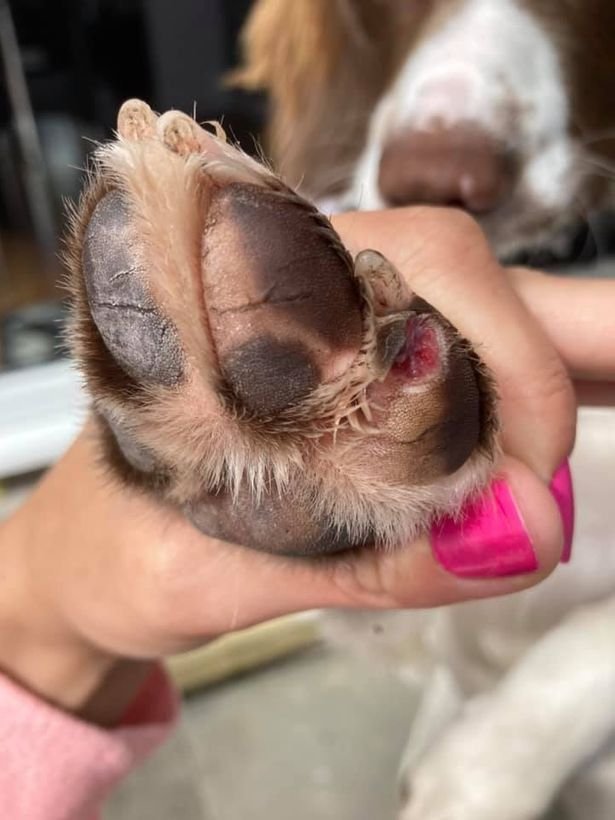
Start by determining whether the injury appears minor enough for temporary home protection. Look at the paw without forcing the dog to tolerate painful handling. Check the pads, nails, spaces between the toes, and visible skin for cuts, abrasions, swelling, bleeding, punctures, or foreign material.
Do not probe deeply into a wound or pull out an object that appears embedded. A painful dog may also bite even if normally gentle, so use caution when examining the paw.
Source: m.media-amazon.com
Usually suitable for temporary protection
A small superficial scrape or minor abrasion with limited bleeding may be protected while you monitor the dog and seek veterinary guidance when appropriate.
Needs veterinary assessment
Deep or gaping wounds, punctures, suspected fractures, severe swelling, significant burns, persistent bleeding, exposed tissue, or an embedded foreign object should be assessed by a veterinarian.
Watch for infection
Increasing redness, swelling, heat, discharge, foul odor, worsening pain, or persistent licking can indicate a complication requiring veterinary attention.
When a Dog’s Paw Injury Is an Emergency
Contact a veterinarian promptly if bleeding does not stop with gentle, continuous pressure, if the dog cannot bear weight, or if the paw has an abnormal shape. Injuries caused by bites, punctures, significant burns, or crushing forces also deserve professional assessment because damage beneath the surface may be greater than it appears.
Severe bleeding
Seek urgent veterinary help when bleeding is heavy or does not respond to appropriate first-aid pressure.
Suspected fracture or dislocation
Do not attempt to straighten or manipulate the limb. Keep the dog as still as practical and contact a veterinarian.
Clean and Cover a Minor Paw Injury Safely
For a minor, superficial injury, gently rinse away visible dirt with clean water or sterile saline. Avoid aggressive scrubbing because damaged tissue can be irritated by friction. Pat the surrounding area dry rather than rubbing the wound.
If the injury needs protection from contamination or rubbing, place a sterile nonstick dressing over it. A veterinarian can advise whether the wound should remain covered and what type of dressing is appropriate.
Source: metlifepetinsurance.com
Use clean materials
Have clean gauze or a nonstick sterile dressing available before handling the wound.
Avoid harsh chemicals unless directed
Do not routinely pour household disinfectants, concentrated antiseptics, alcohol, or hydrogen peroxide onto an open wound unless a veterinarian specifically instructs you to do so.
Prevent licking
A properly fitted protective collar may be more reliable than repeatedly replacing a dressing that the dog keeps chewing or removing.
How to Apply a Paw Dressing Without Making It Too Tight
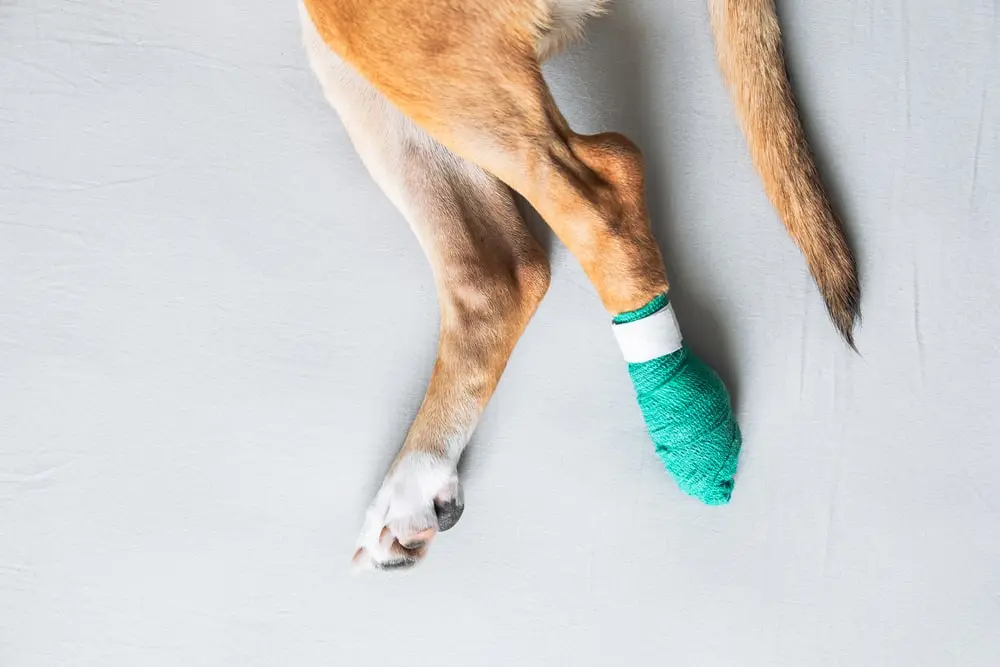
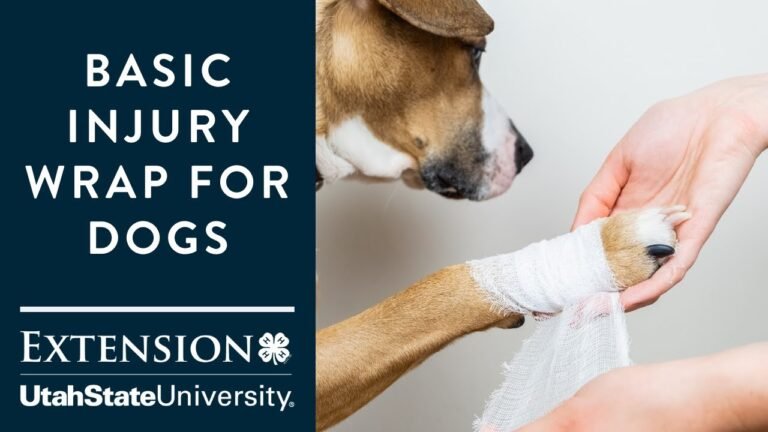
If a veterinarian has recommended a bandage, place the dressing over the injured area and secure it with appropriate bandaging material. The bandage should protect the wound without restricting circulation. Because paw bandaging can cause problems when applied incorrectly, veterinary instruction is especially useful for injuries that require several days of bandage care.
Check the toes
Monitor exposed toes when possible for increasing swelling, unusual coolness, discoloration, or other changes.
Keep the bandage dry
Moisture trapped against an injured paw can contaminate the dressing and irritate the skin. Replace a wet or dirty bandage rather than leaving it in place.
Do not improvise a tight wrap
A dressing that is too tight can interfere with circulation and worsen swelling or tissue damage.
Keep the Injured Paw Clean, Dry, and Protected Outdoors
Outdoor exposure can introduce dirt and moisture to an injured paw, so keep bathroom trips brief and controlled while the injury heals. A protective dog boot may help prevent contact with wet or dirty ground during short outings when the dog can tolerate it safely.
A boot should not be used as a substitute for a dressing or veterinary treatment. Check the paw after removing the boot, particularly if the boot becomes wet, slips, rubs the skin, or causes the dog to walk abnormally.
Source: i.ytimg.com
Limit outdoor time
Use short, necessary outings instead of normal walks until the injury has improved or your veterinarian says regular activity is appropriate.
Avoid wet conditions
Rain, puddles, mud, and wet grass can make it harder to keep a dressing clean and dry.
Inspect after every outing
Check for moisture, dirt, slipping, rubbing, new swelling, or changes in the injury.
Can a Dog Wear a Boot Over an Injured Paw?
A dog boot can provide a physical barrier against outdoor contamination, but the fit and condition of the paw matter. Never force a painful dog to wear a boot, and do not leave a wet boot covering an injured area. If a veterinarian has placed a specialized dressing or bandage, ask whether a boot is appropriate before adding another layer.
Use it for environmental protection
A boot can be useful for brief outdoor trips when it fits correctly and keeps the injured area protected.
Remove and inspect
Check the paw regularly rather than assuming the boot is protecting it safely throughout the day.
Restrict Activity While the Paw Heals
Reducing activity is one of the simplest ways to prevent a paw injury from reopening. Running, jumping, rough play, and long walks can place repeated stress on damaged pads or skin.
Keep the dog on controlled, short leash trips for bathroom needs when appropriate. Indoors, provide a calm area with secure footing and reduce opportunities for jumping on furniture or racing across slippery floors.
Source: rescuedogs101.com
Replace long walks temporarily
Use short controlled outings and follow veterinary instructions about when normal exercise can resume.
Reduce licking and chewing
Persistent licking can interfere with healing and damage protective dressings.
Improve traction
Reduce access to slippery surfaces if the dog is limping or struggling to move comfortably.
Monitor the Paw and Know When Protection Is Not Enough
Protection is only part of treatment. Check the injury regularly for changes in appearance, swelling, discharge, odor, pain, or function. If the dog becomes more lame rather than less lame, contact a veterinarian instead of continuing home care indefinitely.
A dressing can also create a problem if it becomes wet, dirty, loose, damaged, or too tight. Do not simply add more material around a problematic bandage. Ask a veterinarian for guidance on replacement when you are unsure how to correct it safely.
Source: media.gettyimages.com
Improving signs
Less redness or swelling, reduced sensitivity, and progressively more comfortable movement are generally reassuring, although the expected recovery time varies by injury.
Concerning signs
Increasing swelling, worsening pain, foul odor, discharge, discoloration, persistent bleeding, or declining ability to use the leg warrants veterinary advice.
Bandage problems
A slipping, wet, dirty, damaged, or apparently restrictive bandage should be addressed rather than left unchanged.
Signs a Bandage May Be Too Tight
Increasing swelling below or around the dressing, unusual discoloration, coolness, or worsening discomfort can indicate that a bandage is causing a circulation problem. If you suspect a restrictive bandage, contact a veterinarian promptly for instructions rather than attempting increasingly tight adjustments.
New swelling
Swelling that develops or increases after bandaging should be taken seriously.
Changed color or temperature
Unusual discoloration or coolness of the toes or paw can indicate compromised circulation and needs prompt attention.
Common Mistakes That Can Delay Paw Healing
Several seemingly helpful approaches can make an injured paw worse. The most common problems involve excessive moisture, overly tight bandaging, unsuitable topical products, and allowing too much activity before the tissue has recovered.
Avoid changing the treatment repeatedly based only on appearance. If the injury is more serious than a superficial scrape, professional examination is more useful than repeatedly experimenting with different home coverings.
Source: m.media-amazon.com
Leaving a wet covering in place
Wet dressings can create an unfavorable environment around the injury. Replace or have the dressing changed according to veterinary instructions.
Wrapping too tightly
Compression that is excessive can compromise circulation and increase swelling or tissue injury.
Using inappropriate household products
Products intended for human or household use may irritate damaged tissue or be unsafe if licked.
Returning to normal exercise too quickly
A dog may appear eager to run before the injured tissue is ready for normal activity.
What to Keep in a Dog Paw First-Aid Kit
A small pet first-aid kit can make temporary paw protection easier while you arrange professional care. The goal is to have clean, simple supplies available rather than a large collection of medications or specialized products.
Keep supplies stored in a clean, accessible location and replace anything that becomes contaminated or expires. For recurring paw problems or a dog with a known medical condition, ask your veterinarian what supplies are appropriate.
Source: petz-life.com
Sterile gauze or nonstick dressings
These can provide a clean barrier when a superficial wound needs temporary coverage.
Clean water or sterile saline
Useful for gently rinsing minor superficial contamination.
Appropriate bandaging material
Use materials designed for pet wound care or those recommended by your veterinarian.
Protective collar
A suitable collar can help prevent persistent licking or chewing of an injured paw.
Frequently Asked Questions
Q
Should I bandage my dog’s injured paw?
A minor injury may sometimes benefit from temporary coverage, but not every paw injury should be bandaged. Deep wounds, punctures, suspected fractures, severe burns, and significant swelling should be evaluated by a veterinarian. If a bandage is recommended, it must not be tight, wet, dirty, or left unchanged when problems develop.
Q
How do I keep my dog’s injured paw dry?
Keep outdoor trips short, avoid wet ground when possible, and inspect any dressing after the dog comes inside. A properly fitted protective boot may provide temporary environmental protection, but remove it for inspection and never leave moisture trapped against the injured area.
Q
Can I let my dog walk on an injured paw?
That depends on the injury. For a minor injury, controlled short walks for bathroom needs may be appropriate, but running, jumping, and long walks should generally be avoided until healing progresses. A dog that cannot bear weight or becomes increasingly lame should be evaluated by a veterinarian.
Q
How can I stop my dog from licking an injured paw?
A protective collar is often more reliable than repeatedly trying to stop licking manually. A bandage should only be used when appropriate for the injury and should be monitored closely so the dog does not chew or damage it.
Q
When should I take my dog to the veterinarian for a paw injury?
Seek veterinary care for uncontrolled bleeding, deep or gaping wounds, punctures, embedded objects, suspected fractures, severe pain, significant swelling, burns, inability to bear weight, or signs of infection. Veterinary evaluation is also appropriate when a minor injury fails to improve or repeatedly reopens.
✦ Wrapping Up
Conclusion
Protecting a dog’s injured paw means preventing additional trauma while keeping the affected area clean, dry, and appropriately covered when coverage is indicated. Restrict activity, discourage licking, inspect the paw regularly, and replace any wet or dirty dressing according to veterinary guidance.
Home protection is not a substitute for diagnosis. When the injury is deep, painful, contaminated, worsening, or associated with abnormal use of the limb, professional veterinary assessment is the safest next step.
💡 Key Takeaway
For a minor paw injury, gently clean the area, use appropriate nonstick protection when needed, keep the paw dry, restrict activity, prevent licking, and monitor closely. For serious or worsening injuries, contact a veterinarian promptly.
Learn how to tell if a dog’s paw is broken, recognize fracture symptoms, understand when veterinary care is urgent, and learn how broken paw injuries are diagnosed.
Learn how to measure dog paws for socks using width, length, and circumference measurements. Get accurate sizing, avoid common mistakes, and improve sock fit.
Learn how to use paw balm for dogs correctly. Discover when to apply it, how much to use, common mistakes, safety tips, and ways to keep your dog’s paw pads healthy year-round.
Learn why your dog’s paws may be rough, dry, or cracked, from normal paw-pad wear to allergies, irritation, injury, and hyperkeratosis, plus safe care tips.
Learn how to treat a sprained dog paw with safe home care, activity restriction, cold therapy, warning signs, and guidance on when your dog needs a veterinarian.
Learn how to use a dog paw cleaner safely and effectively. Follow simple steps for washing muddy paws, drying them, cleaning the device, and avoiding common mistakes.