For a mild suspected sprain, restrict your dog’s activity, prevent running and jumping, and use a towel-wrapped cold pack for short periods if your dog tolerates it. Because limping can also result from a fracture, torn ligament, paw injury, or another condition, contact a veterinarian if the limp is severe, your dog cannot use the leg normally, or symptoms do not improve promptly.
In the United States, a dog that suddenly starts limping after running, jumping, playing, or stepping awkwardly may have a soft-tissue injury such as a sprain or strain. A sprain affects a ligament, while a strain affects a muscle or tendon. Both can cause pain, swelling, stiffness, and reduced weight bearing.
The challenge is that a dog owner usually cannot confirm a sprain at home. Veterinary examination may be needed to distinguish a mild soft-tissue injury from a fracture, joint injury, torn ligament, foreign object in the paw, or another source of lameness. For that reason, home care should focus on protecting the injured limb rather than trying to diagnose or aggressively manipulate it.
Source: ligcapp.com
What Is a Sprained Dog Paw?
A sprain is an injury involving a ligament, the tough connective tissue that helps stabilize a joint by connecting one bone to another. Depending on the location, a dog may appear to have a paw injury even when the painful structure is higher in the limb, such as the wrist or another joint.
Sprains can range from mild stretching of ligament fibers to more serious tearing. A dog may develop a limp after suddenly changing direction, landing awkwardly, jumping, running on uneven ground, or otherwise placing excessive force on a joint.
The term sprained paw is commonly used by pet owners, but limping does not prove that the paw itself is sprained. Dogs can limp because of problems involving bones, joints, muscles, tendons, ligaments, nails, paw pads, or foreign objects.
Source: storage.googleapis.com
Common signs
Limping, reduced weight bearing, swelling, stiffness, reluctance to jump or climb stairs, reduced activity, or discomfort when moving the affected limb can occur with soft-tissue injuries.
Why diagnosis matters
The same outward sign, such as limping, can occur with a fracture, ligament injury, paw-pad wound, infection, or other orthopedic problem.
How a Sprain Differs From Other Paw Injuries
A sprain involves a ligament, whereas a strain involves a muscle or tendon. A fracture involves a broken bone. A paw-pad injury may involve a cut, burn, puncture, blister, or foreign material. These conditions can look similar from a distance, so persistent or significant lameness should be evaluated rather than assumed to be a simple sprain.
Sprain
Usually involves a ligament around a joint and may cause pain, swelling, stiffness, and limping.
Strain
Involves a muscle or tendon and can also cause pain, swelling, and abnormal movement.
Fracture or major joint injury
May cause severe pain, marked lameness, an abnormal limb position, or inability to use the limb and requires veterinary assessment.
How to Treat a Mild Sprained Dog Paw at Home
For a dog with a mild limp who is otherwise comfortable and behaving normally, the safest initial approach is protection and activity restriction. The goal is to prevent additional stress on the injured tissue while monitoring whether the symptoms improve.
Before providing home care, look at the paw without forcing the joints through a range of motion. Check the paw pads, between the toes, and around the nails for obvious cuts, swelling, thorns, glass, or other foreign material. Stop the examination if your dog becomes painful, fearful, or tries to bite.
Source: storage.googleapis.com
1. Restrict activity
Keep your dog quiet and prevent running, jumping, rough play, stairs, and furniture jumping. Take short leash walks only when necessary for elimination.
2. Use a cold pack carefully
For localized swelling associated with a suspected soft-tissue injury, place a cold pack or wrapped ice pack over the affected area for about 10 to 20 minutes at a time if your dog tolerates it. Always place a clean towel between the cold source and the skin.
3. Provide a safe resting area
Use a quiet area with good traction so your dog does not repeatedly slip while standing or walking. Limit access to surfaces that encourage jumping or sudden movement.
4. Monitor the limp
Watch whether your dog is gradually becoming more comfortable and using the limb more normally. Worsening pain, increasing swelling, or declining ability to bear weight is a reason to contact a veterinarian.
How Much Rest Does a Dog With a Sprain Need?
The recovery period depends on the structure injured and the severity of the problem. Some mild soft-tissue injuries improve with rest over several days, while more significant injuries can require weeks of restricted activity and veterinary rehabilitation. Do not use the disappearance of limping after pain relief as permission for unrestricted exercise; pain can temporarily decrease while an injury remains vulnerable.
During early recovery
Prioritize calm, controlled movement and avoid activities that make the dog suddenly accelerate, turn, jump, or wrestle.
As symptoms improve
Increase activity gradually rather than returning immediately to long walks, running, agility, or rough play.
Should You Wrap a Sprained Dog Paw?
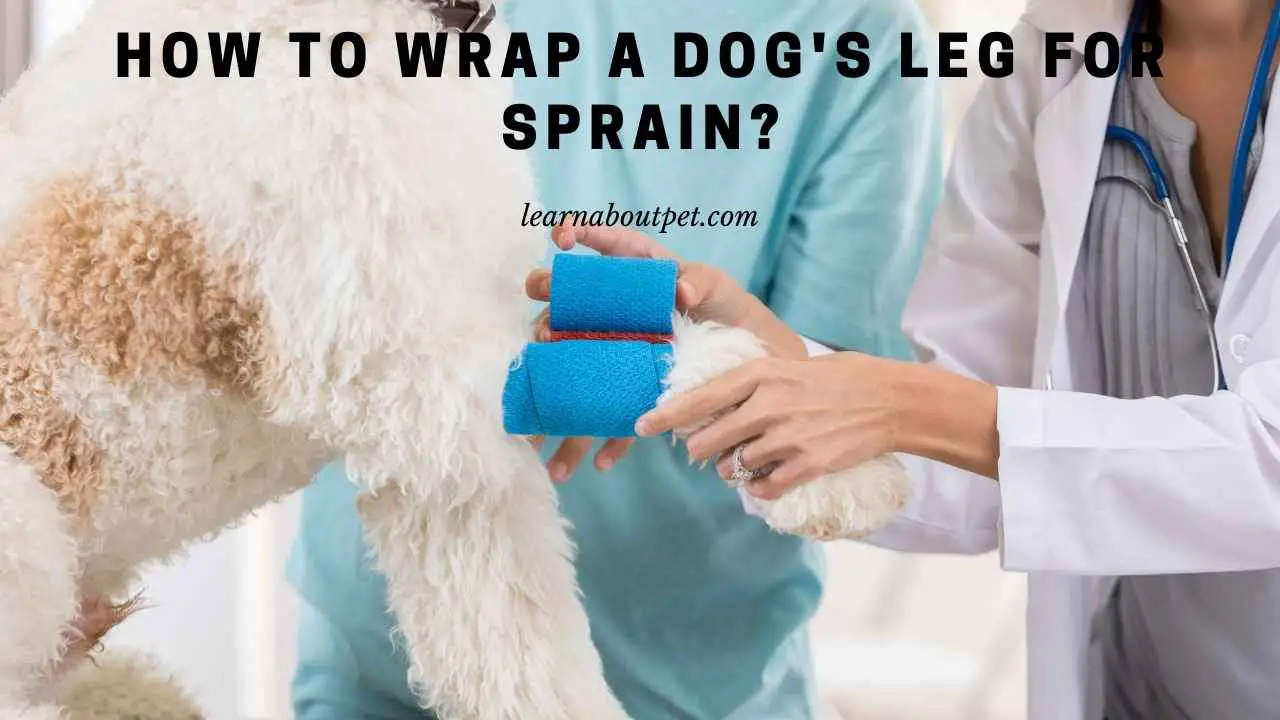
A bandage is not automatically necessary for a sprain, and an improperly applied wrap can cause additional problems. Compression or immobilization may be appropriate for particular injuries, but the correct technique depends on which structure is injured and how stable the limb is.
If the paw has an open wound, a veterinarian may recommend a protective dressing. For a suspected ligament or joint injury, however, do not assume that wrapping the paw will stabilize the injury adequately. A veterinarian may need to determine whether a splint, brace, medication, rehabilitation, or another treatment is appropriate.
Source: animalia-life.club
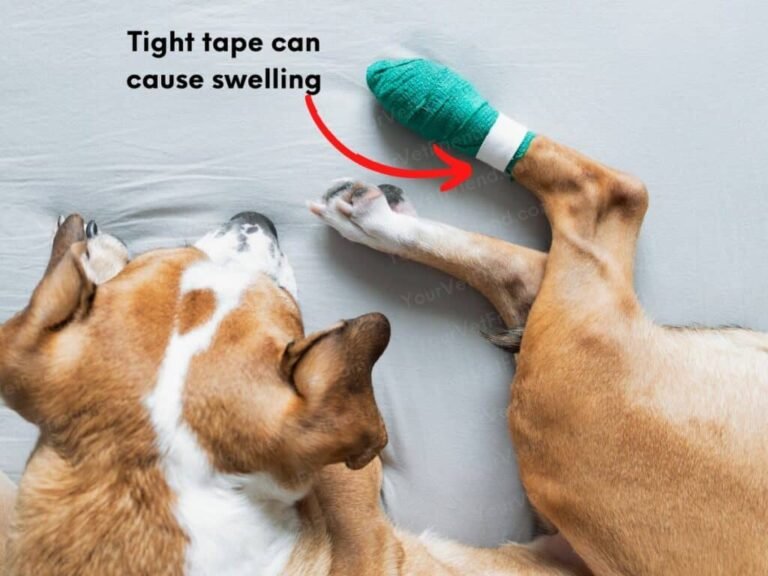
Do not wrap tightly
A wrap that is too tight can interfere with circulation and damage tissues. Swelling, cold toes, discoloration, increasing pain, or changes in the paw after bandaging require prompt veterinary advice.
Do not force a painful limb
Do not repeatedly bend, straighten, massage, or manipulate the injured joint to test it. Painful dogs may react unexpectedly, and unnecessary movement can worsen some injuries.
Use professional guidance when immobilization is needed
A veterinarian can determine whether the injury needs external support and can show you how to monitor any dressing or bandage safely.
When a Bandage Is More Appropriate
Bandaging is more commonly used to protect a wound or paw-pad injury than to treat an uncomplicated ligament sprain itself. If your dog has a cut, puncture, torn nail, or other open injury, veterinary advice is especially important because wounds can become infected or contain foreign material.
Protective dressing
May be useful when specifically recommended for an open paw injury.
Joint support
Should be selected according to the actual diagnosis rather than simply applied because the dog is limping.
What Not to Give a Dog With a Sprained Paw
Do not give your dog human pain medicine on your own. Drugs that are commonly used by people, including ibuprofen and acetaminophen, can cause serious poisoning in dogs. The appropriate pain medication and dose depend on the dog’s diagnosis, size, age, health status, and other medications.
Veterinarians may prescribe canine-approved anti-inflammatory or analgesic medication when appropriate. Follow the prescribed dose and instructions exactly, and contact the veterinary clinic if your dog develops concerning side effects such as vomiting, diarrhea, loss of appetite, or other unexpected changes.
Source: animalia-life.club
Avoid human ibuprofen
Ibuprofen can cause gastrointestinal injury and, at higher exposures, kidney and neurologic problems in dogs.
Acetaminophen can be toxic to dogs at inappropriate doses and can cause serious organ and blood-related problems.
Do not reuse another pet’s prescription
A medication that was prescribed for a different dog, injury, or medical condition may be inappropriate or unsafe for the current problem.
What If Your Dog Already Took Human Pain Medicine?
If your dog has accidentally swallowed ibuprofen, acetaminophen, or another human medication, contact a veterinarian or an animal poison-control service promptly rather than waiting for symptoms. Have the medication container available so the veterinary professional can identify the product and strength.
Act promptly
Some toxic effects can become serious before obvious symptoms appear.
Do not induce vomiting unless instructed
A veterinarian or poison-control professional should determine whether inducing vomiting is appropriate for the specific exposure.
When to Take a Dog With a Sprained Paw to the Vet
Veterinary care is needed when the limp is severe, sudden, persistent, worsening, or accompanied by other concerning signs. A veterinarian can perform an orthopedic and neurologic examination and may recommend imaging such as X-rays or other diagnostic tests when a bone, joint, tendon, or ligament injury is suspected.
Seek urgent veterinary care if your dog cannot use the limb, has severe or constant pain, has an obviously abnormal limb position, or you suspect a broken bone. Severe lameness after major trauma also warrants prompt assessment.
For less severe limping, contact your veterinarian if the lameness continues for more than 24 hours or fails to show clear improvement. Persistent limping should not be treated indefinitely at home because the underlying problem may be more significant than a simple sprain.
Source: animalia-life.club
Seek immediate veterinary care
Do so for suspected broken bones, severe or sudden lameness, severe pain, major trauma, an obviously deformed limb, or a dog that cannot move or use the limb normally.
Arrange veterinary evaluation within about 24 hours
Persistent lameness, continuing swelling, or a limp that is not clearly improving should be evaluated rather than repeatedly treated at home.
Check the paw for another cause
Cuts, punctures, broken nails, burns, foreign objects, and infections can all cause limping and may need different treatment.
How Veterinarians Diagnose the Problem
A veterinary examination typically begins with a history of what happened and an assessment of how the dog stands, rises, and walks. The veterinarian may palpate bones, joints, muscles, and soft tissues and assess swelling, pain, range of motion, and joint stability. Depending on the findings, diagnostic imaging such as radiographs or ultrasound may be recommended.
This diagnostic process matters because a dog with a torn ligament, fracture, tendon injury, or another orthopedic condition may initially look like a dog with a simple sprain.
History
The veterinarian may ask when the limp started, what activity preceded it, whether the dog suffered a fall or collision, and whether symptoms are getting better or worse.
Physical examination
The limb and other relevant body areas are examined for pain, swelling, instability, and abnormal movement.
Imaging
X-rays and, when appropriate, ultrasound or advanced imaging can help identify fractures and certain soft-tissue or joint problems.
How to Help Your Dog Recover From a Paw Sprain
Recovery is mainly about protecting the injured tissue from repeated stress and following the treatment plan provided by your veterinarian. Once a dog feels better, it may try to resume normal activity before the injured tissue has fully recovered, so owners often need to control exercise even when the limp has improved.
Use controlled leash walks rather than unrestricted outdoor activity during the recovery period. Prevent running, jumping, roughhousing, and repeated stair use until your veterinarian or the dog’s recovery progress indicates that these activities can safely resume.
Source: animalia-life.club
Use controlled exercise
Keep walks short and calm during the restricted-activity period and increase activity gradually after improvement.
Reduce slipping
Provide secure footing around the home, particularly on smooth floors where sudden slipping can place additional stress on an injured limb.
Prevent licking or chewing
If your dog repeatedly licks an injured area or bandage, ask your veterinarian about an appropriate protective solution.
Track changes
Record whether swelling, pain, weight bearing, and normal movement are improving. A short video of the dog’s gait can also be useful for the veterinarian if the limp is intermittent.
Signs That Recovery Is Moving in the Right Direction
A favorable trend is gradual improvement in weight bearing, walking comfort, activity level, and willingness to move normally without renewed swelling or pain. Recovery should be gradual rather than a sudden return to unrestricted exercise.
Improving weight bearing
The dog progressively uses the affected limb more normally.
Less swelling or discomfort
The affected area becomes less sensitive and swollen rather than increasingly painful.
Normal movement returns gradually
Walking becomes smoother before more demanding activities are reintroduced.
Frequently Asked Questions
Q
Can a dog’s sprained paw heal on its own?
Some mild soft-tissue injuries improve with rest and controlled activity, but you cannot reliably confirm the severity of a sprain at home. If your dog is not clearly improving, continues to limp, or develops worsening pain or swelling, a veterinarian should evaluate the injury.
Q
Can a dog walk on a sprained paw?
A dog with a mild sprain may still be able to walk, but activity should generally be restricted while the injury is healing. Keep outdoor trips short and controlled, and avoid running, jumping, rough play, and other activities that increase stress on the injured limb.
Q
Is ice good for a dog’s sprained paw?
Cold therapy can help reduce swelling and discomfort from some acute soft-tissue injuries. Use a cold pack wrapped in a towel for about 10 to 20 minutes at a time and supervise your dog. Do not place ice directly against the skin, and stop if your dog becomes distressed.
Q
Should I massage my dog’s sprained paw?
Do not aggressively massage or manipulate a painful or swollen limb before the injury has been diagnosed. Massage and rehabilitation exercises may be useful for some injuries, but the timing and technique should be determined by a veterinarian or qualified veterinary rehabilitation professional.
Q
How long does a sprained dog paw take to heal?
Recovery varies according to the specific tissue involved and the severity of the injury. Some mild soft-tissue injuries improve over days, while more significant sprains and related orthopedic injuries can require several weeks of restricted activity. A persistent limp or lack of improvement warrants veterinary evaluation rather than extending home treatment indefinitely.
✦ Wrapping Up
Conclusion
The safest way to treat a suspected mild sprained dog paw at home is to protect the limb from further stress, restrict activity, provide a comfortable resting environment, and use short periods of towel-wrapped cold therapy when appropriate. Avoid human pain medications and avoid tightly wrapping or aggressively manipulating the injured limb without veterinary guidance.
Because limping is a symptom rather than a diagnosis, do not assume that every painful paw or leg is simply sprained. Severe pain, sudden or severe lameness, inability to bear weight, an abnormal-looking limb, major trauma, or persistent symptoms should prompt veterinary care.
💡 Key Takeaway
If your dog has a mild limp but is otherwise comfortable, start with quiet rest and controlled leash activity while monitoring closely. If the limp is severe, worsens, does not clearly improve within 24 hours, or is accompanied by significant pain or an abnormal limb, contact a veterinarian promptly.
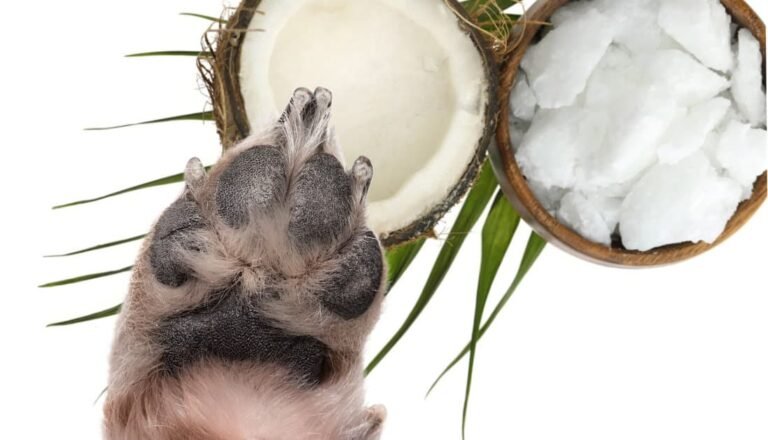
Learn how to apply coconut oil to dog paws with step-by-step instructions, safety tips, benefits, common mistakes, and signs that your dog’s paw pads need extra care.
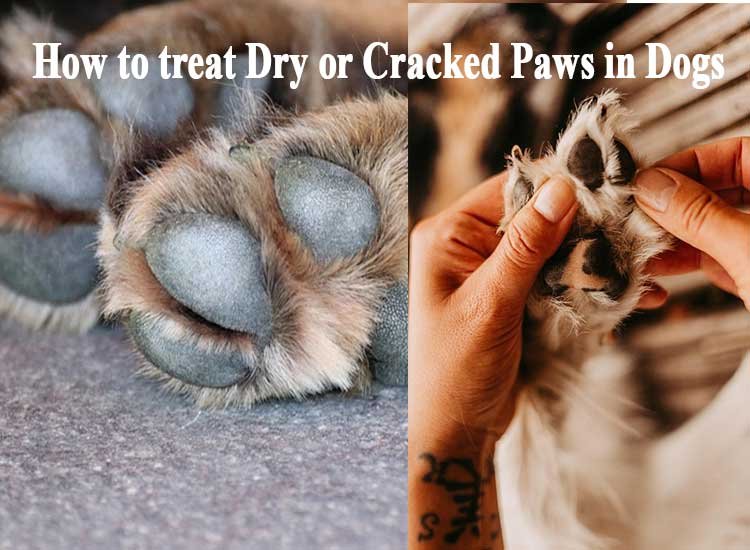
Learn how to treat dry dog paws safely with moisturizing care, paw protection, and prevention strategies. Discover causes, home remedies, and when to contact a veterinarian.
Learn how to tell if your dog sprained his paw, recognize common signs of a sprain, distinguish it from fractures and paw injuries, and know when veterinary care is needed.
Learn why your dog’s paws may be red between the toes, including allergies, infections, irritation, injuries, and interdigital furuncles, plus when veterinary care is needed.
Learn how to clean dog paws naturally using water, gentle homemade solutions, and simple grooming techniques. Keep your dog’s paws clean, healthy, and comfortable after walks.