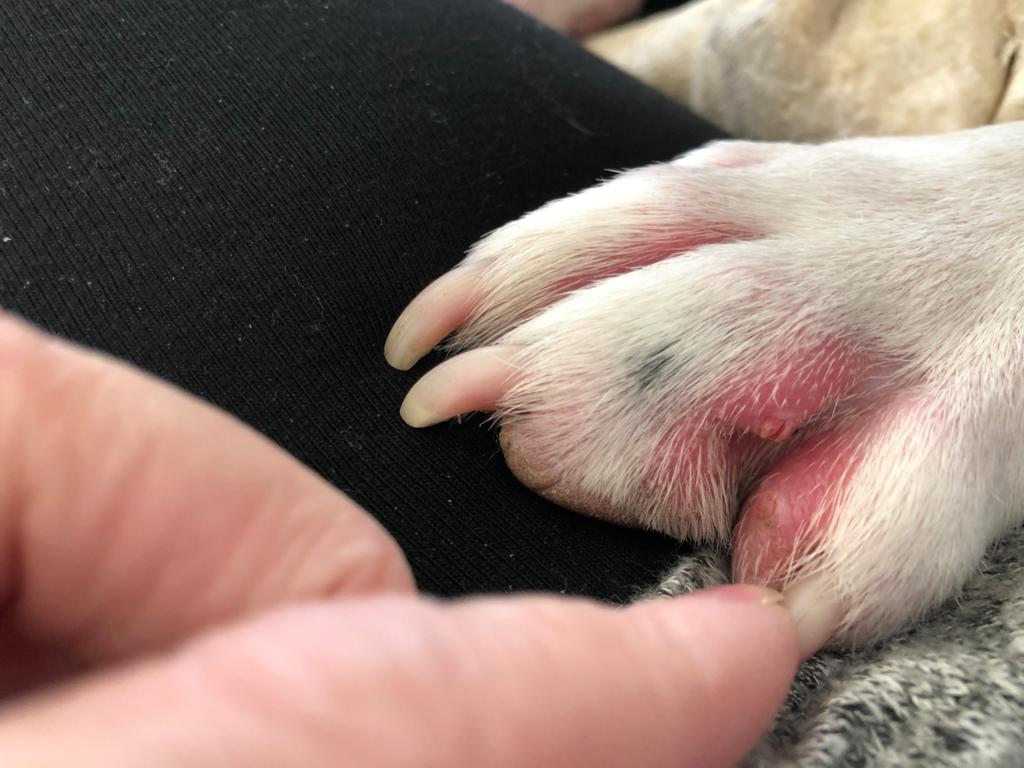
Red, itchy paws in dogs are most often associated with allergies, irritation, parasites, or a secondary bacterial or yeast infection, but injuries and other skin diseases can also cause similar signs.
For dog owners in the United States, red and itchy paws are a common reason to pay closer attention to a pet’s skin. A dog may lick, chew, or repeatedly rub the feet after walking through grass, reacting to environmental allergens such as pollen, developing an infection, or experiencing irritation from a surface or substance. The redness itself is a symptom rather than a diagnosis.
Veterinary evaluation is especially important when the problem persists, keeps returning, affects multiple paws, or is accompanied by swelling, sores, discharge, odor, hair loss, pain, or limping. Pododermatitis is the general veterinary term for inflammation of the paws, and it can have several different underlying causes. Identifying that cause matters because treatment for an allergy is different from treatment for a parasite or infection.
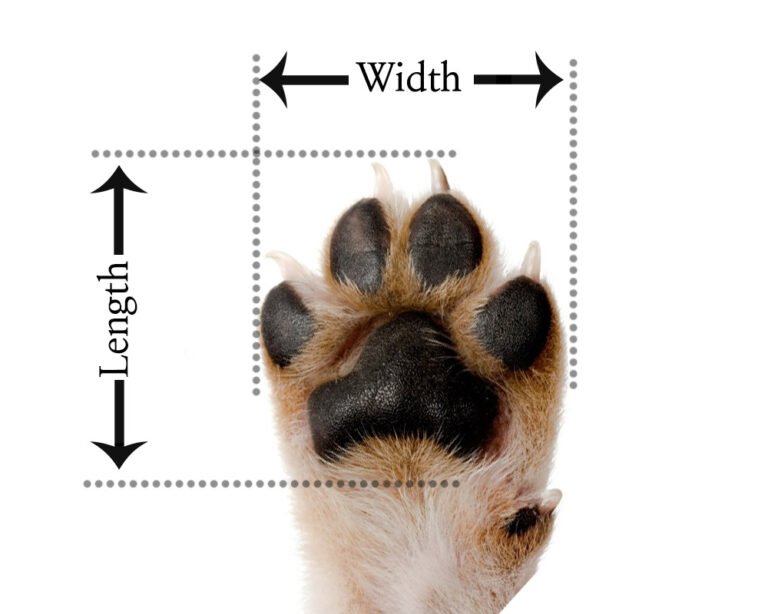
Source: ar.inspiredpencil.com
What Causes Red and Itchy Paws in Dogs?
The most common possibilities include allergies, parasites, infections, irritation, and physical injury. More than one problem can occur at the same time. For example, an allergic dog may lick its paws repeatedly, damage the skin barrier, and then develop a secondary yeast or bacterial infection.
The location and pattern of the redness can provide useful clues, but they cannot reliably establish a diagnosis by themselves. A veterinarian may need to examine the paws closely and test skin samples to determine whether microorganisms or parasites are present.
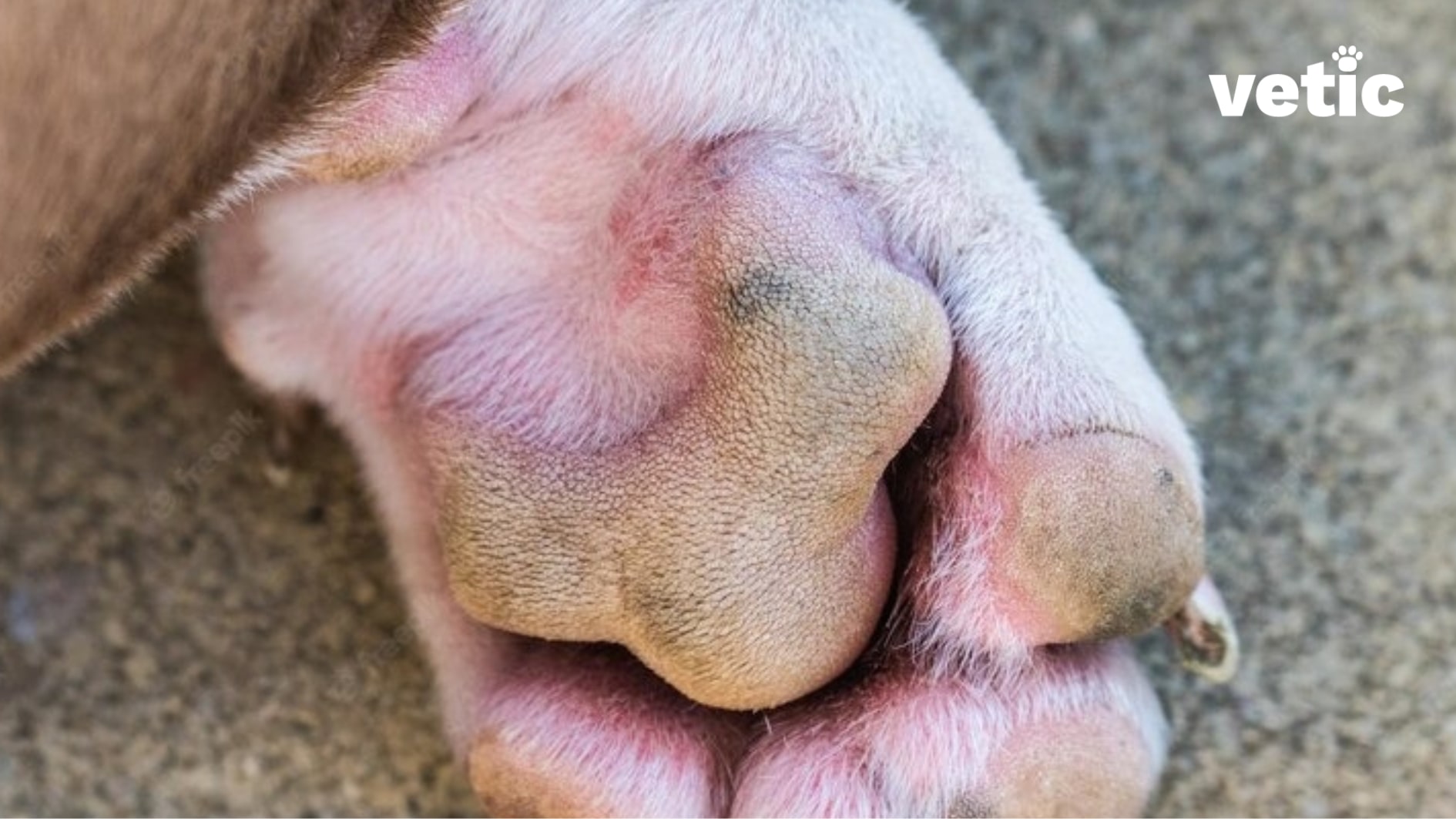
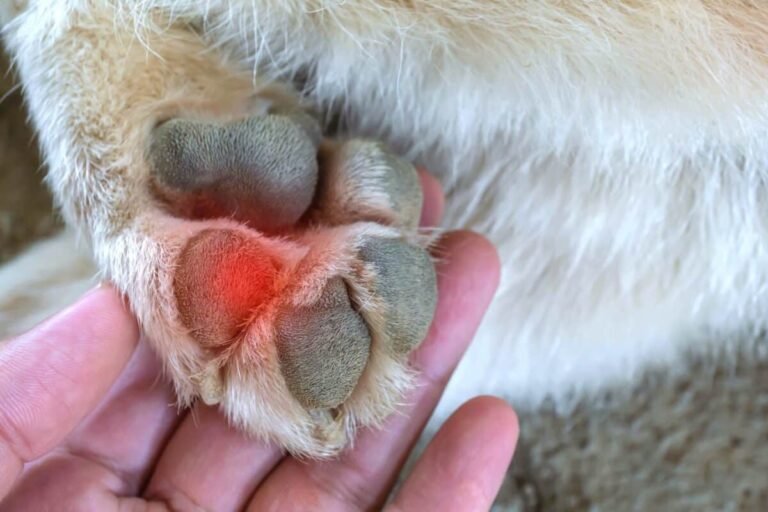
Source: animalwised.com
Allergies
Environmental allergies involving substances such as pollen, mold, or dust mites can cause persistent itching and inflamed feet. Food allergies can also contribute to itchy skin and paws.
Yeast or bacterial infection
Infections can cause redness, itching, swelling, odor, crusting, discharge, and other changes. They may occur as a primary problem or develop after repeated licking and scratching.
Parasites
Fleas and certain mites can cause intense itching. Parasites should be considered even when you do not see them directly.
Contact irritation
A dog’s paws can become irritated after contact with substances or surfaces that inflame the skin. The paw pads and undersides may be particularly affected when exposure occurs during walks.
Injury or foreign material
Splinters, grass awns, cuts, abrasions, burns, or other physical problems can cause localized redness and licking, particularly when one paw is affected.
Less common medical conditions
Immune-mediated disease, hormonal or metabolic disorders, and tumors can also affect canine paws. These causes are less typical but become more relevant when inflammation is persistent, unusual, recurrent, or resistant to routine treatment.
How Allergies Make Dog Paws Red and Itchy
Allergies cause an inappropriate inflammatory response to substances that are normally harmless. In dogs with atopic dermatitis, the feet are among the areas commonly affected. Itching can lead to repeated licking and chewing, which further damages the skin and can encourage secondary infections.
Seasonal changes can provide a useful clue. A dog whose paw itching becomes worse during particular times of the year may be reacting to seasonal environmental allergens. However, year-round itching can also occur with environmental allergies, food allergies, parasites, or recurrent infections.
Signs that can accompany allergies
Look for recurrent paw licking, itchy ears, facial rubbing, redness, hair discoloration from saliva, or other itchy areas of skin.
Why allergy testing is not the first answer
Veterinary allergy guidelines emphasize history, physical examination, parasite evaluation, and basic skin testing before relying on allergy testing to investigate allergic skin disease.
Why Yeast and Bacteria Can Make Paw Itching Worse
A damaged skin barrier can allow microorganisms that normally live on the skin to multiply excessively or cause infection. Yeast dermatitis commonly produces itching and redness and may be associated with a musty odor, scaling, crusting, thickened skin, or darker pigmentation.
Bacterial infections may produce swelling, pustules, crusts, ulcers, or discharge. Because infection and allergy can coexist, simply treating the itch without identifying an infection may not resolve the underlying problem.
A recurring cycle
An underlying allergy or irritation can trigger itching, licking can damage the skin, and the damaged skin can become infected, causing additional inflammation and itching.
How veterinarians check
Skin cytology can help identify inflammatory cells, bacteria, or yeast. Additional testing may be appropriate when parasites, fungal disease, or another underlying condition is suspected.
How to Tell What Might Be Causing Your Dog’s Red Paws
The pattern of symptoms can help you decide how quickly your dog should be examined, but visual appearance alone is not enough to diagnose the cause. Start by comparing the affected paws and noting whether the problem is localized or widespread.
Pay attention to timing, recent activities, possible exposures, parasite prevention, and whether other areas of the body are itchy. These details can help a veterinarian distinguish between allergies, infection, parasites, irritation, and injury.
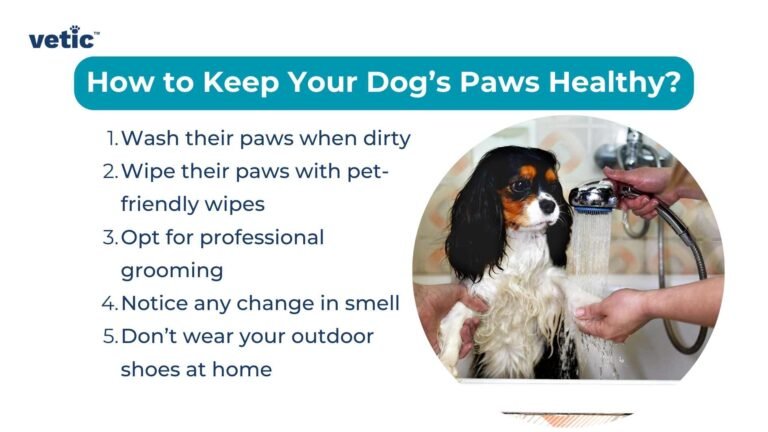
Source: animalia-life.club
Several paws are red and itchy
Multiple affected feet can occur with allergies, parasites, or generalized skin disease. Secondary infection can affect several paws as well.
Only one paw is affected
A localized injury, foreign object, contact irritation, or localized infection may be more likely, although a single-paw presentation does not rule out other causes.
There is a noticeable odor
An unusual or musty odor can occur with yeast or bacterial overgrowth and warrants veterinary assessment when it accompanies persistent redness or itching.
Your dog is limping
Limping suggests pain or a more significant paw problem and should not be attributed to allergies without an examination.
The problem follows a seasonal pattern
Symptoms that repeatedly worsen during certain seasons can support suspicion of environmental allergies, although infections and other conditions can flare at the same time.
The paws are swollen, ulcerated, or draining
These findings can indicate infection, deeper inflammation, injury, or another condition that needs professional evaluation.
What to Check at Home Before the Veterinary Visit
If your dog is comfortable enough to allow inspection, look between the toes, around the nails, across the paw pads, and on the top of each paw. Check for obvious debris, cuts, swelling, broken nails, discharge, crusting, or an unusual odor.
Do not force the examination if your dog appears painful or tries to bite. A painful paw can make even a normally gentle dog defensive.
Record the timing
Write down when the redness began and whether it is getting better, worse, or recurring.
Record possible triggers
Note recent walks, yard exposure, grooming, new cleaning products, new foods, or changes in parasite prevention.
Look for other symptoms
Check for itchy ears, facial rubbing, belly irritation, hair loss, digestive changes, or itching elsewhere on the body.
What to Do About Red and Itchy Dog Paws
The safest approach is to protect the paws from further irritation while arranging veterinary care when the symptoms persist, recur, or appear significant. Treatment should target the underlying cause rather than redness alone.
For a mild problem after a known environmental exposure, gently rinsing the paws with clean water and drying them thoroughly can help remove surface irritants. Avoid harsh household cleaners, concentrated disinfectants, essential oils, or human skin medications unless a veterinarian specifically recommends them for your dog.
Source: 9tailnutrition.com
Reduce exposure to suspected irritants
If symptoms consistently appear after contact with a particular surface or substance, discuss ways to reduce that exposure with your veterinarian.
Keep the paws clean and dry
After outdoor activity, gently clean visible debris and dry between the toes without aggressive scrubbing.
Prevent excessive licking
Persistent licking can worsen skin damage. Your veterinarian can recommend an appropriate strategy if your dog cannot leave the paws alone.
Maintain parasite prevention
Use veterinarian-recommended flea and tick prevention consistently. Parasites are an important part of the diagnostic process for itchy dogs.
Do not self-treat an infection
Antibiotics, antifungal medications, corticosteroids, and other prescription treatments should be selected based on the suspected diagnosis and the individual dog’s health.
When a Veterinarian Should Examine Your Dog
Schedule a veterinary appointment if the redness or itching persists, repeatedly returns, spreads, or interferes with normal activity. Veterinary assessment is also appropriate when there is odor, swelling, hair loss, crusting, discharge, sores, or significant licking and chewing.
Seek prompt veterinary care for marked swelling, severe pain, bleeding, deep wounds, significant limping, rapidly worsening inflammation, or signs that your dog is generally unwell. These findings can indicate a problem that requires more than routine paw care.
Persistent symptoms
Redness and itching that do not settle or repeatedly return deserve evaluation for an underlying condition.
Pain or mobility changes
Limping, reluctance to walk, or obvious pain should be assessed rather than managed only at home.
Open or draining lesions
Ulcers, pus, bleeding, or significant wounds can indicate infection or deeper disease.
Repeated flare-ups
Recurring episodes may indicate allergies, parasites, chronic infection, or another underlying condition requiring a longer-term management plan.
How Veterinarians Diagnose the Cause
There is no single test that explains every case of red, itchy paws. Veterinarians usually begin with the dog’s medical history and a detailed skin examination, then select tests based on the observed pattern.
For suspected allergic skin disease, veterinary guidelines recommend a basic dermatologic workup that can include skin cytology, flea evaluation, skin scrapings, and additional examination of the ears when ear disease is present. These steps help identify infections and parasites before an allergy is assumed to be the primary cause.
Source: animalia-life.club
Skin cytology
A sample from the skin can be examined for bacteria, yeast, inflammatory cells, and other findings.
Skin scraping
Scrapings can help investigate certain mites and other parasitic causes of skin disease.
Flea evaluation
Flea exposure and parasite prevention history are important because flea allergy can cause substantial itching.
Culture or additional testing
Bacterial or fungal cultures and other tests may be recommended when routine examination does not adequately identify the cause.
Diet trial
When food allergy is suspected, a veterinarian may recommend a carefully controlled elimination diet followed by an appropriate food challenge to determine whether food is contributing to the skin disease.
Why Treating Only the Itch May Not Solve the Problem
Itch relief can make a dog more comfortable, but it does not necessarily identify or remove the underlying trigger. Active bacterial or yeast infections, parasites, and ongoing allergen exposure may continue to cause inflammation if they are not addressed.
For allergic dogs, long-term management may involve several measures at once. Depending on the individual diagnosis, veterinary treatment can include parasite control, topical therapy, infection treatment, itch control, dietary management, or allergen-specific immunotherapy.
Comfort and diagnosis are different goals
Reducing itching can improve quality of life while diagnostic work continues, but symptom relief alone does not establish the cause.
Secondary infections matter
A veterinarian may need to address yeast or bacterial infection before judging how well an allergy-focused treatment is working.
Common Mistakes to Avoid When a Dog Has Red Itchy Paws
Red paws are easy to recognize but difficult to diagnose from appearance alone. Several different conditions can look similar, and inappropriate treatment can delay the correct diagnosis or aggravate irritated skin.
The goal is not simply to make the paws look less red for a few days. A lasting improvement depends on identifying and managing the reason the skin became inflamed in the first place.
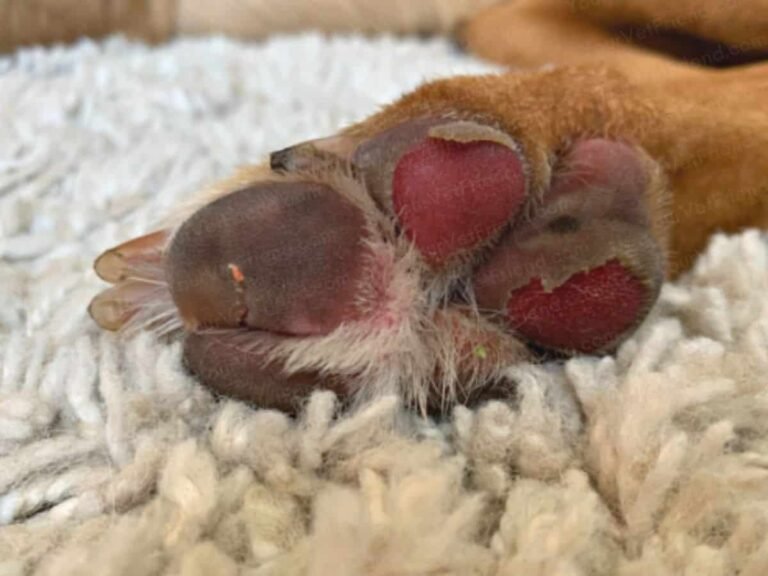
Source: ar.inspiredpencil.com
Assuming every itchy paw is an allergy
Allergies are common, but parasites, infection, injury, irritation, and other disorders can produce similar signs.
Ignoring one-paw problems
A single affected paw may point toward a localized injury, foreign object, or other problem that needs a close examination.
Using human medications without veterinary guidance
Human topical products and medications are not automatically safe or appropriate for dogs, especially when a dog can lick the product.
Overcleaning the paws
Repeated aggressive washing or exposure to harsh substances can further irritate an already compromised skin barrier.
Stopping treatment as soon as the redness improves
A visible improvement does not necessarily mean the underlying infection, allergy, or other trigger has been adequately managed. Follow the veterinarian’s treatment and recheck instructions.
A Simple Decision Guide
Use the pattern of symptoms to decide what to do next rather than trying to diagnose the condition from color alone.
Mild redness after outdoor exposure
Gently remove surface debris or irritants, dry the paws, monitor closely, and seek veterinary advice if the problem persists or worsens.
Repeated itching or licking
Arrange a veterinary examination because allergies, parasites, and secondary infections are common possibilities.
Odor, discharge, swelling, or sores
Schedule veterinary care because infection or deeper inflammation may be present.
Severe pain, marked swelling, bleeding, or limping
Seek prompt veterinary assessment rather than relying on home treatment.
Frequently Asked Questions
Q
Why are my dog’s paws red and itchy but there is no obvious injury?
Allergies are one common possibility, but yeast or bacterial infection, parasites, contact irritation, and other skin conditions can cause the same pattern. If the itching continues or recurs, a veterinarian can examine the paws and perform appropriate skin tests.
Q
Can allergies cause red paws in dogs?
Yes. Environmental and food-related allergies can cause itchy, inflamed paws. Dogs may lick and chew their feet repeatedly, which can further damage the skin and contribute to secondary infection.
Q
How can I soothe my dog’s red itchy paws at home?
For mild irritation after a known outdoor exposure, gently rinsing the paws with clean water and drying them thoroughly can remove surface irritants. Avoid harsh chemicals and human medications unless a veterinarian specifically recommends them. Persistent or worsening symptoms need veterinary evaluation.
Q
Does paw licking always mean my dog has allergies?
No. Paw licking can occur with allergies, parasites, infections, injuries, foreign objects, irritation, and other problems. Because several causes can overlap, persistent licking should not automatically be diagnosed as an allergy.
Q
When should I take my dog to the vet for red paws?
Arrange veterinary care when redness or itching persists, returns frequently, or is accompanied by swelling, odor, discharge, sores, hair loss, or significant licking. Prompt assessment is appropriate for severe pain, bleeding, marked swelling, substantial limping, or rapidly worsening symptoms.
✦ Wrapping Up
Conclusion
If your dog’s paws are red and itchy, allergies are a common explanation, but they are not the only one. Parasites, yeast or bacterial infections, contact irritation, injuries, and less common skin disorders can produce similar symptoms. The pattern, duration, number of affected paws, and presence of pain or other skin changes help determine what should happen next.
For recurring or significant paw inflammation, a veterinary examination is the safest way to identify the cause. Testing such as skin cytology or scrapings may be needed, particularly when infection or parasites are possible. Once the underlying problem is identified, treatment can focus on the actual trigger instead of repeatedly treating redness or itching alone.
💡 Key Takeaway
Inspect your dog’s paws gently, keep them clean and dry, avoid potentially irritating products, and arrange veterinary care if the redness or itching persists, recurs, or is accompanied by swelling, odor, sores, discharge, pain, or limping.
Learn how to stop dogs paws from smelling with safe cleaning methods, prevention tips, and solutions for common causes such as bacteria, yeast, moisture, and allergies.
Learn how to treat split dog paw pads safely at home, when to see a veterinarian, how to prevent infection, and how to help your dog’s paw heal properly.