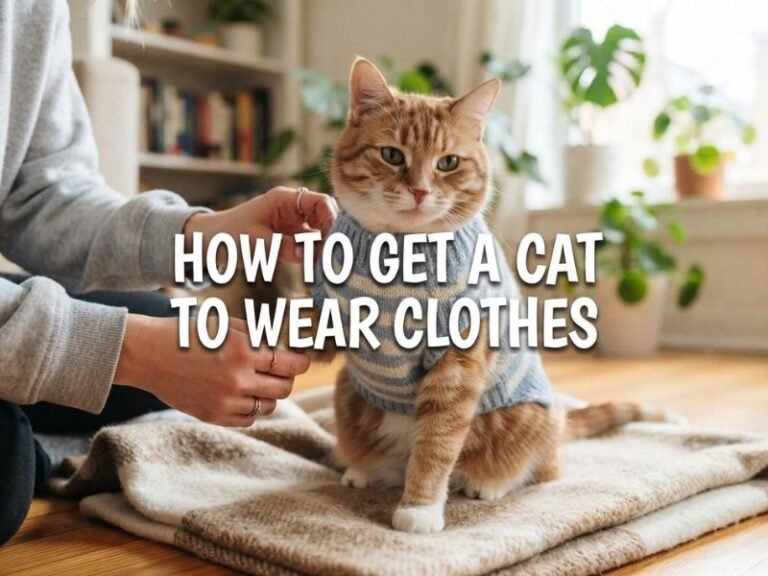
How to Put Clothes on a Cat: Practical Steps and Helpful Tips
Your cat is standing beside the holiday sweater, costume, or recovery shirt, looking far less enthusiastic than you are. The first challenge is not getting the fabric over the body; it is keeping the experience calm, safe, and brief enough that your cat does not panic or become trapped.
Learning how to put clothes on a cat can help with a veterinarian-recommended recovery garment, protection from cold in limited situations, or a supervised photo. The right clothing, gradual practice, and close observation matter more than speed.
I’ll explain how to choose a safe garment, prepare your cat, put it on step by step, recognize stress, and decide when clothing should come off immediately. I’ll also cover common mistakes and answer practical questions about fit, movement, and duration.
How to Put Clothes on a Cat Safely
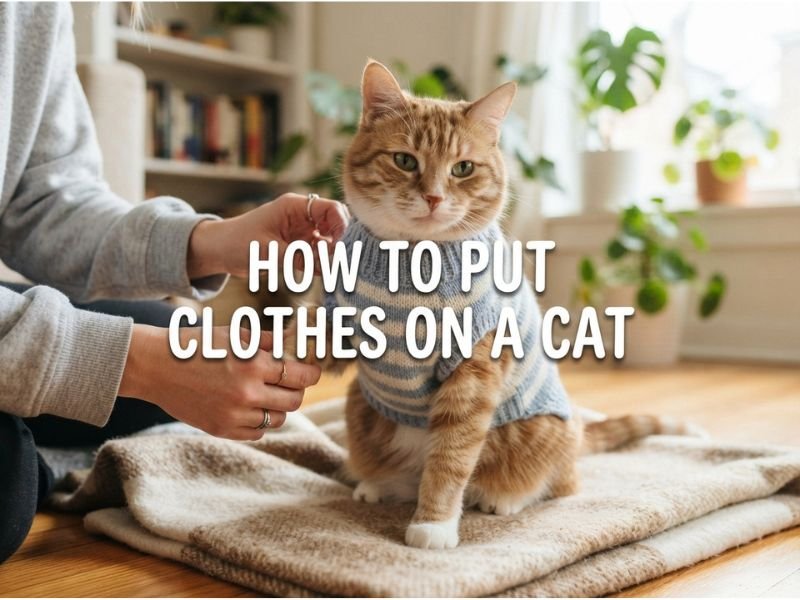
Start with a simple principle: a cat should never be forced into clothing for appearance alone. Some cats tolerate a soft shirt after patient conditioning, while others become frightened by any restriction. Your cat’s body language should determine the pace.
For most cats, the safest process has five stages:
- Choose a lightweight, properly sized garment.
- Let your cat investigate it without putting it on.
- Practice brief contact with treats and calm handling.
- Put the garment on slowly, supporting the body.
- Observe movement, breathing, comfort, and behavior the entire time.
Never leave a dressed cat unattended. Clothing can catch on furniture, limit movement, interfere with grooming, or cause overheating. If a veterinarian prescribed a recovery suit after surgery, follow the clinic’s specific instructions instead of treating it like an ordinary costume.
Decide Whether Your Cat Needs Clothing
Before buying a garment, identify the purpose. A medical recovery suit may protect an incision or reduce access to a wound. A sweater may provide limited warmth for a hairless or recently shaved cat in a cool indoor environment. A costume has no health benefit and should be used only if the cat remains relaxed and mobile.
Medical reasons
A veterinarian may recommend a surgical recovery suit or another protective garment after an operation. The correct design depends on the location of the incision, the type of procedure, and your cat’s health. A garment that covers one wound may rub another or hide swelling, discharge, or skin irritation.
Ask the veterinary team how the clothing should fit, how often it should be removed for inspection, and how it should be cleaned. Do not replace an Elizabethan collar, wound dressing, or prescribed treatment with a decorative shirt without veterinary approval.
Cold protection
Most healthy indoor cats do not need clothes simply because the room feels cool to a person. Cats regulate their temperature through behavior, fur, and access to warmer areas. A sweater may be appropriate in a specific situation, but it should not substitute for a warm, draft-free resting area.
Extra caution is sensible for cats with little or no fur, very young cats, senior cats, or cats with health conditions that affect temperature regulation. A veterinarian can help determine whether clothing is useful or whether environmental changes are safer.
Appearance and photos
For a costume or photo, keep the session short and optional. Avoid garments with dangling pieces, tight elastic, bells, glued decorations, buttons, beads, or anything your cat could chew and swallow. A plain, soft shirt is easier to monitor than an elaborate outfit.
Choose a Safe Cat Garment
Fit and construction matter more than color or style. A suitable garment allows your cat to walk, sit, lie down, use the litter box, groom as much as possible, and breathe normally. It should stay in place without squeezing the chest, neck, legs, or abdomen.
Look for these features
- Soft, breathable fabric without rough seams.
- A secure but nonrestrictive fit around the neck and chest.
- Openings that do not press against the armpits or groin.
- Easy access to the litter box and tail.
- Closures that are simple to fasten and unlikely to catch on furniture.
- A design that does not cover the nose, mouth, eyes, or ears.
- Fabric that can be washed if it becomes soiled.
Use the manufacturer’s measurements rather than guessing from your cat’s weight. Measure the neck, chest at its widest point, and body length if the product requires those dimensions. A garment that is too loose can twist or snag. One that is too tight can restrict breathing, movement, or circulation.
Skip unsafe details
Do not choose clothing with loose strings, narrow straps, long ribbons, exposed zippers, or small decorations. Cats may catch a claw in a loop or pull an ornament loose while grooming. Hooded garments are especially risky because they can obstruct vision, trap heat, or interfere with normal ear movement.
Avoid covering a collar, identification tag, or medical device unless the design specifically allows it. Do not put clothing over a harness unless the garment and harness are designed to work together. Pressure or entanglement can occur when multiple layers occupy the same area.
Prepare Your Cat Before Dressing
Preparation usually determines whether the process succeeds. I recommend choosing a quiet time when your cat is alert but not hyperactive, hungry, or already upset. Close windows if outdoor noises are distracting, move other pets away, and clear a stable surface or use the floor.
Place the garment, treats, and any needed fasteners within reach before you begin. If you have to search for a missing snap while holding a nervous cat, the session will become longer and more stressful.
Let your cat inspect the clothing
Set the garment near your cat and allow sniffing. You can place a treat beside it, but do not push the fabric into your cat’s face or drape it over the body immediately. Repeat this exposure during several short sessions if your cat backs away.
Reward calm behavior such as looking at the garment, sniffing it, or remaining nearby. The goal is to create a neutral or positive association. A cat that hisses, hides, swats, freezes, or tries to flee is communicating that the session is moving too fast.
Practice gentle handling
Before using clothing, touch the shoulders, chest, sides, and legs in the same areas the garment will contact. Briefly lift one front leg only if your cat already accepts handling. Give a treat and release the leg immediately.
Do not pin your cat down to complete practice. Restraint may be necessary for some veterinary procedures, but ordinary clothing training should rely on cooperation as much as possible. If your cat becomes tense, stop and try again later at an easier step.
Step-by-Step Dressing Process
Exact designs vary, so follow the garment’s instructions first. The sequence below works as a general approach for a soft shirt or recovery garment with a neck opening and leg openings.
1. Position the garment correctly
Identify the front, back, neck opening, leg holes, and closure before bringing it to your cat. Open every fastener that can be opened. Hold the garment in its final orientation so you do not twist it while your cat is wearing it.
Keep your movements slow and predictable. Speak normally and avoid suddenly reaching over your cat’s head. If your cat is standing, let all four paws remain on a stable surface whenever the garment allows it.
2. Start at the least difficult opening
Many garments go over the head first, while others wrap around the torso and fasten along the back. Use the method intended for that design. Never force a paw through a narrow opening just because the fabric is already partly in place.
For a neck opening, gently guide the opening over the head while keeping the face and whiskers clear. Do not pull the garment across the eyes or cover the nose. If your cat resists strongly at this stage, remove it and return to handling practice.
3. Guide the front legs one at a time
Once the torso portion is positioned, support the chest with one hand and guide one front leg through its opening. Use the other hand to locate the opening rather than tugging the fabric over the paw. Repeat with the opposite leg.
Move slowly around the shoulder joints. A cat may pull a leg backward or twist suddenly, so avoid holding the limb straight or applying force. If a leg will not pass easily, take the garment off and check the size and orientation.
4. Align the torso and closures
After the legs are positioned, smooth the fabric along the back and chest. Check that seams are not pressing into the armpits, throat, or base of the tail. Fasten snaps, hook-and-loop closures, or other attachments without pulling the fabric tight.
You should be able to slide a finger between the garment and the cat where the design permits, but finger space is not a substitute for the manufacturer’s fit guidance. Watch your cat breathe and move rather than relying on a single measurement.
5. Check function before releasing your attention
Let your cat stand, take a few steps, turn, sit, and lie down. Confirm that the tail is free, the litter area is accessible, and the garment does not twist when your cat moves. Look at the neck and chest for pressure, rubbing, or unusual skin color.
Give a treat if your cat remains calm, then remove the clothing after a short period during early sessions. Ending before distress begins helps prevent the garment from becoming associated with fear.
Read Your Cat’s Body Language
A cat may tolerate clothing while still feeling uncomfortable. I pay attention to small changes rather than waiting for a dramatic reaction. Relaxed ears, normal walking, ordinary grooming, and interest in treats suggest better tolerance, although they do not guarantee complete comfort.
Possible stress signals include:
- Flattened or rotated ears.
- A crouched body, tucked tail, or rigid posture.
- Sudden stillness or refusal to walk.
- Repeated attempts to bite, scratch, or pull off the garment.
- Rapid escape attempts, hiding, hissing, or growling.
- Dilated pupils, excessive vocalization, or rapid breathing.
- Persistent licking or chewing at one area of the garment.
Stop and remove the clothing if your cat struggles intensely, has trouble breathing, becomes weak, shows signs of overheating, or cannot walk normally. If your cat is difficult to handle safely, ask a veterinarian or qualified veterinary professional for help rather than escalating restraint at home.
Help a Cat Adjust to Clothing
Adjustment should happen in small increments. For a cat that accepts the garment calmly, begin with a brief supervised period, then remove it and offer a reward. Gradually increase the time only when your cat continues to behave normally.
Keep the first session quiet. Do not immediately carry the dressed cat outdoors, introduce unfamiliar people, or start a loud celebration. Let your cat walk around a familiar room while you watch closely.
Use positive associations
Food rewards, play, and calm praise can make handling more predictable. Offer the reward after your cat remains settled, not while the cat is actively panicking. If a treat is ignored, that may indicate the situation is already too stressful.
Some cats adjust better when the garment is introduced during a familiar routine, such as after gentle petting or before a favorite meal. Others need complete separation between clothing practice and feeding. Follow your cat’s response rather than forcing a single method.
Keep sessions short
There is no advantage to leaving clothing on longer than necessary during training. Several brief, successful sessions are generally more useful than one long session that ends with struggling. If your cat repeatedly objects, accept that clothing may not be a suitable option unless it is medically necessary.
How Long Can a Cat Wear Clothes?
There is no universal safe duration because the answer depends on the garment, room temperature, activity level, coat, health, and your cat’s tolerance. A veterinarian may provide a specific schedule for a recovery suit. For ordinary clothing, use the shortest period needed and supervise continuously.
Remove the garment for regular checks, especially during early use. Inspect the skin for redness, dampness, swelling, chafing, or pressure marks. Check the fabric for urine, feces, food, or moisture. A soiled garment should be replaced or cleaned promptly.
Take clothing off during sleep or whenever direct supervision is not possible unless a veterinarian has instructed you to use a specific medical garment continuously. Never leave a dressed cat alone in a crate, near stairs, around a heater, or in a room with furniture that could catch the fabric.
Overheating is a serious concern. Signs may include unusual restlessness, weakness, excessive panting, drooling, vomiting, or collapse. Remove the garment, move your cat to a cool area, and contact a veterinarian promptly if symptoms are severe or do not improve.
Common Mistakes to Avoid
Forcing the garment over a struggling cat
Force can cause scratches, bites, joint strain, and lasting fear of handling. It also makes it harder to tell whether the garment itself is painful. Stop, reassess the fit, and use gradual training unless the clothing is medically essential and a veterinary team has shown you how to apply it.
Choosing a size based only on weight
Two cats with the same weight can have very different chest, neck, and body measurements. A long, slim cat may need a different cut from a compact cat. Measure the areas listed by the manufacturer and inspect the fit while your cat is moving.
Ignoring the litter box
A garment that blocks the anus, tail, or genital area can lead to soiling, skin irritation, and litter box avoidance. Before leaving the garment on, confirm that your cat can enter the box, posture normally, and eliminate without fabric interference.
Assuming stillness means comfort
Freezing can be a stress response rather than acceptance. A cat that stands motionless with a low posture, wide eyes, or flattened ears may be overwhelmed. Remove the garment and watch for a return to normal behavior.
Using human baby clothes without checking them
Human clothing may have openings, seams, snaps, or proportions that do not suit a cat’s anatomy. If you use a repurposed item for a temporary situation, inspect it carefully and never assume it is safe because it fits a small human.
When a Veterinarian Should Help
Contact your veterinarian before dressing a cat with a fresh incision, skin infection, bandage, drain, breathing problem, or condition affected by heat. A veterinarian can recommend a suitable recovery garment and show you how to apply it without disturbing the treatment area.
Ask for help if your cat repeatedly bites, scratches, collapses, cannot walk normally, or develops redness or swelling under the clothing. A medical problem, pain, or poor fit may be causing the resistance.
If clothing is prescribed but your cat will not tolerate it, do not simply abandon the treatment or improvise a tighter design. Call the clinic and explain what happens during application. The team may suggest a different garment, an alternate protective method, or a supervised fitting.
FAQ About Putting Clothes on a Cat
How do I put a shirt on a cat that hates clothing?
Do not force the shirt on during a struggle. Start by placing it nearby, reward calm investigation, and practice brief touches on the shoulders and chest. Later, let your cat wear it for only a short, supervised period. If distress continues, stop unless the garment is medically necessary and seek veterinary guidance.
Should a cat’s clothes be tight or loose?
Cat clothing should be secure without squeezing. It must not restrict breathing, walking, leg movement, grooming, or litter box use. Clothing that is too loose can twist, snag, or allow a limb to become trapped, while clothing that is too tight can cause pressure and chafing.
How can I put a recovery suit on a cat?
Use the manufacturer’s instructions and your veterinarian’s directions. Open all closures, support your cat’s body, guide each leg through the intended opening without forcing it, and fasten the suit so it lies flat. Check the incision, skin, breathing, movement, and bathroom access after application.
Can my cat wear clothes overnight?
Usually, decorative clothing should come off before sleep because unsupervised fabric can catch, overheat, or interfere with grooming. A prescribed recovery garment may have different instructions. Follow your veterinarian’s schedule and inspect your cat regularly.
How do I know if cat clothes are too small?
Warning signs include restricted breathing, difficulty walking, short steps, inability to sit or lie down normally, fabric pressing into the neck or armpits, redness, swelling, or repeated attempts to remove the garment. Take it off and compare the measurements with the manufacturer’s size chart.
Can a cat wear a costume for a picture?
Yes, but only briefly and under direct supervision if the cat remains relaxed. Choose a simple garment without dangling or chewable parts, keep the face uncovered, and stop as soon as your cat shows stress. A photo is never a good reason to ignore discomfort.
Conclusion
The safest way to learn how to put clothes on a cat is to treat dressing as gradual handling practice, not a race. Choose a breathable, well-fitting garment, introduce it slowly, watch your cat’s body language, and remove it whenever comfort or safety is uncertain. For medical clothing, follow veterinary instructions exactly; for costumes, remember that your cat’s welfare matters more than the finished look.