Your dog’s paws may look yellow because of saliva staining from repeated licking, dirt or environmental staining, skin or yeast problems, or a change in the paw pad itself. Yellow color alone does not identify the cause, so look for itching, redness, odor, swelling, discharge, hair loss, or pain.
For dog owners in the United States, a sudden change in paw color is worth checking rather than assuming it is simply dirt. The location of the yellow color matters: yellowing of the hair around the paws is different from yellow discoloration of the paw pads or yellow material on the skin.
Repeated paw licking is a particularly important clue. Saliva contains porphyrins that can discolor light-colored hair, while persistent licking can also keep the paws moist and contribute to skin irritation and secondary yeast or bacterial infections. Allergies, parasites, foreign material, injury, and other skin disorders can trigger the licking in the first place.
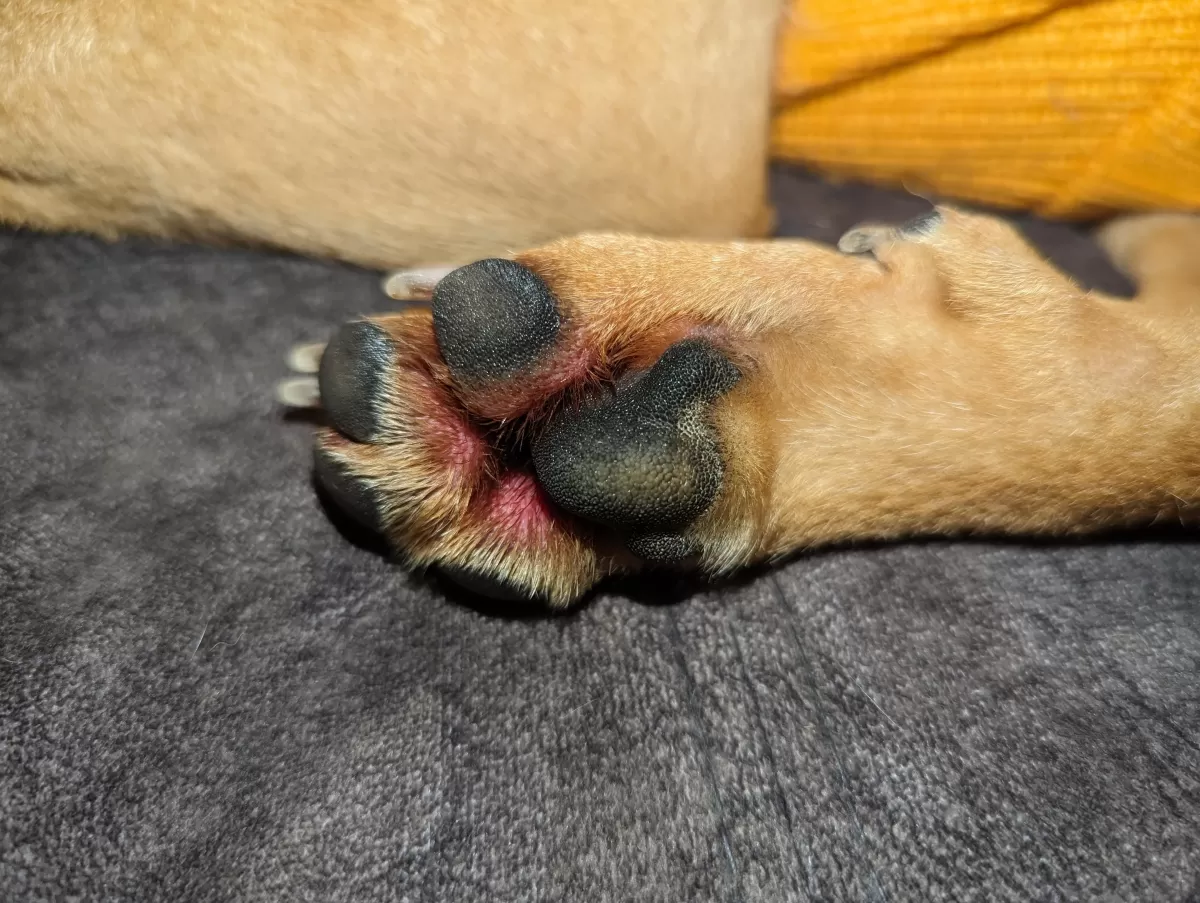
If the paws are yellow but the dog is comfortable, walking normally, and has no redness, swelling, odor, sores, or persistent licking, environmental staining or saliva staining may be relatively minor. If the color change is accompanied by inflammation or discomfort, a veterinarian should determine the underlying cause rather than treating the color alone.
Source: s.puainta.com
What Does Yellow Color on a Dog’s Paws Mean?
Yellow paws can refer to several different changes. The hair around the toes may become yellow, orange, reddish-brown, or rusty from saliva and moisture. The skin between the toes may look yellow because of crusting or discharge. The paw pads themselves may appear unusually yellow. These are not interchangeable signs.
A useful first step is to separate the color from the underlying problem. If only the hair is discolored and the skin looks healthy, staining is more plausible. If the skin is red, moist, thickened, scaly, painful, or foul-smelling, an inflammatory or infectious paw condition deserves more attention.
Veterinary dermatology uses the term pododermatitis for inflammation involving the paws. It is a description of the problem rather than a single diagnosis, so the cause can range from allergies and infection to parasites, foreign bodies, trauma, immune-mediated disease, or other conditions.
Source: seniortailwaggers.com
Yellow fur
Often reflects moisture, saliva, dirt, or staining around areas a dog repeatedly licks.
Yellow skin
Can occur with crusting, irritation, inflammation, or discharge and deserves closer inspection.
Yellow paw pads
Should be assessed separately because a change in the actual pad is not the same as stained hair.
Common Reasons Your Dog’s Paws Look Yellow
The most likely explanation depends on where the yellow color appears and what your dog is doing with the paws. Repeated licking is one of the most useful clues because it can both discolor the hair and worsen the skin problem that caused the licking.
A dog that repeatedly licks one paw may have a localized problem such as a splinter, grass awn, small wound, foreign material, or another source of pain. When several paws are affected, allergies or a more generalized skin condition become more important possibilities.
Source: caninejournal.com
Saliva staining from licking
Frequent licking can leave naturally occurring porphyrins on light-colored fur. Over time, the fur can become yellowish, orange, reddish, or brown.
Allergies
Environmental or food-related allergies can cause itching that leads dogs to lick and chew their feet. Chronic licking can then produce staining and secondary skin changes.
Yeast overgrowth
Warm, moist, irritated paws can support excessive growth of yeast that normally lives on canine skin. Itching, redness, odor, greasy or flaky skin, hair loss, and discoloration may accompany the problem.
Bacterial skin infection
Bacterial overgrowth can develop in damaged or inflamed skin. Feet are among the areas where moisture and inflammation can increase the risk of infection.
Dirt or environmental staining
Soil, grass, mud, outdoor surfaces, and other materials can temporarily change the appearance of paw fur. The color often becomes less concerning when it disappears with gentle cleaning and does not return.
Irritation or contact dermatitis
Substances encountered outdoors or around the home can irritate paw skin and lead to licking, redness, and discoloration.
Injury or foreign material
A thorn, grass seed, splinter, small cut, or other foreign object can make a dog focus on one paw. One-sided persistent licking is particularly useful information for a veterinarian.
Why Paw Licking Can Make the Yellow Color Worse
Licking repeatedly wets the fur and deposits saliva onto it. Saliva contains porphyrins, naturally occurring compounds associated with the breakdown of red blood cells, and these compounds can stain light-colored hair. Continued licking also damages the skin barrier and maintains moisture, which can contribute to inflammation or secondary microbial overgrowth.
This creates a cycle: an underlying source of itch or pain causes licking, licking causes more moisture and irritation, and the resulting skin changes can encourage still more licking. Removing the stain without addressing that cycle may therefore provide only a temporary cosmetic improvement.
Look at the pattern
One paw suggests checking closely for a local problem, while several affected paws can fit a generalized itchy skin condition.
Check the skin under the fur
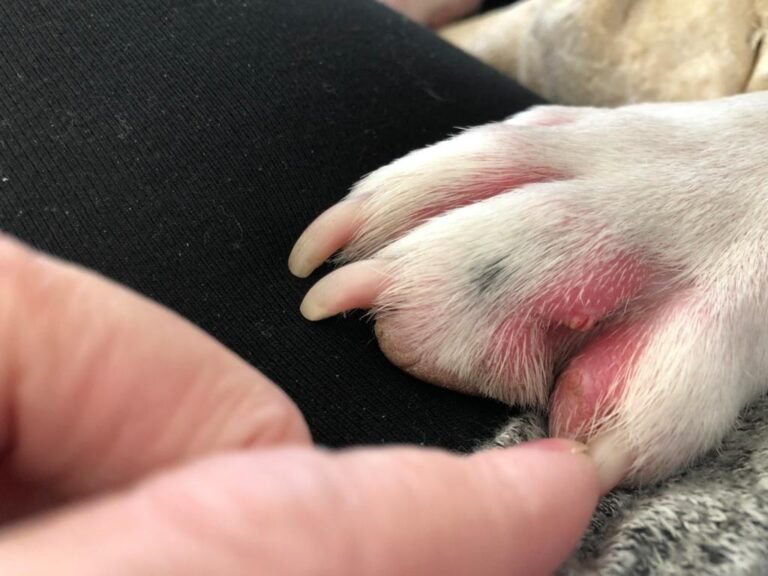
Separate the toes and inspect for redness, swelling, sores, crusting, moisture, discharge, or an unusual smell.
Could Yellow Paws Mean a Yeast Infection?
They can, but yellow color by itself is not enough to diagnose a yeast infection. Yeast overgrowth more commonly produces a combination of itching, licking, redness, odor, greasy or flaky skin, hair loss, and changes in skin color or texture.
Dogs with allergies or another condition that disrupts the skin barrier can be more susceptible to secondary yeast problems. Moisture from persistent licking can also make an already irritated paw more favorable to microbial overgrowth.
A veterinarian may use skin cytology or other diagnostic methods to determine whether yeast or bacteria are actually present. This matters because the appropriate treatment depends on the organism involved and the underlying reason the paw became inflamed.
Source: bubblypet.com
More suggestive of yeast
Persistent licking combined with redness, itchiness, a musty odor, greasy or flaky skin, hair loss, or recurrent inflammation.
Less suggestive of an active infection
Mild staining limited to the hair with healthy-looking skin, no odor, no persistent licking, and no discomfort.
Why diagnosis matters
Yeast, bacteria, allergies, parasites, foreign bodies, and other causes can produce overlapping signs but do not necessarily require the same treatment.
How to Check Your Dog’s Yellow Paws at Home
A gentle visual check can help you decide whether the change looks cosmetic or requires veterinary attention. Do this only if your dog is comfortable with paw handling; do not force an examination if the paw appears very painful.
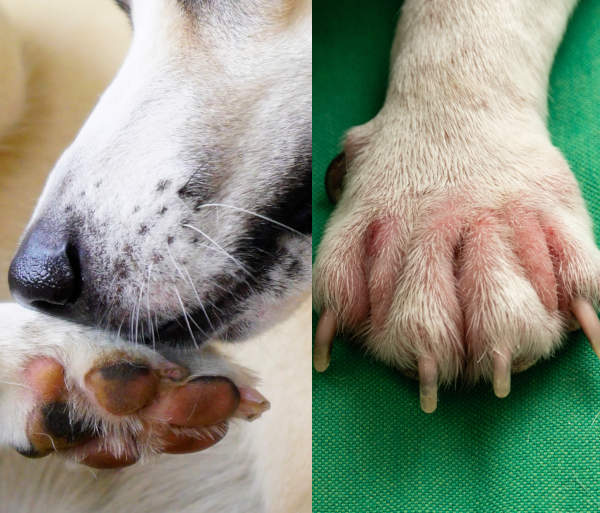
Start by comparing all four paws. Note whether the color is on the fur, between the toes, on the skin, or directly on the pads. Then look for inflammation and compare the affected paw with an unaffected one.
Source: cdn0.animalwised.com
Check the number of paws
One affected paw can point toward a localized problem. Several affected paws can occur with allergies or generalized skin disease.
Check for licking
Frequent licking or chewing is a clue that the color change may be secondary to itch, irritation, or pain.
Check between the toes
Look for redness, swelling, moisture, crusting, discharge, hair loss, or foreign material.
Check the pads
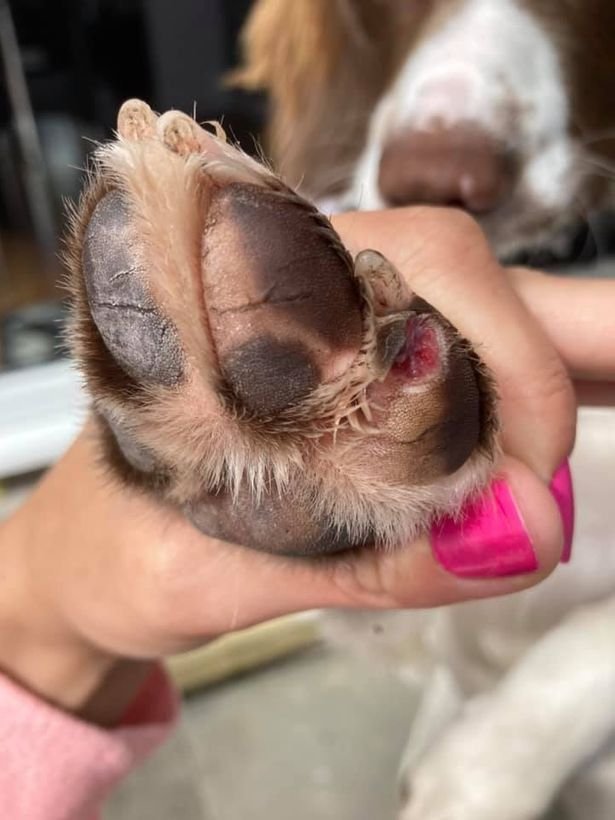
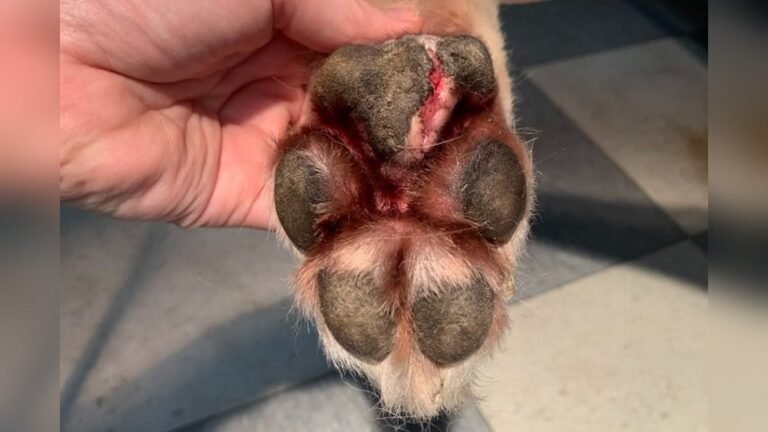
Look for cracking, unusual thickening, wounds, or changes that are actually on the pad rather than on the surrounding hair.
Check for odor
A new strong or musty odor, especially with inflammation or discharge, makes a skin problem more likely.
Check walking
Limping, reluctance to walk, or obvious pain increases the need for professional assessment.
When Gentle Cleaning May Be Reasonable
If the yellow color appears to be simple surface dirt and the paw is otherwise healthy, gently rinsing the paw with clean lukewarm water and drying it thoroughly may remove some staining. Avoid aggressive scrubbing because irritated paw skin can become more inflamed.
Do not apply human medications, essential oils, harsh disinfectants, or antifungal products simply because the paw looks yellow. A color change does not establish which treatment, if any, is appropriate.
Good sign
The discoloration decreases after gentle cleaning and does not return, while the dog remains comfortable and the skin looks normal.
Concerning sign
The yellow appearance returns quickly because the dog keeps licking, or the paw becomes red, swollen, smelly, wet, cracked, or painful.
When Should a Veterinarian Examine Yellow Paws?
Arrange a veterinary examination when yellow discoloration is persistent, repeatedly returns, or occurs with signs of inflammation or discomfort. The color itself is usually less informative than the combination of color, behavior, skin changes, and the number of paws affected.
Veterinary assessment is especially useful when a dog has chronic paw licking because the visible staining may be only a secondary sign. The underlying trigger can be allergic disease, infection, parasites, injury, a foreign body, or another dermatologic condition.
Source: irontonanimalhospital.com
Persistent or worsening licking
Repeated licking or chewing suggests ongoing itch, irritation, or pain that should be investigated.
Redness or swelling
Inflamed skin is more concerning than uncomplicated discoloration of otherwise healthy fur.
Discharge or strong odor
Moist discharge, crusting, or a strong unusual odor can accompany infection or significant inflammation.
Pain or limping
Difficulty walking or reluctance to bear weight can indicate an injury, foreign body, infection, or another painful condition.
Cracks, sores, or bleeding
Open or damaged skin needs appropriate veterinary evaluation, particularly when it is not healing.
Recurring episodes
Repeated paw problems can indicate an underlying allergy or chronic skin condition that requires longer-term management.
What a Veterinarian May Look For
A veterinarian may examine the paws, nails, skin, ears, and other body areas for clues to the underlying condition. Depending on the findings, diagnostic testing can include examination of skin samples for yeast or bacteria, skin scrapings for parasites, blood testing, imaging when a foreign body or deeper problem is suspected, or additional testing for allergies and systemic disease.
The appropriate workup depends on the pattern. A single affected paw is different from four itchy paws, and a yellow stain on the hair is different from yellow material associated with inflamed skin.
Single paw
A local injury, foreign body, or other localized problem becomes particularly important to consider.
Multiple paws
Allergic or generalized dermatologic conditions may become more relevant, especially when itching is prominent.
Recurrent paws
The veterinarian may need to investigate an underlying condition rather than repeatedly treating only secondary infection.
What Not to Do About Yellow Dog Paws
The safest approach is to avoid treating the color before identifying why it appeared. Paw discoloration can be cosmetic, but it can also be the visible result of an itchy or painful condition.
Avoid repeatedly scrubbing stained fur, because mechanical irritation can worsen sensitive skin. Do not assume every yellow or brown stain is yeast, and do not use leftover prescription medication or human skin products without veterinary guidance.
Source: i.redd.it
Do not diagnose by color alone
Yellow, orange, red, and brown changes can have overlapping causes, so color is only one part of the assessment.
Do not ignore persistent licking
Repeated licking can indicate an underlying problem and can contribute to additional skin damage.
Do not aggressively scrub
Harsh cleaning can irritate the skin and make inflammation harder to control.
Do not delay care for painful paws
Lameness, swelling, open sores, significant discharge, or severe discomfort warrants professional assessment.
Frequently Asked Questions
Q
Why are my dog’s white paws turning yellow?
White or light-colored paw fur can become yellowish, orange, reddish, or brown when it is repeatedly exposed to saliva and moisture. Frequent licking is a common reason. Dirt and outdoor staining can also change the appearance. If the dog is licking constantly or the skin is red, swollen, smelly, or painful, the underlying cause should be evaluated.
Q
Can allergies make a dog’s paws yellow?
Yes. Allergies can make the paws itchy, causing repeated licking and chewing. The licking can stain the fur and may contribute to ongoing inflammation or secondary microbial overgrowth. Several itchy paws are more suggestive of a generalized skin problem than an isolated injury.
Q
Are yellow dog paws always a sign of yeast?
No. Yellow color alone does not prove a yeast infection. Yeast overgrowth is more concerning when discoloration occurs with persistent itching, licking, redness, odor, greasy or flaky skin, hair loss, or recurrent inflammation. A veterinarian can use appropriate diagnostic testing when infection is suspected.
Q
Why is only one of my dog’s paws yellow?
One yellow paw may simply have picked up more dirt or may be stained from licking that paw more often. However, persistent attention to one paw can also indicate a localized source of irritation or pain, such as a small injury or foreign material. Compare the paws and seek veterinary care if the behavior persists or the paw looks inflamed.
Q
Should I worry if my dog’s paw pads themselves look yellow?
A change in the actual paw pad deserves more attention than simple staining of light-colored fur because the two findings have different causes. Check for cracking, thickening, tenderness, sores, or difficulty walking. If the pad change is new, persistent, or accompanied by other symptoms, have a veterinarian examine it.
Q
How can I prevent yellow staining on my dog’s paws?
Prevention depends on the cause. Keep paws clean and dry after outdoor activity, maintain routine grooming, and pay attention to persistent licking. If allergies, infection, parasites, or another medical problem are causing the licking, controlling that underlying condition is more effective than repeatedly trying to remove the stain.
✦ Wrapping Up
Conclusion
If your dog’s paws look yellow, first determine whether the color is on the fur, skin between the toes, or the paw pads. Saliva staining from repeated licking and ordinary environmental staining are common explanations, but allergies, yeast or bacterial overgrowth, irritation, injury, foreign material, and other paw disorders can produce discoloration as well.
The most useful clues are what the paw looks like underneath the color and how your dog behaves. Persistent licking, redness, swelling, odor, discharge, sores, cracking, or lameness should not be dismissed as a cosmetic issue. A veterinarian can identify the underlying cause and choose treatment based on the actual diagnosis.
💡 Key Takeaway
Inspect the affected paws gently, compare all four feet, note whether the yellow color is on the fur or pads, and monitor for licking, inflammation, odor, discharge, or pain. If any of these concerning signs are present or the discoloration keeps returning, arrange a veterinary examination.
Learn how to keep dog’s paws from getting muddy with proven strategies, paw protection methods, grooming tips, and easy cleanup routines for cleaner homes and healthier paws.
Learn how to treat dogs paw pads peeling, including common causes, safe home care, warning signs, veterinary treatment, and ways to prevent recurring paw pad damage.
Learn how to tell if a dog’s paw is broken, recognize fracture symptoms, understand when veterinary care is urgent, and learn how broken paw injuries are diagnosed.
Learn why your dog’s paws may be red between the toes, including allergies, infections, irritation, injuries, and interdigital furuncles, plus when veterinary care is needed.