Can Cats Wear Sweaters: Essential Answers and Practical Guidance
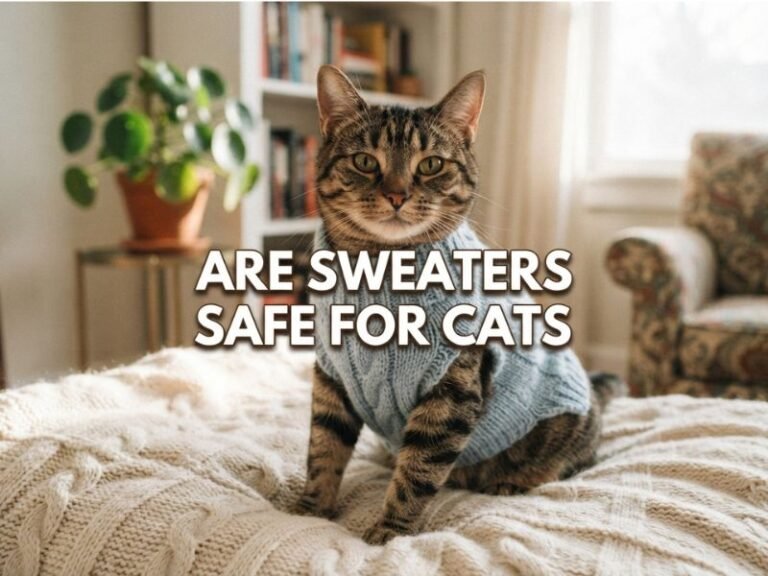
A cat in a tiny sweater can look charming, especially in a holiday photo or on a chilly morning. But clothing that looks comfortable to a person may feel restrictive, hot, noisy, or frightening to a cat. A relaxed pose in one moment also does not prove that a cat is comfortable for an extended period.
So, can cats wear sweaters safely? Some cats can, but only for specific reasons, with the right garment, close supervision, and a clear willingness to remove it at the first sign of distress. I’ll explain which cats may benefit, how to choose and introduce a sweater, what warning signs matter, and when a sweater is the wrong solution.
For most healthy, indoor cats, a sweater is optional rather than necessary. Warm bedding, a draft-free room, and veterinary advice are often better choices. Clothing becomes more reasonable for a hairless cat, a cat with unusually sparse fur, or a cat recovering from a medical procedure, but those situations still require individual judgment.
Can Cats Wear Sweaters Safely?
Can cats wear sweaters without harm? Yes, some cats can wear a properly fitted sweater briefly and comfortably. However, cats differ widely in tolerance. A sweater may help a cat stay warm in a genuinely cold environment, yet it can also cause overheating, tangled fur, restricted movement, skin irritation, stress, or accidental injury.
The safest answer is conditional: a cat may wear a sweater if the cat remains calm, can move normally, can groom and use the litter box, and is supervised the entire time. A cat should not be dressed simply because the outfit is cute if the garment creates discomfort or interferes with normal behavior.
My general rule is to treat a sweater as a temporary tool, not a permanent accessory. I would first ask why the cat needs clothing, whether a warmer environment could solve the problem, and whether a veterinarian has identified a medical reason for extra warmth.
When a sweater may help
- A hairless breed, such as a Sphynx, becomes cold in a cool indoor space.
- A cat has very little fur because of a medical condition or treatment.
- A veterinarian recommends light clothing after a procedure or for a specific health concern.
- A cat must briefly travel through cold conditions and a carrier alone does not provide enough insulation.
- A senior, underweight, or medically fragile cat has difficulty maintaining body warmth, with veterinary guidance.
When a sweater is usually unnecessary
Most cats with a healthy coat and access to a comfortable indoor temperature do not need a sweater. Their fur, skin, behavior, and choice of resting location provide natural temperature regulation. If a fully furred cat seems cold, I would look for a draft, illness, poor body condition, or an overly cool environment before reaching for clothing.
Cold-seeking behavior can have many explanations. A cat that is shivering, unusually quiet, weak, hiding, or cold to the touch may need medical attention rather than a sweater. Likewise, a cat that pants or seems restless in clothing may be overheating or stressed.
Which Cats May Need Extra Warmth?
A cat’s need for warmth depends on more than breed. Age, body condition, coat density, health, recent surgery, activity level, and the surrounding temperature all matter. A veterinarian can help distinguish normal comfort preferences from a problem with temperature regulation.
Hairless and sparsely coated cats
Hairless cats lose the insulating effect of a conventional fur coat and may seek warm surfaces more often. A soft sweater can be useful for a short period, but it should not replace a warm room, safe heated bedding, or regular skin care. Hairless skin may be more vulnerable to rubbing, trapped moisture, and irritation under clothing.
Cats with shaved areas, patchy hair loss, or a coat affected by illness may also need protection. Before covering exposed skin, I would check with a veterinarian, particularly if redness, scaling, sores, itching, or sudden hair loss is present.
Kittens, seniors, and underweight cats
Very young kittens, older cats, and underweight cats can be more vulnerable to cold. A kitten that cannot regulate body temperature normally needs appropriate environmental support and professional guidance; a sweater alone is not a safe substitute. Older cats may become cold because of reduced body fat, illness, or decreased mobility.
A thin cat that feels cold should receive a veterinary evaluation. Weight loss, weakness, low appetite, and changes in activity can signal an underlying condition. Covering the cat may hide symptoms while failing to address the cause.
Cats recovering from treatment
After surgery or treatment, a veterinarian may recommend a recovery suit or another protective garment. That item is not automatically interchangeable with a casual sweater. A medical garment must fit the affected area, allow inspection of the incision, and avoid pressure on sensitive tissue.
If a cat has stitches, a wound, a drain, or a skin infection, I would use only clothing approved by the treating veterinary professional. A loose sweater can catch on an incision, while a tight garment can trap moisture or rub the skin.
How to Choose a Safe Cat Sweater
The best sweater is not the thickest or most decorative one. It is soft, breathable, lightweight, secure without being tight, and simple to remove. I would prioritize the cat’s body language and mobility over appearance.
Check the fit
A sweater should lie smoothly against the body without squeezing the neck, chest, abdomen, or legs. The cat should be able to walk, sit, lie down, stretch, jump onto a low surface, and use the litter box normally. The garment should not drag on the floor or cover the eyes, nose, mouth, or ears.
Check the fit with particular care around the armpits and front legs. Tight arm openings can restrict movement and cause friction. A sweater that is too loose may snag on furniture, become twisted, or allow a leg to slip through an opening.
Do not rely on a generic small, medium, or large label. Measure the cat according to the manufacturer’s instructions, and inspect the garment after the cat moves. A sweater that fits while the cat is standing may shift when the cat curls up or grooms.
Select suitable materials
Choose a smooth, breathable fabric that does not shed loose fibers easily. Soft cotton blends or lightweight knit fabrics may be more comfortable than bulky, rough, or heavily decorated materials. Avoid scratchy yarn, stiff seams, exposed fasteners, and fabrics that trap substantial heat.
Look for loose threads, dangling ribbons, buttons, bells, zippers, and decorations. These can irritate the skin or become chewable hazards. Any embellishment that can be pulled off should be treated as a potential choking or intestinal obstruction risk.
Consider the cat’s coat as well. A dense or long coat underneath a sweater can mat, especially if the fabric rubs repeatedly. Inspect the fur and skin after each short session.
Prefer simple, secure closures
A garment should stay in place without requiring a tight fit. Secure closures can make removal easier, but they should not press into the body or present a chewing hazard. Avoid clothing with long ties or loops that could catch on household objects.
I would choose a design that can be removed quickly if the cat becomes frightened, overheated, or tangled. A sweater that takes several minutes to get off is a poor choice for an animal that may panic suddenly.
How to Introduce a Sweater
Many cats object to clothing because it changes the sensation of movement, not because they are being stubborn. Slow introduction gives the cat a chance to investigate the garment without immediately feeling trapped.
- Let the cat inspect it. Place the sweater near a familiar resting area. Allow sniffing and investigation without pushing the garment toward the cat.
- Pair it with something positive. Offer a favorite treat, calm praise, or gentle play while the sweater is nearby. Stop if the cat becomes tense or fearful.
- Touch briefly. Rub the garment lightly against the cat’s shoulder or side, then remove it. Repeat only while the cat remains relaxed.
- Put it on for a very short period. Start with a few minutes in a quiet room. Observe walking, posture, breathing, grooming, and facial expression.
- Increase time gradually. If the cat behaves normally, extend future sessions in small increments. Never leave the sweater on for a long period during the first attempt.
- End on a calm note. Remove the sweater before the cat becomes distressed, and inspect the skin and fur afterward.
A cat that freezes, falls over, crouches tightly, backs away, or repeatedly tries to remove the garment may be communicating that the experience is not acceptable. I would not interpret stillness as cooperation. Some frightened cats become motionless rather than actively resisting.
Never force a resistant cat
If the cat scratches, bites, vocalizes intensely, hides, or repeatedly escapes, stop the session. Forcing clothing can create fear of handling and make future veterinary care more difficult. A sweater is not essential for most cats, so a strong negative reaction is a good reason to choose another way to provide warmth.
How Long Can a Cat Wear a Sweater?
There is no universal safe time limit because comfort depends on the garment, the cat, the room, and the reason for wearing it. A first session should be brief and directly supervised. Even a cat that accepts a sweater may need frequent breaks.
Remove the sweater for eating, drinking, grooming, and normal rest unless a veterinarian has specifically instructed otherwise. Clothing can interfere with licking, scratching, and body inspection. It can also become damp from spilled water or saliva, which increases skin irritation and chilling after removal.
Never leave a cat unattended in a sweater, especially around stairs, cat trees, crates, doors, heating equipment, or other places where the garment could snag. Do not leave one on overnight. A camera does not replace direct supervision because a problem can develop faster than a remote observer can respond.
Watch for overheating
Overheating is a serious concern, particularly in warm rooms or under thick fabric. Remove the sweater immediately if the cat pants, breathes rapidly, drools, seems weak, becomes unusually restless, develops bright red or very pale gums, or has trouble standing.
Move the cat to a cooler, well-ventilated area and contact a veterinarian promptly if symptoms are significant or do not improve quickly. Do not use a sweater to manage a cat that already appears overheated.
Watch for stress and restricted movement
Stress can appear as flattened ears, a tucked tail, dilated pupils, crouching, hiding, hissing, growling, repeated escape attempts, or sudden aggression. Restricted movement may show up as an awkward gait, stumbling, inability to jump normally, or a garment caught around a leg.
Remove the clothing calmly. If the sweater is stuck, avoid pulling forcefully. Cut it off carefully if necessary, keeping scissors away from the skin, and seek veterinary help if the cat is injured or cannot be freed safely.
Common Sweater Mistakes to Avoid
- Choosing appearance over function: Costumes with hats, capes, dangling pieces, or heavy decoration can create more hazards than warmth.
- Using a dog sweater without checking the fit: Dogs and cats have different body shapes, and a dog garment may restrict feline movement or leave unsafe openings.
- Putting clothing over wet fur or irritated skin: Moisture and friction can worsen skin problems and encourage matting.
- Ignoring grooming needs: Check under the sweater for tangles, redness, pressure marks, and trapped litter or moisture.
- Assuming shivering always means a sweater is needed: Shivering can accompany illness, pain, fear, or environmental cold.
- Using clothing to cover a medical problem: Hair loss, wounds, lethargy, and weight loss deserve evaluation rather than concealment.
- Leaving the cat alone: Even a well-fitted garment can snag, twist, or become wet.
- Assuming acceptance is permanent: A cat may tolerate a sweater one day and reject it later because of illness, heat, pain, or a poor association.
Safer Alternatives to Sweaters
For many cats, changing the environment is safer and more effective than dressing the animal. Provide a warm sleeping area away from drafts, add a washable blanket, and keep the room at a comfortable temperature. Let the cat choose among resting places rather than forcing a particular bed.
A self-warming pet mat can provide gentle insulation without covering the body. If using an electrically heated bed or heating pad, follow the manufacturer’s safety instructions and select a product designed for pets. The cat should be able to move away from the heat easily. Avoid improvised heating devices, exposed cords, and surfaces that can become hot enough to burn skin.
For travel, a well-insulated carrier with secure bedding may offer better protection than a sweater. Keep the carrier away from wind and extreme temperatures, and minimize time outdoors. A carrier cover can block drafts while preserving ventilation, but it should never seal off airflow.
For a cat that dislikes clothing after surgery, ask the veterinarian about an appropriately fitted recovery suit, protective collar, or another approved option. The right choice depends on the location of the incision and the cat’s ability to reach it.
When to Call a Veterinarian
Contact a veterinarian if a cat seems persistently cold, shivers, becomes weak, has pale or blue-tinged gums, breathes abnormally, or is difficult to rouse. Urgent care may be needed when signs are severe, sudden, or accompanied by collapse, confusion, or breathing difficulty.
A routine appointment is appropriate for unexplained hair loss, repeated skin irritation under clothing, ongoing weight loss, reduced appetite, or a major change in tolerance for cold. These signs may point to a health issue rather than a simple need for insulation.
Ask for professional advice before using a sweater on a cat with heart disease, respiratory disease, a significant skin condition, recent surgery, or a history of anxiety related to handling. A veterinarian can also recommend a recovery garment and explain how often to inspect the skin.
Frequently Asked Questions
Can cats wear sweaters indoors?
Some cats can wear a lightweight sweater indoors for a short, supervised period, but most healthy cats do not need one in a comfortable home. Check the room temperature, the cat’s coat, and the cat’s behavior before deciding. Remove the sweater if the cat seems hot, stressed, or restricted.
Can cats wear sweaters overnight?
I do not recommend leaving a cat in a sweater overnight unless a veterinarian has given specific instructions for a medical garment. Unsupervised clothing can snag, twist, interfere with grooming, or cause overheating. A warm bed and draft-free sleeping area are generally safer for nighttime comfort.
Can cats wear sweaters in cold weather outside?
A sweater may offer limited help during brief, supervised travel for a cat that genuinely needs extra warmth, but it does not make outdoor exposure safe. Wind, moisture, freezing temperatures, and traffic remain dangers. Use a secure carrier, limit exposure, and ask a veterinarian about a hairless or medically vulnerable cat.
How can I tell if my cat hates a sweater?
Look for freezing, crouching, flattened ears, a tucked tail, dilated pupils, hiding, hissing, biting, repeated attempts to remove the garment, or an abnormal gait. A cat that stops moving is not necessarily comfortable. Remove the sweater and avoid forcing another attempt if distress continues.
Can a sweater stop a cat from licking a wound?
A regular sweater should not be used as a substitute for veterinary wound protection. It may shift, rub the area, trap moisture, or fail to stop access. Use only a recovery suit or other protective garment recommended for that wound by the treating veterinarian.
What should I do if my cat gets stuck in a sweater?
Stay calm and prevent the cat from running into furniture or hiding. Remove the sweater gently if possible. If the garment is twisted around a limb or cannot be removed without pulling the skin, cut it carefully with blunt-tip scissors or seek immediate veterinary assistance.
Are sweaters safe for hairless cats?
They can be, but hairless cats need extra attention to fit, fabric, temperature, and skin condition. Use a soft, breathable garment for a limited time, inspect the skin afterward, and stop if rubbing, redness, dampness, or overheating occurs. A warm room and safe bedding may be better than constant clothing.
Conclusion
So, can cats wear sweaters? Some can, but comfort and safety must determine the decision, not appearance. I recommend using a soft, well-fitted garment only when there is a genuine reason, introducing it slowly, supervising every session, and removing it at the first sign of heat, stress, restricted movement, or skin irritation. For most cats, a warm environment and the ability to choose a comfortable resting place remain the simplest and safest options.