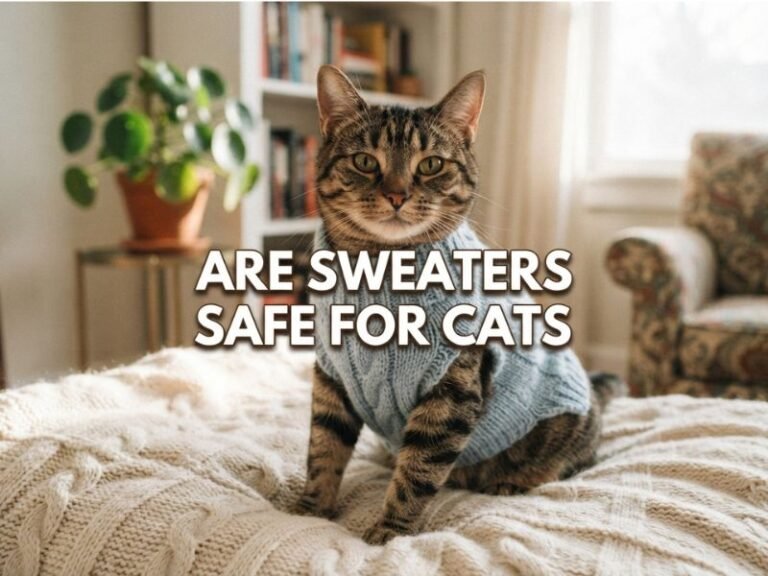
Do Sweaters Keep Cats Warm: Key Facts and Helpful Explanations
A sweater can make a cat feel warmer, but it is not automatically a safe or effective solution for every cat. The answer depends on the cat’s coat, age, health, environment, and ability to move comfortably while wearing clothing.
If you have wondered, do sweaters keep cats warm, I can give you a practical answer: sometimes, especially for hairless, shaved, elderly, sick, or underweight cats in a chilly setting. For many healthy cats, however, a sweater is unnecessary and may create stress, overheating, restricted movement, or a grooming problem.
I’ll explain how cat sweaters work, which cats may benefit, how to choose and introduce one, and which warning signs mean it should come off immediately. I’ll also compare sweaters with safer ways to improve a cat’s comfort in cold weather.
Do sweaters keep cats warm?
Yes, a properly fitted sweater can help some cats retain body heat by adding an insulating layer over the torso. It may reduce heat loss in a cold room, during supervised outdoor activity, or after a veterinarian clips a large area of fur. The benefit is greatest when the cat has limited natural insulation and the sweater fits without interfering with normal behavior.
A sweater does not produce heat by itself. It slows the movement of warmth away from the cat’s body, much as a blanket or insulated bed does. If a cat is already cold because of illness, shock, or dangerously low body temperature, clothing is not a substitute for veterinary care.
Healthy cats with full coats usually regulate temperature effectively. Their fur traps air close to the skin, and their bodies can seek warmer locations, curl up, or reduce exposed surface area. Adding clothing may provide little advantage while creating several disadvantages.
My short recommendation is to treat a sweater as a specific comfort tool, not a routine accessory. First improve the environment, then consider clothing only if the cat genuinely needs another layer and tolerates it calmly.
How cats naturally stay warm
A cat’s coat is part of a sophisticated temperature-control system. Fur helps trap a layer of air near the skin, while the skin and coat respond to changing conditions. A cat can also conserve heat by curling into a compact position, tucking its paws, sleeping in a sheltered area, and moving toward a warm surface.
Some cats grow a thicker coat during colder seasons, although indoor lighting and temperature can affect seasonal shedding. Coat density varies by breed, individual genetics, age, and health. A long-haired cat is not necessarily more comfortable in every cold situation, but a healthy coat generally provides meaningful insulation.
Behavior is another important part of feline thermoregulation. A cat that feels cold may seek a sunny window, burrow into bedding, or stay near a safe heat source. That ability to choose and change position is one reason a confined sweater can be less helpful than a warm room or accessible bed.
Indoor cats often live in stable temperatures and do not need the same protection as a cat exposed to wind, dampness, or freezing conditions. A cat that appears to enjoy lying near a heater is not automatically asking for clothing. Preference for warmth is normal feline behavior.
Which cats may benefit from a sweater?
A sweater may be reasonable for a cat with reduced natural insulation or a temporary need for extra warmth. I would still use one only with close observation, because individual tolerance matters more than a breed label.
Hairless and sparsely coated cats
Hairless cats and cats with very thin coats can lose heat more quickly than heavily coated cats. A soft, lightweight garment may help during cool indoor periods, particularly if the cat is calm in clothing and can still walk, groom, use the litter box, and rest normally.
Hairless skin also needs protection from irritation. A sweater that rubs, traps moisture, or causes sweating can create a problem instead of solving one. Regularly inspect the skin beneath the garment rather than assuming the fabric is harmless.
Cats with clipped or shaved fur
A veterinary procedure may require fur to be clipped. A cat with a large shaved area can temporarily lose some insulation and may appreciate a warm environment while the coat grows back. The timing depends on why the fur was removed and whether the skin is healing.
Never cover a surgical site, drain, bandage, or irritated area unless a veterinarian specifically approves the garment. Clothing can catch on medical equipment, hold moisture against the skin, or hide changes that need attention.
Senior, thin, or medically vulnerable cats
Older cats may have less body fat, reduced muscle mass, arthritis, or medical conditions that make cold more uncomfortable. Very thin cats can also have less insulation. A sweater might offer limited assistance, but unusual cold-seeking, shivering, weakness, or a sudden change in comfort should prompt a veterinary call rather than a clothing purchase.
Some illnesses affect circulation, metabolism, or the ability to maintain body temperature. In those cases, warmth needs to be managed as part of the cat’s medical care. Ask the veterinarian before using a sweater on a cat with chronic disease, recent surgery, significant weight loss, or impaired mobility.
Kittens in special circumstances
Young kittens have immature temperature regulation and can become cold quickly, especially if they are orphaned, ill, wet, or separated from their mother. A sweater is usually not the first solution for a very young kitten. Safe ambient warmth, appropriate bedding, and guidance from a veterinarian or experienced neonatal caregiver are more important.
Small kittens may also become tangled in clothing or overheat more easily. Any warming plan for a fragile kitten should be supervised carefully and matched to the kitten’s age and condition.
When a sweater is usually unnecessary
Most healthy adult cats living indoors at a comfortable temperature do not need sweaters. A full coat already provides insulation, and many cats dislike the sensation of fabric around their chest, legs, or neck.
A sweater is also a poor choice for a cat that is active, unsupervised, or likely to chew and pull at clothing. A loose thread can become a choking or swallowing hazard. A tight garment can restrict breathing or movement. A cat that freezes, rolls repeatedly, hides, or tries urgently to escape is communicating that the item is not comfortable.
Do not use a sweater to make a cat look festive if the cat shows distress. A brief photograph is not worth prolonged fear, overheating, or an avoidable injury. If clothing is necessary for medical or thermal reasons, function and safety should come before appearance.
Signs your cat may be cold
Cold behavior can be subtle, and a single sign does not prove that a cat needs clothing. Look for a pattern and consider the surrounding temperature, the cat’s health, and any recent changes.
- Seeking warm surfaces or staying unusually close to a safe heat source.
- Persistently curling into a tight position or tucking the paws under the body.
- Shivering or visible muscle trembling.
- Cold ears, paws, or body surface along with lethargy or discomfort.
- Hesitation to leave a warm bed or movement that appears stiff in a cold environment.
- Reduced activity, weakness, confusion, or unusual sleepiness.
Shivering is not a normal reason to simply put on a sweater and walk away. If a cat is weak, difficult to wake, uncoordinated, breathing abnormally, or feels markedly cold, contact a veterinarian promptly. Severe hypothermia is an emergency, and a sweater cannot diagnose or correct its cause.
Also remember that cats may hide illness. A cat that stops eating, withdraws, or changes litter box habits needs attention even if the room does not seem cold.
How to choose a safe cat sweater
If a sweater is appropriate, select the simplest garment that provides coverage without compromising movement. Clothing should be soft, breathable, lightweight, and designed for a cat’s body shape rather than adapted from a restrictive human garment.
Focus on fit
The sweater should sit close enough to stay in place but never compress the chest, throat, abdomen, or limbs. Your cat should be able to take a full breath, turn the head, walk, sit, lie down, stretch, and use the litter box normally.
Avoid openings that rub behind the front legs or press against the armpits. Check that the neck is not tight and that the fabric does not cover the eyes, nose, or mouth. A garment that twists when the cat walks is not a good fit.
Use the manufacturer’s measurements instead of relying only on weight or breed. Measure the cat according to the product directions, and inspect the fit again after the cat moves because a sweater can shift from its original position.
Choose safe materials and construction
Look for smooth seams, secure stitching, and fabric that does not shed easily. Avoid dangling strings, ribbons, buttons, bells, zippers that can pinch, and decorative pieces that a cat could chew off. A simple pull-on or fastened design may work, but the safest style depends on the individual cat and the reason for using it.
Wash the garment as directed and keep the skin dry. Do not put a damp sweater on a cat. Moisture reduces comfort, encourages skin irritation, and can make a cold animal feel colder.
Match the layer to the environment
A thick sweater may be excessive in a heated home. Overheating can happen even when the air feels comfortable to a person, especially for a small cat, a long-haired cat, or a cat resting near a heater. For mild indoor chill, a thin breathable layer or a warm bed may be enough.
For outdoor exposure, a sweater does not make a cat safe in freezing rain, snow, strong wind, or icy conditions. Fabric can become wet, freeze, snag on branches, or limit the cat’s ability to escape danger. Outdoor access should be controlled, brief when conditions are harsh, and supervised.
How to introduce a sweater gradually
A cat should not be forced into clothing for the first time and then left alone. I recommend a slow introduction that allows the cat to decide whether the experience remains tolerable.
- Place the sweater near a familiar resting area so the cat can investigate its smell and texture.
- Reward calm interest with a favorite treat, gentle praise, or another reward the cat already enjoys.
- Briefly touch the fabric to the shoulders or back without putting it on.
- Try the garment for a very short period while the cat is awake and supervised.
- Observe walking, breathing, grooming attempts, posture, and emotional response.
- Remove it before the cat becomes distressed, then repeat later only if the earlier step went well.
Some cats accept clothing within a few calm sessions; others never do. Do not interpret stillness as comfort. A frightened cat may freeze rather than struggle. Watch for flattened ears, dilated pupils, crouching, tail flicking, hiding, vocalizing, or frantic attempts to remove the sweater.
Never leave a newly dressed cat unattended. Even a garment that seemed safe can catch on furniture, snag on a claw, or become twisted during grooming. If the sweater is being used for a medical reason, follow the veterinarian’s instructions about how long it should remain on.
How long can a cat wear a sweater?
There is no universal safe duration because tolerance, fit, temperature, coat type, and health all differ. Use the shortest period that meets the purpose, and check the cat frequently. Remove the sweater for breaks, grooming, eating, drinking, and rest unless a veterinarian has given different instructions.
Inspect the skin for redness, dampness, hair matting, pressure marks, swelling, or unusual odor. Check the garment for twisting, stretching, loose threads, and wet spots. If the cat keeps licking or biting one area, take the sweater off and look for irritation.
Stop using it immediately if the cat pants, drools, seems weak, becomes unusually restless, has trouble breathing, loses coordination, or feels hot. Panting in cats is not a normal sign of simple sweater acceptance. It can indicate stress, overheating, pain, or illness and deserves prompt attention.
Safer alternatives to a sweater
For many cats, environmental warmth is more effective and less stressful than clothing. These options preserve the cat’s ability to move away when it feels too warm.
- Keep the indoor temperature stable and reduce cold drafts.
- Provide a thick, dry bed in a quiet area away from doors and windows.
- Offer covered beds or fleece blankets that the cat can enter and leave freely.
- Place a resting area off a cold floor, while ensuring it cannot fall.
- Use a pet-safe heated bed according to the product instructions.
- Keep outdoor cats indoors during freezing, wet, or windy weather when possible.
- Dry a cat thoroughly after rain, bathing, or accidental exposure to water.
Heated products need their own precautions. Follow the temperature and placement instructions, inspect cords, and make sure the cat can move away from the heat. Avoid improvised heating pads, hot water bottles, electric blankets intended for people, or anything that can burn skin or create a fire risk.
A warm bed also makes it easier to distinguish comfort from distress. The cat can select the temperature it prefers instead of being enclosed in a layer it cannot remove.
Common sweater mistakes to avoid
Assuming every cat needs one
Temperature comfort is individual. A hairless cat may appreciate a light layer, while another may become anxious or overheated. Start with the cat’s physical needs and behavior rather than social media trends, costumes, or assumptions about breed.
Using a human baby sweater without checking it
Human clothing may have unsafe buttons, loose threads, narrow openings, or a shape that restricts a cat’s shoulders. If a garment was not designed for feline movement, inspect it carefully and do not assume that a small size is automatically suitable.
Leaving the cat alone
Supervision is essential during introduction and whenever the garment is new. A cat can catch the sweater on a crate, carrier, branch, or piece of furniture. A trapped animal may panic or injure itself while trying to escape.
Ignoring grooming and litter box access
Cats need to groom, scratch, stretch, and eliminate without interference. A sweater that blocks access to the abdomen or rear, collects litter, or causes matting is not functioning safely. Remove it and reassess the design.
Using clothing instead of finding the cause of coldness
Persistent cold-seeking may reflect a cold room, but it can also accompany low body weight, illness, pain, or weakness. Clothing can hide symptoms and delay care. If your cat’s behavior changes suddenly, schedule veterinary advice.
Do sweaters keep cats warm: FAQ
Do indoor cats need sweaters in winter?
Usually not. A healthy indoor cat with a full coat generally stays comfortable in a stable, draft-free home with warm bedding. A sweater may be considered for a hairless, shaved, elderly, underweight, or medically vulnerable cat, but the fit and the cat’s response should be monitored closely.
Can a sweater prevent a cat from getting too cold?
It can reduce heat loss in mild conditions, but it cannot reliably protect a cat from severe cold, wet weather, wind, or a medical problem. Dry shelter, a suitable indoor temperature, and veterinary care are more important than clothing when the risk is significant.
Should a hairless cat wear a sweater all the time?
No. A hairless cat may need extra warmth, but continuous clothing can cause overheating, skin irritation, moisture buildup, and stress. Offer warm resting areas first, use breathable clothing only when appropriate, and give the cat regular breaks for skin checks and grooming.
Can cats sleep in sweaters?
It is safer not to leave a cat sleeping in a sweater unless a veterinarian has specifically recommended it and the garment has been carefully fitted. During sleep, a cat may not respond quickly to overheating, entanglement, or restricted movement. A warm bed is usually a better overnight option.
How can I tell if my cat is too hot in a sweater?
Remove the sweater if your cat pants, breathes rapidly, drools, seems restless, becomes weak, tries repeatedly to escape, or feels unusually hot. Red or damp skin and constant licking also indicate a problem. Move the cat to a comfortable area and contact a veterinarian if symptoms persist or appear severe.
What should I do if my cat hates wearing a sweater?
Take it off and do not force the issue. A cat that hides, freezes, flattens its ears, struggles, or vocalizes is showing distress. Improve warmth through bedding, room temperature, and safe heated products instead. If clothing is medically necessary, ask the veterinarian about alternative designs or protective options.
Can a cat wear a sweater after surgery?
Only with veterinary guidance. A sweater might interfere with an incision, bandage, drain, or prescribed recovery garment. It can also conceal swelling, discharge, or redness. Use the protection recommended by the veterinary team and follow its instructions for supervision and removal.
Conclusion
So, do sweaters keep cats warm? They can help selected cats in mild cold when the garment is breathable, correctly fitted, dry, and used under supervision. Healthy, fully coated indoor cats often benefit more from a warm bed and stable room temperature than from clothing. I would watch the cat’s behavior, prioritize veterinary advice for vulnerable animals, and remove any sweater that causes stress, overheating, restricted movement, or skin irritation.