How to Measure Dog Clothes Size: Practical Steps and Helpful Tips
Have you ever ordered a dog sweater that looked perfect on the size chart but arrived too tight across the chest or far too long in the back? A dog’s weight and breed can suggest a size, but neither one replaces accurate measurements.
I use three main measurements to choose dog clothing: back length, chest girth, and neck circumference. The process is simple, but the placement of the tape, the dog’s posture, and the garment’s design all affect the result. Learning how to measure dog clothes size can prevent uncomfortable fits, unnecessary returns, and clothing that slips, twists, or restricts movement.
This guide explains which measurements matter, how to take them at home, how to compare them with a retailer’s chart, and how to judge fit after the clothing arrives. I’ll also cover special cases such as puppies, broad-chested dogs, short-legged breeds, and garments designed for specific purposes.
What measurements determine dog clothing size?
Most dog clothing manufacturers base sizing on three dimensions:
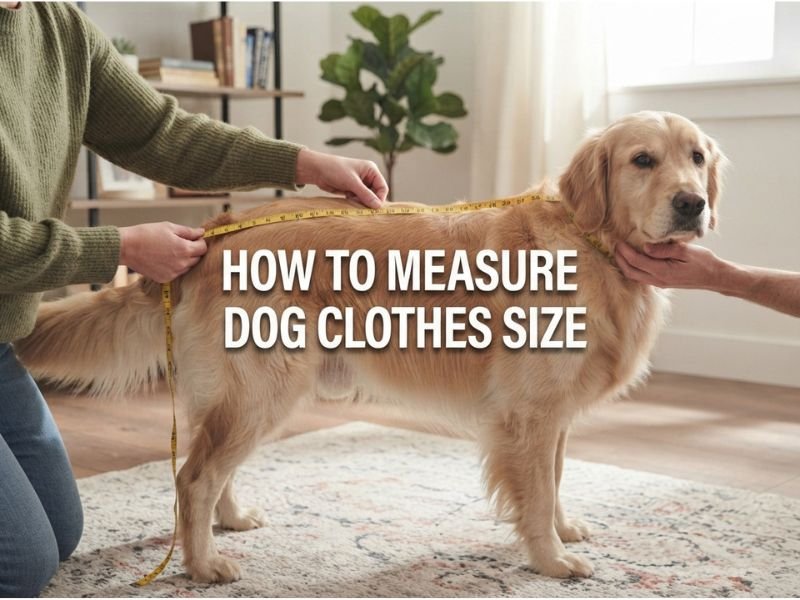
- Back length: The distance from the base of the neck to the base of the tail.
- Chest girth: The circumference around the deepest part of the rib cage.
- Neck circumference: The measurement around the lower part of the neck where a collar or garment opening rests.
Some products also require leg length, waist circumference, head circumference, paw size, or distance between the front legs. Those extra measurements are especially important for full-body suits, raincoats with leg openings, recovery garments, diapers, boots, and costumes.
Dog clothing sizes are not standardized. A “medium” from one brand may fit like a “small” from another, so I treat the manufacturer’s chart as the final authority. Breed labels and weight ranges are useful starting points, but they should not override the dog’s actual measurements.
What you need before measuring
The best tool is a soft fabric measuring tape, such as a sewing tape. It can follow the dog’s curves without digging into the fur. If I do not have one available, I use a piece of string or a flexible ribbon, mark the point where it meets, and measure that length against a rigid ruler.
It also helps to have:
- A calm dog standing on a level surface
- A few small treats
- A helper for energetic, nervous, or heavily coated dogs
- A pen and paper or phone for recording measurements
- The product’s size chart open before taking measurements
Measure over the dog’s normal coat rather than pressing through the fur to the skin. Do not measure over a thick sweater unless the new garment is specifically intended to fit over that layer. For a raincoat or winter coat, note whether the dog will wear an additional layer underneath and allow for that when the product instructions recommend it.
How to measure dog clothes size step by step
1. Position the dog correctly
Ask the dog to stand naturally with all four paws on the floor. The head should remain in a normal position instead of being pulled upward or tucked tightly downward. A sitting or hunched posture can shorten the back measurement and change the chest circumference.
I prefer measuring before exercise, when the dog is calm but not tired or slumped. For a restless dog, a helper can offer treats while the other person places and reads the tape. Several calm attempts are better than one rushed measurement.
2. Measure the back length
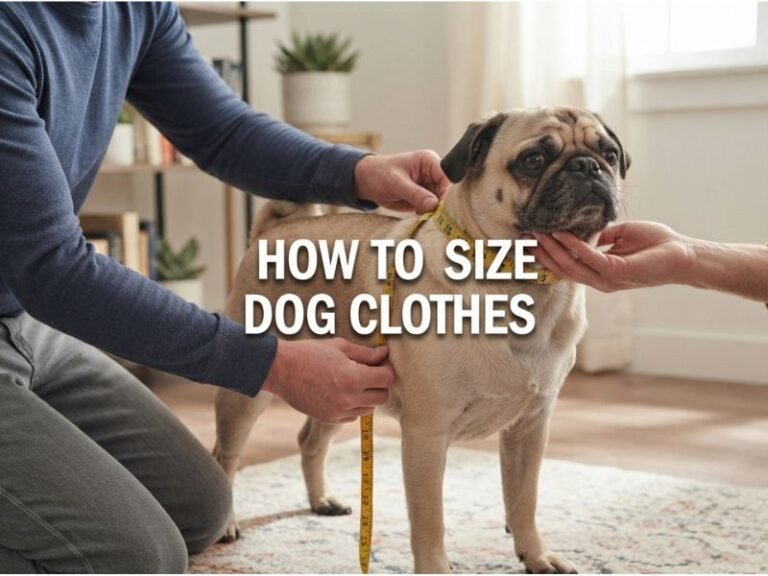
Place one end of the tape at the base of the neck, where the neck meets the shoulders. Run the tape along the spine to the base of the tail. Stop where the tail begins; do not measure to the end of the tail.
Keep the tape flat against the body without pulling it tight. For most shirts, sweaters, and coats, this measurement determines the garment’s overall length. A dog with a long torso may need a larger size even if the chest and neck measurements fit a smaller one.
Some brands define the starting point differently. If a chart says “neck to tail,” follow its instructions exactly. A coat may intentionally extend closer to the tail, while a sweater may stop earlier to avoid interfering with movement or bathroom needs.
3. Measure the chest girth
Wrap the tape around the deepest part of the rib cage, usually just behind the front legs. Keep the tape horizontal and comfortably snug. It should touch the coat but should not compress the ribs or create a deep indentation.
Chest girth is often the most important measurement because it determines whether a dog can breathe, walk, lie down, and move the front legs comfortably. It also reveals why weight-based sizing can be misleading. A muscular French Bulldog, barrel-chested Beagle, or fluffy Shetland Sheepdog may need a different size than another dog with the same weight.
Check that the tape has not slipped toward the belly. A measurement taken at the narrowest part of the waist will be too small for many jackets and shirts.
4. Measure the neck circumference
Place the tape around the lower part of the neck, near the shoulders, where the garment’s neckline will sit. Keep it snug but not tight. As a general comfort check, the finished opening should allow easy movement and should not press into the throat.
Do not automatically measure at the same location used for a narrow collar. Clothing often rests lower on the neck, so measuring too high can produce an inaccurate result. If the garment has a high collar, hood, or turtleneck design, inspect the product instructions for a more specific placement.
5. Record the measurements
Write each number down immediately and label it clearly. Record inches if the chart uses inches and centimeters if it uses centimeters. Rounding up slightly may be sensible when the dog is between sizes, but I first check the brand’s instructions because some manufacturers recommend sizing down for stretch fabric and sizing up for stiff outerwear.
If the measurements seem inconsistent, measure again. A back length that changes dramatically between attempts usually means the dog’s posture or the tape placement changed.
How to use a dog clothing size chart
After measuring, compare every relevant number with the chart rather than choosing a size from one measurement alone. A typical chart may look like this:
| Size | Back length | Chest girth | Neck circumference |
|---|---|---|---|
| Small | 10–12 inches | 14–18 inches | 10–12 inches |
| Medium | 13–16 inches | 19–24 inches | 13–16 inches |
| Large | 17–21 inches | 25–31 inches | 17–21 inches |
This sample is only an illustration, not a universal sizing standard. If a dog’s chest fits medium but the back fits large, the correct choice depends on the garment. A stretchy shirt may accommodate the difference, while a structured coat may need the larger size or a different cut.
Look for notes such as “measurements are garment dimensions” or “measurements are for the dog.” Those terms are not interchangeable. A garment dimension includes the clothing itself and may be slightly larger than the dog’s body measurements. If the chart is unclear, check the product description, return policy, or contact the seller before ordering.
What to do when the dog is between sizes
When a dog falls between two sizes, I consider the fabric, closure, and largest body measurement. For nonstretch fabric, a thick coat, or a dog near the upper end of the chest range, sizing up is often more comfortable. For a flexible knit with substantial stretch, the smaller size may work if the dog remains within the manufacturer’s measurements.
Do not size up automatically if the garment has long sleeves, loose leg openings, or a large hood. Excess fabric can catch on objects, drag on the ground, or interfere with walking. The best answer may be a different style rather than simply a bigger size.
Choosing measurements for different dog clothes
Sweaters and shirts
For a basic sweater or shirt, back length and chest girth usually matter most. Neck circumference still matters for a close neckline, but a soft knit may accommodate a small difference. Check the armholes carefully because an opening that is too tight can rub behind the front legs.
Raincoats and winter jackets
Raincoats and insulated jackets need enough room for movement and, in some cases, an underlayer. Chest girth is critical because the lining and waterproof fabric may have little stretch. Also inspect the belly coverage. A coat that is too long underneath may become wet or dirty during bathroom breaks, especially on male dogs.
Full-body suits and recovery garments
Full-body clothing may require measurements beyond the standard three. Follow the product chart for torso length, waist, leg openings, and sometimes the distance from the neck to the rear opening. A recovery garment must fit securely without restricting breathing, circulation, urination, defecation, or access to a healing area.
For these garments, a close fit is not the same as a tight fit. The dog should be able to stand, walk, sit, lie down, and turn around normally.
Dog dresses, costumes, and formal outfits
Decorative clothing often has less stretch and more structure than everyday apparel. Measure the chest, neck, and back carefully, and check whether the design has straps, buttons, elastic, or a stiff skirt. A costume that fits the torso may still be unsafe if loose accessories can be chewed or if the outfit limits vision and movement.
Dog boots
Boots require paw measurements rather than only body measurements. Follow the brand’s directions, which commonly involve measuring the width of a weight-bearing paw. Place the paw on paper, trace or measure the widest part, and compare it with the chart. Measure more than one paw if the product has a close fit, since front and rear paws can differ.
How to check the fit after the clothing arrives
Measurements reduce guesswork, but an in-person fit check is still necessary. Put the garment on while the dog is calm and observe the dog standing and walking. I look for these signs of a useful fit:
- The dog can breathe freely without pressure at the neck or chest.
- The front legs move through a normal stride.
- The dog can sit, lie down, turn, and climb a step without resistance.
- Closures stay secure without pinching the skin.
- The fabric does not rub repeatedly behind the front legs, at the armpits, or around the belly.
- The garment does not drag on the floor or cover the eyes.
- The dog can use the bathroom without removing the clothing, when the design is intended for that purpose.
Slide two fingers under a snug neckline or strap as a basic comfort check, but do not treat that as a universal rule for every garment. The design and manufacturer’s instructions still matter. For example, a loose raincoat may need a different fit from a recovery suit.
Watch the dog’s behavior as well. Scratching, freezing, repeated biting at the fabric, reluctance to walk, or unusual agitation can signal discomfort. Some dogs simply need gradual introduction, but persistent distress means the garment may be poorly fitted or unsuitable.
Common measuring mistakes to avoid
Using weight as the only guide
Weight does not show body shape, leg length, coat thickness, or chest depth. Two dogs at 25 pounds may need different clothing sizes. Use weight only as a secondary reference after checking the manufacturer’s measurements.
Measuring while the dog is sitting
A seated dog changes the shape of the chest and shortens the apparent back length. Measure while standing naturally, preferably with the spine level.
Pulling the tape too tightly
A tight tape produces measurements that are smaller than the dog’s body. This mistake is especially common around thick fur. Keep the tape flat and snug, not compressed.
Measuring the wrong part of the chest
The chest girth belongs around the deepest rib cage, generally behind the front legs. Measuring across the shoulders or around the narrow waist can result in a garment that binds at the ribs.
Ignoring the size chart’s measurement method
A chart may list body measurements, finished garment measurements, or a recommended range. Read the labels and instructions before comparing numbers. A product photo cannot replace those details.
Assuming a larger size is always safer
Oversized clothing can catch on furniture, drag under the paws, and create tripping hazards. A larger size is useful only when the garment remains secure and does not interfere with movement.
Forgetting seasonal coat changes
A dog with a dense winter coat may measure differently from the same dog after a summer trim. Consider the coat the dog will have when wearing the item. Do not shave a dog merely to make clothing fit; choose a design with enough room for the natural coat.
Special considerations for puppies and unusual body shapes
Puppies grow quickly, so a perfect current measurement may not remain accurate for long. For everyday clothing, buy for the puppy’s present fit and remeasure regularly rather than choosing an excessively large size. Adjustable closures can extend usefulness, but they cannot fix a garment that is too long, loose, or restrictive.
Dogs with long backs, deep chests, short legs, broad shoulders, or narrow waists may not fit standard proportions. Dachshunds, Corgis, Bulldogs, Greyhounds, and mixed-breed dogs can all challenge generic sizing charts in different ways.
For these dogs, I prioritize the measurement that affects comfort and movement most. A broad-chested dog may need a larger chest size with a shorter back, while a long-bodied dog may need extra length without excessive width. Look for brands offering multiple cuts, adjustable straps, stretch panels, or breed-specific patterns.
Dogs with arthritis, spinal problems, skin conditions, recent surgery, or breathing issues may need additional care. Clothing should not aggravate an existing condition. Ask a veterinarian about recovery garments or protective clothing when medical treatment is involved, and stop using any item that causes rubbing, overheating, or breathing difficulty.
Frequently asked questions
Where do I measure a dog’s back for clothing?
Measure from the base of the neck, where the neck meets the shoulders, to the base of the tail. Keep the tape along the spine and stop where the tail begins. Follow the product’s instructions if its starting or ending point differs.
How do I measure a dog’s chest girth?
Wrap a soft tape around the deepest part of the rib cage, usually directly behind the front legs. Keep it level and comfortably snug without compressing the fur or ribs. This measurement is often the most important one for shirts, sweaters, coats, and harness-style garments.
Should a dog wear a collar while being measured?
Measure the neck without relying on the collar’s size. A collar may sit higher and fit differently from a garment neckline. Remove bulky accessories unless the clothing is designed to be worn over them.
What if my dog’s measurements fall into different sizes?
Compare all three measurements and identify which dimension the garment cannot accommodate. For stiff coats, prioritize the chest and choose the larger size if the back remains safe. For stretchy shirts, the smaller size may work when the chest and neck are not tight. If the proportions are significantly different, choose another cut or an adjustable design.
Should I add extra inches to my dog’s measurements?
Usually, do not add a random amount. Use the manufacturer’s recommended ease, especially if the chart already gives a dog measurement range. Add room only when the product instructions account for layers, thick fur, or a nonstretch fabric.
Can I measure a dog’s size from weight alone?
No. Weight can help narrow the choices, but it does not account for body length, chest girth, neck size, muscle, or coat thickness. Actual measurements are more reliable for selecting dog clothing.
How often should I remeasure a dog?
Remeasure before buying new clothing, after a major weight change, and throughout puppyhood. Seasonal coat changes can also affect the fit of close-fitting garments. A quick recheck is worthwhile even if the dog previously wore the same labeled size.
How can I measure a dog that will not stand still?
Use a helper, offer small treats, and take one measurement at a time. Let the dog see and sniff the tape first. If the dog remains distressed, pause and try again later rather than forcing the process. Several relaxed readings are more useful than one inaccurate measurement.
What should I do if the dog clothing fits the chest but not the length?
Check whether the garment’s design allows adjustment. If it does not, look for a different cut or brand with separate proportions. Avoid folding or bunching excess fabric near the legs, belly, or neck, since that can create rubbing and movement problems.
Conclusion
Accurate clothing starts with a standing dog, a soft measuring tape, and three reliable numbers: back length, chest girth, and neck circumference. Compare those measurements with the specific brand’s chart, account for fabric and layers, and check movement and comfort after the garment arrives. With this approach, learning how to measure dog clothes size becomes a straightforward way to choose clothing that fits securely and lets the dog move naturally.