What Size Sweater for Dog: Key Facts and Helpful Explanations
A dog can look perfectly comfortable in the house then start shivering during a short walk standing still while you try to pull a sweater over its head.
If you have searched for what size sweater for dog, the most reliable answer is based on measurements rather than breed name, weight, or a store’s small-medium-large label. I’ll explain which measurements matter, how to compare them with a size chart, how different sweater styles fit, and how to recognize a safe, comfortable fit.
Getting the size right protects movement and warmth at the same time. A sweater that is too tight can rub or restrict breathing, while one that is too loose may twist, snag, or fail to cover the dog’s back. A few careful measurements make the choice much easier.
What Size Sweater for Dog? Start With Three
The three most useful measurements are back length, chest girth, and neck circumference. Many dog-clothing brands list these measurements in inches, but the order and range can vary. I recommend measuring the dog first and treating the brand’s chart as the final authority.
Back length
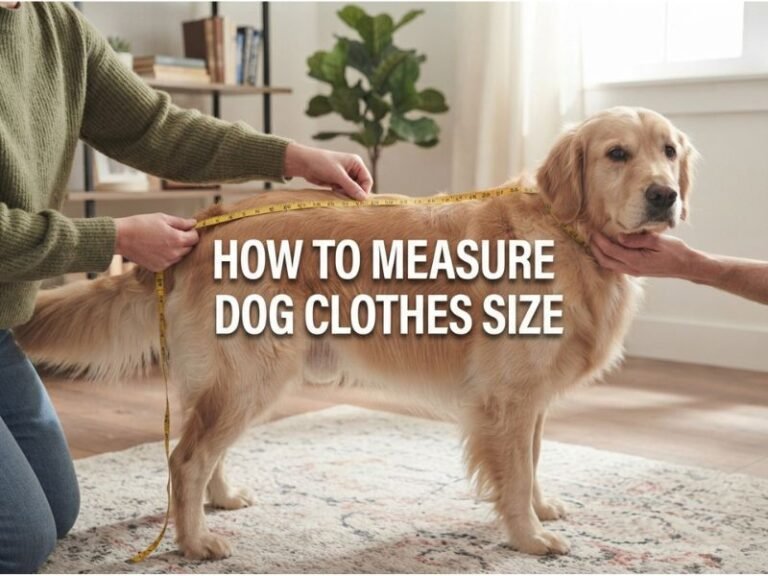
Back length is usually measured from the base of the neck, where the collar naturally rests, to the base of the tail. Keep the measuring tape along the dog’s back without pulling it tightly. Do not measure all the way to the tail tip.
This measurement helps determine how much of the dog’s back the sweater covers. A short sweater may leave the lower back exposed, while an overly long sweater can bunch near the tail or interfere with bathroom breaks.
Chest girth
Chest girth is the measurement around the deepest part of the rib cage, normally just behind the front legs. This is often the most important measurement because the chest is the widest part of a dog’s body and determines whether the garment can be pulled on comfortably.
Keep the tape level around the rib cage. It should touch the fur without compressing the dog’s body. For a thick-coated dog, measure the body rather than measuring a large mound of loose fur.
Neck circumference
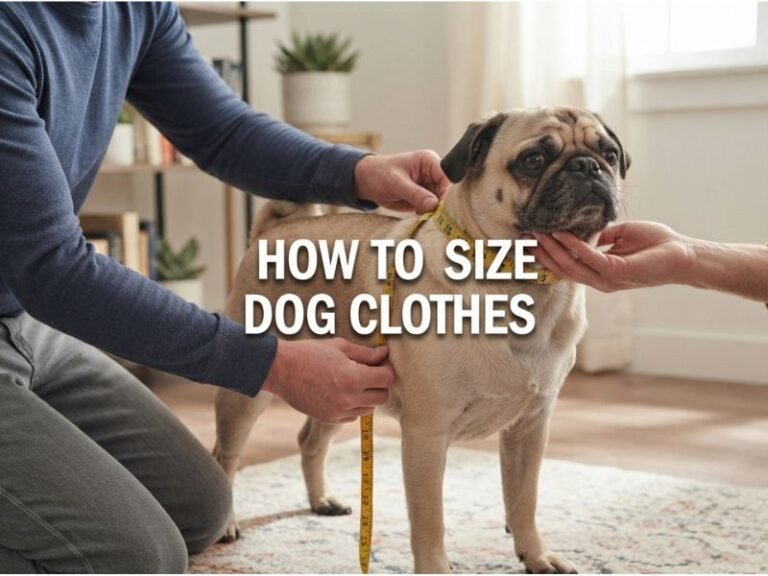
Measure around the base of the neck, not at the very top near the head. The tape should be comfortably close but loose enough to place a finger underneath. A sweater neckline should not press against the throat or make swallowing and breathing difficult.
Some pull-on sweaters stretch enough that the neck measurement is less restrictive. Jackets with buckles, zippers, or nonstretch fabric need a more exact neck measurement.
How to Measure a Dog for a Sweater
I find that measuring is easiest when the dog is standing naturally on a flat surface A second person can offer a treat or gently steady the dog while the first person handles the tape.
- Place the dog in a relaxed standing position.
- Use a soft fabric measuring tape, or use a piece of string and measure the string with a ruler.
- Measure the neck at the base, where a collar usually sits.
- Measure the chest around the deepest rib-cage area, directly behind the front legs.
- Measure the back from the base of the neck to the base of the tail.
- Write each number down in inches before shopping.
- Compare every measurement with the specific product’s size chart.
It is worth measuring twice if a number seems surprising. A difference of an inch can matter for a small dog, especially when the sweater has little stretch. I would also measure again after a major weight change, a haircut, or a change from a puppy’s coat to an adult coat.
How to Read a Dog Sweater Size Chart
A size chart is more useful than a label such as extra small or large because those labels are not standardized. An extra-small sweater from one company may fit a toy breed, while another extra-small garment may be designed for a narrow, long-backed dog.
First, identify which body measurements the chart uses. Some charts list chest, neck, and back length. Others use only chest girth and back length. If weight appears, use it as a secondary reference rather than the deciding measurement.
Next, compare the dog’s numbers with the listed range. If all measurements fit one size, that size is usually the logical starting point. If the measurements fall into different sizes, prioritize the chest for a fitted pullover and consider the dog’s body shape and the sweater’s adjustment features.
| Dog measurement | What it controls | Why it matters |
|---|---|---|
| Chest girth | Room around the rib cage | Determines whether the sweater can be pulled on and whether breathing and movement remain unrestricted |
| Back length | Coverage from neck to tail base | Helps protect the back without creating excess fabric near the tail |
| Neck circumference | Opening or collar fit | Prevents pressure around the throat and avoids a neckline that slips over the shoulders |
| Weight | General size estimate | Can help narrow choices, but does not show body proportions or coat thickness |
When a dog is between sizes I usually choose the larger size for a nonadjustable sweater provided it does not become dangerously loose A slightly roomy sweater can.
What a Proper Sweater Fit Looks Like
A correctly fitted sweater follows the dog’s body without squeezing it. The dog should be able to walk, trot, sit, lie down, turn the head, and use the bathroom normally. The fabric should stay in place instead of rotating around the torso after a few steps.
Check the following areas before leaving the dog unattended in the garment:
- Neck: The opening should not press into the throat or slide over the shoulders.
- Chest: The fabric should not pull tightly behind the front legs or create deep folds in the armpits.
- Back: The sweater should cover the back appropriately without dragging across the tail.
- Leg openings: They should allow a full stride without rubbing or catching the legs.
- Waist and underside: The garment should not block urination or become wet during a bathroom break.
- Fasteners: Zippers, snaps, and hook-and-loop closures should lie flat and should not pinch skin or catch fur.
Run your fingers under the neckline and around the chest There should be comfortable room but not a large gap that allows the sweater to snag on branches.
Why Breed and Weight Alone Can Mislead
Breed descriptions can provide a starting point, but they cannot replace individual measurements. Dogs of the same breed may differ in height, muscle, body length, chest depth, coat thickness, and weight. Mixed-breed dogs can have especially unusual proportions, such as a deep chest with a short back or a long torso with a narrow rib cage.
Weight also has limits. Two dogs can weigh the same while one has a broad chest and the other has a slim, long body. A dog with a heavy coat may need a wider sweater than its scale weight suggests, while a short-haired dog with the same weight may need a different shape.
I use breed and weight to narrow the search, then rely on chest, neck, and back measurements to make the decision. Product photos can also help reveal whether a sweater is shaped for a stocky body, a narrow body, or a long-backed dog, but photos should not replace the size chart.
Choosing a Sweater Style for the Dog’s Shape
Pullover sweaters
Pullovers are often made from knit fabric, fleece, or stretch jersey. They can provide comfortable coverage, but the neck and chest opening must be large enough to pass over the dog’s head and widest body area. A pullover that fits the back but is difficult to pull over the head is not the right size.
Stretch can make a pullover more forgiving, but it does not solve every fit problem. Excessive stretching may create pressure at the chest or leave the fabric thin across the dog’s shoulders.
Coats with closures
Wrap-style coats and jackets with zippers, snaps, or hook-and-loop panels are often easier to put on dogs that dislike clothing over the head. Adjustable closures can help accommodate a broad chest or a narrow waist.
However, adjustment does not mean unlimited sizing flexibility. The back length and leg openings still need to match the dog. A coat that closes over the chest but ends halfway down the back may not provide the intended coverage.
Harness-compatible sweaters
Some sweaters include a leash opening or are designed to fit beneath or over a harness. Check where the opening sits in relation to the dog’s shoulders. A poorly placed opening can rub against the harness or leave the zipper and leash hardware pressing on the spine.
If the dog wears a harness regularly, put the harness on during the fitting. The sweater needs to work with the complete walking setup, not just with the dog’s body by itself.
Special Fit Considerations for Different Dogs
Small and toy dogs
Small dogs often lose body heat more quickly, but a warm sweater still needs to preserve free movement. Pay particular attention to the neck, front-leg openings, and underside. A garment that hangs too low may become wet or drag on the ground.
Very small dogs can also have delicate skin and narrow airways. Avoid tight turtlenecks, stiff seams, and heavy decorations that add weight or create pressure.
Large or deep-chested dogs
Large dogs and deep-chested breeds may need more chest room than a standard sweater shape provides. If the chest fits but the back is too short, look for a long-backed style. If the back fits but the chest is tight, choose a design with stretch or adjustable side panels rather than simply sizing up several sizes.
Long-backed dogs
Dogs with long torsos may need a sweater based on back length more than an ordinary small, medium, or large label. Check that the garment extends far enough over the back without covering the tail base or interfering with elimination.
Curly-coated and thick-coated dogs
Dense or curly fur changes the amount of space inside the sweater. Measure the dog’s body as accurately as possible and read whether the brand’s chart is intended for a close fit or for layering. A sweater that is already tight on the coat can mat fur, trap moisture, and rub the skin.
Do not assume that a thick coat makes a dog immune to cold. Coat type, age, health, wind, rain, activity level, and acclimation all affect comfort. Clothing should support the dog’s needs, not substitute for observation.
Hairless or short-coated dogs
Short-coated and hairless dogs may benefit from a soft, close-fitting sweater in cool conditions, but seams and rough fabric can irritate exposed skin. Check the garment often for redness, trapped moisture, or rubbing, especially under the front legs.
How Much Room Should a Dog Sweater Have?
A sweater should have enough ease for normal motion, but the correct amount depends on the material and design. Stretch knit generally permits a closer fit than a rigid waterproof jacket. A jacket intended to go over another layer needs more room than a single indoor sweater.
Use a simple movement test After putting the sweater on ask the dog to walk sit turn and lie down Look for pulling across the chest bunching behind.
Do not add extra size merely because a sweater feels comfortable to a person’s hand. Too much space can allow a dog to step into the fabric, catch a toenail, or become tangled. Loose clothing can also twist and expose the back to cold air.
Common Sizing Mistakes to Avoid
- Choosing by breed only: Breed averages do not account for individual proportions.
- Using weight as the only measurement: Weight does not reveal chest width or back length.
- Measuring the collar position too high: The neck should be measured at its base.
- Pulling the tape tight: Compression produces a measurement that is too small.
- Ignoring the coat: Thick fur can change how a sweater fits and how much room is needed.
- Assuming every brand sizes alike: Size labels and measurement ranges vary significantly.
- Keeping a sweater that restricts movement: A garment is not acceptable just because the dog tolerates it.
- Failing to inspect the underside: A sweater can fit the back while interfering with urination or defecation.
- Leaving clothing on without supervision: Fabric, strings, and fasteners can create snagging or chewing hazards.
Another common mistake is judging fit from a single photograph. A dog standing still may look comfortable even when the garment rubs during walking. I prefer to check the dog in motion and inspect the skin after removing the sweater.
Safety and Comfort Checks
Introduce a sweater for short periods indoors. Offer calm praise and watch the dog’s body language. Freezing, repeated scratching, trying to escape, tucked posture, excessive panting, or reluctance to move can indicate discomfort, stress, overheating, or a poor fit.
Remove the garment if the dog seems too warm. Sweaters are not automatically appropriate in every indoor setting or at every outdoor temperature. A dog may need a coat in cold wind but not inside a heated home. Never use clothing as a reason to leave a dog outside in unsafe weather.
Inspect the skin and coat after each early use. Redness, hair loss, damp fur, pressure marks, or mats suggest that the garment, material, or duration of wear needs to change. Wash the sweater according to its care instructions and let it dry completely before use.
Dogs with medical conditions, very young puppies, senior dogs, or unusual temperature sensitivity may need individualized advice from a veterinarian. A sweater can help with comfort, but it does not diagnose or treat shivering, weakness, lethargy, or other signs of illness.
How to Buy the Right Sweater Online
Online shopping becomes easier if I keep a short record of the dog’s current measurements. Before adding a product to a cart, I check the measurement units, the intended fit, the fabric’s stretch, the closure design, and the return policy.
- Measure the dog immediately before shopping.
- Open the product’s exact size chart rather than relying on the category label.
- Compare chest first, then neck and back length.
- Read whether the chart describes the dog’s body measurements or the garment’s finished measurements.
- Check customer photos for body-shape clues, while treating reviews as supporting information.
- Choose a returnable product when the dog falls between sizes.
- Try the sweater on indoors and inspect movement before removing tags, if possible.
Finished garment measurements can be confusing. If a sweater is listed as 18 inches around the chest, that may describe the sweater itself rather than the maximum dog chest measurement. Look for wording such as “fits chest,” “dog chest,” or “garment chest.” If the listing is unclear, contacting the seller is safer than guessing.
FAQ: What Size Sweater for Dog Questions
What measurement matters most when choosing a dog sweater?
Chest girth is usually the most important measurement because it determines whether the sweater can fit around the dog’s rib cage without restricting breathing or movement. Neck and back length still matter, especially for nonstretch sweaters and long-backed dogs.
Should I size up if my dog is between sweater sizes?
Usually, sizing up is safer for a nonadjustable sweater if the larger option still fits securely at the neck and does not hang dangerously loose. For a stretchy pullover, compare the material and the brand’s guidance before choosing. A sweater should never be so loose that it twists, drags, or catches the dog’s legs.
Can I choose a dog sweater by weight?
Weight can offer a rough starting point, but it should not be the final decision. Dogs with the same weight may have very different chest girths, back lengths, and body shapes. Use weight together with the manufacturer’s chest, neck, and back measurements.
How should a sweater fit a dog with thick fur?
It should lie comfortably over the coat without compressing it tightly or creating mats. Measure the dog accurately, check whether the size chart allows room for a thick coat, and inspect the fur and skin after wearing. A sweater that is tight over dense fur may trap moisture and cause rubbing.
How do I know if a dog sweater is too small?
Warning signs include difficulty pulling it over the head, tightness behind the front legs, restricted strides, deep pressure marks, a stretched neckline, panting, or reluctance to move. If the dog cannot sit, walk, turn, or use the bathroom normally, remove the sweater and choose a different size or style.
How do I know if a dog sweater is too large?
A sweater may be too large if it slides over the shoulders, twists around the body, drags near the tail, bunches under the chest, or allows the dog to step into it. Excess fabric can also snag on objects. A little room is useful, but the garment should remain stable during movement.
Should a dog wear a sweater over a harness?
That depends on the sweater and harness design. A harness-compatible sweater may have an opening in the correct location, while another sweater may rub beneath the straps or make the harness unstable. Test both together before walking and confirm that the leash attachment remains secure.
Can a puppy wear the same sweater for a long time?
Puppies grow quickly, so a sweater that fits now may soon become restrictive. Check the fit frequently, especially around the chest and neck. A washable, adjustable design can be more practical than an expensive fitted garment during rapid growth.
Conclusion
Finding the right answer to what size sweater for dog starts with accurate chest neck and back measurements followed by a careful comparison with the specific brand s.