How to Trim Cat Hair: Clear Instructions and Common Mistakes
A tuft of fur between your cat’s toes, a sanitary area that stays damp, or a coat packed with small mats can turn routine grooming into a stressful event. A quick snip may seem harmless, but cat skin is loose, thin, and easy to catch with scissors. A frightened cat can also twist suddenly, making an otherwise simple trim unsafe.
I can help you decide what actually needs trimming, prepare the right tools, and work through the process without treating a haircut like a full grooming appointment. The safest approach is usually a small, targeted trim rather than changing the entire coat.
By the end, you will know how to trim cat hair around the paws, sanitary areas, and minor mats, when clippers are preferable to scissors, and when a professional groomer or veterinarian should take over.
How to Trim Cat Hair Safely
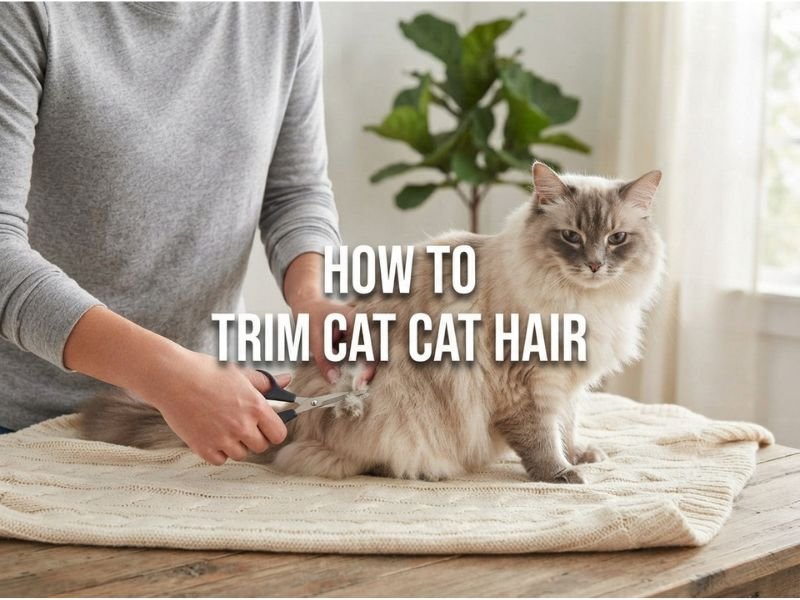
Trim only the fur that is causing a practical problem, such as collecting litter, slipping between paw pads, trapping stool, or forming a manageable surface mat. Start with a calm cat, good lighting, blunt-tipped grooming scissors or pet clippers, and a helper if your cat moves unpredictably.
Keep the first session short. A few careful snips are better than trying to complete every area at once. If your cat becomes tense, stop before the behavior escalates to swatting, biting, or struggling. The goal is a clean, comfortable coat, not a perfect cosmetic finish.
What can be trimmed at home
- Long tufts extending beyond the paw pads or sticking between the toes.
- Small amounts of fur around the rear that regularly collect stool or litter.
- Loose, superficial mats that can be separated without pulling the skin.
- Excess hair around the edges of a long-haired cat’s sanitary area, if the cat remains calm.
What should not be trimmed casually
- Large, tight mats attached close to the skin.
- Fur covering a wound, hot spot, rash, abscess, or swollen area.
- Whiskers, including the long sensory hairs on the face, legs, and above the eyes.
- The entire coat simply because it sheds, unless a veterinarian has given a specific reason.
Cat fur helps insulate the body and provides some protection from sun and environmental irritants. Shaving a cat does not reliably solve shedding, and it can create uneven regrowth or expose sensitive skin. I recommend targeted maintenance first and a professional assessment for anything extensive.
Tools for Trimming a Cat’s Coat
The right tool depends on the location, amount of hair, and your cat’s temperament. Before bringing anything near the coat, place the tools within reach so you do not need to leave a cat on a table or hold a position longer than necessary.
Grooming scissors
Use small, sharp, blunt-tipped pet-grooming scissors for isolated tufts and small amounts of hair. The blunt tip reduces the chance of a sharp point causing injury, although it does not make scissors risk-free. Dull scissors pull fur, require more force, and can make a cat react suddenly.
Keep the blades parallel to the body rather than pointing down toward the skin. I prefer making several tiny cuts through the ends of the fur instead of closing the blades deeply into a thick section.
Pet clippers
Electric clippers are generally more useful than scissors for a flat sanitary trim or a larger coat area. Choose clippers designed for pets, use an appropriate guard when possible, and follow the manufacturer’s instructions. Human hair clippers may become hot or struggle with dense cat fur.
Check the blade temperature frequently. A clipper blade can heat up during use and burn skin even when the cat initially tolerates the sound. Keep a second blade or cooling method available according to the product directions, and never apply a product to the cat’s skin unless it is labeled for cats.
Additional supplies
- A fine-toothed comb or grooming comb for checking the coat.
- A nonslip towel or mat for a stable working surface.
- Small treats for calm behavior and brief breaks.
- A brush suited to the cat’s coat type.
- A clean cloth for wiping loose fur from the coat and work area.
Do not use household scissors, kitchen shears, razors, or chemical detangling products made for people. Avoid forcing a comb through a mat, because the pulling can hurt and may tear irritated skin.
Prepare Your Cat Before the Trim
Preparation often matters more than speed. Choose a quiet room with a closed door, good lighting, and a surface that will not slide. Keep dogs, children, loud appliances, and other cats away while you work.
Let your cat inspect the brush, comb, scissors, or inactive clippers before trimming. Reward calm behavior. If clippers are needed, turn them on several feet away for a moment, then turn them off and offer a treat. Repeat at a comfortable pace. A cat that panics at the sound should not be held down and clipped through the fear.
Use a comfortable position
Many cats do best sitting on a stable surface while a second person gently supports the chest. Others are calmer on a familiar towel or beside you. Do not suspend a cat by the scruff, pull the legs straight, or pin the body with excessive pressure.
Handle one body area at a time. Check that the skin is not folded into the fur, especially around the armpits, groin, belly, and tail base. Loose cat skin can extend farther than it appears to, so a visual inspection is essential before every cut.
Check the skin and coat first
Run your fingers lightly over the area and look for redness, swelling, odor, moisture, scabs, parasites, or signs of pain. A mat that feels warm, wet, or firmly attached may be hiding a skin problem. If your cat flinches, growls, bites, or repeatedly tries to escape when one spot is touched, stop and arrange veterinary advice.
Step-by-Step Paw Hair Trimming
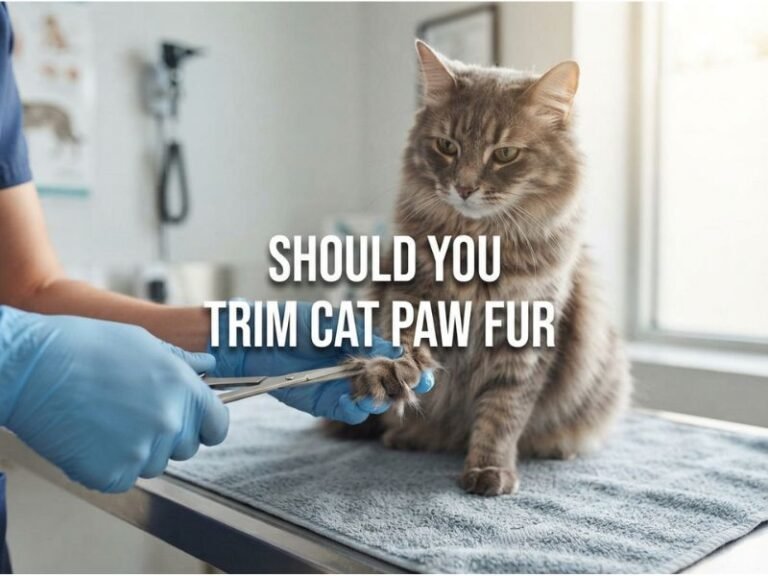
Long hair under or around the paws can collect litter and reduce traction on smooth floors. The objective is to clear fur that extends beyond the pads, not to cut deeply between the toes.
- Place your cat on a secure, nonslip surface and support the leg without pulling it.
- Gently press the top of the paw so the toes spread naturally.
- Identify the paw pads and the fur extending beyond their edges.
- Use pet clippers or small blunt-tipped scissors to remove only the overhanging ends.
- Make short cuts, keeping the tool parallel to the pad rather than pointed at it.
- Release the paw frequently and reward your cat before continuing.
Do not dig between the toes looking for every strand. Cat paw pads are sensitive, and a small amount of hair in the spaces between them is not automatically a problem. Stop if the paw is pulled away repeatedly or if you cannot clearly see where the pad ends.
After trimming, inspect for cracks, cuts, swelling, stuck litter, or a foreign object. Persistent licking or limping is not a grooming issue to solve with more trimming; it warrants an examination.
How to Trim Sanitary Area Fur
A sanitary trim removes a limited amount of hair around the anus and nearby inner thighs so feces, urine, or litter is less likely to cling to the coat. It should leave the skin covered and avoid contact with the anus, genitals, and inner leg folds.
For a calm cat
- Brush or comb loose fur around the area without pulling.
- Use a helper to provide gentle support if your cat cannot remain still.
- Lift the tail only as much as necessary and do not force it upward.
- With pet clippers, remove small amounts of fur from the outer edges of the sanitary area.
- Work away from the openings and stop as soon as the excess length is controlled.
- Check the blade temperature repeatedly and pause if your cat becomes restless.
Scissors are especially hazardous in this location because the skin is loose and the cat may jerk forward. If scissors are the only available tool, trim only clearly separated fur at the outer edge while keeping the blades parallel to the body. Do not cut through a clump that might contain skin.
If feces has dried into the coat, do not pull it off. Moisten the material with warm water and gently clean according to your veterinarian’s advice, or have a groomer remove it. Severe contamination, diarrhea, blood, foul odor, or repeated soiling can indicate a medical problem rather than a simple need for a haircut.
Removing Small Mats Without Injuring Skin
A mat is a compacted knot of hair that can form when loose fur, moisture, oil, and debris become tangled. A small mat sitting loosely on the surface may be removable at home. A dense mat close to the skin should usually be handled by a professional.
Try combing only when the mat is loose
Hold the fur near the skin with your fingers to reduce pulling. Start at the outer edge of the mat and gently work through the ends with a comb. Use short strokes and stop if the cat shows discomfort. Never yank, rake, or repeatedly brush the same painful area.
Do not cut mats with ordinary scissors
It is difficult to tell where a mat ends and folded skin begins. Cutting directly across it can create a deep laceration. A mat splitter or specialized grooming tool still requires skill and a clear view, so it is not a substitute for professional care when the mat is tight or widespread.
Seek a groomer or veterinarian for mats covering a large area, mats in the armpits or groin, mats attached to inflamed skin, or a cat that cannot be safely handled. Some cats need veterinary sedation for humane removal when painful mats prevent safe grooming.
Should You Use Scissors or Clippers?
| Situation | Preferred option | Reason |
|---|---|---|
| A few loose paw tufts | Blunt-tipped grooming scissors | They allow precise removal of small amounts of hair. |
| Routine sanitary trim | Pet clippers | They reduce the need to place a blade close to sensitive skin. |
| Large or tight mats | Professional grooming tools | The skin may be hidden, stretched, or inflamed. |
| A fearful or aggressive cat | Professional assistance | Struggling increases the chance of injury to the cat and handler. |
Clippers are not automatically safe. Noise, vibration, heat, and the need to hold the cat still can all create problems. Scissors are not automatically precise, either. The safest choice is the tool that lets you clearly see the skin, maintain control without force, and stop quickly if the cat reacts.
Common Cat Hair-Trimming Mistakes
Shaving the coat for shedding
Shaving may make loose fur less visible temporarily, but it does not address the cause of shedding. Regular brushing, a suitable diet, and veterinary attention for excessive hair loss are more appropriate solutions. A full shave can also expose skin to sun and temperature changes.
Cutting too close
A close trim is not necessary for most home grooming. Leaving a modest layer of fur lowers the chance of skin irritation and accidental cuts. I would rather see a slightly uneven trim than skin exposed because someone kept trying to create a perfectly smooth finish.
Trimming a moving cat
Do not chase a cat around the room with scissors or clippers. Do not continue after the cat begins thrashing, panting, drooling, or showing intense fear. These signs mean the session needs to end, not that the cat needs stronger restraint.
Ignoring the blade temperature
Clipper blades can heat up faster than expected. Touch the blade to your own wrist regularly, follow the equipment instructions, and switch or cool it when necessary. A cat may not react immediately to a minor burn, especially if the area is hidden by fur.
Using human grooming products
Human shampoos, conditioners, fragrances, essential oils, and detanglers may irritate a cat’s skin or create a poisoning risk if licked. Use only products specifically labeled for cats and only when cleaning is genuinely needed.
Trying to solve a medical problem with grooming
Repeated mats, greasy fur, bald patches, dandruff, odor, overgrooming, and sudden coat changes can be linked to pain, allergies, parasites, obesity, arthritis, or other health conditions. Trimming may hide the visible symptom while the underlying problem continues.
When a Professional Groomer or Veterinarian Is Safer
A professional cat groomer is a sensible choice for extensive matting, a full sanitary trim, difficult coat texture, or a cat that cannot tolerate home handling. Ask whether the groomer regularly works with cats and explain any known health or behavior concerns before the appointment.
A veterinarian should evaluate skin that is red, bleeding, swollen, moist, painful, or foul-smelling. Veterinary care is also appropriate when your cat suddenly stops grooming, develops severe mats, loses hair, or reacts painfully to normal handling.
Do not give a sedative, antihistamine, or other calming medication unless a veterinarian has prescribed it for that cat and explained the dose and timing. Products intended for people can be dangerous, and sedation does not remove the need for trained handling and temperature monitoring.
After an accidental nick, stop trimming and apply gentle pressure with clean gauze if there is minor bleeding. Do not use alcohol, hydrogen peroxide, or human topical medications unless a veterinarian directs you to do so. Significant bleeding, a deep cut, breathing changes, collapse, or severe distress requires prompt veterinary attention.
How to Prevent Excess Hair and Mats
Prevention is easier than removing a dense mat. The right schedule depends on coat length, density, age, body condition, and how well the cat grooms itself.
- Brush long-haired cats frequently enough to prevent tangles from forming.
- Use a comb to check behind the ears, under the legs, around the collar, and near the tail base.
- Keep the litter box clean so loose fur is less likely to collect waste.
- Check the rear after diarrhea or soft stool and clean promptly with cat-safe methods.
- Maintain a healthy body condition so the cat can reach the back, hips, and sanitary area.
- Introduce grooming gradually, pairing brief sessions with rewards.
- Inspect paw fur if litter or debris frequently sticks to the feet.
Brushing should be gentle and purposeful. A brush that only passes over the top of a long coat may miss tangles underneath. Separate the fur with your fingers and check down to the skin without scraping it.
Frequently Asked Questions
Can I trim my cat’s hair with regular scissors?
I do not recommend regular household scissors. They are often sharp at the tip, difficult to control in small areas, and more likely to injure loose skin. Use blunt-tipped pet-grooming scissors only for small, clearly visible tufts, and choose pet clippers or professional help for larger areas.
Is it safe to trim a cat’s paw fur?
It can be safe to trim fur that extends beyond the paw pads when the cat is calm and the pads are clearly visible. Remove only the overhanging ends. Do not dig between the toes or cut a paw that is swollen, painful, or difficult to hold still.
Should I shave my long-haired cat in summer?
Most cats do not need a summer shave. A healthy coat provides insulation and some protection for the skin. Targeted trimming may help with hygiene or severe matting, but a full shave should be discussed with a veterinarian or performed by an experienced cat groomer.
How do I trim a cat that refuses to stay still?
Do not force the trim. Stop, give the cat time to relax, and practice handling without cutting on another day. If the cat remains fearful or aggressive, schedule a qualified cat groomer or veterinary appointment rather than risking a cut.
Can I cut a mat out of my cat’s fur?
Never cut straight into a tight mat with household scissors. The skin may be hidden inside the knot. A loose surface tangle may be combed carefully, but dense, painful, or widespread mats should be removed by a professional.
How short should a sanitary trim be?
A sanitary trim should be long enough to reduce soiling while leaving protective fur over the skin. The exact length depends on the coat and the cat’s needs. Removing only the excess hair around the outer edges is safer than attempting a close shave around sensitive openings.
What should I do if I cut my cat’s skin?
Stop immediately and assess the injury. Apply gentle pressure with clean gauze for minor bleeding, and avoid peroxide, alcohol, or unapproved creams. Contact a veterinarian for any deep wound, persistent bleeding, exposed tissue, severe pain, or concerning change in behavior.
Conclusion
The safest way to learn how to trim cat hair is to start with a limited purpose, use cat-appropriate tools, expose the skin clearly, and stop before your cat becomes distressed. Trim paw tufts or outer sanitary fur only when the area is easy to see and the cat is calm. Leave tight mats, skin problems, and difficult handling to a professional. A short, patient maintenance session is far safer than a rushed full haircut.