Should You Trim Cat Paw Fur: Key Facts and Helpful Explanations
Healthy cat paws usually need less grooming than many owners expect. A little fur between the toes or around the paw pads is normal, especially in long-haired cats, and it does not automatically mean the coat needs trimming.
Still, excess paw fur can collect litter, trap moisture, hide irritated skin, or make a cat slide on smooth floors. If you are wondering, should you trim cat paw fur, the most useful answer is: sometimes, but only for a clear reason and with a very conservative approach.
I’ll explain when trimming helps, when leaving the fur alone is better, how to do it safely, and which signs mean a veterinarian or professional groomer should handle the problem.
Should You Trim Cat Paw Fur?
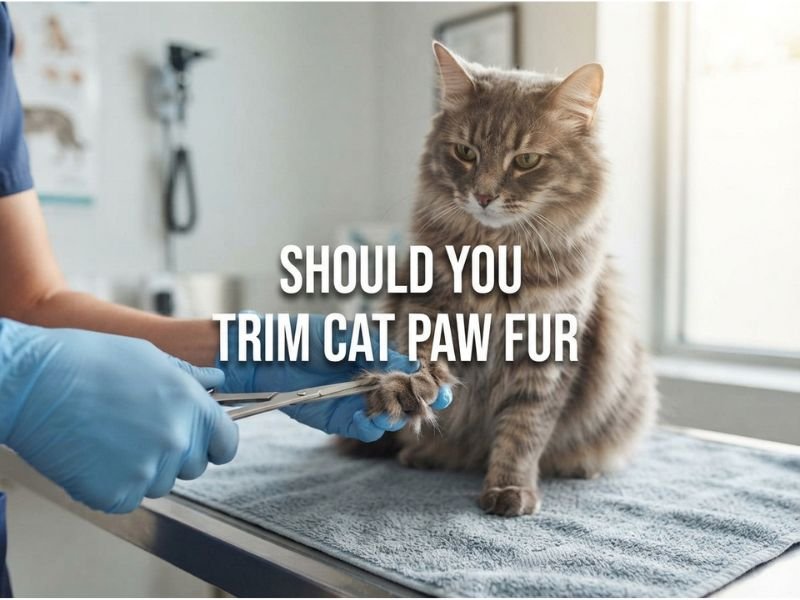
Most cats do not need routine paw-fur trimming. A healthy cat can usually keep its paws clean through normal grooming, and the fur provides a small amount of protection for the skin between the toes and around the paw pads.
Trimming may be appropriate when the fur extends well beyond the paw pads, becomes tangled or matted, collects litter and debris, stays damp, or contributes to slipping. The goal is not to make the paw completely hairless. The goal is to remove only the excess fur that creates a practical problem.
For many cats, a light trim around the edges of the paw pads is enough. Some cats need no trimming at all. A long-haired cat with neat, soft fur between the toes may be perfectly comfortable, while another cat with similar coat length may develop mats or litter buildup.
I recommend judging the paw itself rather than following a breed-based rule. Look at your cat’s comfort, traction, cleanliness, skin condition, and tolerance for handling.
What Is Paw Fur?
Cat paw fur is the hair growing on the top of the paw, between the toes, and sometimes over the edges of the paw pads. The amount varies by individual cat, coat type, age, grooming habits, and genetics.
Long-haired cats often have visible tufts between their toes. These tufts may be called toe feathering or paw-pad fur. They are not inherently unhealthy. In fact, normal paw fur can help protect delicate skin from rough surfaces, cold ground, and minor contact with dirt.
The underside of the paw includes several important structures:
- Digital pads, the smaller pads beneath the toes.
- Metacarpal and metatarsal pads, the larger central pads on the front and rear feet.
- Skin between the toes, which can become irritated or infected if it stays wet or collects debris.
- Claws and surrounding hair, which require careful handling because the quick inside each claw contains nerves and blood vessels.
Hair around these areas can look untidy without causing any problem. Appearance alone is not a strong reason to trim. Comfort and hygiene matter more.
When Trimming Cat Paw Fur Can Help
A small, careful trim can be useful in specific situations. I would first identify the problem and then remove only enough fur to address it.
Excess fur causes slipping
Long tufts can extend beyond the paw pads and reduce contact between the pads and the floor. This may be more noticeable on hardwood, tile, laminate, or other smooth surfaces. A cat may slide while turning, jumping down, or running.
Trimming the fur level with, or just slightly shorter than, the paw-pad surface can improve traction. It should not be cut deeply into the spaces between the pads merely to create a perfectly clean outline.
Litter and debris collect in the coat
Long paw fur can catch clumping litter, dust, small pieces of plant material, and other debris. A cat may lick at the area repeatedly, shake the paw, or leave litter around the home.
Removing the loose excess fur can make cleaning easier. However, persistent debris may also indicate an overly dirty litter box, soft stool, diarrhea, a urinary problem, or difficulty grooming. Trimming treats the hair, not the underlying cause.
The fur becomes matted
Mats pull on the skin and can hide redness, swelling, wounds, or parasites. Mats between the toes may make walking uncomfortable. They should not be pulled out by hand because pulling can injure the skin.
A tiny, loose tangle may be handled by an experienced groomer. A tight mat, a painful paw, or a cat that resists handling is safer for a veterinarian or professional groomer to assess.
The paws stay damp
Wet fur can hold moisture against the skin. This may happen after a bath, contact with a damp floor, or exposure to urine or spilled water. Dampness does not automatically mean infection, but repeated moisture can contribute to irritation and odor.
A light trim may help the area dry more quickly, but drying the paws and finding the source of the moisture are equally important. Do not apply human foot powder, essential oils, or medicated products unless a veterinarian specifically recommends them.
A veterinarian recommends limited trimming
A veterinarian may suggest trimming around a paw injury, bandage, infected area, or recurring mat. In that situation, the recommended amount and technique should take priority over general grooming advice.
If the paw is painful, swollen, bleeding, or draining, I would not treat it as a routine haircut. The health problem should be evaluated first.
When You Should Leave the Fur Alone
Trimming is usually unnecessary when the paw fur is clean, soft, unmatted, and not affecting movement. A cat that walks normally, grooms normally, and shows no irritation does not need paw fur removed simply because it is visible.
It is also better to leave the fur alone if your cat becomes highly distressed during paw handling. Stress can turn a minor grooming task into a struggle, and struggling increases the risk of a cut. A calm cat with slightly long fur is safer than a frightened cat being forcibly restrained.
Do not trim just to make every paw look identical. Cats naturally have differences between feet, and a small amount of unevenness is not dangerous. Avoid shaving the entire paw or removing hair from the top of the foot without a specific medical or grooming reason.
Healthy paw fur should not be confused with a problem such as swelling, a foreign object, a torn claw, or a skin infection. Cutting the hair may make a symptom harder to see and can delay appropriate care.
Signs That Paw Fur Needs Attention
Check your cat’s paws in good light, preferably when the cat is relaxed. Look at both the top and underside of each paw without forcing the toes apart.
Possible grooming-related signs include:
- Fur extending far past the paw pads.
- Visible clumps of litter or dirt caught in the hair.
- Small mats between the toes.
- Repeated licking, chewing, or shaking of one paw.
- Sliding on floors that previously caused no difficulty.
- A strong odor coming from the paw fur.
- Fur that remains wet after the source of moisture has been removed.
- Reduced interest in walking, jumping, or play.
These signs do not prove that trimming is the answer. They tell me that the paws deserve closer inspection. A cat may lick a paw because of a splinter, a sore pad, an allergic reaction, a broken claw, or pain elsewhere in the leg.
How to Trim Cat Paw Fur Safely
If the fur is clearly overgrown and your cat is calm, a conservative home trim may be reasonable. Prepare before touching the paw so the session stays brief.
Gather the right equipment
- A quiet pet clipper with a guard, if available.
- A clean towel for gentle support.
- A bright light.
- A stable surface that is not slippery.
- A few small cat treats.
- A soft brush or comb for loose surrounding fur.
Small grooming clippers are generally safer than sharp scissors near the paw pads because the cutting surface is less likely to puncture the skin when used correctly. If clippers make your cat nervous, stop rather than switching to scissors during a struggle.
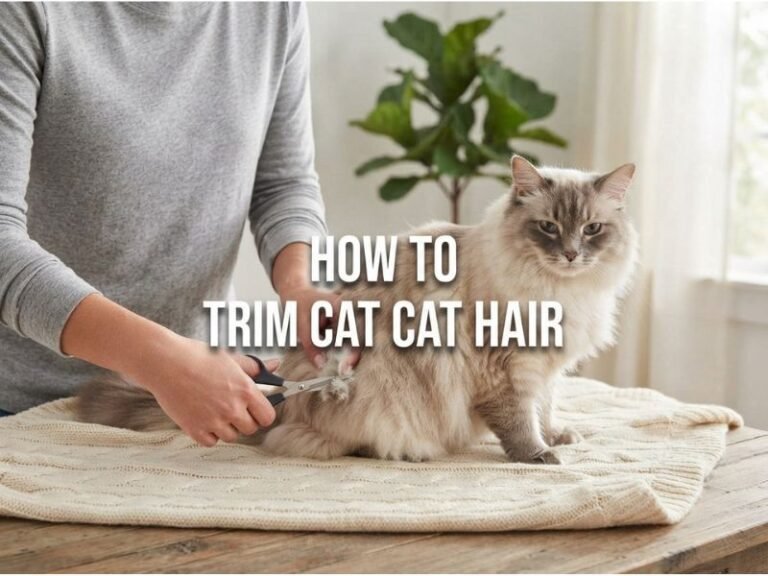
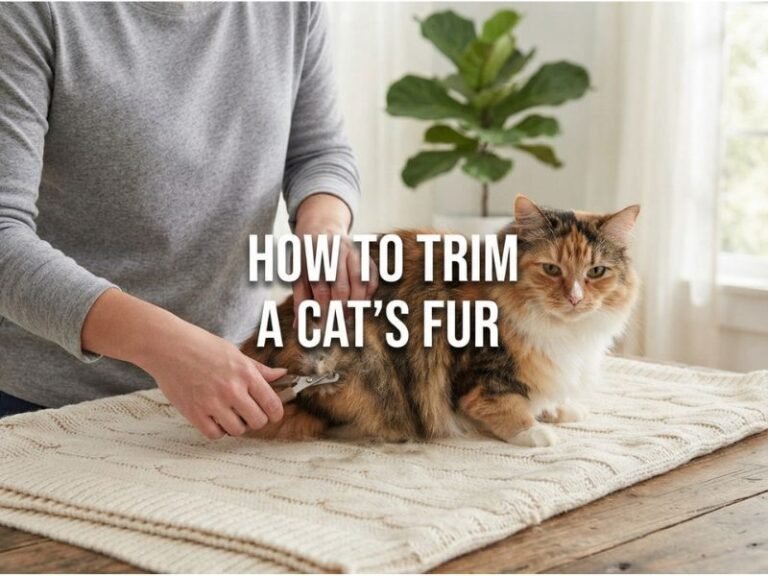
I do not recommend using household scissors between the toes. The skin is close to the hair, toes can move suddenly, and a cat can jerk away without warning. Rounded-tip scissors may reduce the severity of some accidents, but they do not eliminate the risk.
Prepare your cat gradually
Choose a quiet time when your cat is relaxed. Let the cat sniff the equipment, then touch the shoulder or leg before briefly touching the paw. Offer a treat for calm behavior.
Do not begin by tightly gripping the toes. Start with a short session and stop while your cat is still cooperative. A few calm sessions are safer than trying to complete every paw at once.
Trim only the excess
Support the leg gently and keep the paw in a natural position. If you use a clipper, follow the direction of the fur and remove the hair that extends beyond the paw pads or forms a loose tuft around their edges.
Never press hard into the spaces between the pads. Do not dig into a mat, clip close to irritated skin, or try to expose every bit of pad surface. The finished paw does not need to be perfectly smooth.
After each small pass, check the skin. Stop immediately if your cat pulls away sharply, vocalizes, growls, pants, or becomes frantic. A cat that seems merely impatient may still move suddenly enough to be injured.
Finish with a brief check
Look for redness, nicks, dampness, swelling, or remaining debris. Give a reward and allow your cat to leave. Watch the walk for a few minutes afterward; limping or persistent licking means the paw needs further attention.
Clean the clipper after use according to the manufacturer’s instructions. Never share dirty grooming equipment between cats without cleaning and disinfecting it appropriately.
Why Scissors Can Be Risky
Cat paw anatomy leaves very little room for error. The toes flex, the skin can fold between them, and a cat may react to vibration or pressure before the person holding the tool can move away.
Scissors can cut the skin, the webbing between toes, or the pad itself. Even a small cut may bleed heavily, become contaminated, or make the cat fearful of future handling. A wound near a paw pad can also be difficult to keep clean because the foot contacts the floor and litter.
If scissors are the only available tool, I would generally postpone the trim and ask a groomer for help rather than attempt detailed cutting between the toes. Do not use scissors to cut through a tight mat attached to the skin.
Home Trimming Versus Professional Grooming
Home trimming can work for a relaxed cat with a small amount of straightforward excess fur. Professional grooming is the better choice when the coat is heavily matted, the paws are difficult to reach, or the cat does not tolerate handling.
Home trimming may be suitable when
- The cat remains calm when the paws are touched.
- The fur is clean and easy to see.
- There are no open wounds, swelling, or signs of pain.
- Only a small amount of hair needs to be shortened.
- A pet-safe clipper and good lighting are available.
Choose a professional groomer when
- The fur is tightly matted against the skin.
- Your cat bites, scratches, or struggles during grooming.
- You cannot clearly see where the skin ends and the mat begins.
- The cat has a thick coat that needs broader grooming.
- You are uncomfortable using a clipper near the toes.
Look for a groomer experienced with cats rather than assuming a dog-grooming appointment will be appropriate. Tell the groomer about any known medical conditions, past reactions to grooming, or painful areas.
Some cats require veterinary assistance when grooming cannot be done safely while awake. Sedation should never be improvised or obtained without veterinary direction. A veterinarian can decide whether medical handling is necessary and can examine any hidden skin problem at the same time.
When a Veterinarian Should Examine the Paw
Contact a veterinarian if your cat is limping, refusing to bear weight, crying when the paw is touched, or repeatedly hiding the foot. Those signs suggest more than a simple excess-hair issue.
Veterinary attention is also appropriate for:
- Bleeding that does not stop with gentle pressure.
- Swelling, heat, pus, or a foul odor.
- Deep cracks, cuts, burns, or punctures.
- A torn, split, or embedded claw.
- A foreign object stuck between the toes or pads.
- Sudden, persistent licking of one paw.
- Red or raw skin after a trim.
- Repeated paw problems that return after grooming.
Do not give a cat human pain medication. Products such as acetaminophen and many nonsteroidal anti-inflammatory drugs can be dangerous or fatal to cats. Ask a veterinarian before applying antiseptic, antibiotic, antifungal, or steroid products.
If a cat steps in a chemical, hot substance, or unknown liquid, prevent licking and contact a veterinary professional or animal poison service promptly. Paw fur should not be the main concern in a possible poisoning or burn.
How Often Should Cat Paw Fur Be Trimmed?
There is no universal schedule. Some cats may never need a trim, while a long-haired cat with fast-growing toe tufts may need occasional attention. Inspect the paws every few weeks and whenever your cat begins slipping, licking, or collecting debris.
Regular inspection is safer than automatic frequent trimming. Over-trimming can irritate the skin and creates more opportunities for accidental cuts. It can also make a cat increasingly resistant if every inspection turns into a lengthy grooming session.
Make paw checks part of a broader routine that includes looking at the claws, coat, ears, and skin. Keep the handling brief and reward cooperation. The purpose is early detection, not perfection.
Common Mistakes to Avoid
Shaving the paw completely
Removing all the fur is rarely necessary. It can expose sensitive skin to friction, heat, cold, and rough surfaces. A tidy, partial trim is usually more appropriate than a close shave.
Cutting because the fur looks untidy
Visible toe tufts are normal for many cats. Cosmetic neatness does not outweigh the risk of a stressful or poorly controlled trim.
Pulling out mats
Pulling can tear the skin. If a mat is tight, painful, or close to the paw pad, have it removed by a professional.
Holding the cat down by force
Force can provoke panic and defensive scratching or biting. It may also make future veterinary care and grooming more difficult. If the cat will not cooperate, stop and choose professional help.
Ignoring the rest of the paw
Trimming fur can hide the fact that a cat has a sore pad, damaged claw, or foreign object. Always inspect before cutting and observe the cat afterward.
Using human grooming products
Human shampoos, powders, fragrances, and essential oils may irritate feline skin or be dangerous if licked. Use only products labeled for cats or specifically recommended by a veterinarian.
FAQ: Should You Trim Cat Paw Fur?
Should you trim cat paw fur on every cat?
No. Most cats do not need routine paw-fur trimming. Consider it only when excess hair causes slipping, matting, debris buildup, dampness, or another clear comfort or hygiene problem.
Should you trim the fur between a cat’s paw pads?
You may trim a small amount if the fur extends beyond the pads or traps litter, but do not dig deeply between the pads. Leave a protective layer and use a safe pet clipper or a professional groomer.
Can long paw fur make a cat slip?
Yes. Fur that extends over the paw pads can reduce pad contact with smooth flooring. A limited trim may improve traction, although sudden slipping can also result from pain, weakness, illness, or a flooring problem.
Is it safe to cut cat paw fur with scissors?
Scissors are risky near the toes because a cat can move suddenly and the skin may be hidden in the fur. A guarded pet clipper or experienced cat groomer is generally safer. Never cut a tight mat with scissors close to the skin.
Should you trim cat paw fur if litter keeps sticking to it?
Possibly, if long fur is clearly trapping the litter. First check the litter box, litter texture, and stool consistency. Repeated sticking may point to diarrhea, soft stool, or difficulty grooming and may need veterinary attention.
Does paw fur protect a cat’s feet?
It can provide some protection for the skin, but it is not a substitute for healthy paw pads. Removing unnecessary fur may expose the skin to more friction and temperature changes, so avoid close shaving.
What should you do if a cat will not let you touch its paw?
Stop the home grooming attempt. A cat may be frightened, uncomfortable, or in pain. A professional groomer can handle a routine trim, while a veterinarian should evaluate limping, swelling, wounds, or sudden sensitivity.
How short should cat paw fur be trimmed?
Trim only the excess that extends past the paw pads or causes a specific problem. The fur does not need to be shaved flush with the skin, and the spaces between the pads do not need to be completely hairless.
Conclusion
So, should you trim cat paw fur? Usually only when the excess hair interferes with traction, cleanliness, comfort, or skin health. For a calm cat with healthy, manageable paws, leaving the fur alone is often the safest choice. If trimming is justified, remove a small amount with a guarded pet clipper, avoid scissors and close shaving, and use a professional or veterinarian when the coat is matted, the cat resists, or the paw looks painful. Careful observation matters more than achieving a perfectly groomed appearance.