How to Measure a Dog for a Raincoat: A Simple Step-by-Step Guide
Learning how to measure a dog for a raincoat is simple once you know where to place the tape. A soft measuring tape, a calm dog, and a few minutes are usually all you need. Good measurements can help prevent the common problem of buying a coat that is too short, too tight, or too loose.
The key is to measure your dog rather than guess from breed, weight, or a size such as small or large. Dogs with the same weight can have very different body shapes. A Dachshund, a Beagle, and a French Bulldog may all need different raincoat cuts even if their weights are close.

Why accurate Measurements Matter for a Dog Raincoat
A raincoat should keep rain off your dog’s body without getting in the way. If it is too small, it may press on the chest or shoulders. If it is too large, it may shift, drag, or leave gaps where rain can enter.
This is why knowing how to measure a dog for a raincoat matters more than picking a size by eye. A well-fitted coat can cover the parts you want to protect while still allowing normal movement.
A good fit also matters for comfort. Your dog should be able to walk, sit, turn, and use the bathroom without the coat pulling or bunching.
- ✦ Better coverage
Correct measurements help the coat cover the dog’s back and body without leaving large exposed areas.
- ✦ Better movement
A proper fit leaves enough room for normal walking, running, sitting, and turning.
- ✦ Less rubbing
The right size can reduce pressure and rubbing around the neck, chest, legs, and shoulders.
- ✦ Easier shopping
Your measurements give you useful numbers to compare with a brand’s size chart before you buy.
What You Need Before Measuring Your Dog
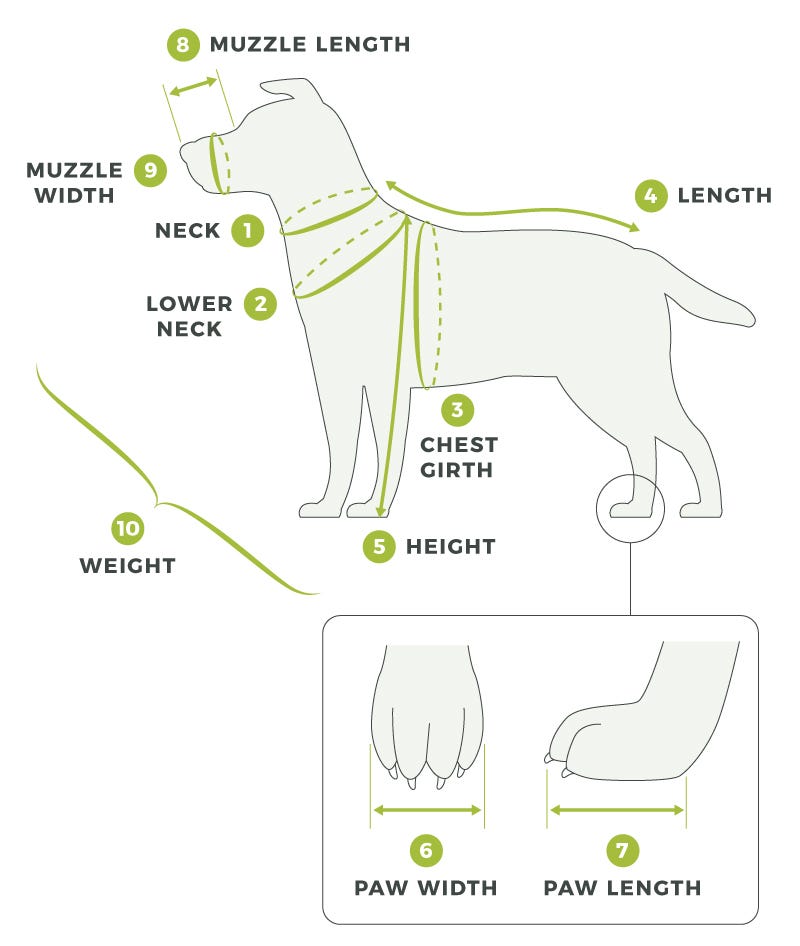
You do not need special equipment to measure a dog for a raincoat. A flexible cloth measuring tape works best because it can follow the shape of your dog’s body. If you do not have one, use a piece of string and measure the string with a ruler or standard tape measure.
Ask your dog to stand on a level surface. Keep the head in a natural position and avoid stretching the body. If your dog moves a lot, have another person gently keep the dog calm while you take the measurements.
- ✦ Soft measuring tape
Use a flexible tape that can sit around curves without pressing into the coat or skin.
- ✦ A calm helper
One person can reward and steady the dog while the other person measures.
- ✦ Small treats
Treats can help a nervous or active dog stay still for a few seconds.
- ✦ The brand size chart
Keep the raincoat’s size chart nearby because each brand may use different measurements.
The Best Time to Measure
Measure your dog while standing in a relaxed pose. Do not measure while your dog is lying down or sitting. If your dog has a thick coat, keep the tape flat against the fur without pulling it tight.
- ✦ Stand naturally
Keep all four feet on the floor when possible so the body length and chest size are more accurate.
- ✦ Stay relaxed
A tense dog may puff out the chest or change posture, which can affect the result.
Step 1: Measure Your Dog’s Back Length
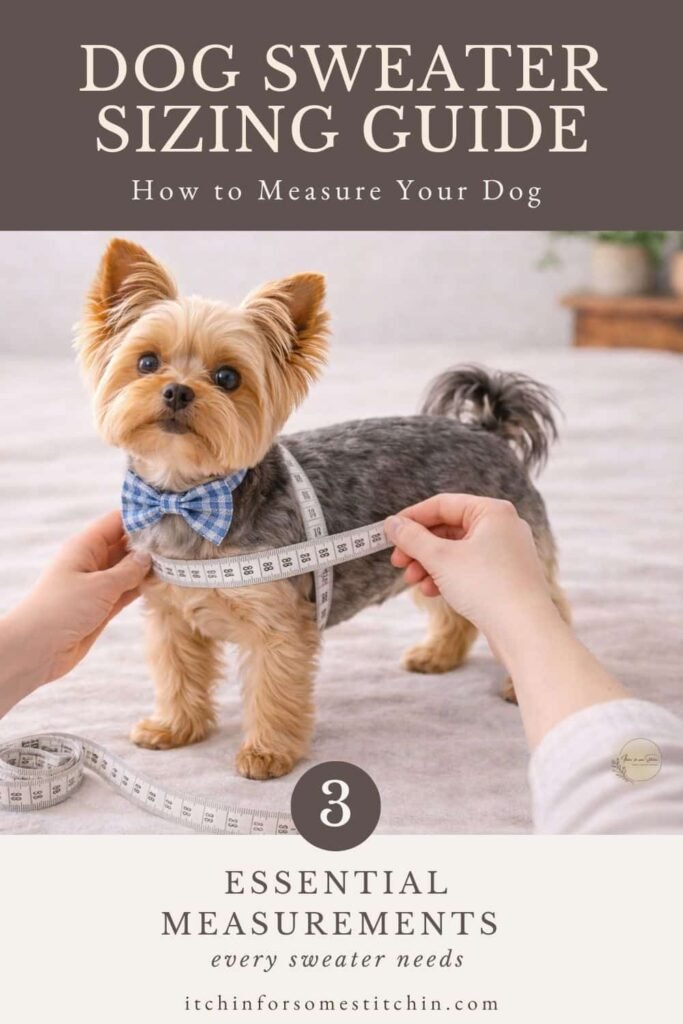
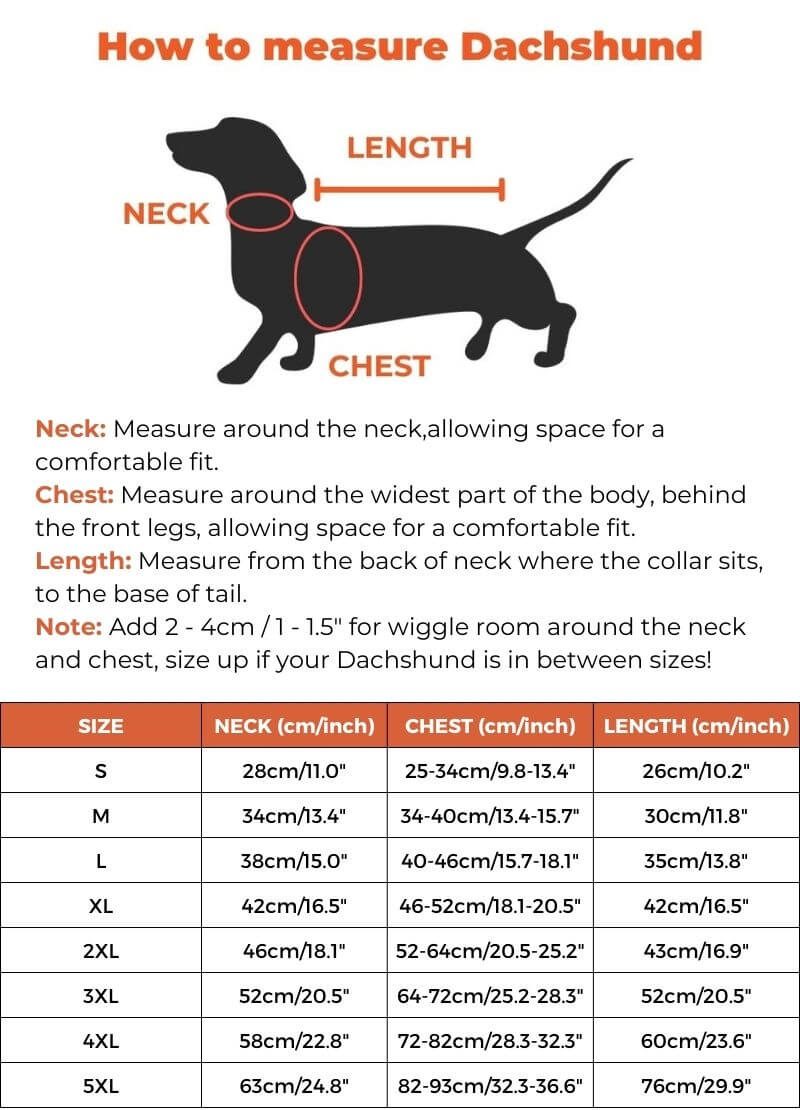
Back length is often the most important measurement when learning how to measure a dog for a raincoat. Start at the base of the neck, where the neck meets the shoulders. Run the tape along the spine to the base of the tail.
Keep the tape following the dog’s back rather than measuring in a straight line above the body. Do not include the tail unless the size chart clearly tells you to do so.
Write the number down in inches. If the brand lists sizes in centimeters, you can convert the measurement before comparing it with the chart.

- ✦ Start point
Place the tape at the base of the neck, near the top of the shoulders.
- ✦ End point
Measure to the base of the tail where the tail joins the body.
- ✦ Tape position
Keep the tape along the dog’s back and do not stretch it tightly.
- ✦ Record the result
Write down the exact number before moving to the next measurement.
Why Back Length Can Be Tricky
Dogs have many body shapes, so back length can vary even among dogs of similar weight. Long-backed breeds may need a longer coat, while broad or compact dogs may need a different cut. This is one reason a weight-only size chart can be less useful than a chart based on body measurements.
- ✦ Long-backed dogs
Check that the coat reaches far enough along the back without restricting movement.
- ✦ Short-backed dogs
Avoid excessive fabric that can bunch near the tail or interfere with movement.
Step 2: Measure Your Dog’s Chest Girth
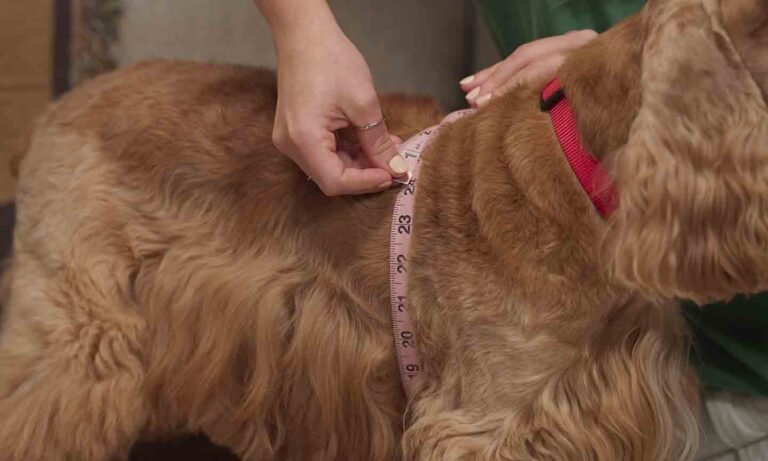
Chest girth is the widest part around your dog’s rib cage. Place the measuring tape just behind the front legs and wrap it around the chest. Keep the tape level and snug, but do not pull it tight.
This measurement is especially important for dogs with deep or broad chests. A coat may have the right back length but still feel too tight around the ribs. Always compare the chest measurement with the raincoat’s own chart.

- ✦ Find the widest area
Wrap the tape around the deepest part of the rib cage, usually just behind the front legs.
- ✦ Keep it level
Make sure the tape does not slope sharply up or down around the body.
- ✦ Use a light touch
The tape should touch the fur without squeezing the chest.
- ✦ Check the chart
Compare the chest number with the exact raincoat size chart before ordering.
Chest Measurement Tips for Thick-Coated Dogs
Thick fur can make a chest measurement look larger than the dog’s body. Press the tape gently through the fur so it sits close to the body, but never pull it tight. If the coat is very thick, take the measurement twice and use the result that you can repeat consistently.
- ✦ Do not flatten the fur
Use gentle pressure rather than compressing the coat hard against the body.
- ✦ Measure twice
Repeat the measurement to make sure you get a similar number each time.
Step 3: Measure the Neck
The neck measurement helps you check the fit of the coat opening or collar. Wrap the tape around the lower part of the neck, close to the shoulders. Keep it snug enough to stay in place but loose enough to avoid pressure.
A raincoat should never make breathing or swallowing harder. If the coat has an adjustable neck, your measurement can help you find the right starting size, but you should still check the fit after the coat is on.
- ✦ Measure low on the neck
Take the measurement near the base of the neck where the coat will normally sit.
- ✦ Do not tighten the tape
Leave enough room for normal comfort and avoid pulling the tape into the fur.
- ✦ Check the finished fit
After putting on the raincoat, make sure the neck area does not press or rub.
Step 4: Check the Raincoat Size Chart
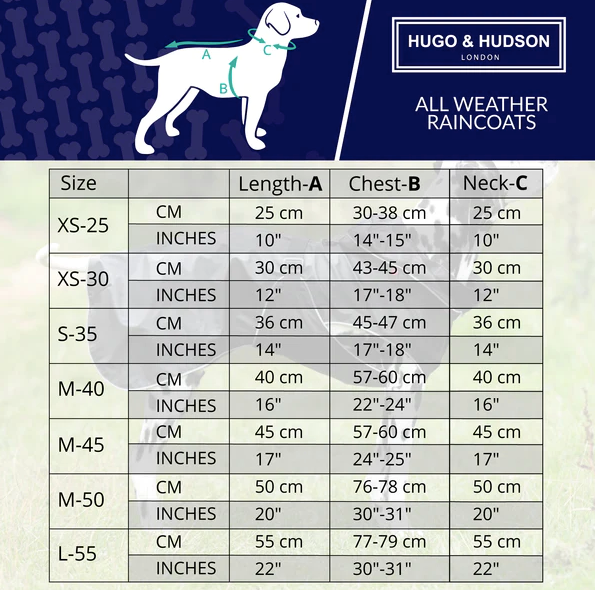
Once you know how to measure a dog for a raincoat, the next step is matching the numbers to the product chart. Do not assume that a medium from one brand will fit like a medium from another. Pet clothing sizes are not fully standardized.
Look at the measurements listed by the manufacturer. Some charts focus on back length, while others list chest, neck, and weight together. Use the measurements that the brand says matter for that specific coat.
If your dog falls between two sizes, read the brand’s fit advice before choosing. For a raincoat, the larger size may sometimes provide more room, but the coat must still stay secure and avoid excessive loose fabric.
- ✦ Compare numbers
Match your dog’s measurements to the manufacturer’s measurements rather than choosing by the letter size alone.
- ✦ Check the fit type
A slim rain shell and a loose poncho can use very different sizing methods.
- ✦ Read special notes
Some brands provide separate advice for dogs with long backs, broad chests, or thick fur.
- ✦ Keep your measurements
Save your dog’s numbers so you can compare future coats without starting from zero.
What If Your Dog Is Between Sizes?
Do not pick a size based on one number alone when the measurements point to different sizes. Look at which measurement controls the fit of that coat. If the coat is adjustable, check how much room the straps or closures provide.
- ✦ Check the largest key measurement
Pay close attention to the measurement that would create a tight fit, such as chest girth.
- ✦ Review the return policy
When shopping online, a clear return policy can help if the first size does not fit.
How to Check the Fit After the Raincoat Is On
Measurements help you choose a starting size, but the final fit must be checked on your dog. Put the raincoat on and let your dog stand, walk, sit, and turn. Watch for pulling, bunching, loose straps, or areas where the coat shifts.
The coat should protect the body without limiting normal movement. Check the neck, chest, shoulders, belly, and legs. Pay extra attention to the closure points because they can create pressure even when the overall coat looks like the right size.

- ✦ Neck
The neckline should sit comfortably and should not press tightly against the neck.
- ✦ Chest
The dog should have enough room to breathe and move without the coat squeezing the rib cage.
- ✦ Shoulders
The front of the coat should allow the shoulders and front legs to move freely.
- ✦ Back
The coat should cover the back well without hanging so far back that it interferes with the tail.
- ✦ Closures
Zippers, snaps, and hook-and-loop fasteners should stay secure without pinching the skin or fur.
Signs a Raincoat Is Too Small
A coat may be too small if it pulls across the chest, restricts the shoulders, or leaves much of the back uncovered. Tight straps and closures are also warning signs. If your dog cannot move normally while wearing it, remove the coat and reassess the size.
- ✦ Pulling
Fabric stretches or pulls when the dog walks or turns.
- ✦ Limited movement
The dog cannot move the shoulders or legs in a normal way.
- ✦ Tight closures
Fasteners press into the body or leave little room for adjustment.
Signs a Raincoat Is Too Large
A coat may be too large if it shifts from side to side, hangs far past the base of the tail, or has loose fabric around the legs. Extra fabric can also catch on objects or make a dog uncomfortable. Adjustable features can solve small fit issues, but they cannot always fix a coat that is far too large.
- ✦ Shifting
The coat moves noticeably when the dog walks.
- ✦ Excess fabric
Large folds or loose sections hang around the body or legs.
- ✦ Poor coverage
The coat moves out of place and leaves areas exposed to rain.
Common Mistakes When Measuring a Dog for a Raincoat
Small measuring errors can lead to a poor fit. The most common mistake is guessing from weight or breed instead of taking actual measurements. Another common error is measuring while the dog is sitting or lying down.
People also tend to pull the tape too tight. A tight measurement can make the dog’s body seem smaller than it is. Take each measurement gently and repeat it when the number seems unusual.
- ✦ Using weight alone
Weight does not show body length, chest shape, or neck size well enough to replace measurements.
- ✦ Measuring over a bulky coat
Heavy fur can add extra space to the measurement, so use gentle pressure and measure consistently.
- ✦ Pulling the tape tight
A tight tape can produce measurements that are smaller than your dog’s true comfortable size.
- ✦ Measuring the tail
Back length usually ends at the base of the tail unless the manufacturer’s chart says otherwise.
- ✦ Ignoring the brand chart
A size label such as large has no universal measurement across all dog raincoat brands.
- ✦ Skipping the movement test
A coat can match the numbers and still have a poor cut for your dog’s body.
Special Considerations for Different Dog Shapes
Knowing how to measure a dog for a raincoat becomes more important when your dog has an unusual body shape. A standard coat may fit a medium-sized dog but fail to fit a dog with a very long back, deep chest, short legs, or broad shoulders.
Look beyond the size label. Compare your dog’s back, chest, and neck measurements with the coat chart, then check whether the coat design suits the dog’s shape.
- ✦ Long-backed dogs
Focus closely on back length and make sure the coat does not leave a large section of the rear exposed.
- ✦ Deep-chested dogs
Chest girth may control the size more than back length, so check the widest part carefully.
- ✦ Broad dogs
Look for enough chest and shoulder room rather than relying on weight-based sizing.
- ✦ Short-legged dogs
Avoid coats with excess fabric near the belly or legs that may drag or get wet.
- ✦ Thick-coated dogs
Measure through the fur with gentle pressure and check whether the coat allows enough room for the dog’s natural coat.
When a Standard Raincoat May Not Work
Some dogs need a coat with adjustable straps or a cut made for a particular body shape. If your dog’s measurements fall far apart on a size chart, look for a design with more adjustment. A coat that offers several fit points can be easier to fit than one with a fixed shape.
- ✦ Adjustable chest
Useful when chest size falls between standard sizes.
- ✦ Adjustable neck
Can help fine-tune the neckline without changing the whole coat size.
- ✦ Flexible belly fit
A flexible closure can help the coat fit dogs with different body widths.
How to Measure a Dog for a Raincoat When Shopping Online
Online shopping makes accurate measurements even more useful. Before adding a raincoat to your cart, find the product’s measurement chart and note exactly which points it asks for. Take your dog’s measurements on the same day you plan to order when possible.
Save a photo or note with the measurements. This makes it easier to compare several raincoats without measuring your dog again. If a seller provides a detailed fit guide, follow that guide because measurement points can vary between products.
- ✦ Read before buying
Check the full size chart and measurement instructions before selecting a size.
- ✦ Measure in the listed units
Use inches or centimeters as requested by the manufacturer to avoid conversion mistakes.
- ✦ Compare all key measurements
Do not stop after checking back length if the product also lists chest and neck measurements.
- ✦ Check returns
Review the store’s return or exchange terms in case the coat does not fit as expected.
A Simple Measurement Checklist
If you need a quick way to remember how to measure a dog for a raincoat, use three core numbers: back length, chest girth, and neck size. Write them down before you shop. Then compare each number with the manufacturer’s size chart.
Do not rush the process. A second measurement can catch a simple mistake and may save you the trouble of returning an ill-fitting raincoat.
- ✦ Back length
Measure from the base of the neck to the base of the tail.
- ✦ Chest girth
Measure around the widest part of the rib cage, usually just behind the front legs.
- ✦ Neck circumference
Measure around the lower neck near the shoulders.
- ✦ Size chart
Match all required measurements to the specific raincoat brand’s chart.
- ✦ Final fit
Check comfort and movement after putting the raincoat on your dog.