How to Measure a Dog for Clothes: A Simple Step-by-Step Fit Guide
Learning how to measure a dog for clothes is simple, but the small details matter. A tape measure that sits too high or a dog that is hunched over can change the result. The goal is not to make the tape tight. The goal is to get a true body measurement that you can match to the garment’s size chart.
In practice, the best time to measure is when your dog is calm and standing on all four paws. Use a soft fabric tape and take each measurement more than once if needed. This guide explains how to measure a dog for clothes, how to read size charts, what measurements different garments need, and how to check the fit after the clothes arrive.

What Measurements Do You Need for Dog Clothes?
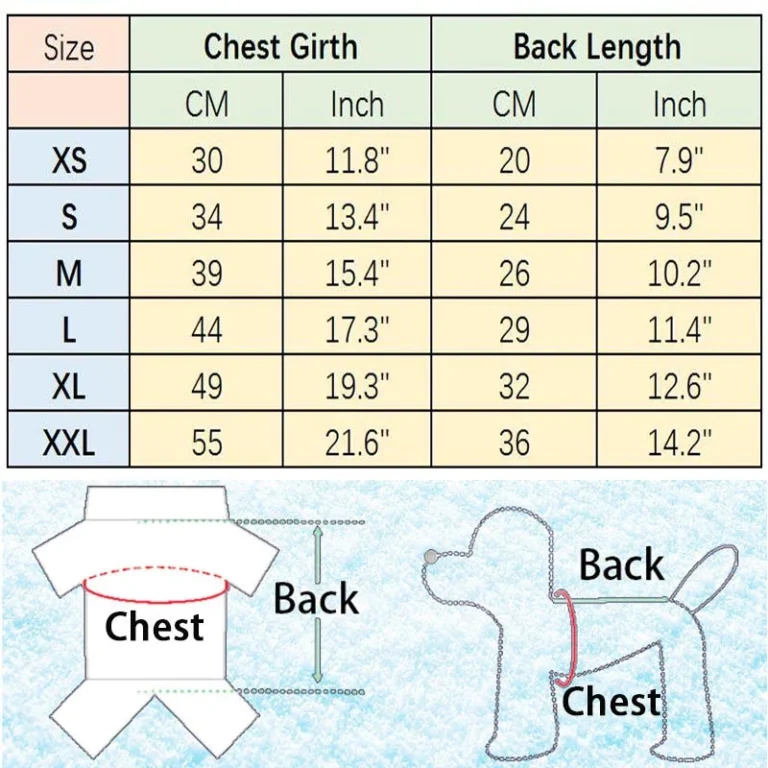
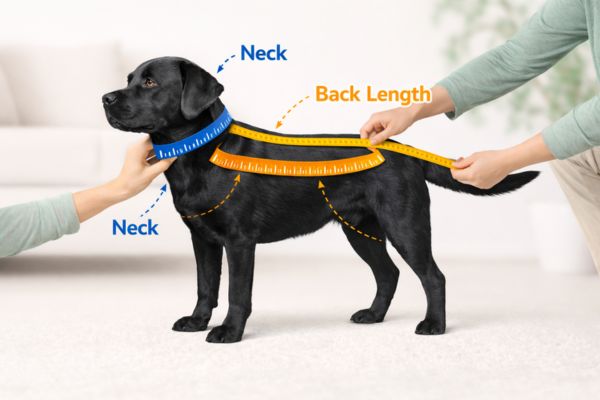
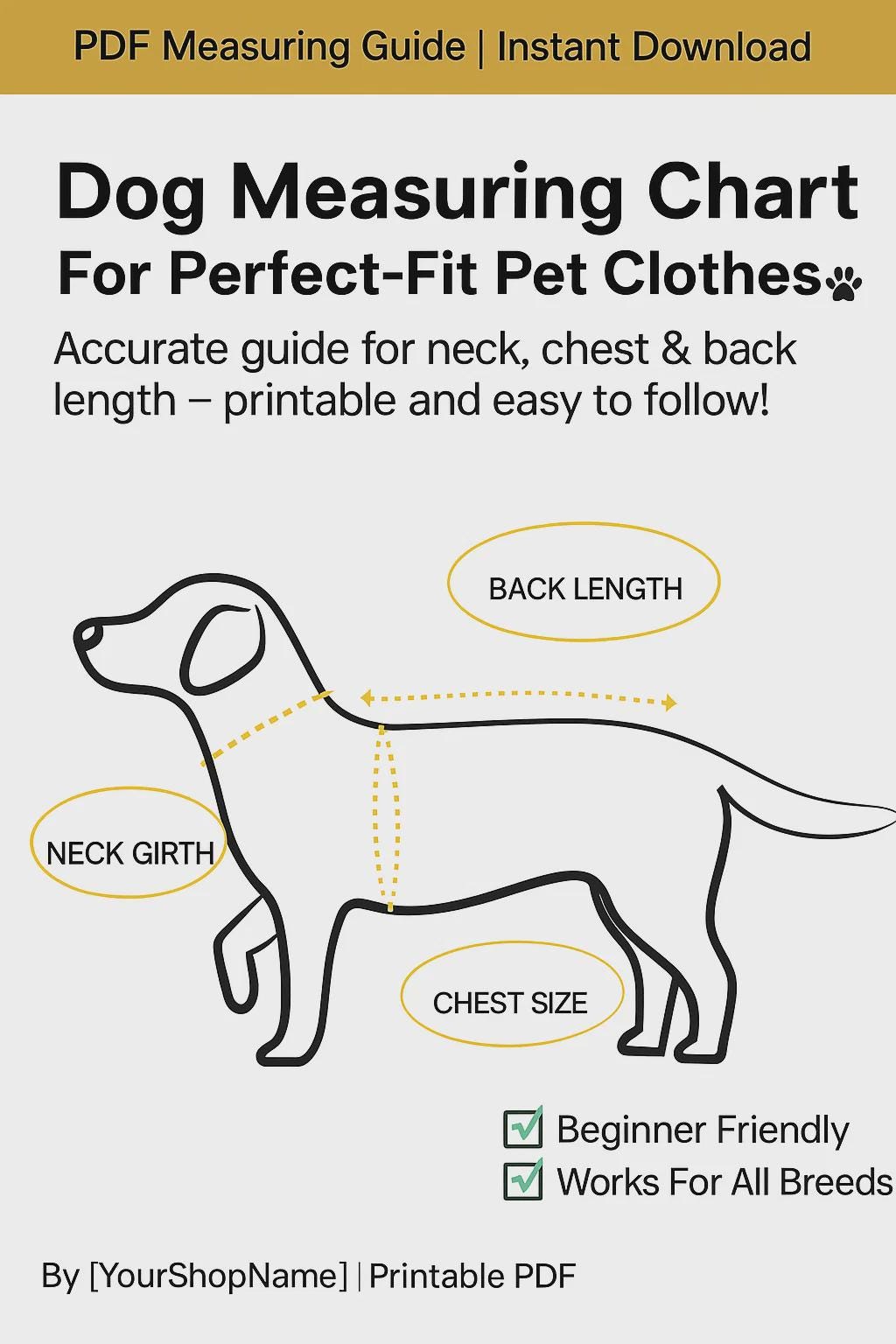
Most dog clothes use three main measurements: back length, chest girth, and neck girth. Some garments also need a waist, leg, head, or front-leg measurement. The exact measurements depend on the type of clothing and the brand.
Before you shop, check the seller’s size chart. One brand’s medium may not match another brand’s medium. Knowing how to measure a dog for clothes helps you choose by body size instead of relying on a label.
- ✦ Back length
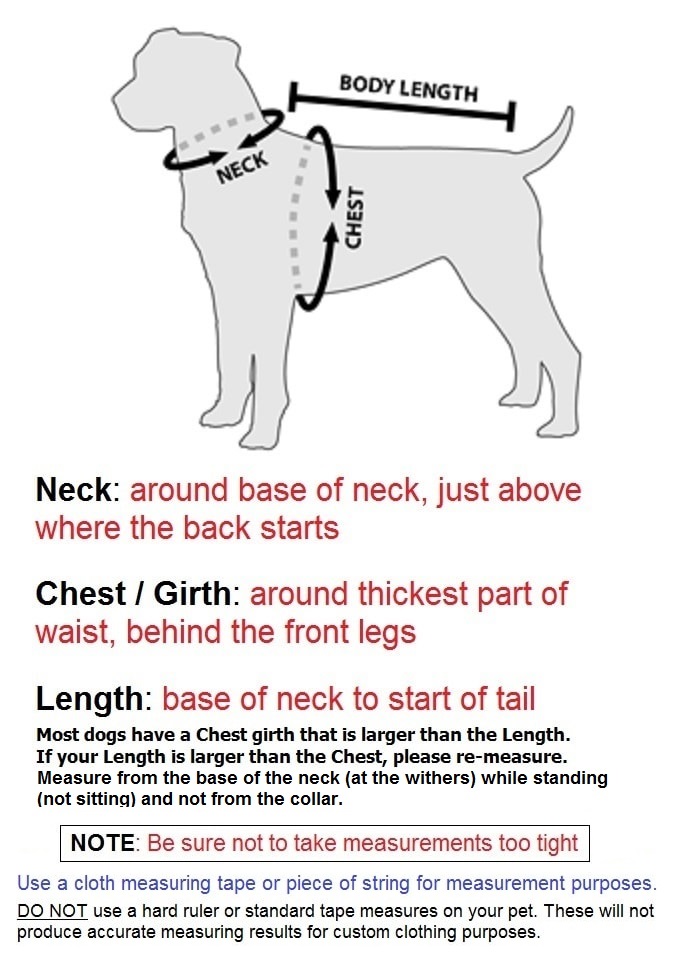
Measure from the base of the neck to the base of the tail. This is often the main measurement for coats, sweaters, shirts, and jackets.
- ✦ Chest girth
Measure around the widest part of the rib cage, usually just behind the front legs.
- ✦ Neck girth
Measure around the base of the neck where the garment’s neckline will sit. Keep the tape snug but not tight.
- ✦ Extra measurements
Some designs may require waist, leg, head, or chest-to-waist measurements. Follow the brand’s chart when it asks for them.
Why Weight and Breed Are Not Enough
Weight can help give you a rough idea of size, but it does not show your dog’s shape. Two dogs with the same weight can have very different chest widths, neck sizes, and body lengths.
Breed can help with general expectations, too, but it should not replace actual measurements. A long-backed dog may need a different size from a dog of the same weight with a shorter body.
- ✦ Body shape varies
Dogs can have deep chests, broad shoulders, narrow waists, short backs, or long backs.
- ✦ Sizes vary by brand
Clothing makers use different size ranges and garment cuts, so always check the specific chart.
What You Need Before Measuring Your Dog
You do not need special equipment to measure a dog for clothes. A soft measuring tape is the easiest tool because it can follow the curves of your dog’s body. If you do not have one, use a strip of string and then measure the string against a ruler or firm tape measure.
Choose a calm place with enough room for your dog to stand. Have a few small treats nearby if your dog needs help staying still. Measuring a relaxed dog is much easier than measuring a dog that is running, sitting, or trying to chew the tape.

- ✦ Soft measuring tape
Use a flexible tape that can wrap around the body without digging into the coat.
- ✦ Pen and paper
Write down each measurement right away so you do not mix up the numbers.
- ✦ Small treats
Reward calm behavior during the process. This can make future measurements easier.
- ✦ Size chart
Keep the clothing brand’s size chart open so you know which measurements to record.
How Your Dog Should Stand
Ask your dog to stand naturally on all four paws. The head can stay in a normal position. Do not stretch the neck, pull the legs forward, or make the dog stand in an unusual pose.
If your dog keeps sitting, take a short break and try again. A natural standing position gives you a better measurement and makes it easier to repeat the process later.
- ✦ Keep the body natural
Do not press your dog into a pose or pull the body straight.
- ✦ Keep the coat natural
Do not flatten thick fur with strong pressure. Let the tape rest against the body without squeezing.
How to Measure a Dog for Clothes Step by Step
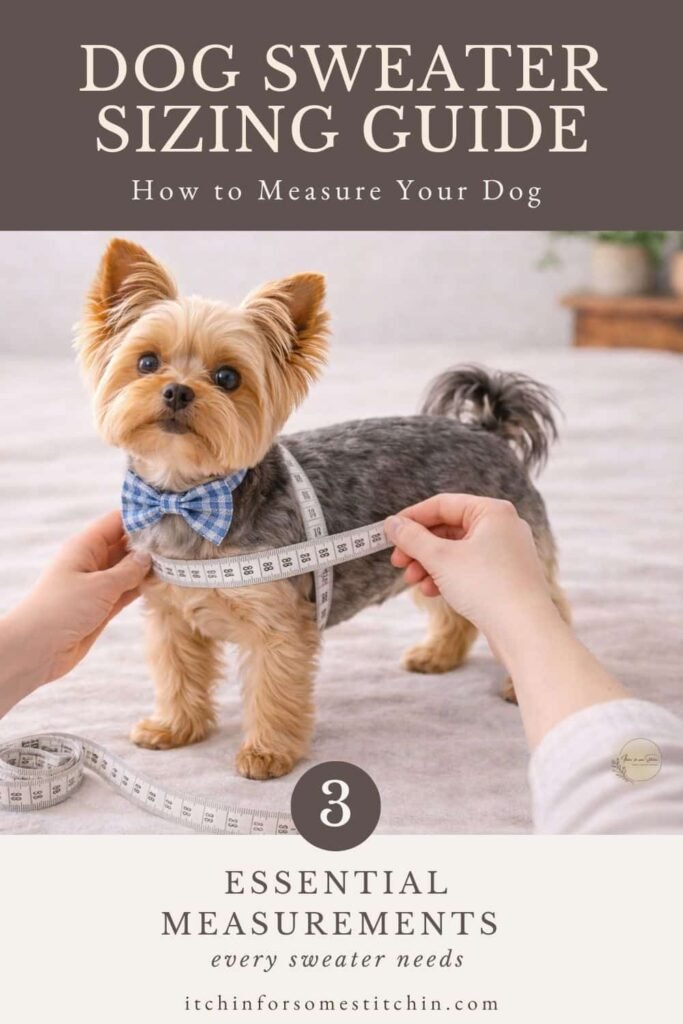
The most useful answer to how to measure a dog for clothes is to take the measurements in a set order. Start with back length, then measure the chest and neck. Record each number in inches if the size chart uses inches, or convert the measurements if the chart uses another unit.
Keep the tape level as you work. It should touch the body without pulling tight. If you get a very different number on the second attempt, take a third measurement and use the result that best reflects your dog’s natural standing position.
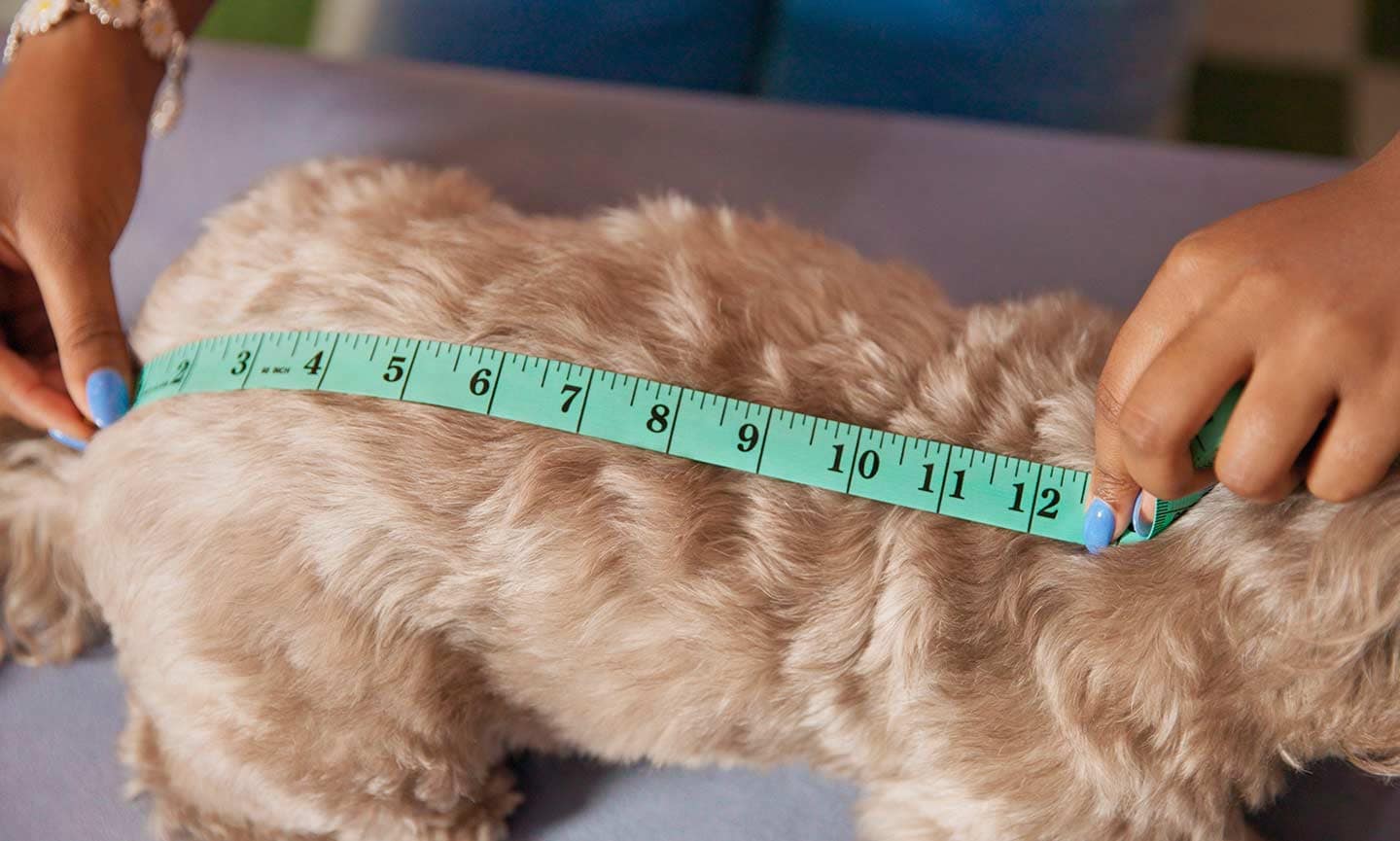
- ✦ Step 1: Measure back length
Place the tape at the base of the neck, where the neck meets the shoulders. Run it along the spine to the base of the tail. Do not measure to the tip of the tail unless the clothing maker specifically says to.
- ✦ Step 2: Measure chest girth
Wrap the tape around the widest part of the rib cage, usually just behind the front legs. Keep the tape level around the body.
- ✦ Step 3: Measure neck girth
Wrap the tape around the base of the neck. Keep it comfortably snug, with no pulling or pressing.
- ✦ Step 4: Record the numbers
Write down the measurements with clear labels. For example, record back length, chest, and neck instead of writing only three numbers.
- ✦ Step 5: Compare with the size chart
Match your dog’s measurements to the exact clothing chart for the product you want to buy.
How to Measure Back Length
Back length is one of the most important measurements for dog clothing. Start at the base of the neck, near the point where the collar normally rests. Run the tape down the back to the base of the tail.
For many coats and sweaters, a back measurement that is too short can leave the rear of the body exposed. A garment that is too long can interfere with movement or sit in an awkward place. Use the brand’s instructions if its starting or ending points differ.
- ✦ Start point
Use the base of the neck where the shoulders begin.
- ✦ End point
Stop at the base of the tail rather than the tail tip unless the size guide says otherwise.
How to Measure Chest Girth
Chest girth is the measurement around the widest part of your dog’s chest. In many dogs, this point sits just behind the front legs and includes the deepest part of the rib cage.
Keep the tape level as it travels around the body. Do not pull it so tightly that it presses into the ribs. This measurement is especially important for shirts, harness-friendly clothing, coats, and jackets.
- ✦ Find the widest point
Look for the broadest part of the rib cage, often just behind the front legs.
- ✦ Wrap evenly
Keep the tape at the same height around the chest instead of letting it slope.
How to Measure Neck Girth
Measure around the lower part of the neck where the clothing neckline will sit. The tape should be snug enough to stay in place but loose enough to avoid pressure.
Do not use the tightest part of the neck unless the garment’s instructions specifically call for that location. A shirt or sweater needs enough room for comfortable breathing and normal head movement.
- ✦ Use the garment area
Measure where the neckline will actually sit rather than choosing a random point on the neck.
- ✦ Avoid a tight pull
The tape should touch the coat and body without digging in.
How to Choose the Right Dog Clothing Size
Once you know how to measure a dog for clothes, the next step is reading the size chart correctly. Start with the measurements the manufacturer lists as most important. If your dog falls between two sizes, look at all the measurements instead of choosing by one number alone.
A good fit should allow normal movement without hanging loose or pressing against the body. For active dogs, clothing should not block the shoulders or rub the front legs. For coats and winter layers, also consider whether your dog will wear another layer underneath.

- ✦ Check every listed measurement
Compare your dog’s back, chest, neck, and any other required measurements with the chart.
- ✦ Follow the brand’s priority
If the seller says chest is the key measurement, give chest size extra attention when choosing between sizes.
- ✦ Consider the garment type
A fitted shirt and a loose raincoat may use different cuts and may need different amounts of room.
- ✦ Read the return policy
Check the seller’s rules before buying in case the garment does not fit as expected.
What If Your Dog Is Between Sizes?
Dogs often fall between two size ranges. In that case, compare the measurements that matter most for the garment. For example, a coat that fits the back but is too tight across the chest may still be uncomfortable.
Look at the garment design as well. Adjustable straps, stretch fabric, open belly panels, and closures can affect how forgiving a size is. When a product has no adjustment and your dog’s measurements are at the upper edge of a size, check the manufacturer’s guidance before ordering.
- ✦ Prioritize comfort
Avoid a size that creates pressure around the neck or chest even if another measurement looks perfect.
- ✦ Check product notes
Brand-specific fit notes can explain whether a garment runs small, large, slim, or roomy.
Why Dog Clothes Sizes Differ Between Brands
There is no single sizing system that makes every dog clothing label identical. Each maker can set its own size ranges, garment shape, and measurement method. That is why a dog may wear one size in a sweater and another size in a coat.
Always use the size chart for the exact product. The label alone is not enough to tell you whether a garment will fit.
- ✦ Different size ranges
Small, medium, and large can represent different measurements from one company to another.
- ✦ Different cuts
A slim shirt, loose coat, and stretch sweater can fit the same dog in different ways.
How to Measure a Dog for Different Types of Clothes
The basic method for how to measure a dog for clothes stays the same, but different garments may need different measurements. A simple shirt may focus on neck, chest, and back length. A full-coverage coat or costume may need more measurements to account for sleeves, openings, or other parts.
Think about where the garment will sit on the body. The more coverage a garment has, the more important it is to follow the product’s full measurement guide.
- ✦ Dog shirts
Usually focus on neck, chest, and back length. Check whether the shirt has a fitted belly or adjustable closure.
- ✦ Dog sweaters
Back length and chest girth are often key. Stretch can make the fit more flexible, but the sweater should not restrict movement.
- ✦ Dog coats and jackets
Measure back length, chest, and neck carefully. Check whether the coat leaves enough room for movement and any layers underneath.
- ✦ Dog raincoats
Use the maker’s full chart because raincoats may have wider or longer coverage than everyday shirts.
- ✦ Dog costumes
Follow all listed measurements because costumes can include hats, sleeves, skirts, or other parts that need extra room.
- ✦ Dog pajamas
Check the full body length and chest fit. Leg openings should allow normal movement without rubbing.
How to Measure for a Dog Coat or Jacket
When measuring for a coat or jacket, chest girth deserves close attention because the garment often wraps around a large part of the rib cage. Back length also matters because a coat that ends too early may leave much of the back uncovered.
Check where the closure sits and whether the design works with your dog’s harness or collar. A good coat should allow your dog to walk, turn, sit, and lie down without the garment pulling across the shoulders.
- ✦ Check shoulder movement
Make sure the front of the coat does not restrict the shoulders or front legs.
- ✦ Check closures
Zippers, snaps, and hook-and-loop closures should close without squeezing the chest.
How to Measure for a Dog Costume
Costumes can be more complex than basic dog clothes. Start with the main body measurements, then follow the costume maker’s instructions for head, leg, waist, or other measurements.
Do not choose a costume based only on appearance. It should allow free movement and should not block your dog’s vision, breathing, or ability to walk normally.
- ✦ Measure all required areas
Use every measurement listed in the costume’s size chart.
- ✦ Check movement
Make sure the costume does not interfere with walking, sitting, or turning.
Common Mistakes When Measuring a Dog for Clothes
Most poor clothing fits start with a poor measurement. A tape can shift, a dog can sit down, or a person can measure the wrong part of the body. Taking a little extra time at the start can prevent an incorrect size choice.
If you are learning how to measure a dog for clothes for the first time, take each measurement twice. If the numbers differ, check your tape position and measure again while your dog stands naturally.
- ✦ Measuring while the dog sits
A sitting position can change the shape of the back and chest. Measure while the dog stands naturally.
- ✦ Pulling the tape too tight
A tight tape can make the body seem smaller than it is and may lead to an uncomfortable garment.
- ✦ Using only weight
Weight does not show body length or chest shape, so it should not replace actual measurements.
- ✦ Measuring to the tail tip
Many clothing charts use the base of the tail as the end point for back length. Follow the specific chart.
- ✦ Ignoring the size chart
Do not assume the same size will fit across different brands or garment types.
- ✦ Forgetting the coat
Very thick fur can affect the way a garment sits. Avoid pressing the tape into the coat.
- ✦ Measuring only once
A second measurement can catch a tape-position mistake before you place an order.
How to Measure a Dog With Thick or Long Fur
Thick fur can make measurements less precise because the tape may sit on the coat rather than close to the body. Keep the tape gently against the coat and use the same method each time.
Do not squeeze the fur down hard. If the clothing maker gives special instructions for long-haired dogs, follow those instructions. The most useful number is one taken in a consistent way that matches the brand’s sizing method.
- ✦ Use gentle pressure
Let the tape rest against the coat without compressing it firmly.
- ✦ Repeat the process
Take the same measurement again to check that the result is consistent.
How to Check Whether Dog Clothes Fit Correctly
Knowing how to measure a dog for clothes is only half the job. Once the garment arrives, check the fit while your dog stands, walks, sits, and lies down. Watch for rubbing, pinching, slipping, or any sign that the garment changes your dog’s normal movement.
The garment should stay in place without feeling restrictive. Pay close attention to the neck, chest, front legs, belly, and closures. If your dog seems uncomfortable or tries to remove the garment, take it off and reassess the size and design.
- ✦ Neck
The neckline should not press tightly against the neck or interfere with normal head movement.
- ✦ Chest
The chest area should allow normal breathing and movement without tight pressure.
- ✦ Front legs
The openings should not rub the legs or limit shoulder movement.
- ✦ Back
The garment should cover the intended area without bunching or sliding out of place.
- ✦ Closures
Fasteners should close securely without pulling hard across the body.
- ✦ Overall movement
Your dog should be able to walk, sit, turn, and lie down in a natural way.
Signs the Clothing Is Too Small
A garment may be too small if it pulls across the chest, presses into the neck, restricts the shoulders, or leaves deep marks after wear. Tight clothing can also make normal movement harder.
Do not rely only on how the garment looks while your dog stands still. Movement often reveals a poor fit that is not obvious at first glance.
- ✦ Visible pulling
Fabric stretches strongly across the chest, shoulders, or back.
- ✦ Restricted movement
Your dog cannot walk, sit, turn, or lie down as usual.
- ✦ Tight openings
Neck, leg, or belly openings press into the body.
Signs the Clothing Is Too Large
Clothes can also be too large. Excess fabric may bunch, slide, catch on objects, or get in the way of your dog’s legs. A loose neckline or loose chest can also let the garment shift during a walk.
Some loose designs are meant to have extra room, so compare the fit with the product’s intended style. The key is that the garment should stay secure without limiting movement.
- ✦ Excess fabric
Large folds or loose sections appear when your dog moves.
- ✦ Sliding garment
The clothing shifts away from its intended position during normal activity.
Tips for Measuring Puppies and Growing Dogs
Puppies grow quickly, so a measurement that fits today may not fit for long. Measure your puppy close to the time you buy the clothing, especially when ordering fitted items. Avoid buying a very large size simply to allow for growth if the loose garment could interfere with movement.
For growing dogs, keep a simple record of their measurements. This makes it easier to spot changes and choose the next size when needed. It also helps when buying seasonal clothes such as winter coats.
- ✦ Measure close to purchase
Use recent measurements rather than old numbers from several weeks or months ago.
- ✦ Allow useful room
Choose a fit that gives normal movement without making the garment excessively loose.
- ✦ Recheck after growth
Measure again when your puppy gains noticeable size or changes body shape.
- ✦ Keep old measurements
A simple record can help you see which areas are growing and make future sizing easier.
How Often Should You Measure a Puppy?
There is no single schedule that fits every puppy because growth speed varies by age, breed, and individual dog. Measure again whenever your puppy has grown noticeably or before buying a new fitted garment.
If a puppy is between sizes, check the seller’s return rules and product fit notes before ordering. This is especially useful for expensive coats or specialty clothing.
- ✦ Before each new purchase
Use current measurements rather than assuming the previous size still fits.
- ✦ After visible growth
Recheck the chest, neck, and back when your puppy has clearly grown.
A Simple Dog Clothing Measurement Checklist
If you want a quick routine for how to measure a dog for clothes, keep the process simple. Have your dog stand naturally, take the main measurements, record them, and compare them with the exact product chart.
Do not rush the final fit check. The right size should support normal movement and comfort, not just look correct in a product photo.
- ✦ Prepare
Get a soft tape, paper, pen, and a few treats.
- ✦ Stand
Keep your dog standing naturally on all four paws.
- ✦ Measure back
Measure from the base of the neck to the base of the tail.
- ✦ Measure chest
Wrap the tape around the widest part of the rib cage.
- ✦ Measure neck
Measure around the base of the neck where the clothing will sit.
- ✦ Repeat
Check each measurement a second time if the first number seems uncertain.
- ✦ Compare
Use the clothing brand’s own size chart and follow its measurement instructions.
- ✦ Check fit
After purchase, watch your dog walk, sit, turn, and lie down in the clothing.
Quick Reference: Which Measurement Matters Most?
Back length often helps determine overall garment length, while chest girth helps determine how the garment wraps around the body. Neck girth matters most around collars and neck openings. The importance of each number changes with the garment design.
When a product chart gives several measurements, use all of them. If the brand provides a specific fitting method, follow that method instead of applying a general rule.
- ✦ Back length
Useful for judging garment length and body coverage.
- ✦ Chest girth
Useful for judging room around the rib cage and front body.
- ✦ Neck girth
Useful for judging comfort around the neckline.