Do Cats Like Wearing Sweaters: Key Facts and Helpful Explanations
A cat may look adorable in a tiny sweater, but the first few seconds often tell a different story: flattened ears, stiff walking, frantic backing up, or an immediate attempt to escape. That reaction raises a practical question for many pet owners: do cats like wearing sweaters, or are sweaters mainly a human preference?
The honest answer is that cats vary, but most cats do not naturally need or enjoy clothing. A sweater can be useful in limited situations, especially for a hairless cat, a cat with very little fur, or a pet recovering from a medical procedure. It can also create stress, overheating, restricted movement, or safety problems when used casually.
I will explain how to recognize a cat’s preference, when clothing may be appropriate, how to introduce a sweater safely, what design features matter, and which warning signs mean it should come off immediately.
Do cats like wearing sweaters?
Some cats tolerate sweaters, and a small number appear comfortable in them. However, most cats are not naturally drawn to clothing because a sweater changes how the body feels, moves, and responds to the environment. Cats rely heavily on their fur, skin, whiskers, posture, and freedom of movement to interpret what is happening around them.
A sweater can feel unfamiliar or restrictive. It may press against the shoulders, rub the armpits, cover part of the back, or interfere with grooming. Even a loose garment can make a cat feel less able to run, jump, hide, or defend itself. A cat that becomes very still is not necessarily enjoying the sweater. It may be frightened or “freezing” in response to the unfamiliar sensation.
The most accurate answer is therefore individual: a cat may accept a sweater if it is comfortable, introduced gradually, and genuinely useful, but a cat should never be assumed to like one because it looks calm or cute in a photo.
Why many cats dislike clothing
- Restricted movement: Sleeves, tight openings, or a long body can interfere with walking, jumping, stretching, and climbing.
- Unfamiliar pressure: Fabric touching the neck, chest, or legs may feel threatening.
- Lost control: Cats often feel safer when they can move away quickly. A garment can make escape feel harder.
- Grooming interference: Grooming is normal feline behavior, and clothing can block access to the coat and skin.
- Heat buildup: Fur already provides insulation. An extra layer may cause overheating, especially indoors.
- Noise and texture: Rustling fabric, Velcro, zippers, or rough seams may irritate sensitive cats.
When might a cat need a sweater?
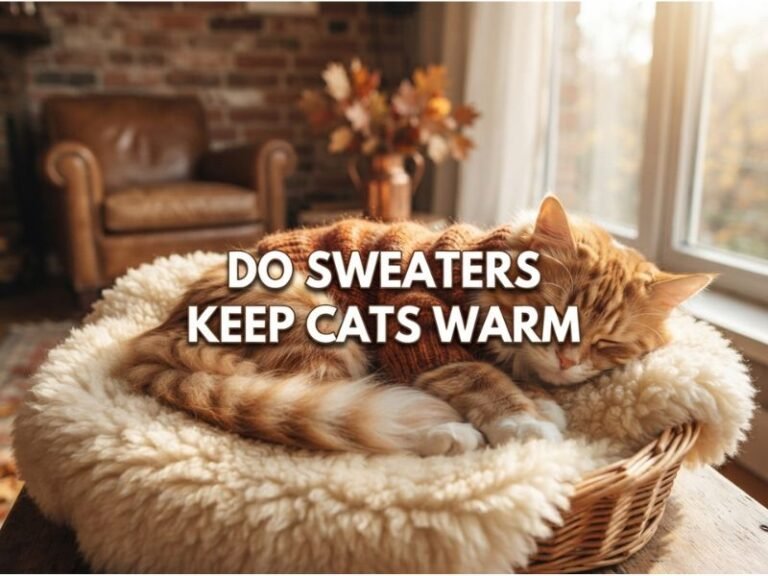
Healthy cats with a normal coat usually do not need sweaters inside a reasonably comfortable home. Their fur provides natural insulation, and adding clothing is not automatically safer than allowing the cat to regulate its own temperature.
There are situations in which a veterinarian may recommend extra warmth or body coverage. Hairless cats, cats with sparse coats, very thin cats, and some senior or ill cats can be more vulnerable to cold. A cat recovering from surgery may also need a protective garment, although a veterinary recovery suit or cone is often more appropriate than an ordinary sweater.
Hairless and lightly coated cats
Hairless breeds, including the Sphynx, have less fur to buffer cold surfaces and cool air. That does not mean every hairless cat needs clothing all day. Individual comfort, room temperature, activity level, and skin condition still matter. Some prefer blankets, heated beds designed for pets, or warm resting areas instead of garments.
Lightly coated cats may also become uncomfortable in a cold room. I would first improve the environment with a draft-free bed, soft bedding, and a comfortable resting location. If a sweater is being considered, a veterinarian can help determine whether clothing is appropriate for that particular cat.
Medical and recovery situations
After surgery or treatment, a cat may need to avoid licking an incision, scratching a wound, or chewing a bandage. A purpose-made recovery suit can sometimes help, but the correct choice depends on the procedure and the location of the wound. A regular sweater may rub the site, trap moisture, hide swelling, or make it harder to inspect the incision.
I would not use a sweater to manage a medical problem without veterinary guidance. A cat that suddenly seems cold, weak, unusually quiet, or reluctant to move may need medical attention rather than an extra layer.
Cold weather and outdoor exposure
A sweater does not make outdoor time safe for every cat. It does not protect against freezing temperatures, wet weather, wind, traffic, predators, or getting caught on branches and fences. A garment can also become dangerous if it snags while a cat is climbing or hiding.
For cats that spend time outdoors, keeping them indoors during severe cold is generally safer than relying on clothing. If a cat must travel outside for a veterinary appointment, a secure carrier and appropriate environmental protection are more dependable than leaving the cat loose in a sweater.
How to tell if a cat is comfortable in a sweater
Comfort is shown through relaxed, normal behavior rather than simply remaining still. A cat that accepts a sweater may walk normally, groom normally, eat treats, respond to familiar sounds, and choose to continue ordinary activities. The cat should be able to sit, lie down, stretch, and move without hesitation.
I look for a loose body, normal ear position, regular breathing, and an ability to disengage from the garment without panic. Even then, acceptance should be monitored because a cat can tolerate a sweater briefly and become distressed later.
Signs the sweater may be acceptable
- The cat moves with a normal stride rather than crouching or wobbling.
- The cat can sit, lie down, turn around, and stretch comfortably.
- The ears remain in a usual position, and the face looks relaxed.
- The cat accepts a favorite treat or engages with a familiar toy.
- The cat does not repeatedly bite, scratch, lick, or pull at the fabric.
- The cat can use the litter box without difficulty.
- The cat returns to normal behavior shortly after the sweater is removed.
Signs of stress or discomfort
Stress signals may be subtle. A cat does not have to hiss or cry to communicate that a sweater is unacceptable. The following behaviors are reasons to remove the garment and allow the cat to settle:
- Freezing, falling over, walking backward, or moving with an exaggerated high step
- Flattened ears, a tucked tail, a tense crouch, or dilated pupils
- Repeated attempts to escape, chew, scratch, or pull off the sweater
- Rapid breathing, excessive vocalization, drooling, or frantic behavior
- Hiding, refusing food, avoiding the litter box, or acting unusually withdrawn
- Repeated licking of one area, skin redness, hair pulling, or rubbing
If breathing seems difficult, the cat becomes weak, or distress does not quickly ease after removal, veterinary advice is appropriate. A sweater should never be used to force a cat to remain still.
Choosing a safe sweater for a cat
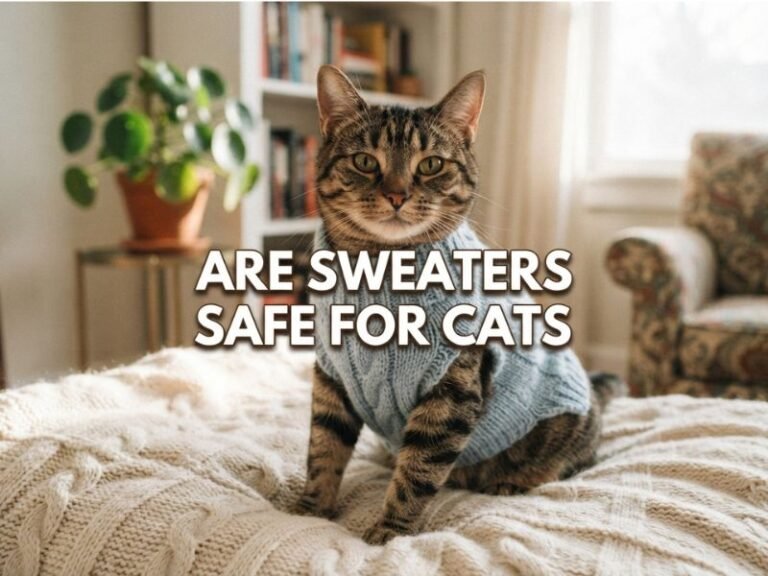
If clothing is genuinely appropriate, the design matters more than appearance. I would choose a simple garment made specifically for cats or small pets, with a soft, breathable fabric and a shape that leaves the legs and shoulders free. The sweater should be easy to remove quickly.
Fit and construction
Measure the cat according to the manufacturer’s instructions, usually around the chest and along the back. Do not rely only on weight or breed because cats with the same weight can have very different body shapes.
A properly fitted sweater should not press into the neck, armpits, abdomen, or base of the tail. It should not drag on the floor or cover the eyes, nose, or mouth. The cat should be able to breathe, swallow, walk, jump onto a low surface, and use the litter box normally.
Check the fit again after the cat moves. Fabric can shift into a tighter position when a cat curls up, runs, or climbs. A sweater that seems loose while standing may become restrictive around the chest when the cat sits.
Fabric and fasteners
Soft, breathable material is usually preferable to thick, heavy, or highly elastic fabric. Avoid rough seams, scratchy tags, dangling strings, loose yarn, and decorations that can be chewed or swallowed. Buttons, beads, bells, and detachable bows add unnecessary hazards.
Fasteners should be secure but not difficult to release. Some cats dislike Velcro because of the sound and texture, while others tolerate it well. Zippers can catch fur or skin if they are poorly designed. I would inspect the sweater for loose threads before every use and remove it if the fabric begins to unravel.
Design features to avoid
- Tight neck openings or high collars that interfere with breathing or swallowing
- Long sleeves that restrict the front or back legs
- Loose straps, ties, or strings that can snag
- Heavy fabric that causes overheating or makes movement difficult
- Hoods that block vision or hearing
- Small decorations that can be swallowed
- Garments that cover the hindquarters and interfere with toileting
How to introduce a sweater gradually
Putting a sweater over a cat without preparation can create a strong negative association. A gradual introduction gives the cat a chance to investigate the item and provides useful information about tolerance before the garment is worn.
Step 1: Let the cat investigate
Place the sweater near a favorite resting area, but do not push it toward the cat. Let the cat smell it and observe it. A treat, play session, or calm praise can help create a neutral or positive association, provided the cat is interested in those rewards.
Do not drape the sweater over the cat during sleep or hold the cat down to make the introduction easier. Restraint may increase fear and can make later attempts more difficult.
Step 2: Touch briefly
Once the cat is relaxed around the sweater, touch the fabric lightly to the shoulder or back for a second, then remove it. Repeat only if the cat remains comfortable. Watch the ears, tail, posture, and willingness to continue the activity.
If the cat walks away, stop and try another day. Progress is not measured by how quickly the sweater gets onto the body. It is measured by whether the cat remains relaxed and in control.
Step 3: Put it on for a very short period
When the cat accepts brief contact, put the sweater on calmly and remove it almost immediately. Choose a quiet room with no other pets, loud noises, or open doors. Offer a reward if the cat is receptive, then observe movement rather than trying to distract the cat continuously.
Never leave the room during the first attempts. If the cat freezes, struggles, falls, or shows stress, remove the sweater right away. Do not wait for the cat to “get used to it” through panic.
Step 4: Increase time only when behavior stays normal
If the cat remains comfortable, future sessions can become gradually longer. Keep the garment off during unsupervised periods, sleep, and play that involves climbing or vigorous movement. Inspect the skin and coat after removal, particularly around the neck, legs, chest, and underarms.
Some cats never progress beyond a few comfortable minutes, and that is useful information. A cat’s refusal is a valid reason not to use clothing unless a veterinarian has given a specific medical reason and a safer alternative is unavailable.
How long can a cat wear a sweater?
There is no universal safe duration because temperature, fabric, fit, coat type, health, and the individual cat all affect tolerance. A cat should wear a sweater only for the shortest period needed, with direct supervision and regular checks.
Remove it for meals, grooming, litter box use, active play, and rest unless a veterinarian has instructed otherwise. Check for heat, dampness, tangled fur, pressure marks, and skin irritation. A cat that starts behaving differently after wearing the garment should get a break immediately.
Indoor temperature can change during the day, particularly near heaters, sunny windows, fireplaces, or heating vents. A sweater that seemed comfortable in a cool room may become too warm later. Panting, rapid breathing, drooling, weakness, confusion, or collapse are urgent warning signs; remove the garment and seek veterinary care promptly.
Alternatives to putting a sweater on a cat
Many owners choose clothing because a cat seems cold, but a sweater is only one possible response. Environmental changes are often less stressful and safer.
- Provide a soft, insulated bed away from drafts and cold floors.
- Offer several resting locations so the cat can choose a warmer or cooler spot.
- Use a pet-safe heated bed according to its instructions and inspect it for damage.
- Keep the home at a comfortable, stable temperature.
- Dry a cat thoroughly after necessary bathing or accidental wetness.
- Ask a veterinarian about unexplained shivering, weight loss, weakness, or cold-seeking behavior.
A cat that suddenly seeks heat may be uncomfortable for a medical reason. Shivering, lethargy, poor appetite, and changes in grooming should not be dismissed as a simple need for clothing. Cats often hide illness, so a new change in behavior deserves attention.
Common mistakes cat owners make
Choosing appearance over function
A festive design may photograph well but still restrict the shoulders, trap heat, or contain chewable decorations. I would prioritize movement, breathability, inspection, and quick removal over color or style.
Assuming stillness means relaxation
A cat that sits motionless after a sweater is put on may be overwhelmed. Look for normal voluntary movement and relaxed body language rather than treating silence as approval.
Leaving the sweater on while away
Unsupervised clothing can snag, twist, become wet, cover the face, or cause overheating. Even a cat that has tolerated a sweater before can react differently when startled or caught on furniture.
Using a sweater instead of veterinary care
Clothing cannot treat low body temperature, skin disease, pain, weakness, or an infection. It can also hide changes that a veterinarian needs to see. Medical concerns should be evaluated directly.
Forcing repeated attempts
Holding a cat down, scolding resistance, or repeatedly dressing the cat after clear stress can damage trust. If a cat strongly objects, I would stop and use a warmer environment or ask a veterinarian for another solution.
FAQ: Do cats like wearing sweaters?
Do cats generally like wearing sweaters?
Most cats do not naturally prefer wearing sweaters, although some tolerate or accept them. Individual personality, past experiences, coat type, fit, temperature, and the design of the garment all influence the response. Relaxed movement and normal behavior matter more than appearance.
Do hairless cats like wearing sweaters?
Some hairless cats accept sweaters because they may feel cooler, while others dislike the texture or restriction. A hairless cat does not automatically need clothing. Start with a warm, draft-free environment and use a sweater only if the cat remains comfortable or a veterinarian recommends it.
How can I tell if my cat hates a sweater?
Freezing, crouching, walking backward, flattened ears, tail tucking, frantic escape attempts, biting the fabric, rapid breathing, hiding, or refusing normal activities suggest stress or discomfort. Remove the sweater and let the cat return to a quiet, familiar space.
Can a cat sleep in a sweater?
It is generally safer not to leave a cat sleeping in a sweater, especially without direct supervision. The fabric can shift, cause overheating, interfere with grooming, or become caught. A warm bed or safe heated pet bed is usually a better sleeping option.
Can I put a sweater on my cat after surgery?
Only follow the veterinarian’s instructions. A veterinary recovery suit may protect a surgical site, but an ordinary sweater may rub the incision, hide swelling, trap moisture, or interfere with treatment. The appropriate garment depends on the surgery and the cat’s condition.
Should a cat wear a sweater outside in winter?
A sweater does not make outdoor exposure safe. It may snag, become wet, restrict escape, or cause overheating during activity. Keeping the cat indoors during severe weather is safer in most situations. For travel, use a secure carrier and follow veterinary advice.
Can I make a sweater for my cat?
A homemade sweater can be safe only if it has a secure fit, breathable fabric, no loose strings or decorations, and clear openings for movement and toileting. Poorly fitted handmade clothing can tighten, unravel, or catch on objects. Commercial pet garments with clear sizing may be easier to evaluate.
Conclusion
So, do cats like wearing sweaters? Some cats tolerate a carefully fitted sweater, but many prefer the freedom and familiar sensation of an uncovered coat. I would use clothing only for a clear reason, introduce it gradually, supervise every session, and remove it at the first sign of stress, overheating, or restricted movement. In most cases, a warm environment, comfortable bedding, and veterinary guidance provide a safer solution than dressing a cat for appearance alone.