Are Sweaters Safe for Cats: Key Facts and Helpful Explanations
A sweater can look like a simple way to keep a cat warm, but clothing changes how a cat moves, grooms, communicates, and regulates body heat. A comfortable garment may help in a narrow set of situations, while the wrong sweater can create stress, overheating, skin irritation, or a dangerous entanglement.
So, are sweaters safe for cats? I would answer: sometimes, but not automatically. Safety depends on the cat’s health, the room or outdoor temperature, the sweater’s fit and fabric, and how closely the cat is supervised.
Below, I’ll explain when a sweater may be appropriate, which cats may need extra warmth, how to choose and introduce one, warning signs that mean it should come off, and safer alternatives for most cold-sensitive cats.
Are sweaters safe for cats?
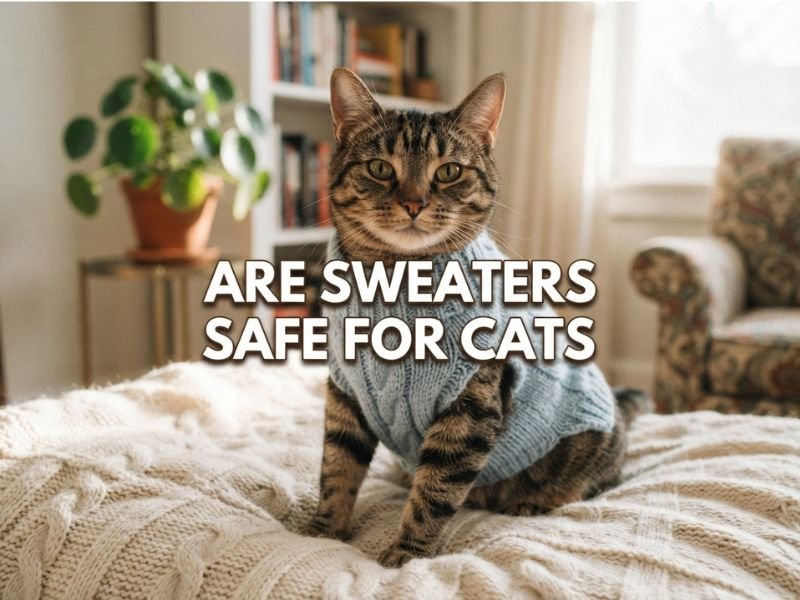
Most healthy cats do not need sweaters indoors because their coats provide natural insulation and cats regulate their body temperature through behavior. They seek warm resting places, curl up to conserve heat, and move away from uncomfortable temperatures. Adding clothing can interfere with those normal behaviors.
A sweater may be reasonably safe for a particular cat when it is:
- Made for cats or carefully adapted for feline body shape
- Loose enough for normal movement but not loose enough to snag
- Free of dangling strings, buttons, zippers, and small decorations
- Made from a soft, breathable, nonirritating material
- Used for a limited period with direct supervision
- Accepted calmly by the individual cat
Even a well-designed sweater is not automatically suitable. Some cats become frightened or frustrated as soon as clothing touches their body. Others may tolerate it briefly but later chew the fabric, become overheated, or get caught on furniture. A sweater is safest as a temporary, closely observed tool—not as a permanent accessory.
When might a cat need extra warmth?
The need for extra warmth depends more on the cat’s condition and environment than on appearance alone. A cat with a thick coat may be comfortable in conditions that bother a thin-coated cat, but coat type is only one factor.
Hairless and sparsely coated cats
Hairless cats, including Sphynx cats, have less fur to slow heat loss. Some may appreciate a soft shirt or sweater in a cool home, especially while resting. However, individual tolerance varies. A hairless cat can still overheat, sweat or accumulate skin oils under clothing, and develop irritation from friction or trapped moisture.
Very short-haired cats may also feel cold more readily than long-haired cats, particularly in a drafty room or during travel. A warm bed, blanket, or heated resting area is often easier for the cat to control than a sweater.
Kittens, senior cats, and underweight cats
Young kittens have limited ability to maintain body temperature, and frail senior cats may lose body heat more easily. Cats that are underweight or recovering from illness can also be vulnerable to cold. These situations deserve veterinary guidance rather than a quick clothing purchase, because unusual cold sensitivity can reflect an underlying health problem.
I would not use a sweater to manage a kitten’s temperature without professional advice. A veterinarian can recommend an appropriate environmental temperature and a safe warming method. Direct heat from heating pads, electric blankets, or hot water bottles can burn a cat if the setup is not carefully controlled.
Cats with illness or reduced mobility
A cat with a medical condition may have trouble maintaining body temperature or moving away from a cold surface Cats recovering from surgery may also need protection from.
Ask the veterinarian who is treating the cat before using clothing after surgery or during illness. The right choice depends on the procedure, incision location, medication, body condition, and the cat’s behavior.
Cold travel or brief outdoor exposure
A sweater might provide limited help during a short, supervised transition from a warm home to a vehicle or another indoor location. It is not adequate protection for prolonged exposure to freezing temperatures, wind, rain, or snow. A cat can become dangerously cold even while wearing clothing, particularly if the sweater gets wet.
For outdoor travel, a secure carrier, dry bedding, and a temperature-controlled vehicle are more important than a sweater. I would keep cats indoors during hazardous weather rather than relying on clothing to make outdoor time safe.
What risks can cat sweaters cause?
The main problem is that a sweater affects more than warmth. It changes the way a cat experiences its body and surroundings. Cats rely on flexible movement, grooming, and rapid escape responses, so even a small restriction can create significant stress.
Overheating
A sweater can trap body heat, especially in a warm room, near a sunny window, or during active play. Cats may not always communicate overheating clearly. Heavy breathing, excessive restlessness, weakness, drooling, vomiting, confusion, or collapse require immediate attention. Remove the garment, move the cat to a cooler area, and contact a veterinarian promptly if heat-related illness is possible.
Never judge safety only by the room temperature. A cat’s age, coat, activity level, health, and the sweater’s thickness all matter. A garment that seems comfortable while the cat is resting may become too warm after several minutes of movement.
Restricted movement and falls
A tight neck opening, narrow armholes, or bulky fabric can make walking, jumping, crouching, and using the litter box difficult. Some cats freeze because they cannot coordinate normal movement in clothing. Others may stumble or panic, increasing the chance of injury.
Movement should look normal immediately after the sweater is put on. If the cat walks stiffly, lowers its body, repeatedly shakes, backs away, or cannot comfortably sit and groom, remove it.
Entanglement and choking hazards
Loose fabric can catch on scratching posts, crate doors, cat trees, furniture, or household hardware. Strings, ribbons, drawstrings, snaps, and decorative pieces can become tangled around a leg or neck. Small parts may also be swallowed if the cat chews them.
For this reason, I avoid clothing with dangling attachments and would never leave a cat unattended in a sweater. A garment that is safe while held and watched may be unsafe once a cat jumps behind furniture or begins grooming.
Skin irritation and trapped moisture
Wool, rough seams, synthetic fibers, dyes, or tight elastic can irritate sensitive skin. A sweater can also trap saliva, sweat, urine, food, or water against the coat and skin. Damp, dirty fabric creates a poor environment for skin health and can be especially problematic for hairless cats.
Inspect the skin and coat after removing the sweater. Redness, bumps, hair loss, scabs, odor, persistent scratching, or licking deserve a break from clothing and possibly a veterinary evaluation.
Stress and loss of normal behavior
A cat may appear quiet in a sweater, but still be highly stressed. Hiding, crouching, flattened ears, dilated pupils, tail flicking, vocalizing, attempting to escape, or refusing treats are meaningful warning signs. Stress can also show up as reduced grooming, litter box changes, or irritability later.
Clothing should not be forced for a photo or costume. If a cat consistently resists it, the safest decision is usually to stop using it.
How to choose a safer sweater
If a sweater is appropriate for a specific cat, selection matters. I would prioritize simple construction and unrestricted movement over appearance, novelty, or maximum coverage.
Check the fit
The sweater should lie smoothly against the body without compressing the neck, chest, abdomen, or legs. You should be able to slide a couple of fingers comfortably under the neckline and other snug areas, but the garment should not hang so loosely that a paw can become trapped.
Check these areas carefully:
- Neck: It should not press on the throat or interfere with swallowing and breathing.
- Chest: The cat should breathe, sit, and walk without restriction.
- Armpits and legs: Armholes should not rub, pinch, or limit stride.
- Abdomen: The sweater should not prevent normal litter box use or become soiled easily.
- Back and shoulders: The fabric should allow stretching, curling, and grooming movements.
Use the manufacturer’s measurements rather than relying only on breed, weight, or a generic small, medium, or large label. Cats vary substantially in body shape, and a sweater designed for a dog may have unsuitable openings or a restrictive chest.
Select appropriate materials
Choose a lightweight, breathable, washable fabric with smooth seams. Soft cotton or a thin, flexible knit may be better tolerated than heavy, scratchy, or highly insulated material. The best fabric still depends on the cat’s skin and individual preference.
Avoid loose fibers and materials that shed heavily. Cats may ingest fibers while grooming, and chewing can turn fabric into a swallowing hazard. Wash the garment with a fragrance-free detergent and let it dry completely before use.
Look for simple, secure design
A safe design should have no dangling ties, loose buttons, exposed hooks, sharp fasteners, or decorative pieces that can be chewed. Closures should stay secure without creating pressure points. A sweater should also allow easy removal if the cat panics or becomes overheated.
Do not cut holes into a garment while it is on the cat. Remove it first, make changes carefully, and inspect every edge for fraying. Improvised alterations can create openings where a paw or claw becomes caught.
How to introduce a sweater gradually
A gradual introduction gives the cat a chance to decide whether the sensation is tolerable. I would begin indoors, when the cat is relaxed, and avoid introducing clothing during a stressful event such as a move, vet visit, or storm.
- Let the cat inspect it. Place the clean sweater nearby and allow sniffing without pushing it toward the cat. Reward calm interest with a favorite treat or gentle praise.
- Touch briefly. Rub the fabric against the shoulder or back for a moment, then remove it. Repeat only if the cat remains relaxed.
- Put it on for a few seconds. Keep the cat on the floor in a safe room. Do not immediately pick the cat up or restrain it.
- Observe movement. Look for normal walking, sitting, stretching, breathing, and awareness. Remove the sweater at the first clear sign of distress.
- Increase time slowly. If the cat remains comfortable, extend the session in small increments while continuing direct supervision.
- End positively. Remove the garment before the cat becomes frustrated, and offer a reward or a preferred resting activity.
Some cats never become comfortable with clothing, and that is a valid outcome. Acclimation should not mean repeatedly overpowering resistance until the cat gives up. A cat that freezes is not necessarily accepting the sweater; it may be experiencing a fear response.
How long can a cat wear a sweater?
There is no universal safe number of hours. A cat’s tolerance, the garment, room temperature, activity, and medical needs all change the answer. For a cat that accepts clothing, short sessions are safer than continuous wear. I would check the cat frequently and remove the sweater for eating, grooming, rest, and normal self-care unless a veterinarian has given different instructions.
Never leave a cat alone in a sweater while you are away, asleep, or unable to respond quickly. Supervision means watching the cat’s behavior, not simply being somewhere in the house. A camera may show that a cat is moving, but it cannot remove a tangled garment or assess skin and breathing as reliably as a person nearby.
Take the sweater off immediately if the cat:
- Struggles, bites, or repeatedly claws at the garment
- Hides, freezes, crouches, or cannot walk normally
- Breathes rapidly, pants, drools, or seems weak
- Cannot reach food, water, the litter box, or a preferred resting place
- Shows redness, swelling, dampness, or sores
- Chews the fabric or tries to swallow fibers
- Becomes unusually irritable or vocal
If breathing difficulty, collapse, severe weakness, repeated vomiting, or suspected overheating occurs, treat it as an emergency and contact a veterinarian immediately.
Safer alternatives to sweaters
For most cats, changing the environment is safer and more effective than dressing the cat. A warm sleeping area lets the cat choose when to use it and when to move away. Helpful options include a thick washable bed, fleece blanket, covered cat bed, or elevated resting surface away from drafts.
Keep the cat’s indoor space comfortably heated and check for cold floors, open windows, and strong air-conditioning vents. A carrier lined with dry bedding can provide warmth during transport. For outdoor cats, an insulated, weatherproof shelter with dry straw bedding may be more appropriate than fabric bedding that holds moisture, but placement and local conditions still matter.
Heated pet beds and pads can help some cats but they need careful use Choose products designed for animals inspect cords for damage follow the instructions and provide an unheated area so the cat can move.
If a cat seems cold despite a comfortable home, focus on the cause rather than simply adding clothing. Shivering, lethargy, weakness, poor appetite, cold ears or paws, or unusual hiding may signal illness. A veterinarian can check for problems such as low body weight, pain, infection, endocrine disease, or other conditions that affect temperature regulation.
Common sweater mistakes to avoid
Choosing appearance over function
Costumes, thick novelty knits, and garments with hoods or embellishments may photograph well but can restrict vision, hearing, movement, or grooming. A plain, lightweight design is generally easier to assess and remove.
Assuming a quiet cat is comfortable
Some cats respond to clothing by becoming motionless. That reaction is not proof of comfort. Evaluate posture, facial expression, breathing, movement, and willingness to eat or interact.
Using a dog sweater without checking the design
Dog clothing often has different chest proportions, leg openings, and closures. It may press on a cat’s throat or leave an opening that allows a paw to slip through. A garment marketed for cats is not automatically safe, but the design should at least account for feline anatomy.
Leaving clothing on during unsupervised time
Entanglement and chewing can happen quickly. Do not leave a sweater on during sleep, overnight, or when the cat is alone.
Ignoring grooming and litter box needs
A cat must be able to groom important areas and use the litter box without the garment becoming wet or soiled. Remove the sweater for regular breaks, and never put a dirty or damp garment back on the cat.
Using a sweater instead of veterinary care
Clothing may hide symptoms and delay treatment. A cat that is persistently cold, weak, or reluctant to move needs an assessment, not just additional layers.
What veterinarians may recommend
A veterinarian may recommend clothing in specific circumstances, such as helping protect a wound, supporting warmth for a vulnerable cat, or covering a surgical area. The recommended garment may be a purpose-made recovery suit rather than an ordinary sweater.
Ask about the exact purpose, how long the cat may wear it, whether the incision or skin must remain visible, and what signs require removal. A veterinary professional can also help determine whether the cat is truly cold or is showing a symptom of illness.
Bring the garment to an appointment if fit is uncertain. The veterinarian or veterinary technician can assess pressure points, movement, and whether the design interferes with the cat’s treatment.
FAQ: Are sweaters safe for cats?
Can cats wear sweaters indoors?
Some cats can wear a lightweight, well-fitted sweater indoors for a short, supervised period. Most healthy cats do not need one in a comfortably heated home. Watch for overheating, stress, restricted movement, skin irritation, and chewing.
Do hairless cats need sweaters?
Not necessarily. Hairless cats may benefit from extra warmth in a cool environment, but they can also overheat or develop skin irritation under clothing. A warm bed and temperature-controlled room may be preferable. If a sweater is used, check the skin and behavior frequently.
Can a sweater keep a cat warm outside?
A sweater provides limited protection and should not be treated as adequate outdoor cold-weather gear. Wind, rain, snow, and wet fabric can quickly make a cat colder. Keep the cat indoors during dangerous weather and use a secure carrier for necessary travel.
Can cats sleep in sweaters?
I do not recommend leaving a cat unattended or asleep in a sweater. A cat may become overheated, tangled, or unable to groom and move normally. Remove the garment during sleep unless a veterinarian has specifically instructed otherwise and provided a safe medical garment.
How can I tell if my cat dislikes a sweater?
Common signs include freezing, crouching, hiding, flattened ears, tail flicking, vocalizing, biting the fabric, repeated attempts to escape, refusal of treats, or abnormal walking. Remove the sweater and allow the cat to recover in a quiet, familiar space.
Is it safe to put a sweater on a kitten?
Kittens are especially vulnerable to temperature changes and may not safely manage clothing. Do not use a sweater to regulate a young kitten’s temperature without veterinary advice. A veterinarian can recommend safe warmth and explain how to monitor the kitten.
Should a cat wear a sweater after surgery?
Only use clothing after surgery if the veterinarian approves it. A standard sweater may rub an incision, hide infection, trap moisture, or fail to prevent licking. A veterinary recovery suit or another prescribed option may be safer for the specific procedure.
What should I do if my cat overheats in a sweater?
Remove the sweater and move the cat to a cool, quiet area. If the cat is panting heavily, drooling, weak, confused, vomiting, or collapsing, contact a veterinarian or emergency clinic immediately. Do not force water or use ice-cold water on a distressed cat.
Conclusion
The answer to are sweaters safe for cats is conditional a simple breathable properly fitted sweater may be safe for some cats during brief supervised use but many.