How to Measure a Dog’s Length: Practical Steps and Helpful Tips
How to measure a dog’s length? People often assume a dog’s length is simply the distance from its nose to its tail. That measurement can be useful for a few specialized purposes, but it is not the standard body measurement used for beds, crates, clothing, or breed descriptions.
For most practical decisions the important measurement runs from the front of the chest near the base of the neck to the base of the tail I ll.
The best result comes from measuring the dog while standing naturally on a level surface. A flexible tape measure, a calm helper, and a second measurement for confirmation are usually enough.
What counts as a dog’s length?
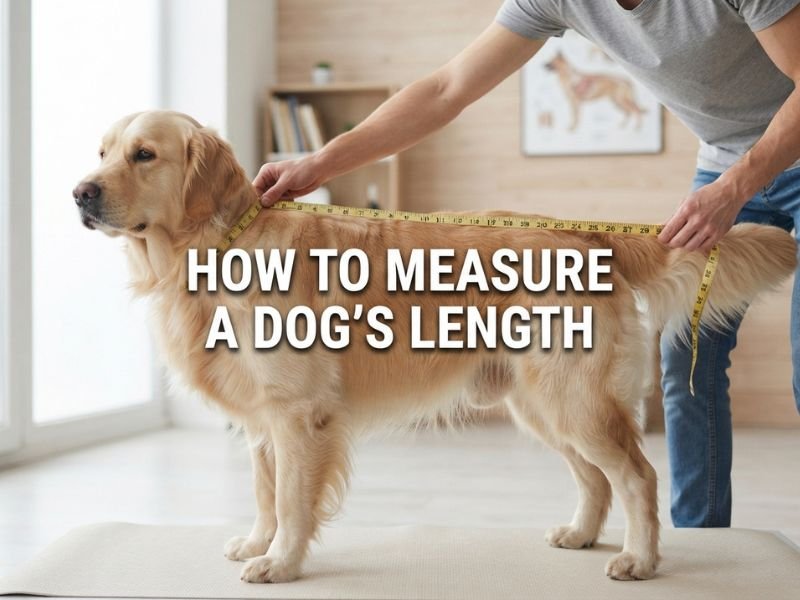
A dog’s practical body length is usually measured from the front of the chest or the base of the neck to the point where the tail begins. The tail itself is normally excluded. This is also called the dog’s body length or, in some contexts, the topline length.
To locate the starting point look at the area where the neck meets the shoulders and chest To locate the endpoint find the tail set the place where.
That definition is different from several other measurements:
- Total body length: The distance from the front of the chest to the base of the tail.
- Head-to-tail length: A longer measurement that includes the head and usually the tail. It is not the usual measurement for crates or beds.
- Back length: A clothing measurement that may begin at the withers and end at the tail base.
- Height: The distance from the ground to the top of the shoulders, also called the withers. Height is not length.
- Length along the curve: A tape measurement that follows the dog’s back. This can be useful for some custom clothing, but it is not interchangeable with a straight body-length measurement.
If a product manufacturer gives specific measuring instructions, follow those instructions over a general definition. A dog coat, harness, carrier, and crate may each use slightly different reference points.
How to measure a dog’s length accurately
For a reliable standard measurement, place the dog in a natural standing position and measure from the front of the chest to the base of the tail. Do not stretch the dog, compress the coat, or include the tail unless the product instructions specifically request it.
Gather the right tools
I recommend using a soft, flexible tape measure marked in inches. A sewing tape works well because it can rest against the dog without creating sharp pressure. A rigid ruler or metal construction tape is harder to position accurately and may frighten a nervous dog.
Keep these items nearby:
- A flexible tape measure
- A level floor with enough room for the dog to stand
- A helper to hold treats or gently steady the dog
- A notepad or phone for recording the number
- A firm book, yardstick, or piece of cardboard if a direct tape measurement is difficult
Treats can help a dog remain still, but the goal is a relaxed posture rather than a perfectly rigid pose. If the dog is anxious, take a short break and try again. Several calm measurements are more useful than one rushed measurement.
Position the dog correctly
Ask the dog to stand squarely on all four legs The head should be in a normal position not pulled upward or lowered toward the floor The back should be relaxed and the dog should not.
A level nonslip floor is ideal Carpet can work but a slick floor may cause the dog to spread its legs or crouch If the dog keeps moving.
For a particularly restless dog, I find it helpful to take a quick measurement first, reward the dog, and then repeat the process. The first attempt often helps the dog understand what is happening.
Find the two reference points
Place one end of the tape at the front of the chest, close to the point where the neck joins the shoulders. Depending on the dog and the product, this may be described as the base of the neck, the front of the chest, or the withers.
Run the tape straight along the dog’s back to the base of the tail. Stop where the tail begins. Do not continue down the tail unless the instructions for a particular item say to include it.
The tape should touch the body lightly It should not sag several inches away from the back and it should not be pulled tightly enough to press into.
Repeat and record the result
Take the measurement at least twice. If the results differ by more than about half an inch, check the starting and ending points rather than immediately averaging the numbers. A shifted starting point, a bent tape, or a dog that moved can easily cause the difference.
For buying decisions, record the measurement along with the date and the purpose. For example, “body length for crate” and “back length for coat” may not be identical. Keeping the purpose beside the number prevents confusion later.
Which starting point should you use?
Different sellers use different terms, so the starting point deserves special attention. “Neck to tail,” “back length,” and “body length” may refer to similar measurements, but not always to exactly the same landmarks.
For a crate, bed, or carrier
Measure from the front of the chest or base of the neck to the tail base This represents the dog s main body length For a crate or.
A dog bed can be sized from the same body-length measurement but sleeping style matters A dog that curls tightly may use a smaller bed than a dog.
For a coat or sweater
Clothing usually uses the back length from the withers to the base of the tail. The withers are the highest point of the shoulders, located just behind the neck. Some coat charts begin at the collar line instead, so I would check the seller’s diagram before choosing a size.
Do not assume that a coat’s back-length measurement includes the neck, chest, or tail. Those areas may have separate measurements. A dog can match a coat’s length chart but still need a different size because of a broad chest, deep rib cage, thick neck, or heavy coat.
For a harness
A harness is usually selected using the chest or girth measurement not body length alone Measure around the widest part of the rib cage normally just behind the.
Follow the manufacturer’s instructions for neck, chest, and girth measurements. A harness that is too tight can restrict movement or rub the skin, while one that is too loose may allow the dog to back out of it.
For breed or conformation information
Breed standards may define body proportions using a measurement from the forechest to the rear of the pelvis, or they may compare body length with height. These technical measurements can differ from the everyday measurement used for a crate or bed.
If the measurement is for a veterinary, breeding, or conformation record, use the organization’s stated method. A casual household measurement should not be presented as an official breed-standard measurement.
How to measure a dog that will not stand still
Some dogs dislike tape measures, and puppies rarely hold a perfect pose. I would not force the dog into position. Instead, make the process brief and use a helper, treats, or a familiar command such as “stand.”
Try these practical adjustments:
- Let the dog sniff the tape before placing it on the body.
- Have a helper hold a treat just in front of the dog’s nose.
- Measure immediately after the dog stands up from a relaxed position.
- Take several quick readings instead of attempting one long, precise session.
- Use a wall, furniture, or a helper as a visual boundary without restraining the dog.
- Measure while the dog is calm after a walk, but not when it is exhausted or uncomfortable.
If the tape causes fear, use a nonstretching piece of string or ribbon. Mark the two endpoints, then lay the string flat against a ruler or yardstick. Do not use elastic material because it can shorten and produce a false result.
For a puppy, two people make the process easier: one keeps the puppy’s attention while the other finds the landmarks. A puppy’s body changes quickly, so recheck the measurement before purchasing an expensive item or ordering a custom product.
How much extra room should you add?
The correct amount of extra room depends on the item. A dog’s measured length is not automatically the correct interior length for a crate or bed.
Crates and carriers
A crate should allow the dog to stand without crouching, turn around, sit naturally, and lie down fully. Start with the dog’s body length, then compare that number with the crate’s usable interior length. The interior measurement matters more than the product’s outside dimensions.
For a carrier also check the dog s height chest width and weight limits A carrier can be long enough but too low or narrow Soft-sided carriers may.
Beds
For a rectangular bed add room for the dog s preferred sleeping posture A dog that curls may be comfortable with a bed close to its body length.
For a round bed, compare the dog’s stretched sleeping length with the bed’s usable diameter. Measure from the dog’s nose to the base of its tail while it is lying fully extended, if that is how it commonly sleeps.
Clothing
Do not add generous extra length to a coat or sweater unless the manufacturer recommends it. Clothing that is too long can bunch near the tail or interfere with movement. Clothing that is too short may leave the back exposed or pull across the shoulders.
Use the brand’s size chart and compare the dog’s back length, chest girth, and neck circumference with the listed ranges. If the dog falls between sizes, the best choice depends on the garment’s adjustment points, fabric stretch, and the measurement that the manufacturer treats as most important.
Common measurement mistakes
Small differences in technique can produce surprisingly different results. Most errors come from measuring the wrong route or using a number for a purpose it was not designed to serve.
Including the tail
The tail is usually excluded from body length. Including it can make a crate or bed seem too small when the product only needs to accommodate the dog’s torso. Include the tail only if a specific form, costume, or custom design requests a total length.
Measuring from the nose
Nose-to-tail length is easy to understand but rarely matches retail sizing charts. The head can extend forward, turn sideways, or rest differently depending on the dog’s posture. For most products, begin at the chest or withers instead.
Measuring a sitting dog
A sitting dog compresses the body and changes the position of the hips. This can make the back appear shorter and can produce an unsuitable crate or bed size. Measure while the dog is standing naturally.
Following the curve of the spine
Running the tape over every curve adds distance and may not match the seller’s chart. For a standard body-length measurement, keep the tape generally straight from the front reference point to the tail base. Use a curved measurement only when the product instructions specifically call for it.
Pulling the tape tight
A tight tape can compress long or dense fur and may cause the dog to shift position. A loose, sagging tape is also inaccurate. The ideal tape placement is light and straight, with no visible gap and no pressure against the body.
Using only one measurement
A single reading may be affected by posture or movement. Repeating the process confirms the result. If a measurement is important for a custom item, take it on two separate occasions and use the manufacturer’s instructions to resolve any difference.
Measuring long-haired, curly-coated, or heavy dogs
Coat thickness can make it difficult to identify the body landmarks. Do not flatten the fur aggressively, especially if doing so makes the dog uncomfortable. Part the hair gently at the neck and tail base so the tape reaches the approximate body landmarks.
For a curly-coated dog the tape should measure the body rather than the outermost curls Avoid stretching the curls straight unless the product maker specifically asks for a.
A groomed and ungroomed dog may produce slightly different clothing results If the dog s coat changes seasonally measure at the time the garment will be used A.
How length relates to height and body shape
Two dogs can have the same body length but need different products because their proportions differ A short-legged long-backed dog may need a longer bed or coat than.
For a fuller fit assessment, record these measurements separately:
- Body length: Front of chest or withers to the base of the tail.
- Height: Floor to the top of the withers while standing.
- Chest girth: Around the widest part of the rib cage.
- Neck circumference: Around the area where a collar or garment rests.
- Weight: Useful for product safety limits, but not a substitute for dimensions.
Never estimate length from weight alone. Weight is influenced by muscle, bone structure, body condition, and coat. It can help narrow product choices, but the actual dimensions provide the better fit information.
How to measure a dog’s length for specific purchases
The measurement method should match the product’s purpose. Before ordering, find the manufacturer’s sizing diagram and identify exactly where the chart begins and ends.
| Item | Primary measurement | Important additional check |
|---|---|---|
| Crate | Body length from chest to tail base | Standing height and ability to turn around |
| Bed | Body length or stretched sleeping length | Sleeping style and usable interior dimensions |
| Coat | Back length from withers to tail base | Chest girth, neck, and leg openings |
| Sweater | Brand-specific back length | Chest girth and fabric stretch |
| Carrier | Body length | Interior height, width, ventilation, and weight limit |
| Harness | Usually not length | Chest girth, neck, and adjustment range |
If a product’s listed dimensions are ambiguous, contact the seller before buying. Ask whether the stated length refers to the dog’s body, the dog’s back, or the item’s interior or exterior. This is especially important for carriers, crates, and custom clothing.
Frequently asked questions
Do I measure a dog from the nose to the tail?
Usually, no. For the standard body-length measurement, measure from the front of the chest or base of the neck to the base of the tail. Nose-to-tail length includes the head and may include the tail, so it usually does not match crate, bed, or coat sizing charts.
Do I include the tail when measuring a dog’s length?
Exclude the tail for most body-length, crate, bed, and clothing measurements. Stop the tape where the tail joins the body. Include the tail only when a form or product specifically requests total head-to-tail or tail-inclusive length.
Should my dog be sitting or standing during measurement?
Your dog should be standing naturally on all four legs. Sitting changes the body’s shape and can make the back appear shorter. Keep the head and back in a relaxed position rather than stretching the dog into a rigid pose.
Where exactly does the measurement start?
For general body length, start at the front of the chest or the base of the neck. For many coats, start at the withers, which are the highest points of the shoulders. Because sellers use these terms differently, check the product’s measuring diagram whenever one is available.
Where does the measurement end?
End at the base of the tail, where the tail joins the body. Do not measure to the tip of the tail unless the instructions specifically call for total length or a tail-inclusive design measurement.
What if my dog is between two sizes?
Compare all relevant dimensions rather than choosing by length alone. Check chest girth, height, neck size, weight limits, and the product’s adjustment range. For a crate, choose a size that permits standing, turning, and lying down. For clothing, follow the manufacturer’s priority measurement and consider the garment’s stretch.
How can I measure a puppy accurately?
Have one person keep the puppy’s attention while another measures quickly from the chest or withers to the tail base. Take two or three readings and record the date. Recheck the puppy as it grows, especially before buying a custom item or a product intended for long-term use.
Is a dog’s back length the same as body length?
Not always. Back length often means withers to tail base, while body length may mean front of chest to tail base. The difference can be small on some dogs but important for clothing. Use the terminology and landmarks shown by the specific manufacturer or organization.
Can I use a ruler instead of a tape measure?
Yes, but a flexible tape is easier and usually more accurate. You can also place a piece of string between the two reference points, mark it, and measure the string against a straight ruler. Use nonstretching string and keep it aligned with the dog’s back.
Why does my measurement differ from the product size chart?
The chart may describe the item’s dimensions rather than the dog’s dimensions, or it may use different starting and ending points. It may also list exterior dimensions for a crate or carrier. Check the chart’s instructions and compare usable interior space with your dog’s measurements.
Conclusion
The simplest reliable method for how to measure a dog’s length is to have the dog stand naturally measure from the front of the chest or appropriate withers.