How to Measure Dog Chest Girth: Practical Steps and Helpful Tips
A dog’s chest girth is one of the most useful measurements for choosing a coat, harness, life jacket, or other piece of equipment. It sounds simple, yet a tape placed slightly too high or too low can produce a number that leads to an uncomfortable fit.
I find that the most reliable results come from treating the measurement as a repeatable process rather than a quick guess. Your dog’s posture, coat thickness, tape tension, and the design of the item can all affect the final decision.
This guide explains how to measure dog chest girth accurately, where the tape should sit, how to read a size chart, what to do if your dog is between sizes, and which common mistakes are worth avoiding.
How to Measure Dog Chest Girth Correctly
To measure a dog’s chest girth, place a flexible measuring tape around the deepest part of the rib cage, usually immediately behind the front legs. Keep the tape level around the torso, snug against the fur without compressing the chest, and record the measurement while your dog stands naturally.
That location matters. Chest girth is not the same as neck circumference, waist circumference, or the dog’s length. The girth measurement describes the distance around the broadest part of the rib cage, which is often the area that determines whether clothing or a harness will fit.
What you need
- A flexible fabric sewing tape is best.
- A flat piece of string, ribbon, or nonstretch cord can work if a measuring tape is unavailable.
- A ruler or rigid tape measure is useful for measuring the string afterward.
- A few small treats can help your dog stand calmly.
- A second person can steady an active dog, although it is not always necessary.
Avoid using a stiff metal construction tape directly around your dog. It may bend unevenly, pinch the skin, or make it difficult to keep the measurement level. Stretchy elastic is also a poor choice because it can produce a smaller number than the dog’s actual chest circumference.
The correct starting position
Ask your dog to stand on a level surface with the head in a natural position The front legs should be comfortably straight not stretched forward or tucked beneath the body A standing measurement usually represents.
Try to measure before a vigorous play session. A dog that is panting, twisting, or holding an unusual posture can change the shape of the rib cage enough to affect the result. Calm praise and brief pauses are preferable to forcing the process.
Step-by-step method
- Stand beside your dog, roughly level with the rib cage.
- Locate the deepest part of the chest. On many dogs, this is just behind the front legs and around the widest portion of the ribs.
- Wrap the tape around the torso at that point.
- Check that the tape travels straight across the back and under the chest rather than angling toward the neck or abdomen.
- Keep the tape snug enough to touch the coat, but do not pull it tight or press into the body.
- Read the number where the tape overlaps.
- Repeat the measurement at least once, then write down the consistent result.
If the two readings differ, reposition the tape and measure again. A difference of a small fraction of an inch may be normal, but a larger difference usually suggests that the tape moved, the dog changed posture, or the tension was inconsistent.
Where Is a Dog’s Chest Girth?
A dog’s chest girth is the circumference around the deepest and widest part of the rib cage. The tape normally passes immediately behind the front legs, across the back, down both sides of the torso, and beneath the chest.
The exact broadest point varies by body shape A deep-chested dog may have the greatest circumference close behind the elbows A barrel-chested dog may be widest slightly farther.
Chest girth versus chest width
Girth is a measurement around the body. Chest width is a measurement across the front of the chest from one side to the other. A product size chart may ask for one, the other, or both. Never substitute chest width for girth unless the manufacturer specifically provides a conversion method.
Chest girth versus body length
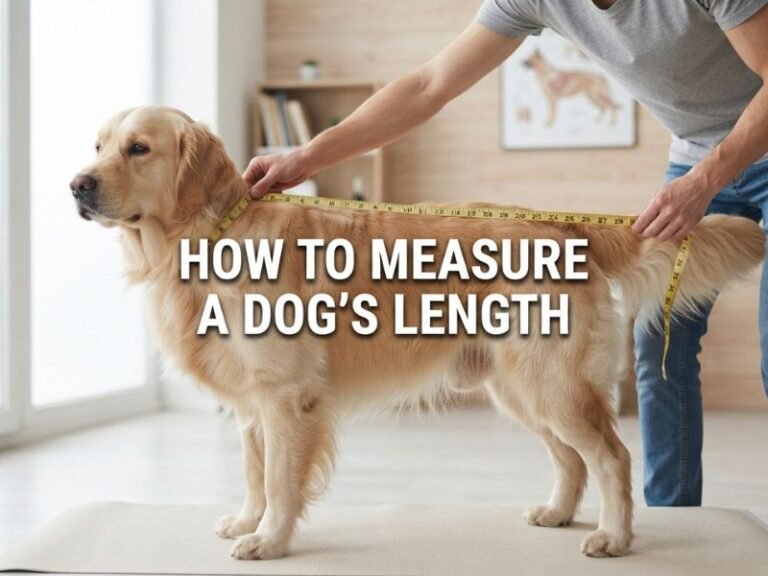
Body length is commonly measured from the base of the neck to the base of the tail It helps determine whether a coat or shirt covers the back.
Chest girth versus waist measurement
The waist is usually narrower than the rib cage and sits farther back toward the abdomen. Measuring there can make a coat or harness appear to fit on paper even though it is too tight around the chest. For girth-based sizing, always follow the product’s stated location.
How to Keep the Measurement Accurate
Accuracy depends less on sophisticated equipment than on consistent technique. I recommend making the first measurement a calm practice run, then taking two or three readings without changing the tape position.
Keep the tape level
Look at your dog from above and from the side. The tape should form a level ring around the torso. If it slopes upward toward the shoulders or downward toward the abdomen, the reading may be misleading.
For a very furry dog, use your fingers to separate or gently flatten the coat beneath the tape. Do not compress thick fur aggressively. The aim is to measure the space an item needs to occupy while allowing normal movement.
Use consistent tension
A loose tape exaggerates the girth, while a tight tape understates it and may lead to restrictive clothing or equipment. A useful rule is to keep the tape close to the body with enough room that you can slide a finger beneath it without forcing the tape outward.
This is not a universal fit allowance for every product. It is simply a way to avoid pulling the tape tight during measurement. The manufacturer’s chart and fit instructions determine how much extra room the product itself should provide.
Measure on bare fur when possible
Remove bulky sweaters, harnesses, or other layers before measuring. A thin, naturally lying coat can remain in place, but thick or matted fur can add noticeable volume. If the item will be worn over a sweater, take a second measurement with that layer on and compare it with the product’s layering guidance.
Record the date and conditions
Write down the measurement, the unit, and anything that may affect it, such as a winter coat or a thick undercoat. Dogs can gain or lose weight, puppies can grow quickly, and seasonal coat changes can influence fit. A measurement from several months ago may no longer be suitable.
Choosing the Right Measuring Unit
Most United States product listings use inches, although some brands also provide centimeters. Read the tape carefully and confirm which unit appears on the size chart before ordering.
To convert inches to centimeters, multiply the inch measurement by 2.54. To convert centimeters to inches, divide by 2.54. Do not round too early if the dog is close to a size boundary; keep the original reading available while comparing the options.
For example, a girth reading of 24 inches is approximately 61 centimeters. If a brand lists sizes only in centimeters, use the converted value and then follow the brand’s rounding instructions if it provides them.
Using Chest Girth to Select a Size
After measuring, compare the result with the manufacturer’s size chart rather than relying on labels such as small, medium, or large. Those labels are not standardized. A medium harness from one company may have a very different chest range from a medium coat made by another.
Check every measurement the product requires
Chest girth is often the primary measurement, but many products also require neck circumference and body length. A harness may need a neck measurement to prevent rubbing near the throat. A coat may need back length to avoid ending too early or extending over the tail.
Measure each listed dimension in the position described by the manufacturer. Product diagrams are especially useful because terms such as “neck,” “torso,” and “length” can be defined differently across brands.
What to do between sizes
If your dog falls between two sizes, first check whether the product has adjustable straps, buckles, or hook-and-loop panels. An adjustable item may fit the smaller range if the chest measurement remains within its stated limits and the straps do not sit at their shortest setting.
For a nonadjustable garment, the larger size is often the safer starting point when the chest is the limiting measurement, but only if the neck and body length also remain appropriate. A larger coat that drapes too far or a harness with excessive strap slack can create separate problems.
Never choose a size solely because it provides the most room. Excess material can catch on objects, shift while walking, or allow a dog to back out of a harness. The best size leaves comfortable breathing and movement without creating loose, unstable areas.
Leave room for movement
A dog should be able to walk, sit, lie down, turn, and breathe normally while wearing the item. Clothing should not restrict shoulder movement, and a harness should not press into the armpits as the front legs move.
Manufacturers typically account for some ease in their sizing recommendations, so avoid automatically adding several inches to the measured girth. If the chart says the measurement is the finished product range, follow that wording. If it says “fits chest girth,” use the dog’s measurement as the comparison value.
Measuring for Different Dog Products
The same chest-girth technique provides a starting point for many products, but fit priorities differ by item. A coat, harness, life jacket, and recovery garment do not distribute pressure in the same way.
Dog harnesses
For a harness, measure around the rib cage behind the front legs unless the brand gives a different location. Check that the harness will not sit directly across the throat or rub behind the elbows. After putting it on, inspect the straps while the dog is standing and walking.
A harness that fits correctly on the chest may still be unsuitable if the neck opening is too tight or the straps interfere with shoulder motion. The girth number is an important sizing input, not a complete evaluation of harness fit.
Dog coats and sweaters
Chest girth is important for closing the garment without pulling, while back length determines coverage. A coat may need extra room for a thick coat underneath, but too much room can allow cold air in or cause the garment to shift.
Pay attention to the location of closures. A zipper or buckle that runs along the chest may require a different fit than a coat secured around the abdomen. Follow the brand’s instructions about whether the listed girth is the dog’s body measurement or the garment’s finished measurement.
Life jackets
A life jacket needs a secure fit because water movement can shift a loose item. Use the manufacturer’s chest measurement and also check neck support, belly straps, flotation placement, and the location of the handle. A dog should not be able to slip backward out of the jacket.
Do not use a regular coat or harness size as a substitute for a life-jacket size. The design and safety requirements are different.
Recovery suits and medical clothing
For a recovery suit, chest girth may be combined with body length, neck, leg, or waist measurements. The garment should protect the intended area without interfering with urination, defecation, walking, or breathing.
If a veterinarian has provided post-surgical instructions, those instructions take priority over general sizing advice. Swelling, bandages, and incision location may change which size or design is appropriate.
Special Situations That Affect Chest Girth
Puppies and growing dogs
Puppies can outgrow equipment quickly, so measure shortly before purchasing. If a product has adjustable features, confirm that the adjustment range will accommodate reasonable growth without becoming unsafe or unstable.
For a puppy’s first harness, avoid buying a much larger size for future use. A poor fit can allow escape and may make the puppy uncomfortable with wearing equipment.
Long-haired or thick-coated dogs
Part the fur enough for the tape to follow the body without flattening the coat completely. If the product will be worn over the coat, compare the normal measurement with a measurement taken over the intended layer. Use the product’s instructions to decide which number belongs on the size chart.
Dogs with unusual body shapes
Deep-chested breeds, broad-fronted dogs, narrow-waisted dogs, and dogs with short legs may not fit standard proportions. In these cases, girth may indicate the correct chest size while length, neck, or strap placement creates a mismatch.
Look for brands offering multiple adjustment points or breed-specific shapes. If the dog is between sizes in several areas, a custom or highly adjustable product may be more practical than forcing a standard design to fit.
Dogs that dislike handling
Break the process into short sessions. Let your dog see and sniff the tape, reward calm standing, and stop before frustration builds. You can also measure the string separately if the tape itself causes concern.
Do not wrap a tape tightly around a fearful, injured, or painful dog. For a dog with a recent injury, breathing difficulty, severe anxiety, or a surgical site, ask a veterinarian for appropriate handling guidance.
Common Measurement Mistakes
- Measuring behind the wrong area: Placing the tape around the abdomen instead of the deepest rib cage produces a waist measurement.
- Pulling the tape tight: This creates an artificially small girth and can lead to restrictive equipment.
- Leaving too much slack: A loose loop adds inches that the product may not need.
- Measuring while sitting: The body can compress or change shape, making the result less consistent.
- Measuring over bulky clothing: The added layer can distort the dog’s actual body measurement.
- Using an old measurement: Weight, age, pregnancy, muscle, and coat changes can alter fit.
- Trusting the size label alone: Brand sizing is not uniform.
- Ignoring other dimensions: A correct girth does not guarantee a correct neck or length.
- Failing to inspect the item afterward: A number can be accurate while the product design remains unsuitable.
If a new item seems too tight, remove it and reassess rather than waiting for your dog to adjust. Watch for restricted breathing, rubbing, chafing, unusual gait, reluctance to move, or repeated attempts to escape the equipment.
How to Check the Fit After Measuring
Put the product on your dog according to the manufacturer’s instructions and examine the fit while your dog stands naturally. The item should remain in its intended position without twisting or sliding excessively.
For adjustable equipment, tighten each point gradually and evenly. Straps should lie flat rather than roll into narrow edges. Check behind the front legs, across the shoulders, around the neck, and anywhere a closure touches the skin.
Ask your dog to walk, sit, turn, and lie down. Observe whether the item shifts, catches the legs, restricts the shoulders, or exposes a gap that could allow escape. Recheck the fit after a few minutes because some materials settle as the dog moves.
Fit should also be checked periodically. An item that fit in spring may be different after weight gain, weight loss, a haircut, seasonal coat growth, or normal puppy development.
FAQ About Dog Chest Girth
Where exactly should I place the tape to measure dog chest girth?
Place the tape around the deepest and widest part of the rib cage, usually immediately behind the front legs. Keep it level across the back and under the chest. Do not place it around the neck, narrow waist, or front edge of the shoulders.
Should my dog be standing or sitting during the measurement?
Your dog should stand naturally on a level surface. Standing provides a more consistent representation of how a coat, harness, or other item will fit during normal use. Take another reading if your dog shifts position.
How tight should the measuring tape be?
The tape should touch the fur or body without compressing it. Keep it snug, not tight. You should generally be able to slide a finger beneath the tape without pulling the tape away from the body.
Can I use string instead of a measuring tape?
Yes. Wrap a nonstretch string around the deepest part of the rib cage, mark where the ends meet, then measure the string against a ruler. Keep the string level and use the same snug tension as you would with a fabric tape.
What if my dog is between two chest-girth sizes?
Check the product’s adjustment range and compare the dog’s neck and length measurements as well. For nonadjustable items, the larger size may be appropriate if the other dimensions remain suitable, but excessive looseness is unsafe for harnesses and can interfere with clothing.
How often should I remeasure my dog?
Remeasure before each major purchase and whenever your dog gains or loses weight, grows, changes coat thickness, or begins wearing a different layer underneath the item. Puppies and young dogs may need measurements much more often.
Why does my dog’s measurement not match the product’s fit?
The tape may have been placed at a different location from the brand’s instructions, or the product may require additional measurements. Design, adjustability, coat thickness, posture, and the shape of the dog can all affect real-world fit. Compare the measurement method with the size chart and inspect the item during movement.
Conclusion
Accurate chest girth starts with a calm naturally standing dog and a flexible tape placed around the deepest part of the rib cage immediately behind the front legs. A reliable answer to “how to measure dog chest girth” comes from applying these points to the specific situation rather than relying on one rule.