What Size Dog Sweater for a Pitbull: Clear Answers and Key Facts
Getting a pitbull’s sweater size wrong can turn a useful layer into a source of rubbing, restricted movement, overheating, or escape. A sweater that is too small may press across the chest and shoulders, while one that is too loose can twist, snag, or leave the dog exposed to cold air.
I find that the most reliable answer depends less on the breed label and more on three measurements: chest girth, back length, and neck circumference. Pitbull-type dogs often have broad chests, muscular shoulders, and relatively short backs, so a simple small, medium, or large label is only a starting point.
This guide explains how to determine what size dog sweater for a pitbull, how to compare measurements with a manufacturer’s chart, how the right fit should feel, and which sweater features work best for a stocky, athletic body.
What Size Dog Sweater for a Pitbull?
Most adult pitbulls fit somewhere between medium and large in dog clothing, but there is no dependable universal size. A smaller American Pit Bull Terrier may wear a medium, while a heavier or broader pitbull mix may need a large or extra-large. Weight alone cannot determine the correct sweater size.
For a useful starting point, measure the dog rather than choosing by breed or estimated weight. The most important measurement is usually chest girth, followed by back length and neck size. If the measurements fall between sizes, I generally favor the larger size when the sweater has adjustable features and a secure design.
| Measurement | How to measure | Why it matters |
|---|---|---|
| Chest girth | Wrap a soft tape around the deepest part of the rib cage, usually just behind the front legs. | Shows whether the sweater can fit around the broadest part of the body. |
| Back length | Measure from the base of the neck to the base of the tail. | Indicates whether the sweater covers the back without hanging too far behind. |
| Neck circumference | Measure around the lower neck where the sweater collar will sit. | Helps prevent choking, rubbing, or an overly loose neckline. |
Many manufacturers list a dog sweater as medium, large, or extra-large based primarily on chest girth. I would treat those labels as marketing categories, not standardized dimensions. Always compare the dog’s measurements with the specific product chart.
Why Pitbulls Need Careful Sweater Sizing
Pitbull is a broad everyday term that can describe several related breeds and mixed-breed dogs. Dogs identified as American Pit Bull Terriers, American Staffordshire Terriers, Staffordshire Bull Terriers, and pitbull mixes can differ substantially in height, weight, chest depth, leg length, and body proportions.
Even two dogs from the same household may need different sizes. One may have a compact, barrel-shaped torso, while another may be leaner with a longer back. Puppies also change quickly as their shoulders, chest, and neck develop.
Broad chests and muscular shoulders
A pitbull s chest may be much wider than its waist This creates a common sizing problem a sweater can appear long enough and still be too tight.
For this reason, chest girth often matters more than body weight. A dog that weighs less than another dog may still need the larger sweater if its chest is broader.
Short or moderate back length
Many pitbull-type dogs have a compact body. A sweater made for a long-backed breed can extend over the tail base, bunch near the hind legs, or interfere with bathroom breaks. Good coverage should protect the back and sides while leaving the tail area and rear legs free.
Short coats and cold sensitivity
Pitbull-type dogs commonly have short coats that provide limited insulation A sweater can help during cold walks or indoor drafts but it should not be treated as a.
How to Measure a Pitbull for a Sweater
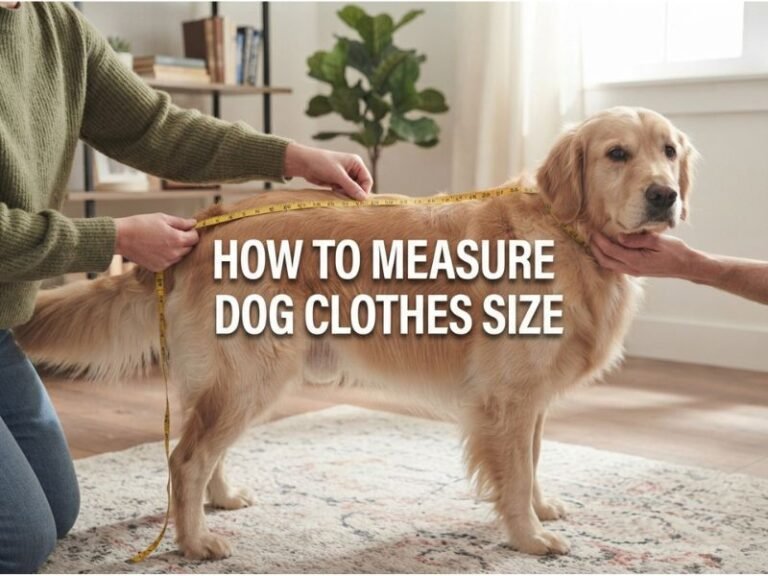
I recommend measuring when the dog is standing naturally on a level surface. A helper can offer treats while one person holds the tape. Use a flexible fabric tape, but do not pull it tight enough to compress the coat or skin.
1. Measure chest girth
Place the tape around the deepest section of the rib cage, usually directly behind the front legs. Keep the tape level from the top of the chest around the body. Record the measurement in inches, since most U.S. dog clothing charts use inches.
This is normally the deciding measurement for a pitbull sweater. If the dog has a particularly deep chest, measure twice to make sure the tape did not slide upward toward the narrower part of the ribs.
2. Measure back length
Start at the base of the neck, where the neck meets the shoulders, and measure along the spine to the base of the tail. Do not measure to the end of the tail. Keep the dog standing rather than sitting, because a seated posture shortens the apparent back.
Some brands measure from the collar line, while others begin between the shoulder blades. Read the company’s instructions before comparing the result with its chart.
3. Measure the neck
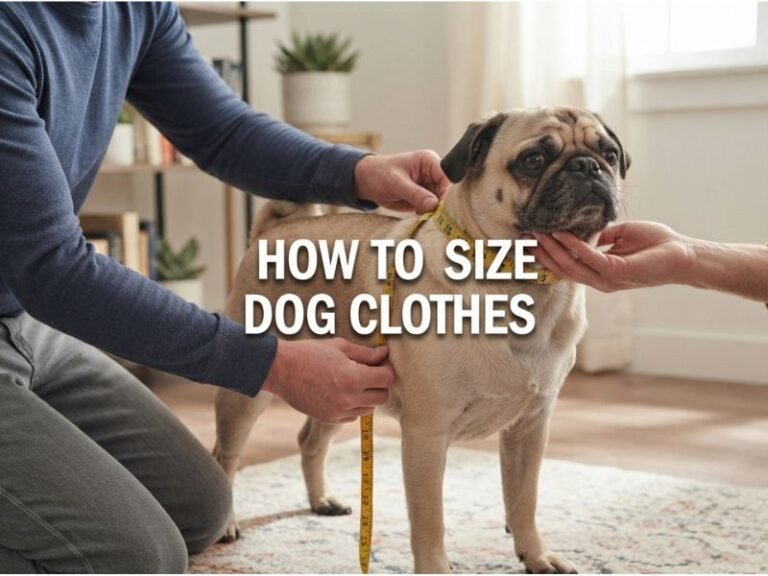
Wrap the tape around the lower part of the neck where the collar normally rests. Leave enough room to insert two fingers between the tape and the neck. A sweater collar should sit comfortably without pressing into the throat or sliding over the head too easily.
4. Check the weight as a secondary detail
Write down the dog’s current weight, but use it only as a supporting reference. Weight can help identify an obviously unsuitable size, yet it cannot show how much of that weight is concentrated in the chest, shoulders, or neck.
If the dog is still growing, use current measurements and leave modest room for growth. Buying several sizes too large usually creates more problems than it solves, especially if the dog walks, runs, or plays while wearing the sweater.
How to Read a Dog Sweater Size Chart
Find the product’s actual measurement chart rather than relying on a label such as “large breed.” Look for chest, neck, and back-length ranges. Compare all three measurements, with chest girth receiving the most attention for a muscular pitbull.
Suppose a sweater chart lists these ranges:
- Medium: 24 to 28 inches around the chest
- Large: 28 to 32 inches around the chest
- Extra-large: 32 to 36 inches around the chest
Those figures are only an example of how a chart may be organized not a universal sizing standard If a dog measures 29 inches in the chest the.
When measurements fall between sizes, review the garment’s construction:
- Choose the larger size if the fabric has little or no stretch.
- Consider the smaller size only if the material is highly flexible and the chest measurement remains comfortable.
- Favor adjustable straps or closures when the chest and neck do not fit the same size category.
- Check the return policy before buying an uncertain size.
A size chart may also list a recommended weight range. I would not ignore weight entirely, but I would never allow it to override a clear chest-girth mismatch.
What a Proper Fit Looks Like
A correctly fitted dog sweater should lie smoothly over the back and chest without pulling, sagging, or twisting. The dog should be able to walk, sit, lie down, shake, turn the head, and lift each front leg normally.
Use these checks immediately after putting the sweater on:
- Slide two fingers beneath the neck opening and chest area.
- Look for even fabric rather than tight horizontal stretching.
- Check that the front legs move freely through the arm openings.
- Make sure the sweater does not cover the eyes, nose, mouth, or ears.
- Confirm that the rear edge stops before the tail and does not obstruct elimination.
- Watch the dog walk for several minutes before allowing active play.
Signs the sweater is too small
A tight sweater may leave red marks, cause the dog to scratch or bite at the fabric, or produce visible indentations around the neck, chest, and legs. Other warning signs include shortened strides, reluctance to move, repeated attempts to remove the garment, panting in cool conditions, or fabric that rolls tightly behind the front legs.
Do not assume that stretchy material makes a tight sweater safe. Stretch can hide pressure while the dog is standing, then become restrictive when the chest expands during movement or panting.
Signs the sweater is too large
An oversized sweater may slide sideways, drag near the back legs, bunch under the chest, or expose the dog’s back whenever the garment shifts. Loose fabric can catch on branches, crates, furniture, or another dog’s mouth during play.
A slightly relaxed fit can be acceptable for a calm dog wearing a soft layer under supervision. A loose fit is not appropriate for unsupervised outdoor activity, rough play, or a sweater with dangling cords.
Choosing the Best Sweater Style
Size is only part of the decision. A well-measured sweater can still be unsuitable if its cut does not match the dog’s body or the intended activity.
Stretch pullover sweaters
Stretch pullovers are often simple and comfortable for dogs that dislike buckles. Fleece, knit, or jersey fabrics can work well indoors and during moderate cold. The opening must still be wide enough to pass over a broad head and chest without forcing the shoulders into an awkward position.
Look for a cut that allows room across the chest while remaining close enough at the waist to avoid twisting. A high-stretch fabric is useful, but it should recover its shape rather than becoming loose after repeated wear.
Adjustable coat-style sweaters
Coat-style garments with hook-and-loop panels, snaps, or adjustable straps can accommodate a broad chest and narrower waist better than a fixed tube shape. They are useful when a pitbull’s chest measurement falls into one size but its neck or back length fits another.
Closures should lie on the back or side, not directly under the dog’s chest where they can rub. Check that the fastener cannot scrape the skin or catch on household fabrics.
Harness-compatible designs
If the dog wears a harness, choose a sweater with a built-in leash opening or enough clearance for the harness to sit correctly. Do not attach a leash to a sweater unless the garment was specifically designed for that purpose.
A sweater worn under a harness should not create pressure at the throat, behind the elbows, or across the sternum. After attaching the harness, repeat the movement check because a comfortable sweater can become restrictive once another layer is added.
Full-coverage and legged designs
Full-coverage sweaters can provide more warmth, but they require closer attention to leg openings, armpits, and bathroom clearance. They may work for a calm dog in dry, cold weather but can collect snow, mud, or moisture during outdoor activity.
For many pitbulls, a simpler torso sweater or coat is easier to fit and less likely to interfere with movement.
Fabric and Weather Considerations
Choose the material based on temperature, moisture, activity level, and the dog’s tolerance. Soft fleece can provide warmth without much weight. Knit sweaters may be comfortable indoors but can absorb water and stretch when wet. Water-resistant outer layers are more useful in light rain or snow than ordinary knit fabric.
A sweater should not make the dog overheat. Remove it indoors if the home is warm, and check the skin after walks. Panting, restlessness, drooling, flushed skin, weakness, and trying to escape the garment can indicate that the dog is too warm or uncomfortable.
For cold-weather walks I would also consider wind exposure and wet conditions rather than temperature alone A dry sweater may help on a calm day but a damp or wind-permeable garment may offer little protection Dogs with medical conditions very young puppies senior dogs or unusually.
How to Introduce a Sweater
Some dogs accept clothing immediately, while others freeze, scratch, or try to remove it. A gradual introduction can prevent the sweater from becoming associated with fear.
- Let the dog sniff the sweater while it is lying on the floor.
- Reward calm investigation with a treat or praise.
- Touch the sweater briefly to the shoulder and chest without putting it on.
- Put it on for a short period indoors.
- Offer rewards while checking movement and body language.
- Remove it before the dog becomes distressed, then slowly extend future sessions.
Never force a dog into a garment while it is struggling. If the dog remains anxious, pants heavily, becomes unusually still, or shows repeated stress signals, clothing may not be appropriate without professional guidance.
Common Pitbull Sweater Sizing Mistakes
Choosing by breed name alone
“Pitbull” does not describe one standardized clothing size. Breed labels are useful for understanding general body tendencies, but they cannot replace current measurements.
Using weight as the only measurement
Two dogs with the same weight can have very different chest girths. A muscular, compact dog may need a larger chest size than a lighter, leaner dog with a longer body.
Measuring a sitting dog
Sitting changes the shape of the torso and can produce inaccurate back and chest measurements. Measure while the dog stands naturally.
Ignoring the front-leg openings
Many fitting problems appear at the armpits rather than the center of the chest. If the openings rub, restrict stride, or press into the skin, the sweater’s cut is unsuitable even if the listed measurements look correct.
Buying for expected adult size
A puppy should not wear an oversized adult sweater simply because it may grow into it. Excess fabric can catch, trip the dog, or interfere with movement. Recheck measurements as the puppy develops.
Leaving clothing on without supervision
Dogs can chew and swallow fabric, become caught on furniture, or overheat. Remove the sweater during unsupervised crate time unless a veterinarian has recommended a specific garment and safety routine.
Quick Decision Guide
Use this process if you need a practical buying decision:
- Measure chest girth at the deepest part of the rib cage.
- Measure the back from the neck base to the tail base.
- Measure the lower neck and record the dog’s current weight.
- Find a product chart from the specific sweater manufacturer.
- Match chest girth first, then verify neck and back length.
- Choose the larger option when the dog is between sizes and the garment is not adjustable.
- Inspect the fit indoors before using the sweater on a long walk.
- Stop use if the dog shows rubbing, restricted movement, overheating, or distress.
If the chest fits but the back is too long, look for a shorter-cut sweater rather than automatically sizing down. If the back fits but the chest is too tight, choose a broad-chest design, a stretchier fabric, or an adjustable coat.
FAQ: What Size Dog Sweater for a Pitbull?
Do pitbulls usually wear medium or large sweaters?
Many adult pitbulls wear medium or large sweaters, but the correct choice depends on the individual dog’s chest girth, neck circumference, and back length. A broad-chested pitbull may need a large even if its body weight falls within a medium label. Compare measurements with the manufacturer’s chart.
Can I choose a pitbull sweater by weight?
Weight can serve as a secondary reference, but it should not be the main sizing method. Chest shape and shoulder width vary too much among pitbulls and pitbull mixes. Measure the chest, neck, and back before ordering.
What is the most important measurement for a pitbull sweater?
Chest girth is usually the most important measurement because pitbull-type dogs often have broad rib cages and muscular shoulders. Neck circumference and back length still need to fit so the sweater does not choke, shift, bunch, or interfere with bathroom breaks.
Should I size up if my pitbull is between sweater sizes?
Usually, sizing up is safer when the material has little stretch or the sweater uses a fixed opening. Confirm that the larger size will not hang over the tail or leave a dangerously loose neck. An adjustable design may solve the problem better than simply choosing a much larger garment.
How tight should a sweater be around a pitbull’s chest?
The sweater should lie close to the body without compressing the ribs or pulling across the shoulders. You should be able to slide two fingers under the garment at the chest and neck. The dog must be able to walk, sit, lie down, shake, and breathe comfortably.
Why does a sweater fit my pitbull’s chest but not its back?
Pitbulls often have broad chests with compact backs, while many dog sweaters are cut for longer, narrower bodies. Try a short-back design, an adjustable coat, or a garment made for broad-chested dogs. Do not keep a sweater that reaches the tail or restricts the hind legs.
Can a pitbull wear a sweater under a harness?
Yes, if the sweater and harness fit together without creating pressure. Check the neck, chest, armpits, and sternum after both are on. A leash should attach to the harness, not to an ordinary sweater, and the dog should be watched closely during the first combined use.
How do I know if my pitbull’s sweater is too small?
Look for tight fabric, red marks, rubbing behind the front legs, restricted strides, repeated scratching, reluctance to move, or unusual panting. Remove the sweater if any of these signs appear and reassess the size or design.
Should a pitbull wear a sweater indoors?
A sweater may be useful in a genuinely cold room, but many dogs do not need one indoors. Monitor for panting, restlessness, warm skin, or attempts to remove the garment. Remove clothing during unsupervised periods unless a veterinarian has provided specific instructions.
Conclusion
The best answer to what size dog sweater for a pitbull comes from accurate measurements not a breed label or weight estimate Measure chest girth first verify the.