Do Dogs Need to Wear Shoes? When Dog Shoes Help and When They Do Not
So, do dogs need to wear shoes? Usually, no. A healthy dog can often walk on safe grass, soil, and other mild surfaces with bare paws. Dog paw pads are tough, and normal use helps keep them strong.
The answer changes when the ground becomes very hot, icy, rough, sharp, or covered with road salt. Shoes can also help protect a paw that is healing. The key is to use them for a clear reason, not simply because every dog should wear them.
For U.S. dog owners, weather can change the answer from one season to the next. A summer sidewalk in Arizona, an icy road in Minnesota, and a salty winter street in New York can all create very different risks for a dog’s feet.

When Do Dogs Need to Wear Shoes?
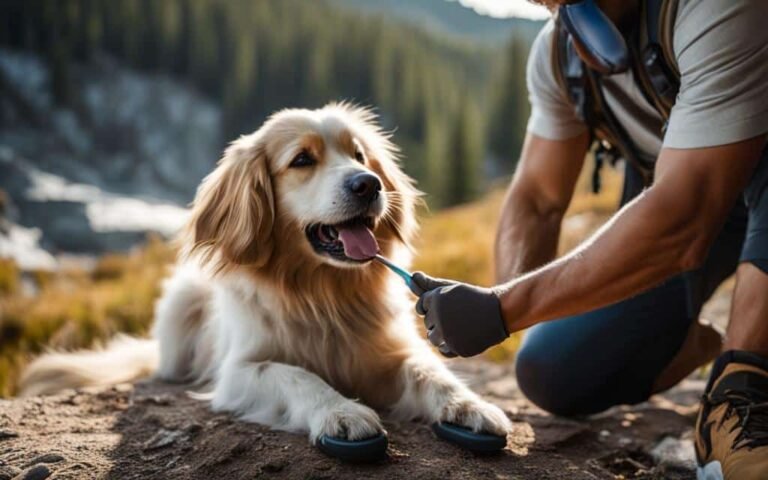
Dogs may need shoes when their paws face a clear risk. The most common risks include hot pavement, ice, snow, road salt, sharp rocks, broken ground, and some outdoor surfaces. In these cases, boots can act as a barrier between the paw and the ground.
A dog with a paw injury may also need protective footwear. However, injured paws need proper care, and a boot should not replace advice from a veterinarian. If your dog has a deep cut, swelling, bleeding, a burn, or severe pain, seek veterinary care.
This is why the question is not simply, do dogs need to wear shoes? A better question is whether your dog’s paws need protection for the place, weather, or activity ahead.

- ✦ Hot pavement
Very hot pavement can burn paw pads. Shoes can reduce direct contact with hot surfaces.
- ✦ Ice and snow
Boots can help protect paws from ice, packed snow, and cold ground during winter walks.
- ✦ Road salt
De-icing salt can irritate paw pads and may be harmful if a dog licks a large amount from its feet.
- ✦ Rough trails
Sharp rocks, gravel, thorns, and rough ground can cause cuts or sore paw pads.
- ✦ Paw injuries
A protective boot may help shield a healing paw when a veterinarian recommends appropriate protection.
Dogs That May Benefit From Boots
Some dogs may have more reason to use shoes than others. Working dogs, hiking dogs, and dogs that spend time on rough ground may face more paw wear. Dogs with sensitive paws may also benefit during certain activities.
Still, breed alone does not tell you whether a dog needs shoes. Watch the surface, weather, activity, and your dog’s response.
- ✦ Active dogs
Dogs that hike, run on rough trails, or spend long hours outdoors may benefit from added paw protection.
- ✦ Sensitive paws
Some dogs develop soreness on rough or very hot surfaces and may do better with protective footwear.
Do Dogs Need Shoes in Hot Weather?
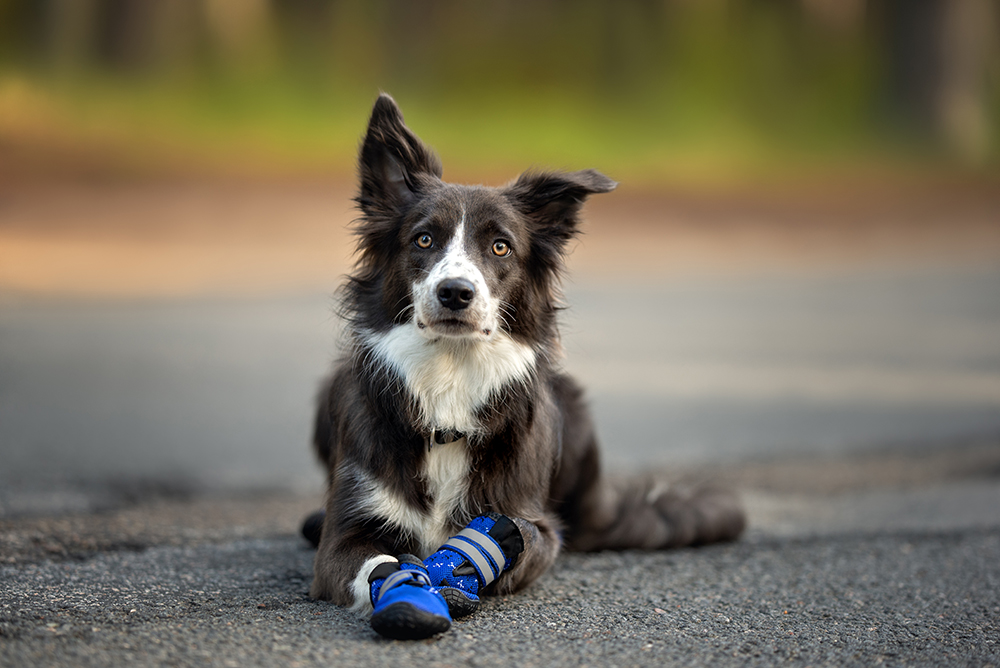
Hot weather is one of the clearest times when dog shoes may help. Pavement, asphalt, and other dark surfaces can become much hotter than the air. A dog may suffer a paw burn before an owner notices how hot the ground feels.
A simple ground check can help. Place the back of your hand on the pavement for several seconds. If it feels too hot for your hand, choose a cooler route or walk at a cooler time instead. Shoes can add protection, but they should not be used to make a dangerous surface safe for a long walk.
Watch your dog’s paws after a hot walk. Redness, tenderness, peeling, blisters, limping, or reluctance to walk can signal paw damage. Stop the walk and contact a veterinarian if you see a serious burn or marked pain.
- ✦ Walk at cooler times
Early morning or later evening walks can reduce contact with very hot ground.
- ✦ Use shaded routes
Grass and shade may be easier on paws than exposed pavement.
- ✦ Check the paws
Look for redness, cracks, peeling, blisters, or tenderness after walks in hot weather.
Can Dog Shoes Prevent Paw Burns?
A well-made boot can reduce direct contact between the paw pad and hot ground. Yet no boot can remove every heat risk. A poorly ventilated or poorly fitted boot may also trap heat and cause rubbing.
For extreme heat, changing the walking time and route is often more useful than relying on shoes alone.
- ✦ Do not depend on boots alone
Use cooler routes and shorter walks when pavement is dangerously hot.
Do Dogs Need Shoes in Winter, Snow, and Ice?
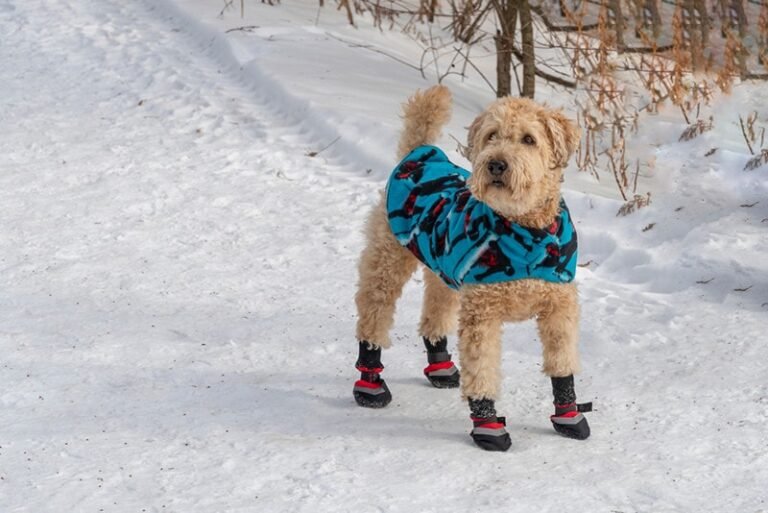
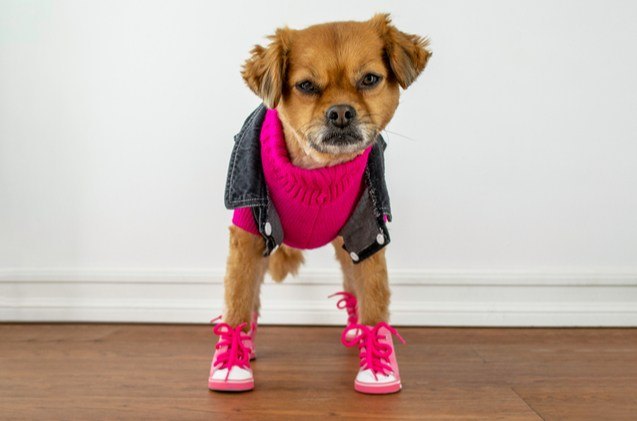
Winter can create several paw hazards at once. Snow and ice can collect between the toes. Frozen ground can make paw pads sore, while de-icing products can irritate the skin. In very cold weather, prolonged exposure can also damage tissue.
So, do dogs need to wear shoes in winter? Not always. Many dogs can take short walks without boots when the weather is mild and the route is safe. Boots become more useful when there is deep snow, heavy ice, very cold ground, or a lot of road salt.
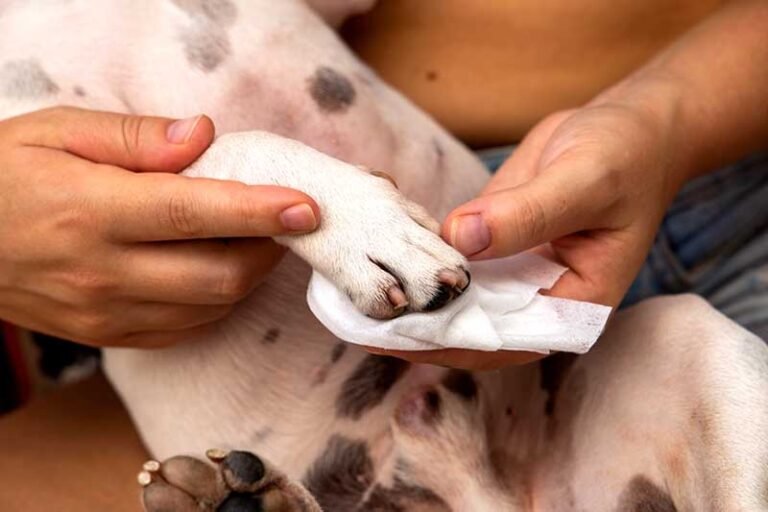
After winter walks, wipe and inspect your dog’s feet. Check between the toes and around the pads. Even when your dog wears boots, inspect the feet for dampness, ice, redness, or rubbing.
- ✦ Ice buildup
Boots can reduce the amount of snow and ice that packs around the paws.
- ✦ Road salt
Boots can limit direct contact with salt and other de-icing materials.
- ✦ Cold ground
Protective footwear adds a barrier between the paw and very cold surfaces.
- ✦ Post-walk care
Dry and inspect the paws after winter walks, even when boots were used.
Are Dog Shoes Good for Snow?
Dog boots can be useful in snow, especially for longer outdoor trips. Look for boots that stay secure and keep moisture out while still allowing the dog to walk normally.
For short trips in light snow, some dogs may do fine without boots. Your dog’s comfort and the condition of the ground should guide the choice.
- ✦ Choose a secure fit
A boot that slips off in snow will not provide much protection.
- ✦ Keep feet dry
Wet, cold paws can become uncomfortable during long outdoor sessions.
Benefits and Drawbacks of Dog Shoes
Dog shoes can solve real problems, but they are not perfect for every dog. A good boot can protect the paws, yet a poor fit can cause rubbing, pressure, or an altered gait.
Some dogs also dislike the feel of footwear at first. This is normal. Slow training can help a dog learn that boots are safe and temporary.
The goal is not to keep a dog’s paws covered all the time. The goal is to use shoes when they provide a clear benefit and remove them when they are no longer needed.

- ✦ Paw protection
Boots can reduce contact with hot, cold, rough, sharp, or irritating surfaces.
- ✦ Cleaner feet
Shoes can reduce the amount of mud, salt, and debris that reaches the paws.
- ✦ Support during outdoor activity
Some dogs benefit from added protection during hiking, long walks, or work on rough surfaces.
- ✦ Possible rubbing
A boot that does not fit well can rub the skin or create pressure points.
- ✦ Adjustment period
Dogs may walk oddly or try to remove the boots until they become familiar with them.
When Should Dogs Not Wear Shoes?
Dogs do not need shoes simply because they are outside. On safe, mild surfaces, bare paws are often fine. Constant use can also create moisture or rubbing problems if the feet and boots are not kept clean and dry.
Remove the boots if your dog shows clear discomfort, develops redness, or keeps trying to remove them. Check the feet before putting the boots back on.
- ✦ Normal safe ground
Shoes may not be needed for short walks on comfortable grass or other safe surfaces.
- ✦ Signs of irritation
Remove the boots and inspect the paws if you notice rubbing, redness, swelling, or sores.
How to Choose Safe Shoes for Your Dog
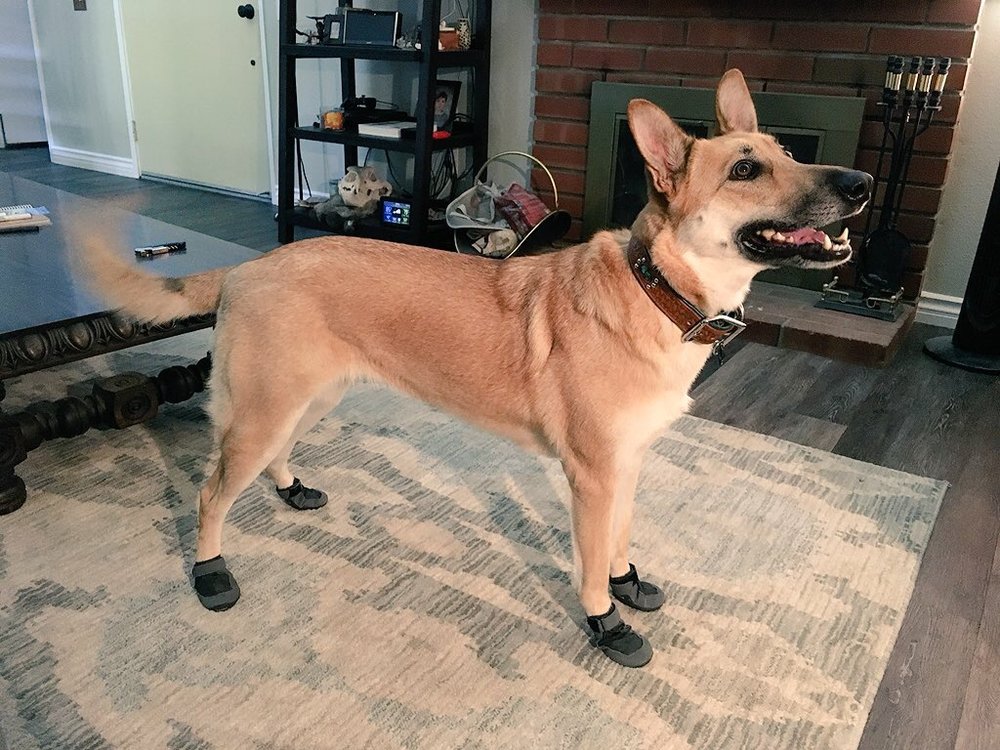
Fit is the most important part of choosing dog shoes. The boot should stay on without squeezing the paw or cutting into the leg. Your dog should be able to stand, walk, and move the toes in a natural way.
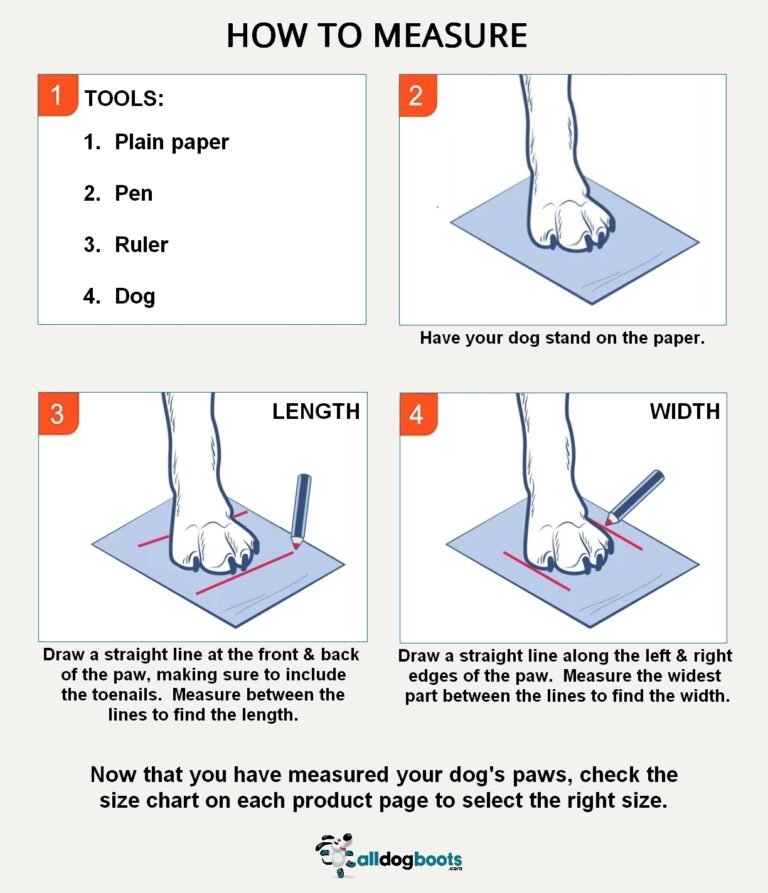
Measure your dog’s paws according to the shoe maker’s instructions. Paw width and length can both matter, and front and back paws may differ. Do not assume that a dog’s usual collar, harness, or clothing size tells you the right shoe size.
Look for footwear made for the activity and weather. A winter boot may not be the best choice for a hot summer trail. For long hikes, a durable sole and secure closure may matter more than a soft indoor boot.
- ✦ Correct size
Measure the paw and follow the brand’s size chart instead of guessing from your dog’s weight or breed.
- ✦ Secure closure
The shoe should stay on during normal movement without being so tight that it causes pressure.
- ✦ Flexible design
A good boot should let the dog move naturally rather than forcing an awkward step.
- ✦ Suitable sole
Choose a sole that matches the surface and activity, such as traction for slippery ground.
- ✦ Breathable materials
For warm weather, materials that allow heat and moisture to escape can improve comfort.
How Should Dog Shoes Fit?
A properly fitted shoe should feel secure but not tight. The boot should not twist, slide around, or fall off during normal walking. At the same time, it should not leave deep marks on the skin.
After the first few minutes, remove the boots and inspect the paws. Look for red spots, rubbed skin, damp areas, or pressure marks. If you see these signs, stop and reassess the fit.
- ✦ Check movement
Your dog should walk without a major change in stride or repeated attempts to remove the boot.
- ✦ Check the skin
Inspect the paw and lower leg for rubbing or pressure after each early use.
How to Get a Dog Used to Wearing Shoes
Many dogs need time to accept shoes. The first goal is not a long walk. It is simply to help your dog feel calm while wearing one boot.
Start indoors on a clean, safe floor. Let your dog sniff the boots. Reward calm behavior. Then place one boot on a paw for a short time and remove it before your dog becomes upset. Repeat the process with the other paws over several short sessions.
Once your dog accepts the boots indoors, take a few steps outside. Keep the first outing short. With steady practice, many dogs learn that wearing boots is part of a normal walk.

- ✦ Start slowly
Begin with brief sessions and increase the time only when your dog stays relaxed.
- ✦ Use rewards
Give small treats or praise when your dog calmly sniffs, wears, and walks in the boots.
- ✦ Try one boot first
Introducing one boot at a time can make the new feeling less overwhelming.
- ✦ Practice indoors
A safe indoor area lets your dog learn the feel of the boots before facing outdoor distractions.
- ✦ Keep early walks short
Short outdoor sessions make it easier to spot fit or comfort problems.
Why Do Dogs Walk Funny in Shoes?
A dog may lift its legs high, shake its feet, or take short steps when first wearing boots. The new pressure and weight can feel strange, even when the boots fit well.
This often improves with slow practice. If the unusual walk continues, gets worse, or comes with pain, remove the boots and check the fit.
- ✦ Normal adjustment
A brief awkward walk can happen while a dog learns how the boots feel.
- ✦ Possible poor fit
Persistent limping, rubbing, or strong resistance can mean the boots are not suitable or correctly fitted.
Dog Shoes vs. Bare Paws: How to Decide
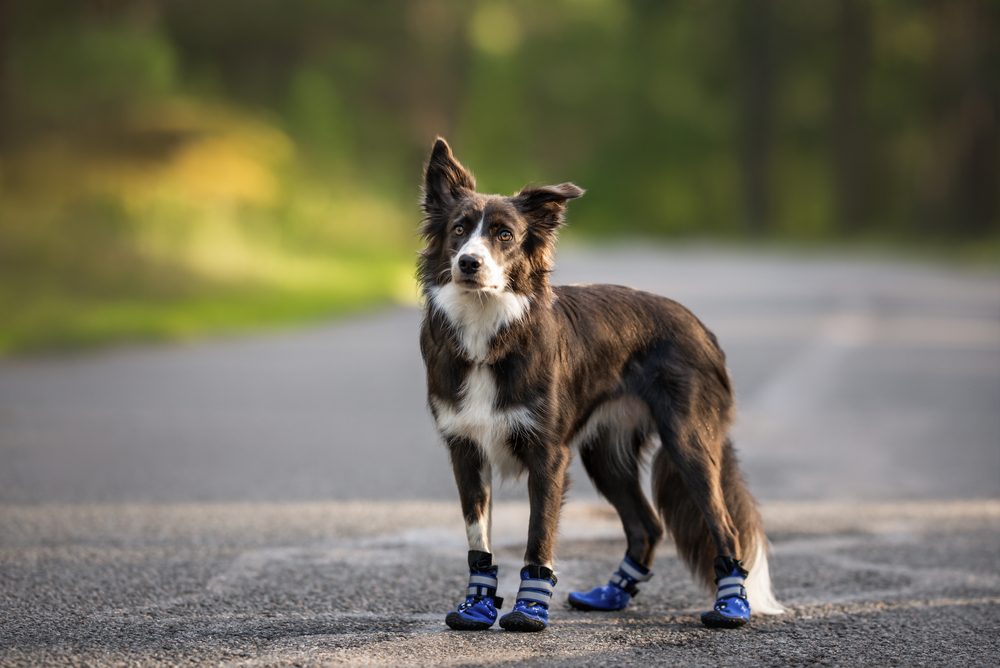
There is no single rule that says every dog should wear shoes or every dog should go barefoot. The right choice depends on the surface, weather, activity, paw health, and your dog’s comfort.
For a short walk on a mild day, bare paws may be all your dog needs. For a hike over sharp rocks, a winter walk on salted streets, or a walk on very hot pavement, protective footwear may make more sense.
If you are still unsure, focus on the condition of the paws. A dog that walks comfortably on safe ground may not need boots. A dog that develops repeated soreness or faces harsh surfaces may benefit from them.
- ✦ Choose bare paws
Bare paws may work well for short walks on comfortable, safe surfaces in mild weather.
- ✦ Choose boots
Boots may help when the ground is hot, icy, sharp, rough, salty, or otherwise irritating.
- ✦ Consider the activity
Long hikes and outdoor work can create more paw wear than a short neighborhood walk.
- ✦ Watch your dog
Your dog’s gait, comfort, and paw condition provide useful clues about whether footwear is helping.
When to Ask a Veterinarian
A veterinarian can help when paw problems keep coming back or when an injury is more than a minor surface scrape. Seek veterinary advice for deep cuts, burns, bleeding, swelling, infection, severe cracks, or ongoing limping.
Veterinary advice is also useful when a dog needs a boot for a medical reason. The right type of protection may depend on the injury and treatment plan.
- ✦ Persistent pain
Have your dog checked if pain or limping continues after the walk ends.
- ✦ Visible injury
Deep wounds, burns, swelling, or signs of infection need professional attention.