How Tight Should Dog Boots Be? A Complete Fit and Safety Guide
If you are wondering how tight should dog boots be, the simple rule is this: secure, not squeezed. A good boot should stay on when your dog walks, turns, and plays, yet it should not dig into the skin or change the way the paw moves.
Fit matters more than looks. A boot that slips can cause rubbing and falls. One that is too tight can cause pressure, pain, and poor blood flow. This is why measuring your dog’s paw and checking the fit after a few minutes of walking are both important.
Dogs have different paw shapes, nail lengths, and leg shapes. A size that works for one dog may not work for another. The best fit comes from the boot maker’s size guide plus a hands-on check of the boot while your dog stands and walks.

What Is the Right Tightness for Dog Boots?
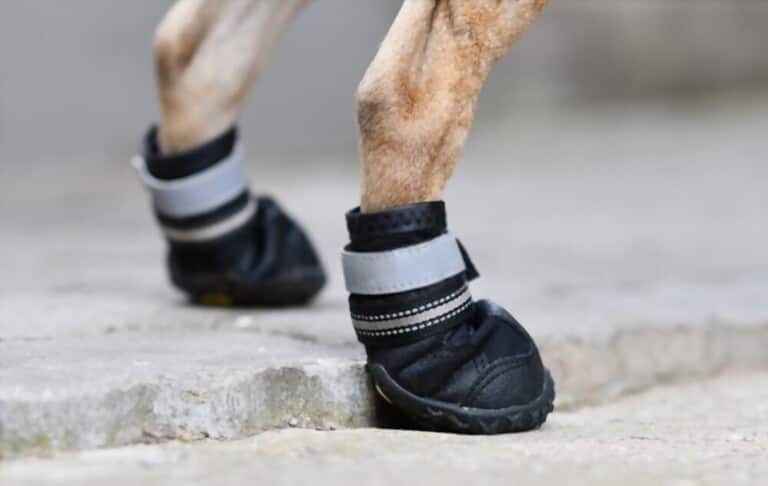
The right dog boot should feel snug around the paw or lower leg without acting like a tight band. It should hold the boot in place, but it should not leave deep marks or make the paw feel trapped.
When asking how tight should dog boots be, think about balance. The boot must be tight enough that your dog cannot easily kick it off, but not so tight that the strap presses hard into the skin.
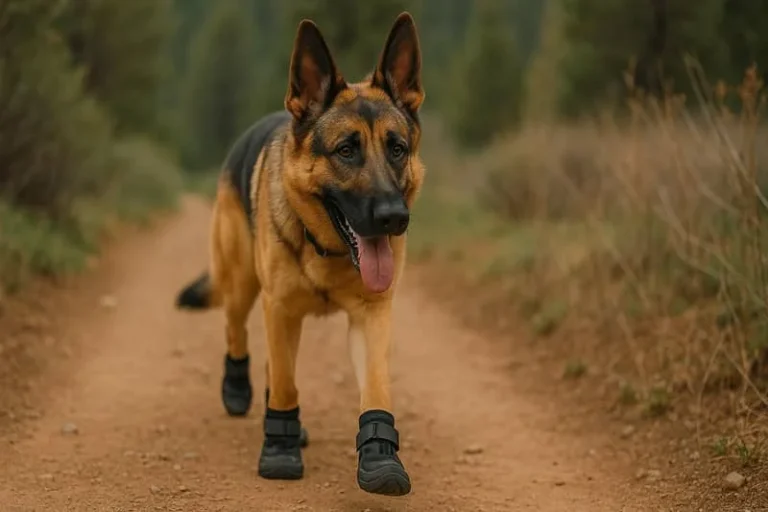
A properly fitted boot should also let your dog place the paw down in a natural way. Watch your dog walk after fitting the boots. A normal step is one of the best signs that the fit works.

- ✦ Snug fit
The boot stays in place without sliding around or twisting during normal walking.
- ✦ No strong pressure
The strap should not cut into the skin, create deep grooves, or cause swelling above or below the boot.
- ✦ Natural movement
Your dog should be able to bend the paw and walk without limping, lifting the feet oddly, or taking very short steps.
- ✦ Secure closure
The fastener should close firmly enough to keep the boot on without needing to be pulled as tight as possible.
The Finger Check
After fastening the boot, check the strap with your fingers. You should be able to slide a finger under the strap without forcing it or pressing hard. The exact space varies by boot design, so use this as a comfort check rather than a fixed measurement.
The strap should sit flat. If it digs into the skin when your dog walks, loosen it or try a different size or boot style.
- ✦ Check both sides
Make sure the strap does not press more on one side of the leg than the other.
- ✦ Check after walking
A boot may seem fine while your dog stands still but become too tight as the leg moves.
The Stay-On Test
Have your dog walk indoors for a few minutes. The boot should remain centered over the paw and should not rotate far to one side. If it slips off, first check whether the size is too large or the closure is in the wrong place.
Do not solve every slipping problem by tightening the strap more. A poor shape or wrong size can cause slipping even when the strap feels very tight.
- ✦ Watch the boot
Look for twisting, sliding, bunching, or repeated movement up and down the leg.
- ✦ Watch your dog
Look for limping, shaking the foot, stopping often, or trying to bite the boot.
How to Tell If Dog Boots Are Too Tight
A boot that is too tight can leave pressure marks or make your dog uncomfortable. Some dogs show clear signs, while others may simply change their gait or stop walking.
Check the paw and leg when you remove the boot. Mild contact marks may occur with some designs, but deep grooves, swelling, rubbed skin, or sore spots are warning signs. If the skin looks damaged, stop using the boot until the area has recovered and consider asking your veterinarian about the problem.
The answer to how tight should dog boots be is never tighter just because the boot keeps slipping. Tightening a poorly fitted boot can trade one problem for another.
- ✦ Deep strap marks
A clear groove that remains after the boot comes off may mean the closure is too tight.
- ✦ Swelling
Swelling around the paw or leg can signal excessive pressure and needs prompt attention.
- ✦ Cold or unusual toes
A paw that feels unusually cold or looks pale, bluish, or otherwise abnormal after wearing a boot should not be ignored.
- ✦ Limping
A new limp or odd step after putting on boots is a reason to remove them and reassess the fit.
- ✦ Skin rubbing
Redness, hair loss, sores, or rubbed skin can show that the boot or strap is creating too much friction.
What to Do If the Boot Is Too Tight
Remove the boot and inspect the paw and leg. Let your dog rest before trying another fit. If there is swelling, broken skin, marked pain, or a lasting change in the paw, contact a veterinarian.
If the paw looks normal, refit the boot with less tension. If it still feels tight when properly fastened, choose a larger size or a different boot shape instead of forcing the current boot to work.
- ✦ Stop and inspect
Do not keep walking in a boot that causes clear discomfort.
- ✦ Do not overtighten
More strap tension is not a substitute for the correct boot size.
How to Tell If Dog Boots Are Too Loose
Loose boots create a different set of problems. They may twist, slide, fall off, or allow the paw to move inside the boot. That movement can cause rubbing even when the boot itself feels soft.
A boot that is too loose may also reduce protection. Snow, ice, salt, sand, and small bits of dirt can enter through gaps. On walks, a loose boot can also change how your dog places the paw.
If you are checking how tight should dog boots be because the boots keep falling off, look at the size and shape first. The best solution may be a different boot rather than a tighter strap.

- ✦ Boot slips off
Repeated loss of the boot during normal walking often points to a poor fit or closure.
- ✦ Boot twists
A boot that rotates so the sole moves away from the bottom of the paw may be too loose or poorly shaped.
- ✦ Paw slides inside
Too much internal movement can create friction and reduce stable footing.
- ✦ Debris enters
Large gaps around the boot can let snow, sand, or grit reach the paw.
Why a Loose Boot Can Still Cause Rubs
It is easy to assume that only tight boots cause rubbing. Loose boots can rub too because the boot moves back and forth against the skin as the dog walks.
A secure fit reduces this extra movement. The boot should move with the paw rather than sliding against it.
- ✦ Less movement
A stable boot reduces repeated rubbing between the boot, fur, and skin.
- ✦ Better control
A boot that stays centered gives the paw a more stable base on the ground.
How to Measure Your Dog’s Paws for Boots
Good fit starts with a good measurement. Dog boot sizes differ between brands, so do not rely only on your dog’s weight, breed, or the size of another pair of shoes.
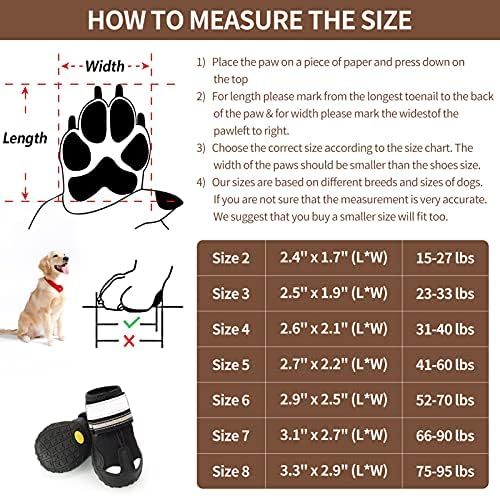
Measure the paw while your dog stands. Weight on the paw spreads the toes and gives you a more useful measurement for choosing boots.
Use the brand’s own size chart when possible. Some brands focus on paw width, while others use paw length or a combination of measurements.

- ✦ Place the paw on paper
Have your dog stand with the paw flat on a sheet of paper.
- ✦ Mark the widest points
Measure across the widest part of the paw, including the toes as directed by the boot maker.
- ✦ Measure paw length
Measure from the back of the paw to the front as the brand’s guide instructs.
- ✦ Measure more than one paw
Front and rear paws can differ, so check each pair when the manufacturer gives separate sizing advice.
- ✦ Compare with the size chart
Choose the size based on the boot maker’s measurements rather than guessing from breed or body weight.
Why Paw Measurements Matter More Than Breed
Two dogs of the same breed can have different paw shapes. Age, body size, nail length, fur, and natural paw shape can also affect the fit.
A measurement gives you a starting point. You still need to test the boot on the dog because a correct measurement does not guarantee that every boot shape will feel comfortable.
- ✦ Paw shape varies
Width and length can differ even among dogs of similar size.
- ✦ Boot design varies
A wide boot and a narrow boot can fit the same measured paw very differently.
How to Put Dog Boots on Without Making Them Too Tight
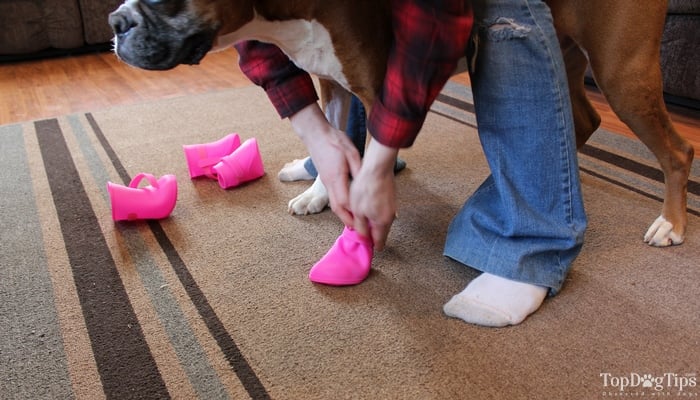
Putting on a dog boot correctly is part of getting the fit right. Open the boot as much as the design allows, guide the paw fully inside, and make sure the toes sit naturally before closing the fastener.
Do not pull the strap as hard as possible. Fasten it until the boot feels secure, then check the paw and leg. A boot that requires extreme force to stay on may be the wrong size or shape.
Give your dog a short indoor test before going outside. This makes it easier to spot slipping, rubbing, or an unusual gait without adding cold, heat, pavement, or trail hazards.

- ✦ Open the boot fully
A wide opening makes it easier to place the paw inside without bending or forcing the toes.
- ✦ Center the paw
Make sure the paw sits over the sole and is not pushed to one side.
- ✦ Fasten gently
Close the strap firmly enough to secure the boot without pulling it tight against the leg.
- ✦ Test indoors
Let your dog walk on a safe indoor surface before using the boots outside.
- ✦ Check again
Look at the straps and paw after a few minutes because movement can change the fit.
Give Your Dog Time to Adjust
Many dogs walk oddly when they first wear boots. That does not always mean the boots are too tight. The dog may simply be learning what the new feeling is.
Start with short sessions. Reward calm behavior and remove the boots if your dog shows clear pain, distress, or skin irritation. Once your dog walks naturally indoors, increase use slowly.
- ✦ Start short
Use the boots for a brief indoor session before a long walk.
- ✦ Watch the gait
A dog that becomes more natural after practice may simply need time to learn the new footwear.
Do Dog Boots Need to Fit the Front and Back Paws the Same?
Not always. A dog’s front and rear paws can have different shapes and sizes. Some boot makers account for this, while others sell sets where all four boots use the same size.
If the front boots fit well but the rear boots slip or feel tight, check the brand’s sizing instructions. In some cases, different sizes or a different boot style may work better.
This is another reason not to rely on a single rule for how tight should dog boots be. The goal is a comfortable and secure fit on each paw.

- ✦ Front paws
Front paws often carry a large share of the dog’s weight and may have a different shape from the rear paws.
- ✦ Rear paws
Rear paws may be narrower or shaped differently, depending on the dog.
- ✦ Follow the brand chart
Use the manufacturer’s instructions when it offers separate front and rear sizing.
When Different Sizes May Help
If your dog has noticeably different paw sizes, one size may not give the best fit on every foot. Some boot designs allow mixed sizes, while others do not.
When mixed sizing is not available, look for a design with a flexible opening and a secure but adjustable closure. The boot should still meet the same comfort and safety checks on every paw.
- ✦ Uneven paw sizes
A visible size difference may make a single-size set less suitable.
- ✦ Flexible design
A boot with a forgiving shape may fit small differences better than a rigid boot.
How Tight Should Dog Boots Be in Winter and Summer?
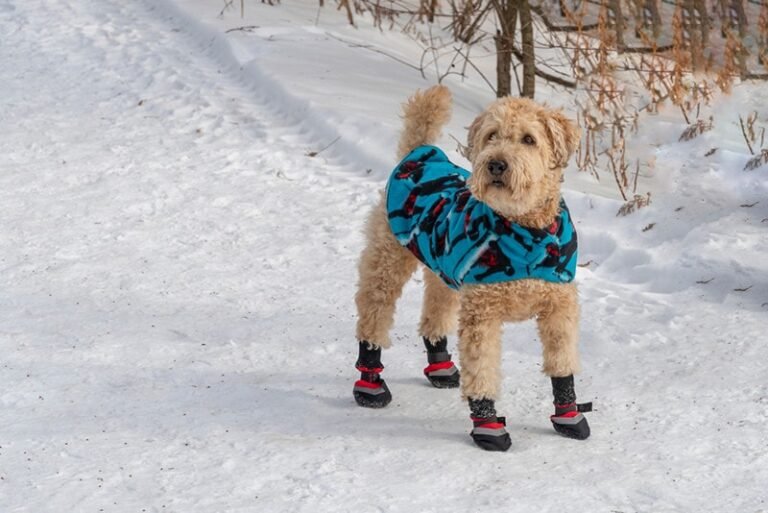
The basic fit rule stays the same in every season: snug, secure, and comfortable. The reason for using the boots may change, but the straps should not become tight simply because the weather is cold or hot.
In winter, boots can help protect paws from snow, ice, and treated sidewalks. In the United States, road salt and ice-melt products can also irritate paw pads. A proper boot can reduce direct contact, but it still needs regular checks.
In hot weather, dogs may wear boots to protect paws from very hot pavement or rough ground. Heat can build up inside some boots, so use them for the shortest practical time and check the paws often.
- ✦ Winter
Check for snow or ice buildup, wetness, rubbing, and changes in paw temperature.
- ✦ Summer
Watch for heat, sweating, trapped moisture, and signs that the paw is becoming too warm.
- ✦ Wet conditions
A wet boot can increase rubbing, so inspect the paw after walks and dry the area as needed.
- ✦ Long walks
Longer wear means more time for friction or pressure to develop, so check the fit during and after extended outings.
Boots and Paw Protection on Hot Pavement
Hot pavement can burn paw pads. Boots may offer a barrier, but they do not make heat exposure harmless. Avoid long walks during peak heat and choose cooler times when possible.
If a boot becomes hot, wet inside, or uncomfortable, remove it and inspect the paw. A boot should protect the paw, not create a new source of heat or friction.
- ✦ Check often
Feel and inspect the boot and paw during longer outings.
- ✦ Choose cooler times
Walking early or later in the day can reduce heat exposure.
Common Dog Boot Fit Mistakes to Avoid
Many boot problems start with a simple sizing mistake. Owners may choose a size based on weight, pull the straps too tight, or assume that a boot that stays on must be a good fit.
The better approach is to measure, fit, walk, and check. This simple process helps you judge comfort rather than relying on one sign.
Remember that how tight should dog boots be depends partly on the boot’s design. A sock-style boot, a rigid hiking boot, and a winter boot may all use different closure systems.
- ✦ Choosing by weight alone
Weight does not tell you the exact width or length of a dog’s paw.
- ✦ Making the strap very tight
A tight strap can hide a poor fit for a short time while adding pressure to the leg.
- ✦ Skipping the walking test
A boot can look perfect while standing still and still twist or rub during movement.
- ✦ Ignoring the rear paws
Different paws can need different adjustments or sizes.
- ✦ Leaving boots on too long
Long wear can increase moisture, heat, friction, and pressure.
- ✦ Ignoring skin changes
Redness, sores, swelling, or lasting marks mean the fit needs attention.
When to Stop Using a Pair
Stop using a pair if it repeatedly causes rubbing, pain, swelling, or an abnormal gait even after careful adjustment. A different size may solve the issue, but a different boot design may be needed if the shape does not match your dog’s paw.
If your dog has an existing paw injury, reduced sensation, circulation concerns, or a medical condition affecting the feet, ask your veterinarian about boot use and fit. Extra care may be needed because your dog may not react normally to pressure or discomfort.
- ✦ Persistent irritation
Repeated skin problems suggest that the boot is not working well for your dog.
- ✦ Persistent limping
Do not keep using boots that cause or worsen a limp.
- ✦ Repeated boot loss
If proper fitting does not keep the boot on, consider another size or design.