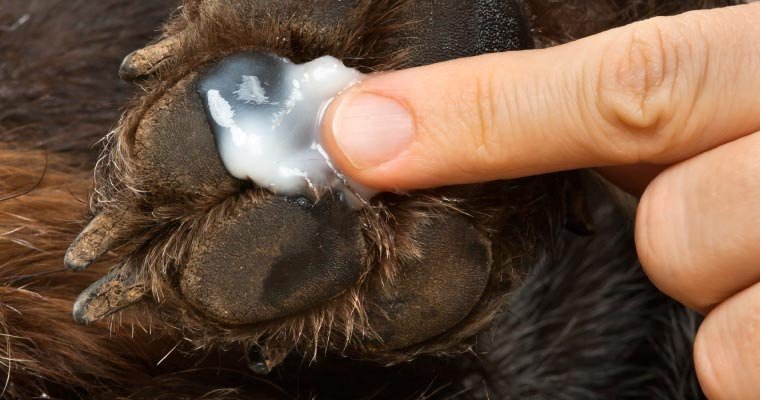
The safest way to make dog paws more grippy is to keep the paw pads clean and healthy, keep nails appropriately trimmed, improve traction on slippery floors, and use a properly fitted traction aid when needed.
For dogs living in the United States, slippery hardwood, tile, laminate, and other smooth indoor flooring can make ordinary movement difficult, particularly for older dogs or dogs with mobility problems. Paw pads naturally provide cushioning and traction, but they cannot always compensate for a slick surface.
Start by checking the paws rather than trying to make the pads artificially sticky. Clean and dry the pads, inspect between the toes, and check the nails. If your dog is suddenly slipping, limping, licking a paw excessively, or showing pain, look for an injury or another medical problem instead of treating traction as the only issue.
For persistent slipping, practical options include carpet runners or other non-slip surfaces, veterinarian-recommended toe grips or paw coverings, and appropriate nail and paw care. These approaches address traction without applying household adhesives or other substances that can irritate the pads.
Source: m.media-amazon.com
Why Do Dogs Slip on Smooth Floors?
Dogs slip when their paws cannot generate enough friction against the surface to control each step. Smooth flooring such as polished hardwood, tile, vinyl, and laminate can provide substantially less traction than grass, carpet, or textured outdoor surfaces.
A dog’s paw pads normally help with traction, shock absorption, and protection from the ground. However, traction can be reduced by wet paws, debris, excessively long nails, changes in paw condition, or a floor that is simply too smooth for the dog’s needs.
Age and mobility also matter. Dogs with arthritis, weakness, neurologic problems, or other mobility limitations may have more difficulty correcting a slide once it starts. Repeated slipping can also make a dog less confident about walking across a room.
Source: i.etsystatic.com
Wet paws
Water can reduce friction between the paw and a smooth floor, making an already slippery surface harder to navigate.
Long nails
Overgrown nails can affect how the foot contacts the ground and may make stable movement more difficult.
Paw irritation
Cuts, cracks, burns, foreign objects, or inflammation can cause a dog to change its gait and become less stable.
Smooth flooring
Even healthy paws may struggle on highly polished or smooth surfaces because the floor itself provides limited friction.
When Slipping May Signal a Health Problem
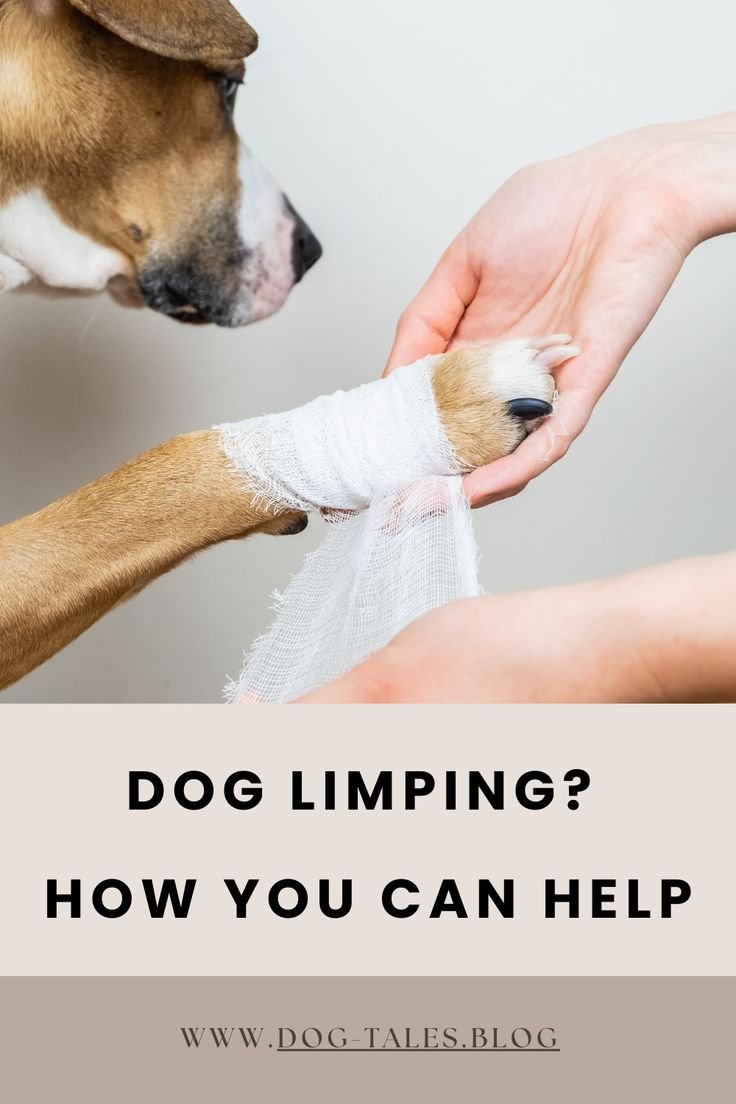
If a dog that normally walks confidently suddenly begins slipping, do not assume the paw pads simply need more grip. Check for cuts, punctures, swelling, foreign material between the toes, broken nails, or other sources of pain. Persistent lameness or an unexplained change in mobility warrants veterinary advice.
A dog that repeatedly slips may also have a broader mobility problem. Veterinary evaluation can help determine whether the problem is primarily the floor, the paws, strength and coordination, or an underlying condition.
Stop and inspect
Check the pads, spaces between the toes, and nails if your dog suddenly becomes less stable.
Watch for pain
Limping, repeated paw licking, reluctance to walk, swelling, bleeding, or obvious discomfort should not be ignored.
How to Make Dog Paws More Grippy Safely
The most effective approach is usually to improve traction around the dog rather than trying to alter the natural surface of the paw. Work through the following steps in order, starting with basic paw care and environmental changes.
There is no universally appropriate substance that should be applied to a healthy paw pad simply to make it sticky. The goal is controlled friction without irritating the skin or interfering with normal paw function.
Source: i.pinimg.com
1. Clean the paws
Remove dirt, mud, salt, ice, or other debris and dry the paws thoroughly. Moisture and debris can make a smooth floor more difficult to navigate.
2. Inspect the paw pads
Look for cracks, cuts, punctures, burns, redness, swelling, or foreign material between the toes.
3. Maintain the nails
Keep nails at an appropriate length through routine grooming. Ask a veterinarian or professional groomer for help if nail trimming is difficult.
4. Improve the walking surface
Place carpet runners, rugs, or other stable non-slip surfaces along the routes your dog uses most.
5. Consider a traction aid
For dogs that still struggle, a properly fitted toe grip, paw covering, or boot may provide additional traction.
6. Monitor the result
The dog should walk more confidently without developing rubbing, redness, altered gait, or other signs of discomfort.
Keep Paw Pads Clean and Dry
Cleaning and drying the paws is a simple first step. Dirt, salt, lawn debris, and moisture can accumulate around the pads and between the toes. After walks, gently clean the paws and dry them rather than leaving them damp.
Routine inspection also helps identify problems before they affect traction. Healthy pads should not be bleeding, visibly ulcerated, deeply cracked, or obviously painful.
After outdoor walks
Check between the toes and around the pads for debris, especially after exposure to snow, ice, salt, or rough terrain.
After getting wet
Dry the paws before allowing the dog to cross a large area of smooth flooring.
Keep Nails at an Appropriate Length
Nail care is part of traction management because the nails influence how the foot contacts the floor. Overgrown nails can change foot placement and may interfere with comfortable movement.
Do not rush a nail trim if your dog is fearful or difficult to handle. A veterinarian or experienced groomer can help establish a safer grooming routine.
Trim gradually
Regular maintenance is preferable to waiting until nails become substantially overgrown.
Get professional help when needed
If your dog resists nail care or you are uncertain about safe trimming, ask a veterinary professional or groomer for assistance.
Improve Traction on Slippery Floors
For many indoor slipping problems, changing the walking surface is the most straightforward solution. Put stable, non-slip material over the areas where your dog walks, turns, rests, and gets up.
Carpet runners and rugs can create a predictable path across hardwood or tile. Secure them so they cannot slide or bunch up under the dog’s feet. Dogs with mobility problems may benefit from having traction available throughout the main areas of the home rather than only at one doorway.
Pay particular attention to stairs and other places where a slip could lead to a fall. A veterinarian may also recommend restricting access to stairs for a dog with significant mobility limitations.
Source: steadypaws.com
Create traction pathways
Use stable runners or rugs along frequently traveled routes between sleeping, eating, drinking, and outdoor areas.
Secure the material
A loose rug can itself become a tripping hazard, so use an appropriate non-slip backing or another secure method.
Address stairs
Use a stable non-slip surface on stairs and consider restricting access when a dog cannot safely manage them.
Keep floors clean
Remove water, grease, and other residues that can make smooth surfaces even more slippery.
Which Is Better: Paw Traction or Floor Traction?
If the slipping occurs mainly on one type of indoor flooring, improving the floor is often the simplest place to start. It does not require the dog to tolerate something attached to its paws and can improve traction across several steps at once.
Paw-based traction aids can make more sense when the dog needs extra grip across different surfaces or when changing the environment is impractical. The decision should account for fit, comfort, the dog’s gait, and whether the aid stays securely in place.
Choose floor changes first when
The problem is concentrated in predictable areas such as hardwood hallways, tile rooms, or stairs.
Consider a paw aid when
The dog needs additional traction in multiple locations and can comfortably tolerate a properly fitted device.
Can Paw Grips, Toe Grips, and Boots Help?
Yes. Traction aids can help some dogs, particularly those that struggle on smooth indoor floors. Veterinary mobility guidance describes options such as toe grips, nail caps, paw coverings, and boots as possible ways to increase traction, while emphasizing that different dogs respond differently to each option.
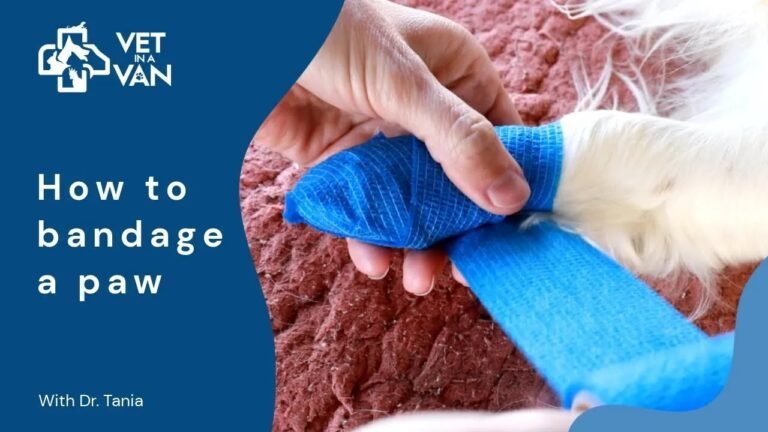
A traction aid should fit correctly and allow normal movement. It should not create pressure points, rub the skin, restrict movement, or cause the dog to alter its gait. Introduce any new device gradually and monitor the paws afterward.
Products shown in photographs or marketed as anti-slip solutions should not automatically be treated as proven to work for every dog. Fit, construction, surface, and the individual dog’s movement all affect the result.
Source: m.media-amazon.com
Toe grips
Small rubber or silicone devices that attach around the toenails can provide additional contact and traction for some dogs.
Paw coverings
Adhesive or fitted coverings can add a textured contact surface, but they must be used according to their directions and monitored for irritation or poor fit.
Dog boots
Boots can provide a protective or textured surface, but they need a secure fit and may require gradual acclimation.
Nail caps
Some mobility plans use nail coverings as part of a broader traction strategy, but veterinary guidance can help determine whether they suit an individual dog.
How to Tell Whether a Traction Aid Is Working
The clearest sign of success is functional improvement: the dog can walk, turn, stand up, and lie down with greater confidence and fewer slips. The device should not cause a new limp or make the dog walk unnaturally.
After use, inspect the paws and toes for redness, rubbing, swelling, or other irritation. If the dog repeatedly tries to remove the device or appears uncomfortable, stop using it and seek advice about alternatives.
Positive signs
More stable steps, fewer slips, easier turns, and greater confidence on the target surface.
Warning signs
Limping, altered gait, repeated chewing at the device, skin irritation, swelling, or worsening reluctance to walk.
What Should You Not Put on Dog Paws to Increase Grip?
Do not improvise with household adhesives, aggressive chemicals, or substances that are not intended for canine paw use. A product that feels sticky to a person can irritate paw skin, collect debris, transfer to flooring, or be licked and swallowed by the dog.
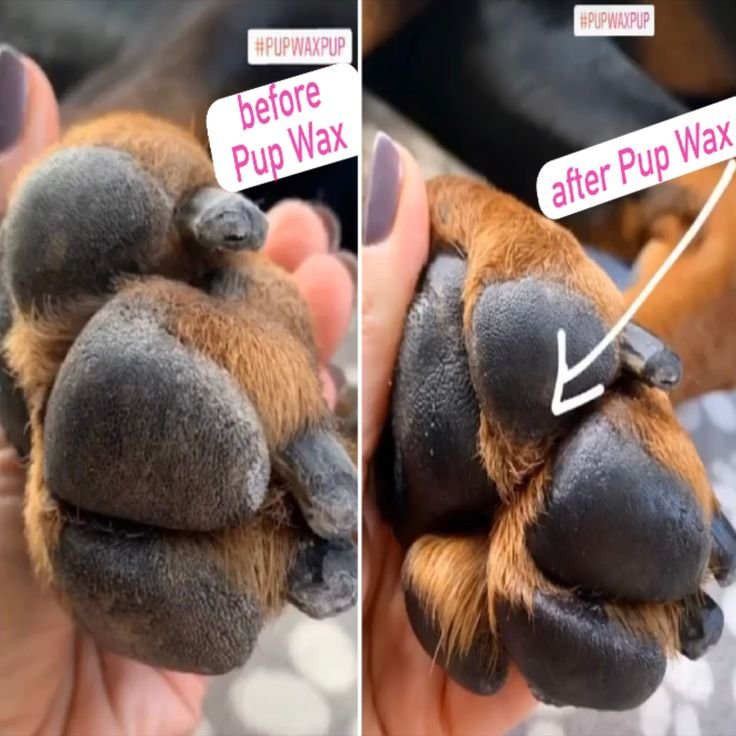
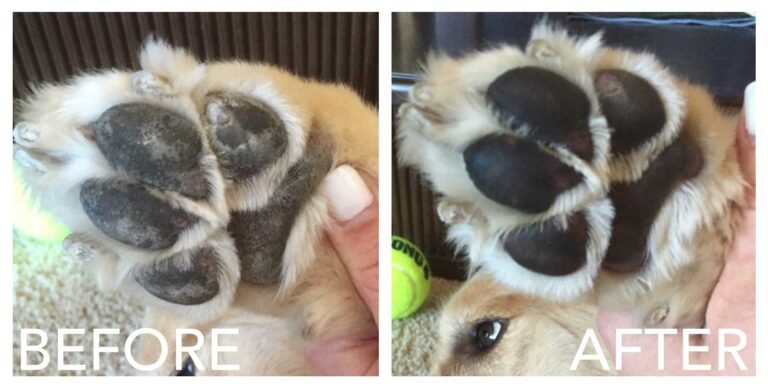
Avoid assuming that a moisturizer will automatically improve traction. Paw balms and protective waxes may have legitimate uses for protecting dry or exposed pads, but their purpose is not necessarily to create a high-friction surface. Some substances can also make the paws feel slick rather than grippy.
If the paw pads are cracked, bleeding, burned, swollen, or painful, focus on treating the underlying problem rather than attempting to increase traction.
Source: m.media-amazon.com
Avoid household glue
Adhesives are not an appropriate DIY traction treatment for paw pads.
Avoid harsh chemicals
Cleaning chemicals, solvents, and other irritants can damage paw-pad tissue.
Do not experiment on injured pads
An injured paw needs appropriate care, not a grip-enhancing coating.
Do not assume sticky is better
Effective traction depends on controlled friction and safe movement, not simply making the paw surface tacky.
Why Healthy Paw Care Matters More Than Making Pads Sticky
Paw pads are specialized structures designed to protect the foot, absorb shock, and contribute to traction. When the pads are cracked, burned, or otherwise injured, normal movement can become painful and unstable.
If a dog’s pads repeatedly crack or become damaged despite routine care, the problem may involve environmental exposure, excessive wear, irritation, or an underlying medical condition. Veterinary evaluation is appropriate when paw problems persist or recur.
Check for damage
Look for cracks, bleeding, redness, exposed tissue, swelling, or changes in pad appearance.
Address repeated problems
Recurring pad damage should be investigated rather than repeatedly covered with traction products.
How to Make a Slipping Dog Safer at Home
If your dog is already slipping around the house, make the environment safer before expecting the paws to provide all the traction. Create clear, stable routes across smooth flooring and reduce situations that require sudden turns or rapid acceleration.
Dogs with mobility limitations may need a broader home-management plan. Non-slip flooring, controlled access to stairs, ramps where appropriate, and veterinary or rehabilitation guidance can work together to reduce the physical demands of moving around the home.
Source: i.ytimg.com
Cover high-traffic areas
Prioritize the routes your dog uses most frequently rather than trying to cover every square foot immediately.
Protect transition areas
Place stable traction surfaces where your dog moves from carpet to hardwood, tile, or other smooth flooring.
Reduce risky movements
Limit unnecessary jumping, sharp turns, or uncontrolled access to slippery stairs.
Consider mobility support
For dogs with significant mobility limitations, discuss ramps, harnesses, flooring changes, and other adaptations with a veterinarian or rehabilitation professional.
A Simple Home Traction Check
Watch your dog walk slowly across the areas where slipping occurs. Look for hesitation, splaying of the legs, repeated sliding, difficulty turning, or trouble getting up. Then compare the same movement on a carpeted or textured surface.
If the dog moves comfortably on the high-traction surface but repeatedly slips on smooth flooring, the environment is likely contributing substantially to the problem. If instability remains across multiple surfaces, veterinary assessment becomes more important.
Surface-specific slipping
Slipping that occurs mainly on smooth floors points toward an environmental traction issue.
General instability
Difficulty walking on several surfaces may indicate a mobility or health problem that needs further evaluation.
Common Mistakes When Trying to Improve Dog Paw Traction
The most common mistake is treating slipping as a simple paw-pad problem. A dog may slip because the floor is too smooth, because the paws are wet, because nails need attention, or because pain or weakness is changing the dog’s gait.
Another mistake is using a traction product without checking whether it fits or whether the dog can move naturally while wearing it. More traction is not automatically better if the device causes discomfort or changes normal movement.
Source: i.pinimg.com
Changing the paw but ignoring the floor
A dog can continue slipping if the main problem is an extremely smooth walking surface.
Using an improvised sticky substance
Household products can irritate paws and may be unsafe if licked.
Ignoring sudden changes
A sudden loss of stability can be a sign of pain or another health problem.
Failing to monitor a new device
Check for rubbing, redness, swelling, discomfort, or an altered gait after using any traction aid.
Leaving wet paws untreated
Drying the paws after bathing, rain, or wet outdoor conditions can reduce avoidable slipping.
What to Do If the First Solution Does Not Work
If cleaning, drying, nail care, and environmental changes do not solve the problem, do not keep adding products at random. Reassess the dog’s paws and observe whether the instability occurs on carpet, outdoor ground, and other surfaces.
If the dog remains unstable, develops pain, or shows other changes in movement, arrange a veterinary examination. A professional can determine whether the problem is related to the paws, joints, muscles, nerves, or another condition.
If only one room causes slipping
Focus on changing that surface with secure non-slip flooring.
If several surfaces cause slipping
Consider whether a medical or mobility issue is contributing.
If pain appears
Stop experimenting with traction products and seek veterinary guidance.
When to Call a Veterinarian About Slippery Paws
Contact a veterinarian when slipping is accompanied by limping, persistent pain, swelling, bleeding, a visible wound, excessive paw licking or chewing, or a sudden change in mobility. Paw injuries can worsen when a dog continues walking on them.
A veterinarian should also evaluate recurring or unexplained paw-pad problems. Cracked or damaged pads can have environmental causes, but persistent problems can sometimes be associated with an underlying condition.
For a severe injury, uncontrolled bleeding, a deep puncture, a serious burn, significant distress, or an embedded foreign object that cannot be safely removed, seek prompt veterinary care.
Source: m.media-amazon.com
Sudden lameness
A new limp or refusal to bear weight should be evaluated rather than treated solely as a traction issue.
Deep or bleeding injuries
Deep cuts, punctures, significant bleeding, or exposed tissue require professional assessment.
Burns
Paw-pad burns from hot pavement or other sources can require veterinary treatment, particularly when tissue is damaged.
Persistent instability
If a dog continues to have difficulty walking despite safer flooring and healthy paws, a broader mobility assessment may be needed.
Do Not Confuse Traction Problems With Paw Injuries
Healthy paw pads contribute to traction, but pain can change how a dog places the foot. A dog that avoids loading one paw may appear unstable even when the floor itself has not changed.
Check the paw gently if your dog permits it, but stop if the examination causes significant pain or distress. Dogs in pain can react unpredictably, so professional help is safer when the injury is difficult to assess.
Check the pads
Look for cuts, punctures, cracks, discoloration, or other visible changes.
Check between toes
Foreign material can become trapped between the toes and cause discomfort or swelling.
Frequently Asked Questions
Q
How can I make my dog’s paws less slippery on hardwood floors?
Start by keeping the paws clean and dry, maintaining appropriate nail length, and adding secure non-slip runners or rugs to the areas your dog uses most. If slipping continues, ask your veterinarian whether a toe grip, paw covering, or other traction aid is appropriate.
Q
Can I put something sticky on my dog’s paw pads for better grip?
Avoid household adhesives and unapproved sticky substances. They can irritate paw tissue, collect debris, transfer to surfaces, or be swallowed when the dog licks its paws. Use products specifically intended for canine traction only when appropriate and according to their directions.
Q
Do dog paw balms improve traction?
Not necessarily. Paw balms and protective waxes can be used for certain paw-care purposes, but they are not automatically traction products. Some substances may even make a smooth surface feel more slippery. If traction is the goal, focus on the flooring, nail and paw care, or a purpose-designed traction aid.
Q
Are toe grips safe for dogs?
Toe grips can be useful for some dogs, but suitability depends on the individual dog, fit, nail condition, and gait. Monitor for rubbing, redness, swelling, discomfort, or an altered walking pattern. A veterinarian or canine rehabilitation professional can help determine whether they are appropriate.
Q
Why is my dog suddenly slipping when it never did before?
A sudden change can come from wet paws or a changed floor surface, but it can also reflect pain, an injury, weakness, or another mobility problem. Inspect the paws and observe your dog on different surfaces. If instability persists or occurs with limping, pain, swelling, or other concerning signs, contact a veterinarian.
✦ Wrapping Up
Conclusion
Making dog paws more grippy is usually less about changing the paw itself and more about creating healthy paws and a safer contact surface. Clean and dry the paws, maintain appropriate nail length, address damaged pads, and improve traction on smooth floors with secure runners or other non-slip surfaces.
When those measures are not enough, properly fitted traction aids such as toe grips, paw coverings, or boots may help some dogs. Because slipping can also be a symptom of pain or reduced mobility, persistent or sudden instability should not be treated solely with a traction product.
💡 Key Takeaway
Start today by inspecting and drying your dog’s paws, checking the nails and pads, and placing a secure non-slip runner over the slipperiest high-traffic area. If your dog remains unstable or shows pain, limping, swelling, bleeding, or repeated paw problems, contact your veterinarian.
Learn how to keep a bandage on a dog’s paw clean, dry, secure, and comfortable while watching for swelling, slipping, infection, and other warning signs.
Learn how to treat burned dog paws safely, when to contact a veterinarian, how long recovery takes, and how to prevent paw pad burns from hot surfaces.
Learn how to remove a bandage from a dog paw safely, including preparation, step-by-step removal, wound checks, stuck bandages, and signs that require veterinary care.
Learn how to treat sore dog paws between toes with safe home care, cleaning steps, paw protection tips, and guidance on when veterinary treatment is needed.