Should Dogs Wear Boots When Hiking? A Complete Guide
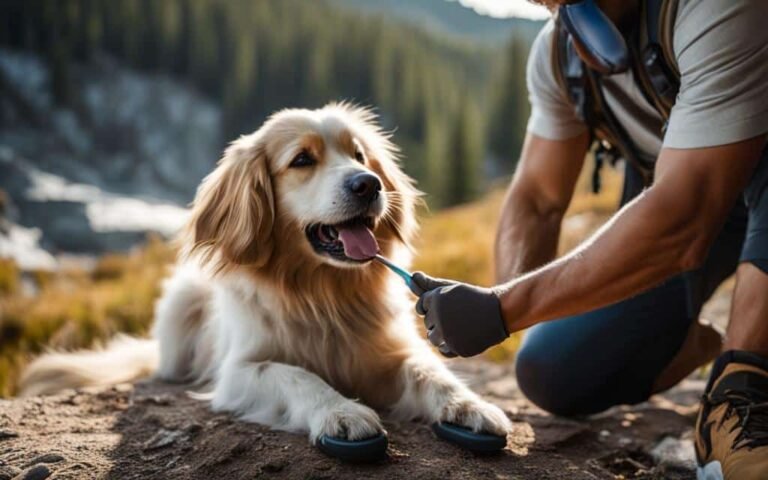
The answer to “should dogs wear boots when hiking” depends on the trail, weather, distance, and your dog’s paws. A short walk on a cool, soft trail may not call for boots. A long hike over hot rock, rough gravel, ice, or sharp debris can be a very different story.
Dog paws are tough, but they are not damage-proof. Boots can add a useful barrier between the paw and the ground. They can also help keep snow, ice, mud, and small bits of debris away from the paw. The key is to use boots when they solve a real problem, not simply because every hiking dog must wear them.

When Should Dogs Wear Boots When Hiking?
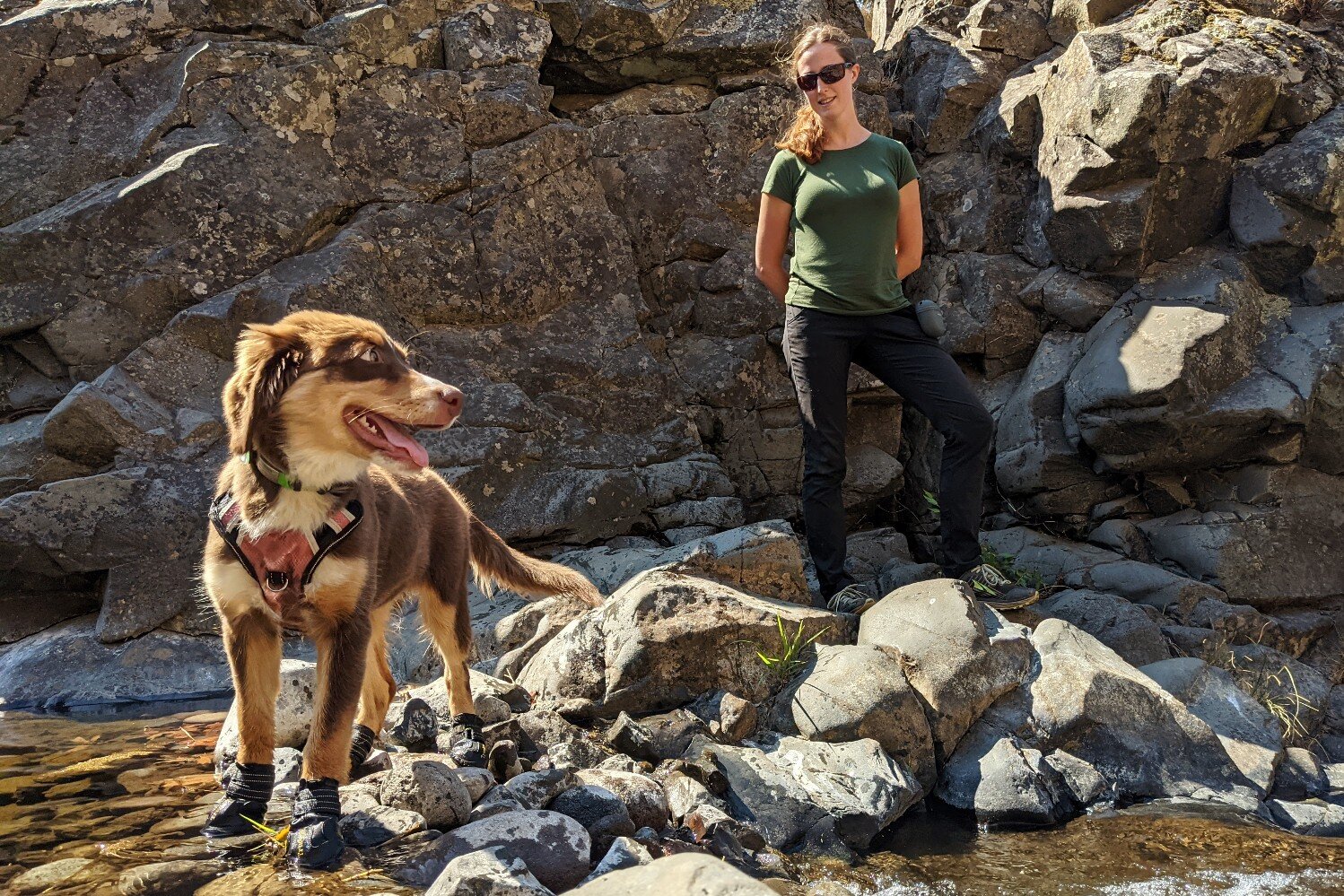
When asking should dogs wear boots when hiking, start with the trail itself. Boots are most useful when the ground can cut, burn, scrape, freeze, or irritate the paw. They may also help dogs with sore paws or past paw injuries, when a veterinarian agrees that extra protection is suitable.
For many U.S. hikers, trail conditions can change fast. A cool forest trail may lead to hot rock, rough gravel, or icy ground. Carrying boots can give you another option if the surface becomes hard on your dog’s paws.
- ✦ Hot ground
Hot pavement, rock, sand, and other surfaces can burn paw pads. Boots can reduce direct contact with the hot surface.
- ✦ Sharp or rough ground
Loose rock, gravel, thorns, and sharp debris can cause cuts or scrapes. A sturdy boot can add a layer of protection.
- ✦ Snow and ice
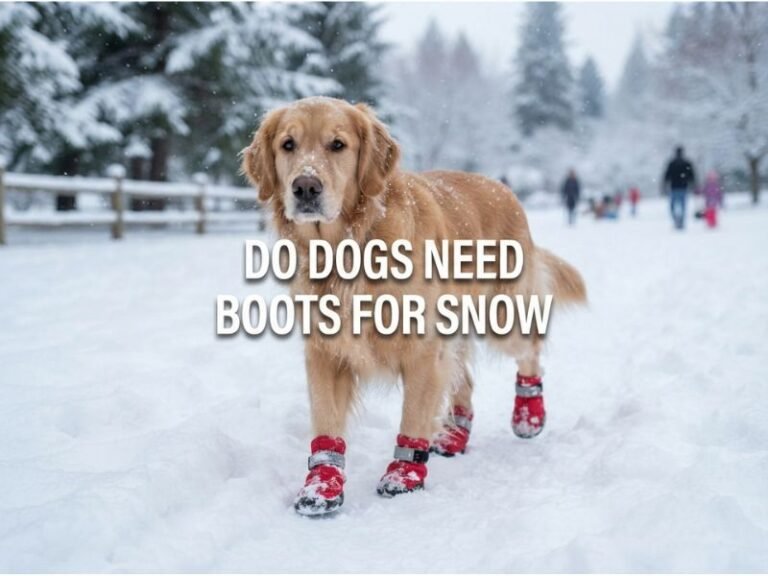
Boots can help protect paws from ice, packed snow, and salt or de-icing products used near trails and roads.
- ✦ Long hikes
A long hike can expose paws to many hours of friction and rough ground. Boots may help limit wear when they fit well.
- ✦ Known paw problems
A dog with a paw injury or sensitive feet may need extra protection. Follow your veterinarian’s advice in these cases.
When Boots May Not Be Needed
Boots are not required for every hike. A short walk on a cool, clean, soft trail may be fine without them if your dog has healthy paws and moves comfortably.
Natural paw contact also gives dogs useful traction and ground feedback. If your dog is comfortable without boots and the trail is safe, there may be no need to add them.
- ✦ Mild trail conditions
Soft dirt, grass, and cool natural ground often create less paw stress than hot, sharp, or icy surfaces.
- ✦ Short walks
A brief hike may place less wear on the paws than a long day on rough terrain.
- ✦ Comfortable paws
If your dog has healthy paws and shows no signs of soreness, boots may be optional on suitable trails.
How Dog Boots Protect Paws on the Trail
A hiking boot acts as a barrier between the paw and the trail. Depending on its design, it can help block heat, cold, sharp debris, and rough surfaces. This does not make a dog immune to paw injuries, but it can lower direct exposure to some hazards.
Boots can also help with debris. Tiny stones, burrs, ice chunks, and packed snow can get between a dog’s toes. A well-designed boot may keep much of this material away from the paw during a hike.

- ✦ Paw pad protection
A durable sole can reduce direct contact with rough, hot, or sharp surfaces.
- ✦ Barrier from debris
Boots can keep small stones, burrs, snow, and other debris from reaching the paw.
- ✦ Cold weather support
Insulated or weather-resistant boots can help protect paws during cold-weather hikes.
- ✦ Less surface contact
Boots create a physical layer between the paw and the trail, which can be helpful when the surface is harsh.
Boots Do Not Replace Trail Awareness
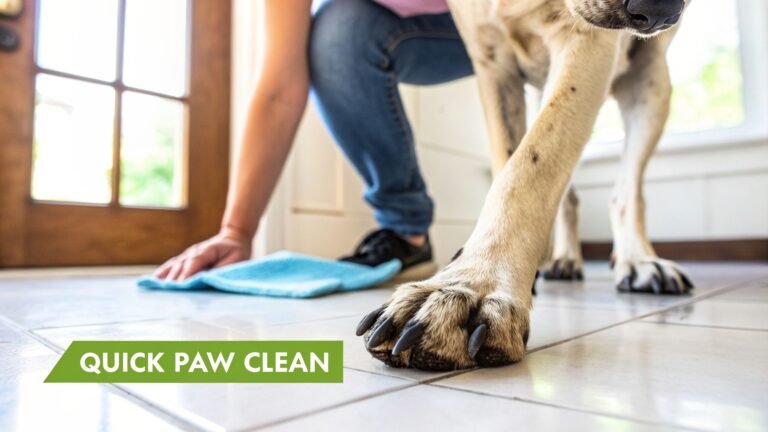
Even with boots, check your dog’s paws during a long hike. A boot can hide a problem until you remove it. Look for moisture, redness, swelling, cuts, rubbing, or trapped debris during breaks.
Boots also do not protect every part of a dog’s leg. A dog can still step into a hole, slip on a wet rock, or get scratched by brush. Good hiking habits remain important.
- ✦ Check often
Stop during long hikes and inspect each boot and paw for rubbing, debris, or damage.
- ✦ Watch the trail
Choose a safe path and avoid hazards that boots cannot prevent, such as unstable rocks and steep drops.
Should Dogs Wear Boots on Hot, Rocky, or Rough Trails?
This is one of the clearest cases where dog boots may help. Hot rock and hard ground can place heavy stress on paw pads, while rough rock can cause small abrasions. If the trail is too hot or harsh for your bare hand or foot, it deserves extra care for your dog too.
The surface matters as much as the air temperature. A mild day can still have very hot pavement or rock after hours of sun. Before a hike, check the trail surface and think about shade, distance, and how long your dog will be exposed to it.

- ✦ Hot rock
Dark rock can heat up in strong sun and may be uncomfortable or harmful to paw pads.
- ✦ Gravel
Loose gravel can create repeated pressure and friction, especially during long hikes.
- ✦ Desert trails
Dry, rocky desert terrain can expose paws to heat, sharp edges, and rough ground for long periods.
- ✦ Urban trail sections
Concrete and pavement can become hot and may add more paw stress than cool soil.
Signs That the Trail Is Too Hard on Your Dog’s Paws
Your dog’s behavior can give you useful clues. Slow movement, repeated paw lifting, stopping, licking the paws, or reluctance to walk can signal discomfort. These signs can have other causes too, so do not assume boots alone will solve the problem.
If your dog develops a cut, burn, blister, bleeding paw, or strong pain, stop the hike. Clean the paw as appropriate and seek veterinary advice when the injury is serious or does not improve.
- ✦ Repeated paw lifting
Your dog keeps raising one or more paws instead of walking normally.
- ✦ Paw licking
Frequent licking during or after a hike can point to irritation or injury.
- ✦ Sudden reluctance
A dog that suddenly refuses to continue may be telling you that something hurts.
How Should Hiking Boots Fit a Dog?
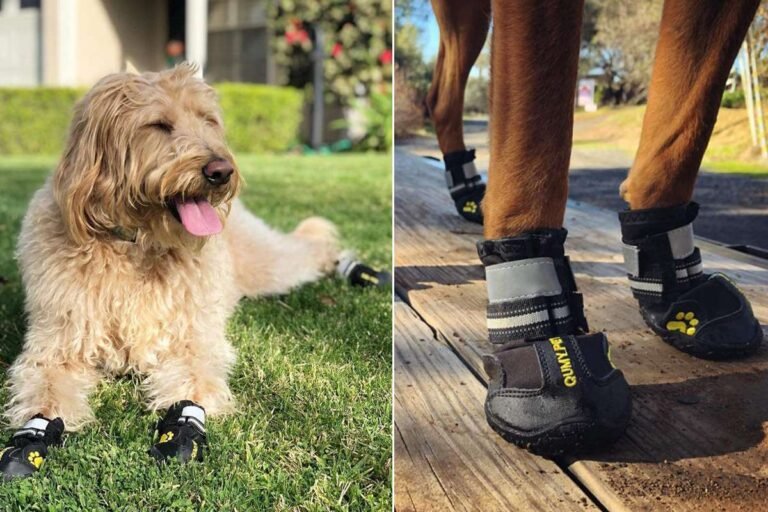
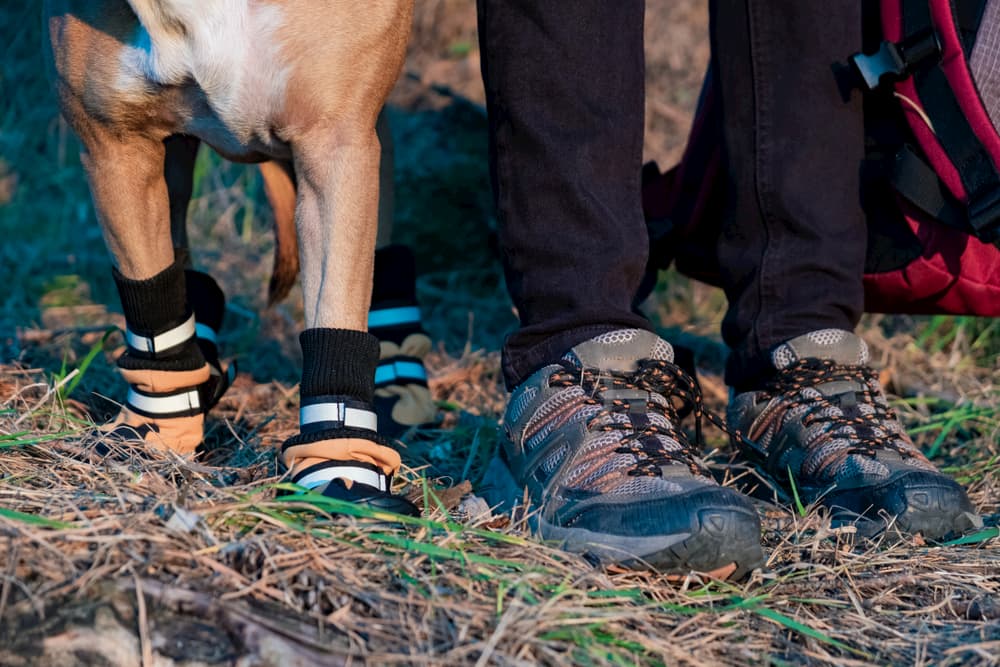
A correct fit is essential when deciding should dogs wear boots when hiking. A boot that is too loose may twist, slide, or fall off. A boot that is too tight can rub the skin, restrict normal movement, or cause pressure on the paw.
Measure your dog’s paws according to the boot maker’s instructions. Dogs often have different front and rear paw sizes, so do not assume every foot needs the same size. Always test the boots before a long hike.
- ✦ Secure but not tight
The boot should stay in place without squeezing the paw or leaving deep pressure marks.
- ✦ Room to move
Your dog should be able to flex and place the paw in a natural way.
- ✦ No rubbing
Check the toes, paw pads, ankles, and areas around the boot opening for rubbing.
- ✦ Correct size
Use the brand’s measurement guide rather than choosing a size based only on your dog’s weight.
How to Test the Fit Before Hiking
Put the boots on indoors for a few minutes. Let your dog stand and walk. Then check whether any boot twists or slides. Gradually increase wear time over several short sessions.
A good test is a short walk on a safe surface before a real hike. If your dog keeps trying to remove a boot, limps, walks oddly, or develops redness, stop and reassess the size or design.
- ✦ Start indoors
Let your dog become familiar with the feel of the boots in a calm place.
- ✦ Use short sessions
Build up wear time instead of putting new boots on for a full-day hike.
- ✦ Inspect after removal
Look at the skin and paw after each early session for signs of rubbing or pressure.
How to Get a Dog Used to Hiking Boots
Many dogs dislike boots at first because the feeling is new. That does not mean the boots are wrong. A slow introduction can help your dog learn to walk normally while wearing them.
Keep the first sessions calm and short. Praise relaxed behavior and use rewards if they work well for your dog. Never force a dog to keep wearing a boot that causes pain or clear distress.

- ✦ Let your dog sniff them
Place the boots nearby and let your dog inspect them before putting them on.
- ✦ Try one boot
Start with one boot for a brief period if your dog is comfortable with that approach.
- ✦ Add more boots slowly
Increase the number of boots only when your dog can walk calmly.
- ✦ Practice walking
Use short indoor walks and then safe outdoor walks before a real hike.
- ✦ Reward calm behavior
Praise your dog when they stand, walk, and relax normally in the boots.
Why Dogs May Walk Strangely at First
A new boot changes how the paw feels against the ground. Some dogs lift their feet high, take short steps, or appear unsure at first. This can improve as they learn the new sensation.
If the unusual gait continues, check the fit and boot design. Persistent limping or pain is not normal training behavior and deserves attention.
- ✦ New sensation
Your dog may need time to learn how the boot feels during each step.
- ✦ Poor fit
A boot that slips, rubs, or presses in the wrong place can cause an abnormal gait.
How to Choose Dog Boots for Hiking
The best hiking boot depends on the trail and your dog’s needs. A light boot may work well for short walks, while rough mountain terrain may call for a stronger sole and a secure fastening system. There is no single boot that fits every dog or every trail.
Look for a design that matches the conditions you expect. The boot should stay on during normal movement, allow a natural gait, and resist the type of wear the trail can cause.

- ✦ Durable sole
Choose a sole that can handle the surface you plan to hike on, especially if the trail has sharp rock or rough gravel.
- ✦ Secure closure
A reliable closure helps keep the boot in place while your dog walks over uneven ground.
- ✦ Good traction
A treaded sole can help provide grip on some outdoor surfaces.
- ✦ Water resistance
A water-resistant design may help during wet trails, rain, snow, or muddy conditions.
- ✦ Breathable materials
In warm weather, materials that allow some airflow may improve comfort.
- ✦ Easy cleaning
Simple-to-clean boots are useful after muddy, wet, or dusty hikes.
Do Dogs Need Boots on Every Hike?
No. The question should dogs wear boots when hiking is not a rule that applies equally to every trail. Think about the surface, weather, hike length, your dog’s paw condition, and how well the dog tolerates boots.
Some hikers carry boots rather than using them for every outing. This can be useful when conditions may change or when a trail has a mix of soft ground and rough surfaces.
- ✦ Match boots to conditions
Use them when they provide a clear benefit for the trail or your dog’s needs.
- ✦ Carry them when unsure
Boots can be useful backup gear on longer trips where weather and trail conditions may change.
- ✦ Keep paw checks part of the hike
Even with boots, inspect your dog’s paws during long outings and after the hike.
When to Ask Your Veterinarian
Talk with your veterinarian if your dog has a paw injury, repeated paw pain, skin problems, or another condition that affects walking. A vet can help you decide whether protective footwear is suitable and how to manage the underlying issue.
For a healthy dog, a vet can also help if you notice repeated soreness after hikes. The answer may involve boots, shorter hikes, different terrain, rest, or another change.
- ✦ Existing injury
Ask your veterinarian before using boots over or near an injured paw.
- ✦ Ongoing pain
Repeated pain after walks should not be treated as a simple boot problem.
- ✦ Unusual walking
Persistent limping or a major change in gait needs proper assessment.