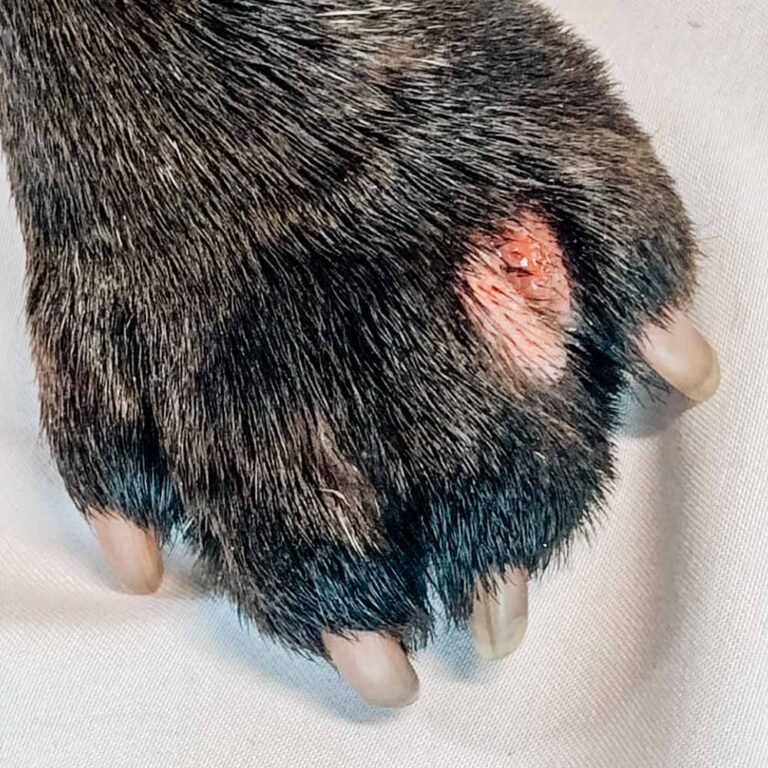
Your dog’s paws can be pink for several reasons, and pink color is not automatically a sign of illness. Puppies commonly have naturally pink paw pads, while adult dogs may develop pink or reddish fur around the paws from repeated licking and saliva staining. New or worsening pink skin can also result from allergies, irritation, infection, injury, or inflammation.
For dog owners in the United States, the most useful first step is to determine whether the pink color is normal pigmentation or a recent change. A puppy with uniformly pink pads and no discomfort may simply have normal, developing pigmentation. In contrast, an adult dog’s paws that suddenly become pink, red, swollen, itchy, or painful deserve closer attention.
The location of the color change matters. Pink paw pads can be a normal pigment pattern, whereas pink or reddish fur between the toes often results from saliva staining after frequent licking. Persistent licking can itself point to allergies, parasites, irritation, infection, a foreign object, or another source of discomfort. Veterinary examination is appropriate when discoloration is accompanied by swelling, odor, discharge, sores, limping, hair loss, or significant licking.
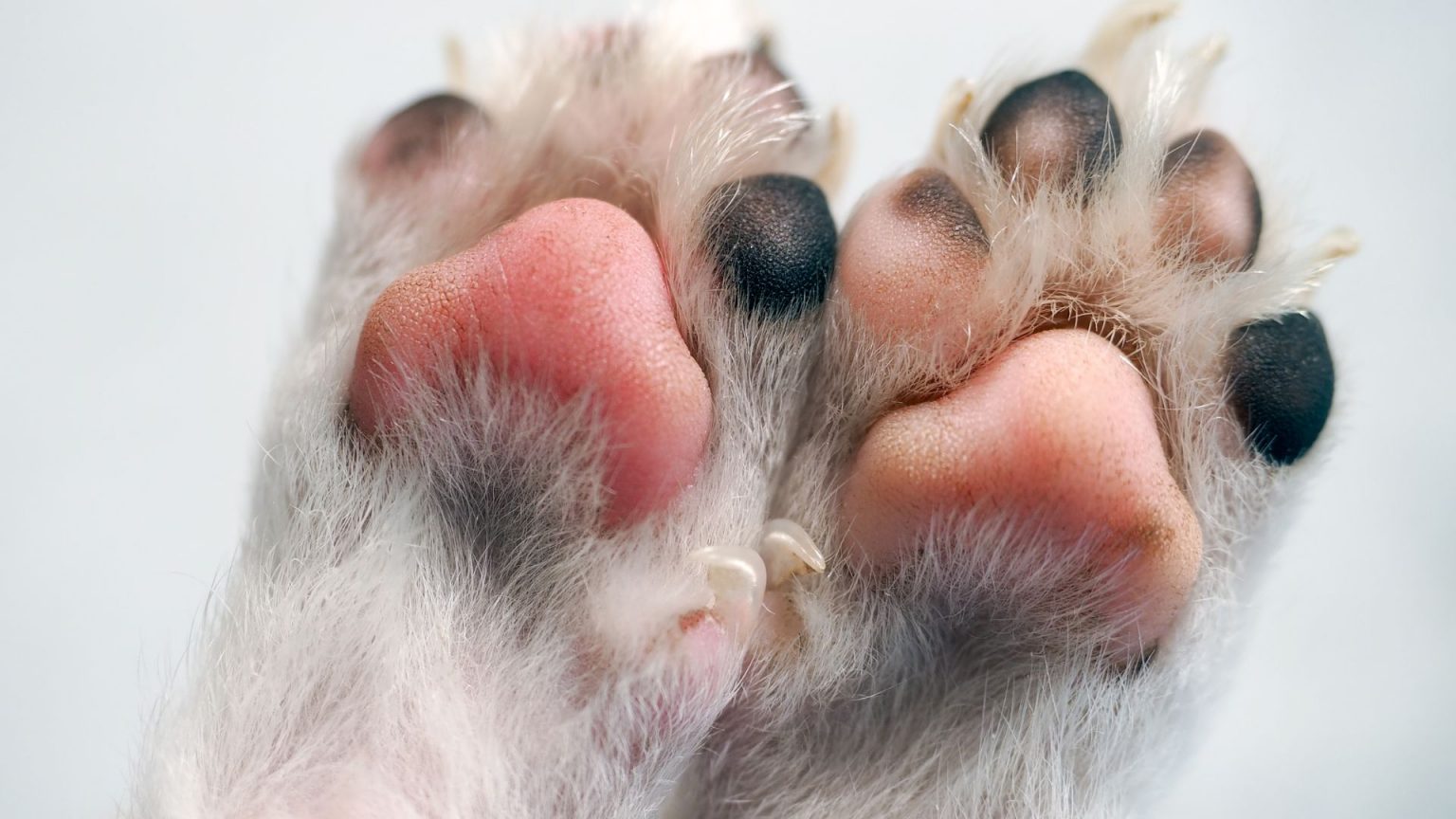
Source: petdogslife.com
What Does It Mean When a Dog’s Paws Are Pink?
Pink paws can describe either the paw pads themselves or the skin and hair surrounding the pads. These are different situations and should not be interpreted the same way. Naturally pink paw pads may simply reflect the dog’s pigmentation, while newly pink skin can indicate inflammation or irritation.
Puppies commonly have soft pink paw pads before their pads become darker and more conditioned through normal activity. Some adult dogs also naturally retain areas of lighter pigmentation. A stable color pattern without itching, pain, swelling, or other changes is generally less concerning than a sudden color change.
If the fur around the paws has become pink, red, orange, or rusty, repeated licking is a common explanation. Saliva contains porphyrins, naturally occurring compounds that can stain light-colored hair. The staining itself may be cosmetic, but the reason a dog is licking should still be considered.
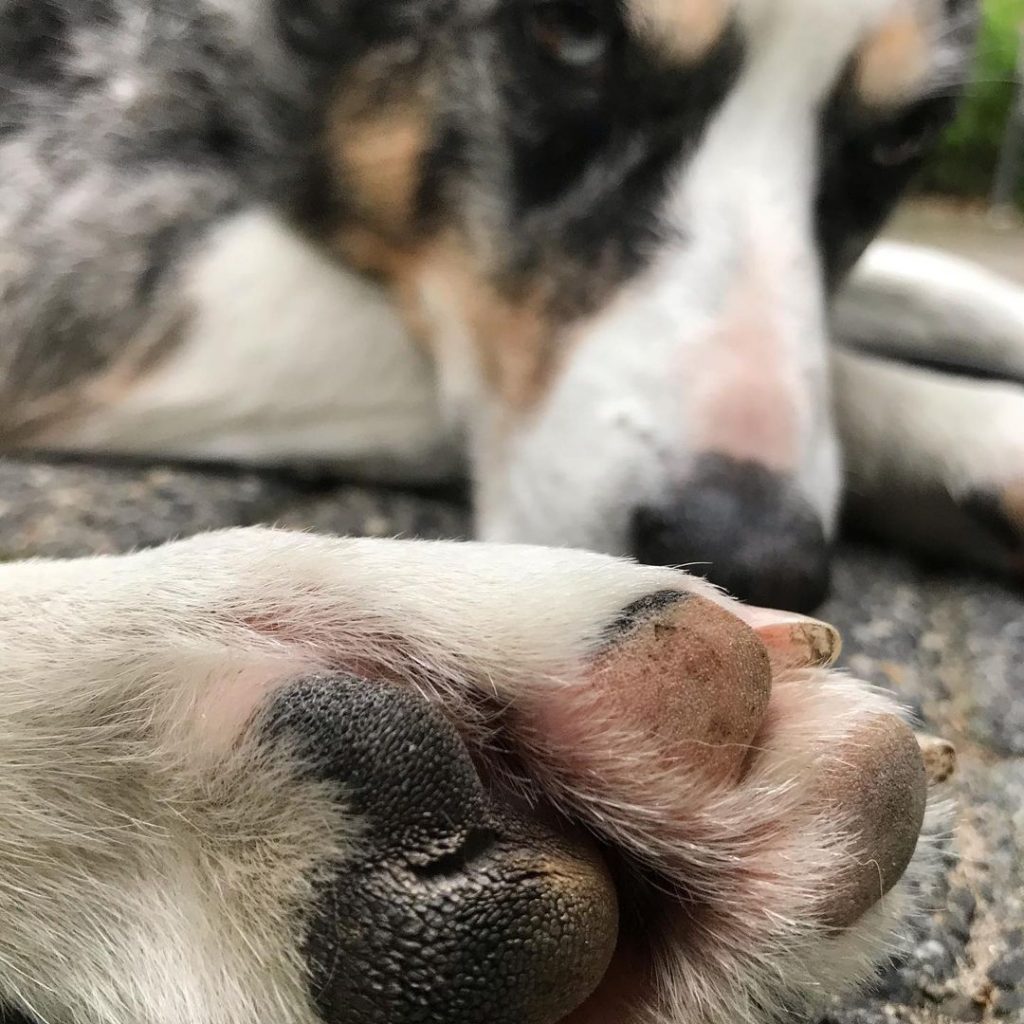
Source: oodlelife.com
Pink paw pads
May be normal pigmentation, especially in puppies or dogs with naturally light-colored pads.
Pink or rusty fur
Often reflects repeated licking and saliva staining rather than the paw tissue itself changing color.
Pink or red skin
Can indicate inflammation caused by allergies, irritation, infection, trauma, or another dermatologic problem.
Why Puppy Paw Pads Can Be Pink
Young puppies often have softer, lighter paw pads than mature dogs. As puppies grow and walk on different surfaces, their pads can become tougher and darker. A healthy puppy with pink pads that are intact, comfortable, and free from swelling or lesions may simply have normal puppy pigmentation.
A puppy should still be checked by a veterinarian if the pads become painful, swollen, cracked, ulcerated, or unusually sensitive, or if the puppy begins persistently licking or avoiding normal activity.
Usually reassuring
The color is consistent on multiple paws and there is no itching, pain, swelling, odor, discharge, or behavioral change.
Worth checking
The color changes suddenly or is accompanied by sores, swelling, excessive licking, or difficulty walking.
Common Reasons a Dog’s Paws Turn Pink
When pinkness is new or occurs with itching and licking, several causes are possible. The pattern of affected paws, associated symptoms, and recent environmental changes can help narrow the possibilities, but a visual inspection alone cannot reliably identify the cause.
Allergies are a frequent reason dogs develop itchy feet. Environmental allergens, food-related reactions, and flea-related allergies can contribute to paw irritation. Dogs with allergic skin disease may lick or chew their feet repeatedly, producing inflammation and reddish-brown staining.
Infections can also cause red or pink paws. Bacterial and yeast-related skin problems are more likely when the paw is moist, inflamed, malodorous, swollen, or producing discharge. Infection may develop as a secondary problem after allergies or another condition damages the skin barrier.
Contact irritation is another possibility. A dog’s feet can react after exposure to irritating substances, contaminated surfaces, or other environmental triggers. Trauma, excessive activity on rough surfaces, burns, splinters, or other foreign material can also cause localized paw inflammation.
Source: walkiesandwhiskers.com
Normal pigmentation
A stable pink color can be normal, particularly in puppies or dogs with naturally light pigmentation.
Repeated licking
Saliva can stain light-colored paw hair pink, red, orange, or brown over time.
Allergies
Environmental, food-related, or flea-associated allergies can make paws itchy and inflamed.
Bacterial or yeast overgrowth
Infections may cause redness, itching, odor, swelling, discharge, hair loss, or discomfort.
Contact irritation
Exposure to irritating surfaces or substances can inflame the underside of the paws.
Injury or foreign material
A splinter, puncture, burn, torn pad, or other injury can cause localized redness and licking.
Pink Paws From Excessive Licking
If the fur between your dog’s toes is turning pink or rusty, look for evidence that your dog is licking the area repeatedly. Saliva can gradually stain light-colored hair, making the discoloration appear dramatic even when the underlying skin is only mildly irritated.
The key question is why the dog is licking. Allergies, infection, parasites, a foreign object, pain, and other forms of irritation can all lead to persistent foot licking. Treating only the stained fur will not address the underlying problem.
Check the pattern
One affected paw can point toward a localized problem, while several paws may be more consistent with a broader skin or allergy problem.
Watch the behavior
Frequent licking, chewing, rubbing, or reluctance to walk suggests that the color change may have a medical cause.
How Allergies Can Make a Dog’s Paws Pink
Allergies can cause itchy, inflamed paws and are an important consideration when a dog repeatedly licks or chews the feet. Environmental allergies may involve substances such as pollens, molds, dust mites, or other allergens. Food allergies can also cause itchy paws or other skin symptoms.
Allergic paw problems often affect more than one foot and may occur alongside itching in other areas, including the ears, face, abdomen, or limbs. Seasonal patterns can provide useful information, but allergies can also persist throughout the year.
A dog with suspected allergies should not automatically be placed on a restrictive diet or given medication without veterinary guidance. Food allergy evaluation may require a structured elimination diet, while environmental allergies may require a combination of trigger management and veterinary treatment.
Source: walkiesandwhiskers.com
Seasonal pattern
Paw licking that becomes worse during particular seasons can be consistent with environmental allergy triggers.
Year-round itching
Persistent symptoms can have several causes, including environmental allergies, food allergy, parasites, or recurrent infection.
Multiple body areas
Itching involving the paws plus ears, face, abdomen, or other areas makes a broader skin problem more likely.
Could Pink Paws Mean an Infection?
Yes. Pink or red paw skin can occur with bacterial or yeast-related skin problems, especially when the paw is persistently moist, inflamed, or damaged. Infection is more concerning when discoloration is accompanied by odor, discharge, swelling, sores, crusting, hair loss, or significant discomfort.
Veterinarians may use skin cytology, scrapings, hair examinations, cultures, or other tests when needed to determine whether bacteria, yeast, parasites, or another condition is involved. Because different causes can look similar, treatment should be based on the suspected or confirmed cause rather than color alone.
Repeated licking can make an irritated paw more damaged and moist, creating conditions that can support secondary infection. This is one reason persistent paw licking deserves attention even if the original discoloration looks minor.
Source: pupvine.com
Possible infection signs
Look for odor, discharge, swelling, pustules, crusts, open sores, hair loss, or worsening redness.
Why diagnosis matters
Bacterial, yeast, allergic, parasitic, traumatic, and immune-related paw problems can require different approaches.
Avoid guessing at medication
Using leftover or inappropriate medication can delay the correct diagnosis and may worsen some skin conditions.
Pink Paws With a Bad Smell
A noticeable new odor from the paws is more concerning than color alone. Odor combined with redness, licking, discharge, or swelling can occur with microbial overgrowth or infection. A veterinarian can examine the skin and determine whether testing or targeted treatment is appropriate.
Monitor closely
A mild color change without symptoms is different from pink skin accompanied by odor, swelling, pain, or discharge.
How to Check Your Dog’s Pink Paws at Home
A gentle visual check can help you decide whether the pink color appears normal or needs veterinary attention. Examine the paws in good lighting and compare all four feet when your dog is calm. Do not force the paw into a position that causes pain.
Start by identifying exactly where the color occurs. Look at the paw pads, the skin between the toes, the tops of the feet, the nail beds, and the surrounding hair. Note whether the change is present on one paw or several paws.
Next, look for associated signs such as persistent licking, chewing, swelling, cracks, bleeding, sores, discharge, odor, hair loss, or limping. These details can be useful when speaking with a veterinarian.
If your dog has recently walked on unusually hot, rough, icy, or chemically treated surfaces, consider whether a contact injury or irritation could explain the change. A recent grooming appointment can also be relevant if the paws were clipped.
Source: animalia-life.club
Step 1: Identify the location
Determine whether the pink color is on the pads, skin, fur, between the toes, or around the nails.
Step 2: Compare the paws
Check whether one paw is affected or whether several paws show a similar change.
Step 3: Look for symptoms
Check for itching, licking, swelling, odor, discharge, cracks, sores, hair loss, or pain.
Step 4: Consider recent exposures
Think about changes in walking surfaces, grooming, outdoor exposure, cleaning products, or other environmental factors.
Step 5: Decide whether veterinary care is needed
Persistent or worsening symptoms, significant discomfort, or visible injury should be evaluated by a veterinarian.
When Should You Take Your Dog to the Vet for Pink Paws?
Contact your veterinarian when pink paws are accompanied by persistent licking, chewing, pain, swelling, odor, discharge, open sores, significant cracking, hair loss, or difficulty walking. These signs can indicate inflammation, infection, injury, or another condition that requires diagnosis.
A localized problem affecting one paw deserves particular attention if it appeared suddenly. A foreign object, puncture, burn, torn pad, or other injury may be responsible. Problems involving multiple paws can occur with allergies or other broader skin conditions, although the pattern alone cannot establish a diagnosis.
Prompt veterinary care is especially appropriate if your dog appears significantly painful, cannot walk normally, has a substantial wound, or develops rapidly worsening swelling or redness. In these situations, do not wait for the discoloration to resolve on its own.
Source: www.youtube.com
Make a veterinary appointment
Persistent licking, recurrent pink paws, itching, odor, swelling, or unexplained changes should be evaluated.
Seek prompt attention
A painful paw, significant swelling, open wound, discharge, or difficulty walking warrants timely veterinary assessment.
Do not focus only on color
The associated symptoms and changes in behavior are usually more useful for judging whether the paw problem needs medical attention.
What a Veterinarian May Check
A veterinarian may examine the paw pads, skin between the toes, nails, and surrounding hair while reviewing the dog’s environment, diet, parasite prevention, activity, and symptom history. Depending on the findings, diagnostic testing can include skin cytology, skin scrapings, hair examinations, cultures, blood or urine testing, or other tests.
The goal is to identify the cause rather than simply remove the visible pink staining. Treatment can vary substantially depending on whether the problem is allergic, infectious, traumatic, parasitic, inflammatory, or related to another disease.
History
The veterinarian may ask when the discoloration began, whether it is seasonal, and whether licking or other symptoms are present.
Physical examination
The paws and other areas of the skin may be examined for inflammation, lesions, infection, or injury.
Diagnostic testing
Testing may be used when the cause cannot be identified from the examination alone.
What Not to Do When Your Dog’s Paws Are Pink
Do not assume that pink paws automatically mean an infection or allergy. Color alone cannot establish the cause. Likewise, do not concentrate only on removing stains if your dog continues to lick or chew the feet.
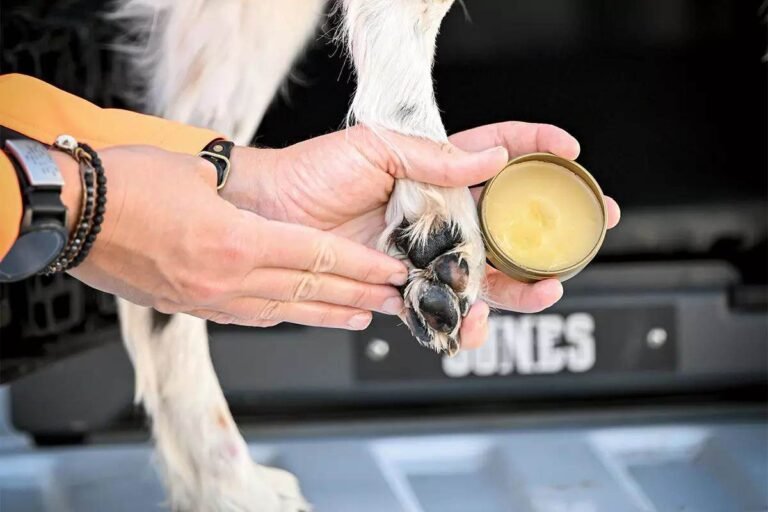
Avoid applying human skin products, essential oils, harsh disinfectants, or other substances to irritated paws unless a veterinarian has confirmed that the product is appropriate for your dog. Some substances can further irritate damaged skin or be unsafe if licked.
Do not ignore a paw that is becoming progressively more painful, swollen, damaged, or infected-looking. Early evaluation can help identify the underlying problem before repeated licking and inflammation create additional skin damage.
Source: oodlelife.com
Do not diagnose from color alone
Pinkness can be normal pigmentation, saliva staining, inflammation, injury, or several other conditions.
Do not use random treatments
Different causes require different treatments, and some products can irritate already inflamed skin.
Do not ignore persistent licking
Repeated licking is often a sign that the dog is experiencing itching, irritation, or discomfort.
Frequently Asked Questions
Q
Are pink paw pads normal in dogs?
Yes. Pink paw pads can be normal, especially in puppies and dogs with naturally light pigmentation. A stable pink color without pain, swelling, itching, or other symptoms is generally less concerning than a sudden change.
Q
Why is the fur around my dog’s paws turning pink?
Repeated licking is a common reason. Naturally occurring compounds in saliva can stain light-colored hair pink, reddish, orange, or brown. The staining may be harmless by itself, but frequent licking can indicate allergies, irritation, infection, parasites, or another source of discomfort.
Q
Why are my dog’s paws pink and itchy?
Pink, itchy paws can occur with allergies, infections, parasites, contact irritation, or other inflammatory skin conditions. Because several problems can produce similar symptoms, persistent itching should be assessed by a veterinarian rather than treated based only on appearance.
Q
Why are only one of my dog’s paws pink?
A single affected paw can suggest a localized problem such as a foreign object, minor injury, contact irritation, or another issue affecting that foot. It does not establish a diagnosis, but sudden one-sided changes are worth examining closely and discussing with a veterinarian if they persist or cause discomfort.
Q
Can allergies cause pink dog paws?
Yes. Allergic skin disease can make the feet itchy and inflamed, leading to repeated licking and pink or reddish staining of the surrounding fur. Environmental, food-related, and flea-associated allergies are among the possibilities.
✦ Wrapping Up
Conclusion
The answer to why are my dogs paws pink depends on whether the pink color is normal pigmentation, saliva staining, or a change in the paw’s skin. Puppies commonly have pink pads, and some adult dogs naturally retain lighter pigmentation. Pink or rusty fur around the paws is often associated with repeated licking.
When pink paws appear with itching, chewing, swelling, odor, discharge, sores, cracks, hair loss, or limping, the color change is more likely to be part of an underlying paw or skin problem. Allergies, infections, irritation, parasites, and injuries are among the conditions a veterinarian may consider.
The safest approach is to observe where the color occurs, compare the affected paws, look for accompanying symptoms, and consider recent environmental or activity changes. If the problem persists or your dog seems uncomfortable, veterinary evaluation can identify the cause and guide appropriate treatment.
💡 Key Takeaway
If your dog’s paws are simply and consistently pink with no discomfort, monitor them as part of normal grooming checks. If pinkness is new, worsening, or accompanied by persistent licking, itching, swelling, odor, discharge, sores, or limping, arrange a veterinary examination rather than treating the color change alone.
Learn how to protect dog paws without boots using paw balm, route planning, surface management, and seasonal care. Discover practical ways to keep your dog’s paws healthy year-round.
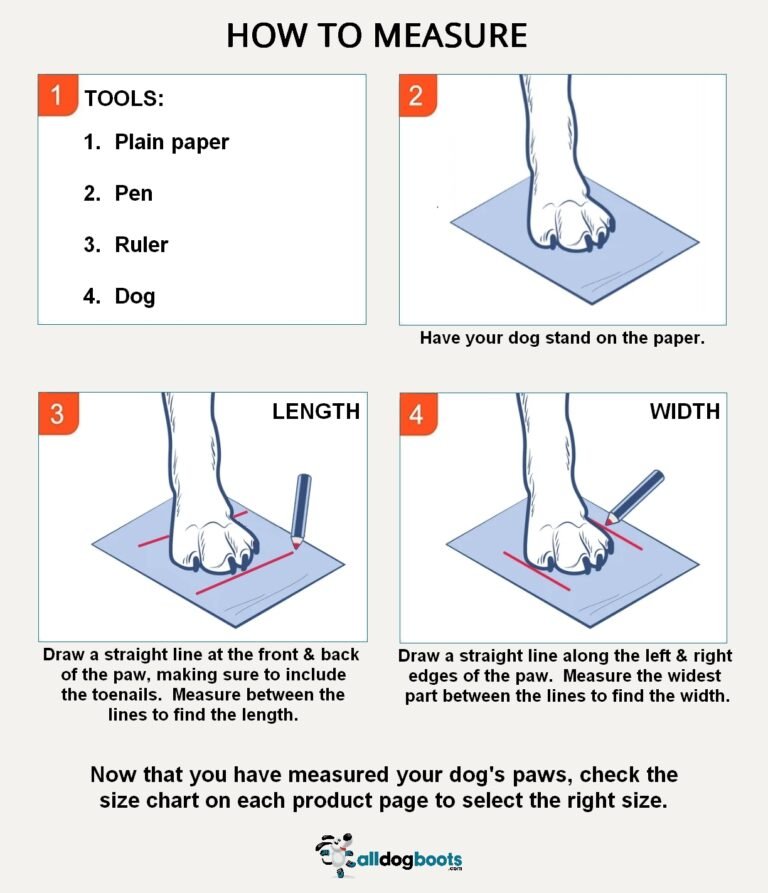
Learn how to measure dog paws for socks using width, length, and circumference measurements. Get accurate sizing, avoid common mistakes, and improve sock fit.
Learn how to safely bandage a dog paw for a broken nail, control bleeding, protect the nail bed, avoid common bandaging mistakes, and know when to see a U.S. veterinarian.
Learn how to treat an interdigital cyst on a dog paw, recognize interdigital furunculosis, provide safe home care, and know when veterinary treatment is needed.
Learn how to soak dogs paws safely with warm water or veterinarian-approved solutions, when paw soaks help, what to avoid, and when to call a veterinarian.