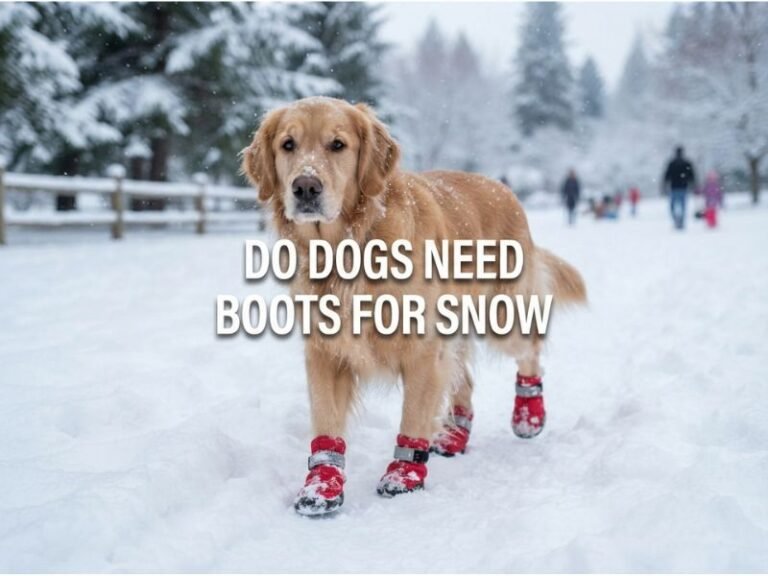
Do Dogs Need Shoes in Winter: What to Know and Why It Matters
Many dogs spend winter walks barefoot without a problem, so it is easy to assume that shoes are either unnecessary or essential for every pet. The truth depends less on the calendar and more on the surface, weather, walk length, and condition of the dog’s paws.
If you are asking, do dogs need shoes in winter, the short answer is no—not every dog needs them. However, protective footwear can be useful in freezing temperatures, deep snow, icy conditions, or areas treated with salt and chemical deicers.
I will explain when winter dog boots help, when they may cause problems, how to choose and introduce them, and what to do if your dog refuses to wear them. The goal is not to put shoes on every dog, but to make safer, more comfortable decisions for each walk.
Do dogs need shoes in winter?
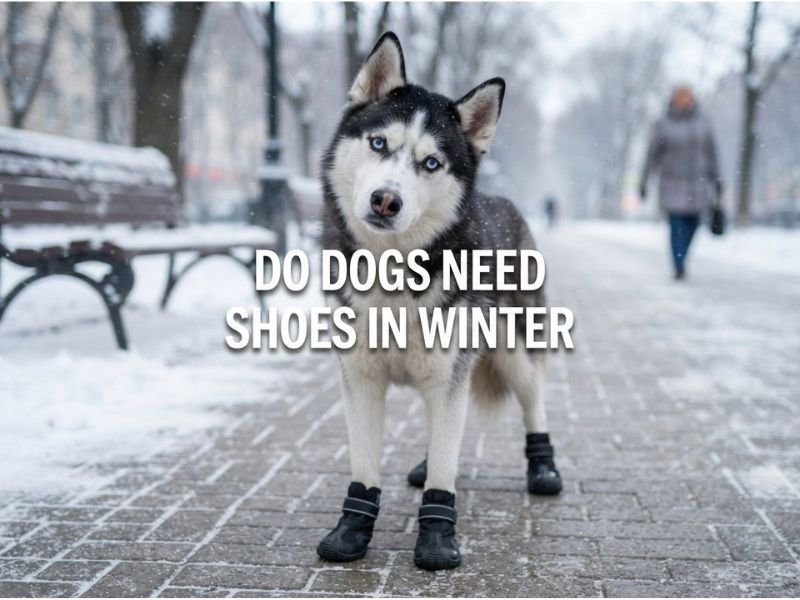
Most healthy dogs do not automatically need shoes for every winter outing. A brief walk on clean, dry pavement may be perfectly safe with bare paws, especially if the dog is comfortable and shows no signs of irritation. Dogs have paw pads that provide traction and some protection from cold surfaces.
Winter boots become more valuable when a dog’s paws face a specific hazard. Common examples include:
- Road salt and ice-melting chemicals
- Sharp ice, frozen gravel, or packed snow
- Very cold ground during longer walks
- Snow and ice clumping between the toes
- Cracked, dry, bleeding, or previously injured paw pads
- Repeated exposure to winter conditions because of hiking, work, or outdoor activity
My practical rule is simple: footwear is optional protection in mild conditions, but it can be important equipment in harsh or contaminated environments. I pay attention to the dog’s behavior and paws rather than relying only on the air temperature.
Why winter can hurt a dog’s paws
A dog’s paw pads are tough, but “tough” does not mean invulnerable. Cold, moisture, friction, chemicals, and rough surfaces can work together to cause pain. A dog may appear eager to walk while discomfort is building, so checking the paws after a winter outing matters.
Cold and frostbite risk
Freezing temperatures can reduce circulation in the paws. Prolonged contact with cold snow or ice may contribute to tissue damage, particularly in small dogs, thin-coated dogs, puppies, older dogs, and dogs with health conditions that affect circulation.
Frostbite is a medical concern, not simply a minor winter inconvenience. Pale, gray, bluish, hard, swollen, blistered, or very painful skin requires prompt veterinary attention. Do not rub a suspected frostbitten paw or apply direct heat. Move the dog to a warm area and contact a veterinarian for specific instructions.
Salt and deicing chemicals
Rock salt and other deicers can irritate paw pads. Small crystals may lodge between the toes, causing stinging and inflammation. Dogs can also ingest residue when they lick their feet after a walk. The risk depends on the product and the amount consumed, but deicing chemicals should not be treated as harmless.
Boots create a physical barrier between the paw and treated pavement. If boots are not practical, I recommend wiping or rinsing the paws after every walk and drying carefully between the toes.
Ice, frozen snow, and rough surfaces
Sharp ice edges can cut paw pads, while packed snow can form hard balls between the toes. These clumps pull on hair and skin with every step. Dogs with long hair around their feet are especially likely to collect snow and ice.
Winter boots can reduce direct contact with these surfaces, but fit matters. A loose boot can twist, rub, or become a tripping hazard. A poorly fitted boot may create a different problem instead of solving the original one.
Dryness and cracking
Cold air, indoor heat, salt, and repeated wet-dry cycles can leave paw pads dry or cracked. Small cracks may be uncomfortable; deep cracks can bleed and become vulnerable to infection. A veterinarian can help determine whether a paw problem is simple irritation or something requiring treatment.
Which dogs benefit most from winter boots?
Some dogs are more likely than others to benefit from paw protection. Breed alone does not determine the answer, but body size, coat, age, health, and activity level all matter.
- Small or short-haired dogs: They may lose body heat more quickly and may have less tolerance for icy ground.
- Puppies: Young dogs may not recognize discomfort or may need more time to adapt to cold conditions.
- Senior dogs: Older dogs may have arthritis, reduced circulation, or less ability to move away from a painful surface.
- Dogs with paw injuries: Boots can protect a healing paw outdoors when a veterinarian approves their use.
- Dogs with allergies or sensitive skin: A barrier may reduce exposure to irritating substances, although it does not replace medical treatment.
- Long-haired dogs: Hairy feet can collect snow, ice, and salt more readily.
- Working and athletic dogs: Dogs spending extended time outside may need protection even when a pet taking a short neighborhood walk does not.
- Dogs living in heavily treated areas: Frequent contact with salt or chemical deicers makes prevention more useful.
Large, thick-coated breeds may tolerate cold better, but they are not immune to paw injuries. A Siberian Husky, for example, can still cut a pad on sharp ice or develop irritation from salt. I evaluate the individual dog and route instead of assuming a breed is automatically protected.
Signs your dog may need paw protection
Behavior often provides the earliest clue that winter conditions are uncomfortable. Stop and check the paws if your dog:
- Lifts one foot repeatedly
- Stops walking or tries to turn home
- Licks or chews the paws during or after the walk
- Walks stiffly, limps, or takes shorter steps
- Shakes the feet or refuses to step on snow and ice
- Has visible redness, swelling, cracks, bleeding, or lodged ice
- Whines, cries, or reacts when a paw is touched
Some dogs simply dislike the sensation of snow or boots, so not every refusal proves injury. Still, I treat a sudden change in gait or behavior as a reason to inspect the feet rather than assuming the dog is being stubborn.
After a winter walk, look between the toes, around the nails, and across the entire pad surface. Check for salt crystals, ice balls, cuts, redness, and dampness. A dog that seems comfortable outside may show irritation once the paws warm up indoors.
Dog boots versus paw balm
Boots and paw balm serve different purposes. Boots provide a physical barrier, while balm helps condition and protect the surface of the pad. Neither option is ideal for every dog or every situation.
| Option | Best use | Limitations |
|---|---|---|
| Winter boots | Salt, chemicals, sharp ice, deep snow, and longer outings | Require careful fitting and gradual training |
| Paw balm | Dryness, minor surface protection, and short walks | Can wear off and does not fully block sharp objects or chemicals |
| Paw wiping and rinsing | Removing salt, deicer residue, and wet snow after a walk | Does not prevent injury during the outing |
| Shorter walks | Reducing exposure in severe cold or hazardous conditions | May not provide enough exercise by itself |
A pet-safe paw balm may reduce dryness, but I would not rely on it as the only defense against heavily salted pavement or sharp ice. Avoid products containing ingredients that are unsafe if licked, and follow veterinary advice if the paws are cracked, infected, or painful.
Boots also should not stay on for longer than necessary. Remove them indoors and inspect the skin for rubbing, trapped moisture, or swelling. A damp, covered paw can develop irritation even when the boot prevented contact with salt.
How to choose winter boots for a dog
The best dog boot is not necessarily the thickest or most expensive model. It should fit securely, allow natural movement, and match the conditions where the dog walks.
Measure the paws correctly
Follow the manufacturer’s measurement instructions because sizing systems vary. In general, place the dog’s paw on paper while the dog is standing, then measure the usable width and length of the paw. Standing matters because the paw spreads under the dog’s weight.
Measure more than once if the dog is between sizes. A boot that is too tight can restrict movement and rub the toes. A boot that is too loose may slip off, rotate, or collect snow.
Look for secure but comfortable closure
A fastening strap should hold the boot in place without pressing into the leg. The boot should not slide down toward the toes or sit so high that it restricts the ankle. After fastening, check that you can place a finger under the strap without forcing it.
Match the sole to the surface
A flexible, textured sole can help with traction on icy pavement. Waterproof or water-resistant materials are useful in slush and wet snow. For hiking, a more durable sole may be appropriate, but excessive stiffness can make walking awkward.
Some lightweight dog socks provide warmth and traction indoors, but they may not offer enough protection from salt, sharp ice, or wet outdoor conditions. Read the product description carefully instead of treating socks and outdoor boots as interchangeable.
Inspect the boot’s interior
Seams, edges, and fasteners should not press into the paw or rub the skin. Turn the boot inside out if possible and feel for rough areas. The interior should remain reasonably dry during use, and the material should not trap excessive heat during indoor wear.
How to teach a dog to wear boots
Many dogs walk strangely in boots at first. That reaction is normal: the dog has a new sensation on each foot and may not understand how to move naturally. Forcing the boots on and immediately starting a long walk usually makes acceptance harder.
- Let the dog investigate. Place the boots on the floor and allow sniffing. Reward calm interest with a small treat or praise.
- Touch the paws briefly. Handle each foot in a relaxed way, then reward the dog. This helps connect paw handling with positive experiences.
- Put on one boot. Leave it on for only a few seconds while the dog stands. Remove it before the dog becomes highly distressed.
- Add boots gradually. Increase the number of boots and the wearing time over several short sessions.
- Practice indoors. Encourage a few steps on a clean, nonslip surface. Keep the session easy and upbeat.
- Move outside briefly. Start with a short trip in mild conditions before attempting snow, ice, or a long walk.
Reward relaxed movement, not frantic paw shaking or chewing at the boots. If the dog remains panicked, limps, or repeatedly tries to remove them, stop and reassess the fit. Some dogs may need a slower process or may be better served by shorter outings and careful paw cleaning.
I would never leave a dog unattended in winter boots until I know the dog can wear them safely. A boot can catch on an object, come loose, or cause rubbing that the dog does not immediately communicate.
Safe winter paw care without boots
Boots are not the only way to protect a dog’s feet. A consistent routine can reduce irritation for dogs that will not tolerate footwear.
Choose safer walking surfaces
Whenever possible, use routes with less visible salt and fewer sharp ice patches. Fresh snow may be gentler than heavily treated sidewalks, but deep snow can still hide hazards. Avoid areas with liquid deicers or unknown chemical residue when an alternative route is available.
Keep walks shorter in severe conditions
Several short outings may be safer than one long walk when the ground is frozen or the wind chill is severe. Watch the dog rather than trying to meet a normal walking distance. Exercise can be supplemented indoors with training, food puzzles, scent games, and controlled play.
Trim excess hair carefully
Keeping the hair between the paw pads neat may reduce snowball formation. Do not cut into the pads, and use caution around the webbing and nails. If the dog is difficult to handle, a professional groomer can help.
Clean and dry the paws
After every winter walk, wipe or rinse the feet with lukewarm water. Separate the toes gently and dry the spaces between them. Do not use very hot water on cold paws, and do not scrub cracked skin aggressively.
A washable mat near the entrance, a towel, and a shallow paw-rinse container can make this routine easier. Cleaning also reduces the amount of salt and deicer residue a dog can lick from the feet.
Winter walking mistakes to avoid
Several common choices can increase risk even when a dog is wearing boots.
- Assuming boots guarantee safety: They do not prevent hypothermia, frostbite on uncovered body parts, or slipping on every surface.
- Using a poor fit: Loose or tight boots can cause rubbing, pressure injuries, and altered gait.
- Skipping post-walk checks: Snow, moisture, and salt can remain hidden between the toes.
- Leaving boots on indoors: Covered paws may become hot, damp, or irritated.
- Applying human products casually: Some lotions, creams, and medications may be unsafe if licked.
- Ignoring repeated licking: Persistent licking can indicate irritation, injury, allergy, or infection.
- Forcing a frightened dog: Fear can make future handling and veterinary care more difficult.
- Walking through unknown deicer: A product may be labeled pet-friendly but still irritate paws or cause illness if swallowed in quantity.
Do not pull ice out forcefully if it is attached to hair or painful skin. Warm the area gradually with lukewarm water and contact a veterinarian if the ice cannot be removed easily or the paw looks injured.
When to call a veterinarian
Contact a veterinarian if a paw is bleeding, deeply cracked, swollen, discolored, unusually cold, or painful. Veterinary advice is also appropriate if your dog is limping, refusing to walk, or repeatedly licking one foot after winter exposure.
Seek urgent care for signs that could indicate serious cold injury or systemic illness, such as extreme weakness, confusion, collapse, severe shivering that stops while the dog remains cold, pale or bluish skin, or extensive blistering. A dog that has ingested a significant amount of deicer may also need immediate guidance from a veterinarian or animal poison service.
Dogs with diabetes, circulation problems, immune conditions, chronic skin disease, or previous paw injuries may need a more individualized winter plan. I would ask the veterinarian about appropriate walking limits, protective products, and signs that warrant an examination.
Frequently asked questions
Do dogs need shoes in winter if they only take short walks?
Not always. A short walk on clean, dry pavement may not require shoes if the dog is comfortable and the paws look healthy. Shoes become more useful when the route is salted, icy, sharply textured, or cold enough to cause the dog to lift its feet or stop walking.
At what temperature do dogs need winter boots?
There is no single temperature that applies to every dog. Paw safety depends on wind, moisture, surface temperature, exposure time, the dog’s size and health, and the presence of salt or ice. Observe the dog closely and shorten the outing when conditions are severe rather than relying on one numerical cutoff.
Can dogs get frostbite on their paws?
Yes. Prolonged exposure to extreme cold can injure the paws and other exposed tissues. Frostbite may cause pale, gray, bluish, hard, swollen, blistered, or painful skin. Warm the dog gradually, avoid rubbing the area, and contact a veterinarian promptly.
Are dog boots necessary for snow?
They are not necessary for every snowy walk. Boots are especially helpful when snow is deep, packed, icy, contaminated with salt, or forming painful clumps between the toes. A short walk in soft, clean snow may be comfortable without boots if the dog shows no signs of cold or paw irritation.
What should I do if my dog refuses to wear winter boots?
Introduce one boot at a time indoors and reward calm behavior. Increase the duration gradually before going outside. Check the size and placement if the dog limps, chews at the boot, or cannot walk normally. If the dog remains highly distressed, use shorter walks, choose safer surfaces, clean the paws afterward, and ask a veterinarian or qualified trainer for help.
Can dogs wear human socks instead of winter boots?
Human socks may provide limited warmth indoors, but they generally do not offer dependable protection from wet snow, salt, chemicals, or sharp ice. They can also slip, absorb moisture, and create rubbing. Outdoor dog boots designed for the conditions are usually a better option.
Should I use paw balm instead of boots?
Paw balm may help with dryness and minor surface protection, especially on short walks. It does not fully block salt, chemical deicers, sharp ice, or deep snow. If those hazards are present, boots plus post-walk cleaning may provide more complete protection.
How long can a dog wear winter boots?
A dog should wear boots only for the time needed for the activity. Remove them indoors and inspect the paws after use. Stop if the skin becomes red, damp, swollen, or rubbed, or if the dog develops an abnormal gait. Follow the product directions and your veterinarian’s advice for dogs with paw injuries.
Conclusion
So, do dogs need shoes in winter? Not automatically. Healthy dogs may manage brief walks without them, but boots can protect against salt, deicing chemicals, sharp ice, snow clumps, and prolonged cold. I recommend judging the route, weather, and dog together, then choosing well-fitted boots, paw care, shorter walks, or a combination of these options. The safest winter routine is the one that leaves the dog comfortable, walking normally, and free of irritated paws after every outing.