How Are Dog Boots Supposed to Fit? A Complete Fit and Sizing Guide
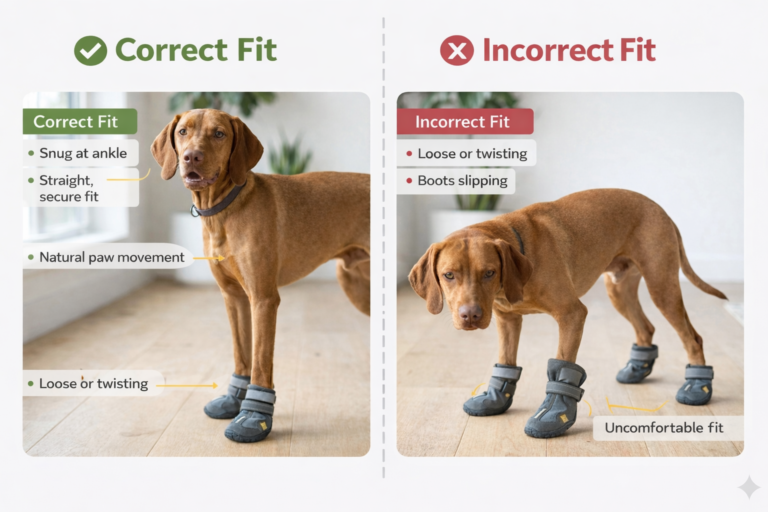
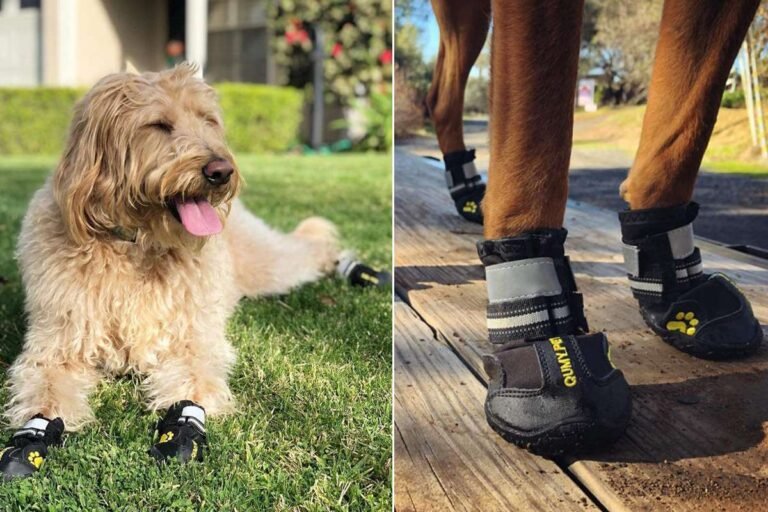
If you are wondering how are dog boots supposed to fit, think snug but not tight. A good boot should sit securely on the paw without cutting into the skin. Your dog should be able to walk, stand, and flex the toes without a struggle.
Fit matters more than looks or a size label. Dogs have very different paw shapes, and front and rear paws may not be the same size. In practice, careful measuring, a short indoor test, and a close check of the skin are the best ways to judge a new pair.

What Does a Proper Dog Boot Fit Look Like?
A properly fitted dog boot should cover the paw without forcing the toes into a cramped position. It should have enough room for natural movement, but not enough room for the paw to slide around inside. The boot should also remain in place as your dog walks.
When asking how are dog boots supposed to fit, check three things first: security, comfort, and movement. A boot that falls off is too loose. A boot that leaves deep marks or changes your dog’s gait may be too tight or poorly shaped.
- ✦ Snug fit
The boot should hold the paw firmly without creating pressure points or cutting into the skin.
- ✦ Free movement
Your dog should be able to flex the paw and move the toes without obvious restriction.
- ✦ Stable position
The boot should stay centered on the paw rather than twisting, sliding sideways, or rotating.
- ✦ Comfortable closure
Straps or fasteners should hold the boot in place without being pulled so tight that they leave strong marks.
How Much Room Should Dog Boots Have?
There should be enough internal space for the paw to sit naturally. Too much extra space lets the paw move inside the boot and can cause rubbing. Too little space can press the toes together and make walking uncomfortable.
- ✦ Avoid excess space
A loose boot can shift with every step and may come off during walks.
- ✦ Avoid compression
The boot should not squeeze the toes, paw pads, or leg.
How to Measure Your Dog’s Paws for Boots
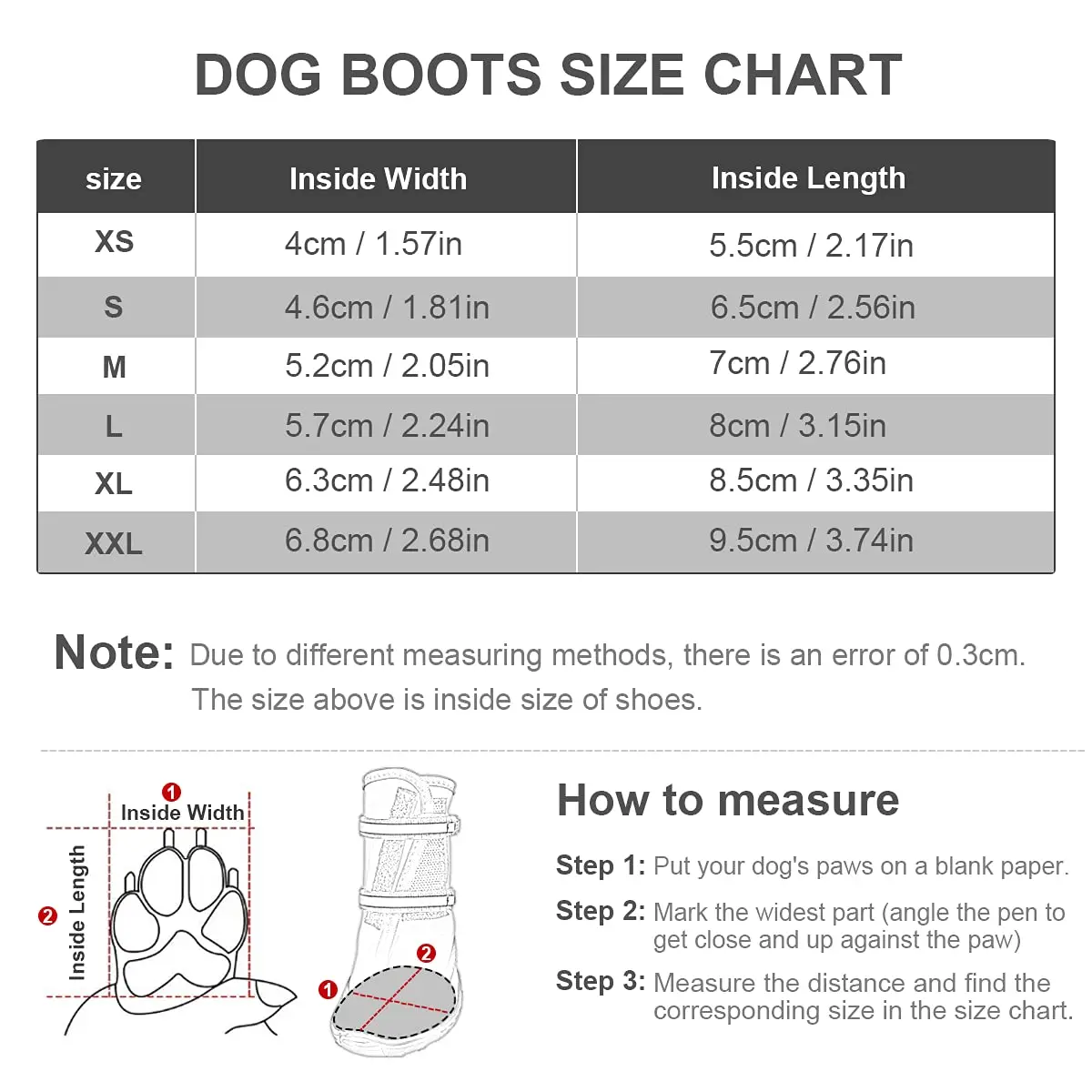
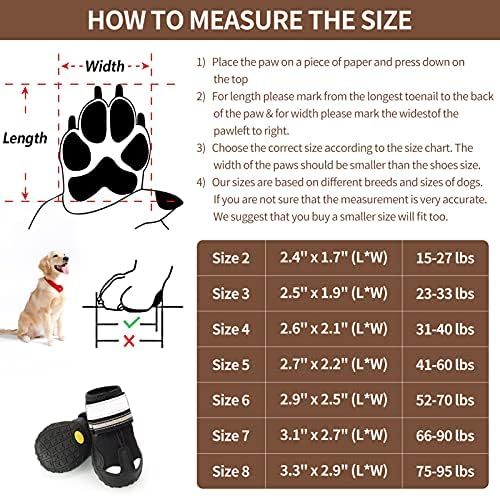
Good fit starts with the right measurements. Do not choose a size based only on your dog’s weight or breed. Paw width and length can vary widely, even among dogs of the same breed.
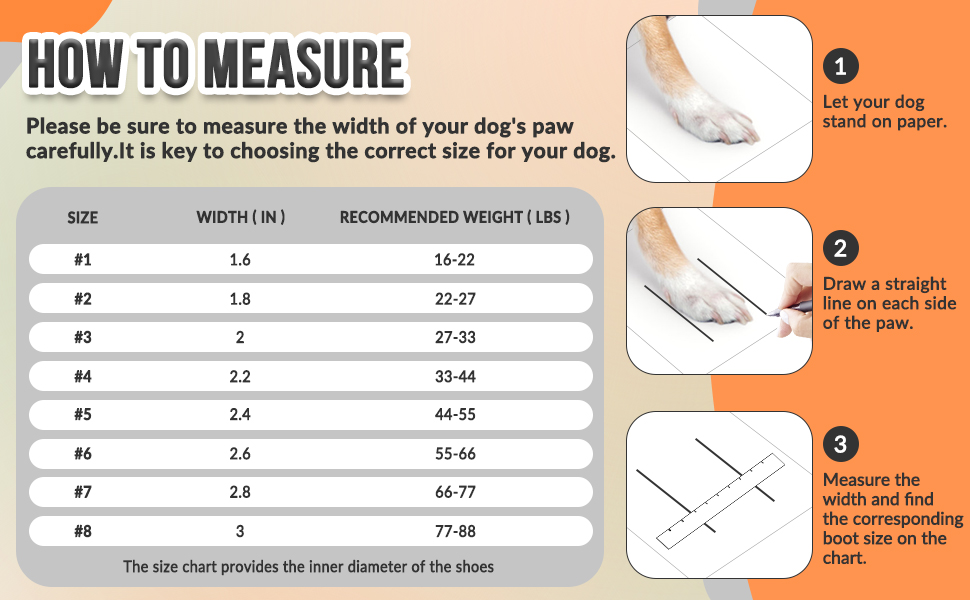
For the most useful measurement, have your dog stand with weight on the paw. Trace or measure the part of the paw that the boot will cover, then compare that measurement with the manufacturer’s size chart. If the brand gives a different measuring method, follow its instructions.
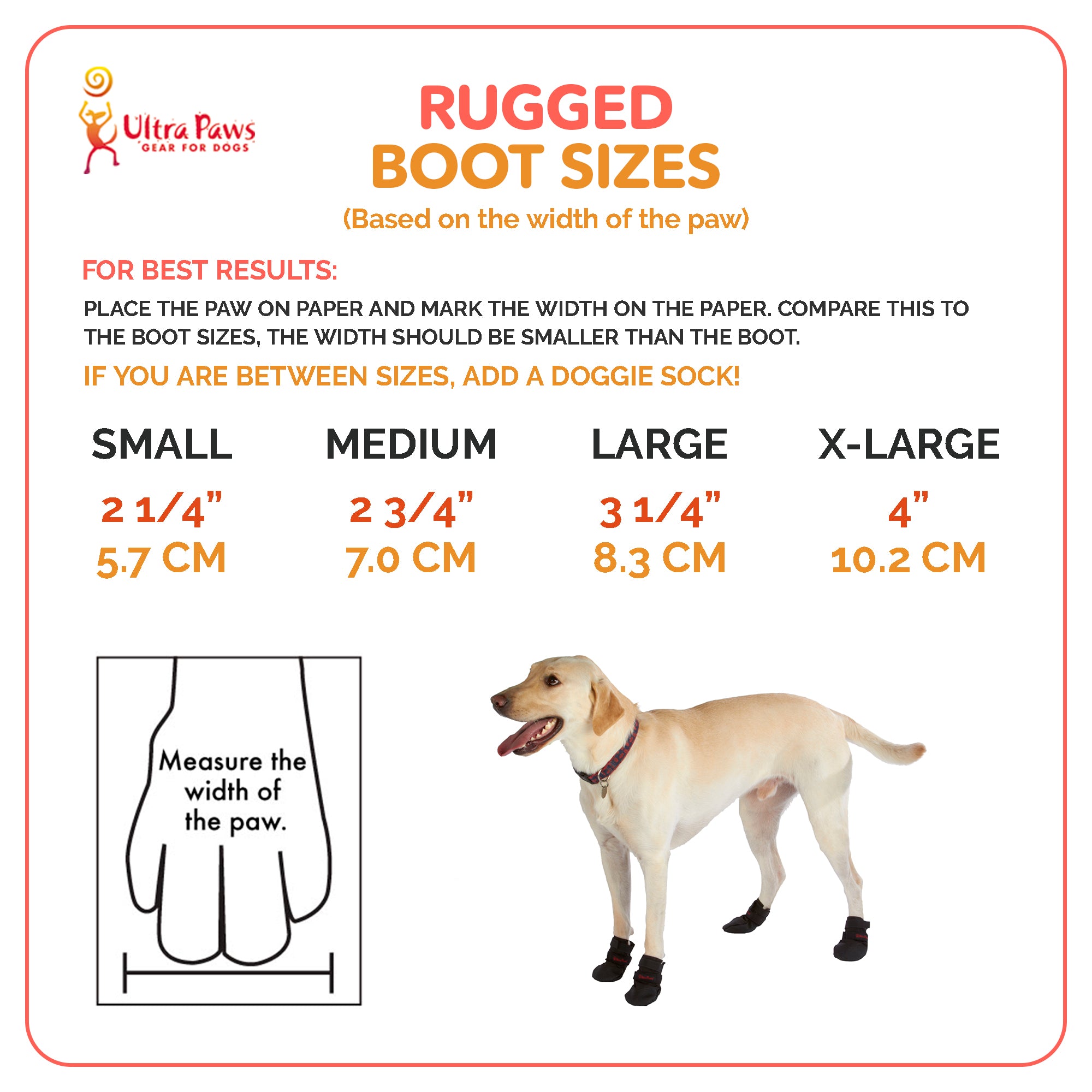
- ✦ Measure while standing
A standing dog places weight on the paw, which gives a more useful size than measuring a lifted paw.
- ✦ Measure length
Measure from the back of the paw to the end of the longest toe area used by the brand’s sizing guide.
- ✦ Measure width
Measure across the widest part of the paw when the dog is standing.
- ✦ Check all four paws
Front and rear paws can differ in size, so check whether the boot maker offers separate sizes for each pair.
- ✦ Use the brand chart
A small, medium, or large label is not universal. Always compare your measurements with the specific product chart.
Why Weight Alone Is Not Enough
Two dogs with the same weight can have very different paws. A lean dog may have narrow feet, while another dog of the same weight may have broad paws. Paw measurements give a much better starting point than weight alone.
- ✦ Paw shape matters
Long toes, wide paws, and thick fur can change how a boot fits.
- ✦ Product design matters
A flexible boot and a stiff boot may fit the same paw in very different ways.
How Tight Should Dog Boots Be?
Dog boots should be tight enough to stay on but loose enough to avoid pressure. This is the key answer to how are dog boots supposed to fit. You should be able to secure the boot without having to pull the strap as hard as possible.
A strap that is too loose may let the boot twist or fall off. A strap that is too tight may cause pressure, rubbing, or swelling. After fastening the boot, inspect the skin and watch your dog walk before using the boots outside.

- ✦ Check the strap
The closure should hold the boot in place without digging into the leg or paw.
- ✦ Look for deep marks
A strong indentation that remains after removing the boot can signal excessive pressure.
- ✦ Watch the gait
Your dog should not limp, repeatedly lift a paw, or walk in a stiff or unusual way.
- ✦ Recheck after movement
A boot may feel fine when first fitted but shift after several minutes of walking.
A Simple Tightness Test
Fasten the boot while your dog is calm and standing. Check that the paw sits fully inside the boot and that the closure holds it securely. Then let your dog walk indoors for a few minutes and check the fit again.
- ✦ Before walking
Make sure the boot is fully seated and the closure is secure.
- ✦ After walking
Check for slipping, twisting, rubbing, redness, or swelling.
How to Tell If Dog Boots Are Too Big
A boot that is too large can be just as troublesome as one that is too small. Extra space lets the paw move inside the boot. That movement can cause rubbing and may make your dog feel unsure on different surfaces.
When learning how are dog boots supposed to fit, watch for movement inside the boot. If the boot slides backward, twists, folds, or comes off during normal walking, check the size and closure.

- ✦ The boot slips
The boot moves up or down the paw during ordinary steps.
- ✦ The boot rotates
The sole turns away from the bottom of the paw while your dog walks.
- ✦ The boot falls off
A boot that repeatedly comes off may be too large, poorly shaped, or not secured correctly.
- ✦ Your dog steps on the boot
Excess length or loose material can interfere with normal foot placement.
Can a Loose Boot Cause Rubbing?
Yes. A loose boot can move back and forth with each step. That repeated movement may create friction, especially around the toes, paw edges, or upper leg.
- ✦ Check contact areas
Look at the skin after a short test walk and stop if you see irritation.
How to Tell If Dog Boots Are Too Small
A boot that is too small can squeeze the paw or restrict normal movement. It may also force the toes into an unnatural position. If your dog seems uncomfortable soon after the boots go on, remove them and reassess the size and shape.
The answer to how are dog boots supposed to fit is not simply about getting a boot to stay on. A boot that never falls off but causes pressure is still a poor fit.
- ✦ Toe pressure
The toes appear cramped or pressed together inside the boot.
- ✦ Strong skin marks
The closure leaves deep or lasting marks on the skin.
- ✦ Redness
The skin looks red or irritated after a short period of wear.
- ✦ Changed walking
Your dog limps, takes shorter steps, shakes the paw, or tries to remove the boot.
When to Stop Using the Boots
Remove the boots if you notice pain, swelling, bleeding, sores, marked redness, or persistent limping. Give the paws a chance to recover and consider a different size or design. If a paw problem continues, ask your veterinarian for advice.
- ✦ Pain or swelling
Do not keep using a boot that appears to cause pain or swelling.
- ✦ Persistent irritation
Ongoing sores or redness need attention rather than a tighter strap.
How Should Dog Boots Fit Around the Ankle?
The ankle area should be secure without being squeezed. The boot should not slide down toward the paw during walking, but the upper edge should also avoid digging into the leg.
Some boots use a strap above the paw to prevent slipping. When checking how are dog boots supposed to fit, inspect this area after movement because repeated rubbing may not be obvious during the first few steps.
- ✦ Secure but gentle
The upper closure should keep the boot in place without creating a pressure ring.
- ✦ No sharp edges
The top edge should not rub the skin with each step.
- ✦ No sliding
The boot should not migrate down the leg during normal walking.
- ✦ Check after exercise
Inspect the area after a short walk, especially when using boots for the first time.
Why Boot Height Matters
Boot height changes where the boot contacts the leg. A taller design may offer more coverage but can rub a dog with a different leg shape. Choose a design that suits both the paw and the part of the leg where the closure sits.
- ✦ Short boots
These may be easier to put on and can limit contact higher on the leg.
- ✦ Tall boots
These can offer more coverage but need careful checking around the upper closure.
How to Test Dog Boots Before Going Outside
Do not make a new pair of boots part of a long hike on the first day. Start at home on a clean, safe floor. This gives you time to see whether the boots stay on and whether your dog can walk normally.
A short test is also useful for answering how are dog boots supposed to fit on your individual dog. Dogs react differently to new footwear. Some need time to learn the new feel, while others show discomfort right away.

- ✦ Start indoors
Put the boots on for a short period while your dog walks around in a safe area.
- ✦ Watch the first steps
Look for repeated paw shaking, limping, unusual high steps, or attempts to remove the boots.
- ✦ Check the boots
See if any boot has moved, twisted, or loosened.
- ✦ Inspect the paws
Remove the boots and check the skin for redness, rubbing, or pressure marks.
- ✦ Increase time slowly
If the boots remain comfortable, gradually increase wear time before using them for longer outdoor trips.
Signs Your Dog Needs More Time to Adjust
Some dogs walk in an odd way when they first wear boots because the sensation is new. A brief adjustment period can be normal, but pain or persistent distress is not. If your dog cannot walk comfortably after repeated short sessions, reconsider the fit or boot design.
- ✦ Normal adjustment
Your dog may take a few unusual steps at first and then settle into a normal gait.
- ✦ Possible fit problem
Persistent limping, paw lifting, or repeated attempts to remove a boot suggest that something needs to change.
Common Dog Boot Fit Mistakes to Avoid
Many fit problems start before the boots are even put on. Owners may choose a size by weight, assume all four paws match, or tighten the straps to stop a loose boot from moving. Each of these shortcuts can lead to discomfort.
Knowing how are dog boots supposed to fit makes it easier to avoid these mistakes. Measure first, follow the product instructions, and judge the final fit by how the boots perform on your dog.
- ✦ Choosing by weight alone
Weight does not tell you the exact length and width of a dog’s paws.
- ✦ Ignoring brand sizing
Different brands can use different measurements and boot shapes.
- ✦ Tightening too much
A very tight strap is not a substitute for the correct boot size.
- ✦ Skipping a test walk
A boot can look correct while still slipping or rubbing during movement.
- ✦ Using worn boots
Damaged closures, worn soles, and torn material can change the fit and reduce protection.
- ✦ Leaving boots on without checks
Long wear makes regular skin and paw checks more important.
Fit Is More Important Than a Perfect Size Label
A size label is only a starting point. The real test is how the boot fits your dog’s paw and behaves during movement. If your measurements fall between sizes, use the manufacturer’s guidance and consider the boot’s shape, closure, and intended use.
- ✦ Compare measurements
Use the product’s exact sizing method instead of assuming a familiar size will fit.
- ✦ Test the result
Check both comfort and stability after the dog has walked in the boots.
Do Front and Back Dog Boots Need the Same Fit?
Not always. A dog’s front and rear paws can differ in size and shape. The front paws may also carry more weight during some activities, so a boot that fits one pair well may not fit the other pair as well.
When considering how are dog boots supposed to fit, measure all four paws if the product allows different sizes. If a manufacturer sells boots as a fixed set, use its sizing instructions and check every boot during the first fitting.
- ✦ Measure both pairs
Check front and rear paw dimensions rather than assuming they are identical.
- ✦ Check every boot
Make sure each boot sits correctly and stays secure during movement.
- ✦ Watch different legs
A dog may move differently on each leg, so observe the whole gait during testing.
When Different Sizes May Help
Some dogs have a clear size difference between front and rear paws. If a boot maker offers separate sizes, using the correct size for each pair can improve stability and comfort.
- ✦ Mixed sizing
Use different sizes only when the product and manufacturer support that setup.