What Size Shirt Does My Dog Wear? A Simple Dog Shirt Size Guide
If you are asking, “what size shirt does my dog wear?”, the answer is not as simple as small, medium, or large. Dog clothing sizes vary a lot between brands. A small shirt from one maker may fit like an extra-small or medium from another.
The most useful approach is to measure your dog first. A soft tape measure, a calm dog, and a few minutes are enough. For most shirts, chest girth and back length are the key numbers. Neck size can also matter, especially for shirts with a snug collar.
Breed can give you a rough starting point, but it should not be the final guide. Two dogs of the same breed can have very different body shapes. A lean Chihuahua, a stocky French Bulldog, and a long-backed Dachshund may all need very different shirts even if their weights are close.

How Do I Know What Size Shirt My Dog Wears?
The safest way to find out what size shirt your dog wears is to take three basic measurements. These are chest girth, back length, and neck circumference. Once you have them, compare them with the size chart for the exact shirt you want.
Do not assume that your dog’s weight tells the whole story. Weight can help, but it does not show where that weight sits on the body. A deep-chested dog and a narrow dog may weigh the same but need different shirt sizes.
When asking what size shirt does my dog wear, think in measurements rather than labels. The letters XS, S, M, L, and XL are not universal. The actual inches listed by the maker are much more useful.
- ✦ Chest girth
Measure around the widest part of your dog’s chest, usually just behind the front legs. Keep the tape snug but not tight.
- ✦ Back length
Measure from the base of the neck to the base of the tail while your dog stands in a normal position.
- ✦ Neck circumference
Measure around the lower part of the neck where the shirt collar will sit. Leave enough room for comfort.
- ✦ Weight
Use weight as a supporting detail. It can help narrow your choice, but measurements should guide the final size.
Why Dog Shirt Sizes Are Not Universal
There is no single sizing system used by every dog clothing maker in the United States. One brand may use chest girth as its main size rule, while another may focus more on back length. Some shirts also have a different cut for male and female dogs.
This is why a dog that wears a medium in one shirt may need a large in another. Always check the product’s own chart before ordering.
- ✦ Brand differences
Each maker can set its own measurement ranges for XS, S, M, L, and XL.
- ✦ Different cuts
A loose cotton tee, fitted recovery shirt, and stretchy tank can all fit the same dog in different ways.
How to Measure Your Dog for a Shirt
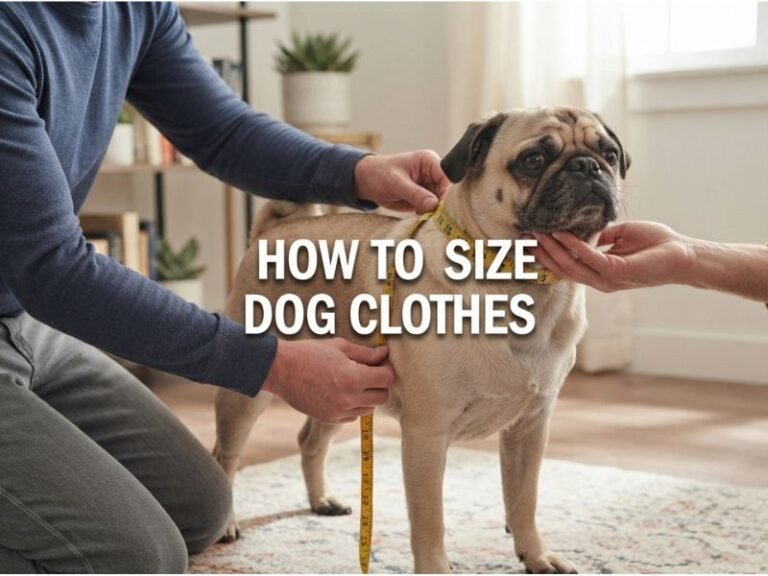
Good measurements make the answer to “what size shirt does my dog wear?” much easier. Use a soft measuring tape if you have one. If not, use a piece of string and measure the string with a ruler.
Have your dog stand on all four feet. Keep the body in a natural position. Do not pull the tape tight, because a tight measurement can lead to a shirt that restricts movement.
Write down each number in inches if you are shopping in the United States. Then keep those numbers in your phone. They can save time the next time you shop for a dog shirt, sweater, jacket, or costume.

- ✦ Step 1: Measure the chest
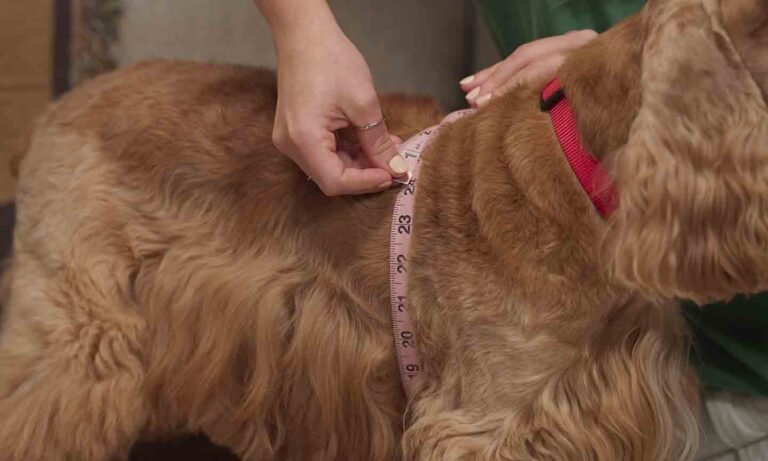
Wrap the tape around the widest part of the rib cage, just behind the front legs. Keep the tape level around the body.
- ✦ Step 2: Measure the back
Start at the base of the neck and measure along the spine to the base of the tail. Do not measure down the tail.
- ✦ Step 3: Measure the neck
Wrap the tape around the neck where the shirt opening will sit. Leave a little space so the collar does not press into the skin.
- ✦ Step 4: Record the numbers
Write down the chest, back, and neck measurements. Note them in inches for easy use with most U.S. pet clothing charts.
How Tight Should the Measuring Tape Be?
The tape should rest against the fur without squeezing the body. You should be able to place a finger between the tape and your dog’s body. Very loose measurements can make a shirt seem smaller than it really needs to be.
Thick coats can also affect the result. Do not flatten the coat hard to get a smaller number. Measure the dog as the shirt will actually fit over the body.
- ✦ Use gentle tension
Keep the tape snug enough to stay in place, but never pull it tight.
- ✦ Measure twice
Take each measurement twice if possible. If the numbers differ, take a third measurement and use the consistent result.
Dog Shirt Size Chart: What Do XS, S, M, L, and XL Mean?
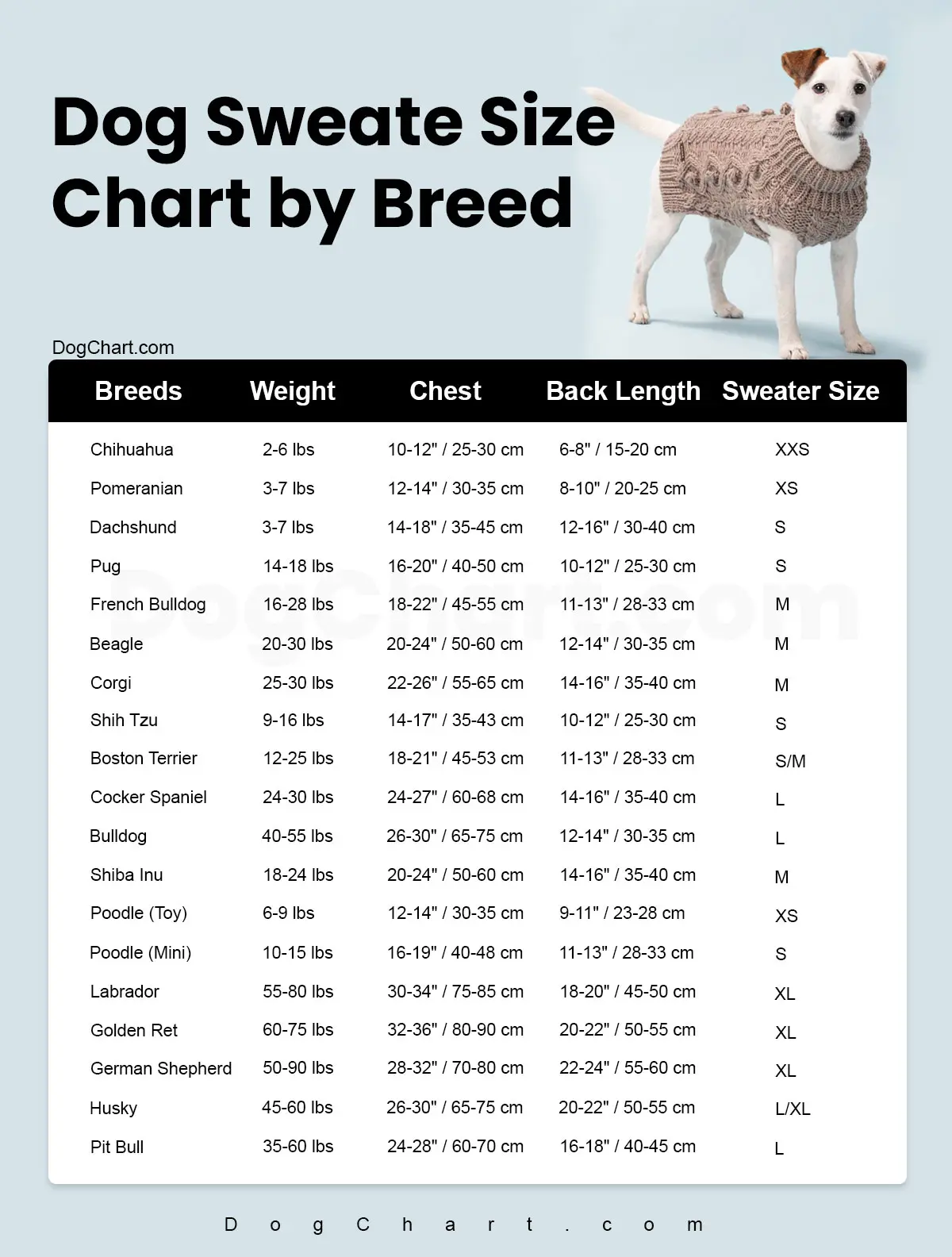
A general dog shirt size chart can help you understand the labels, but it should not replace the manufacturer’s chart. The ranges below are only rough examples. Actual sizes can differ by brand, shirt style, and dog shape.
Small dogs often fall into XS or S sizes, while medium dogs may wear S, M, or L. Large and giant dogs may need XL or larger. But there is no reliable rule that says a certain breed always wears one letter size.
If you are searching for what size shirt does my dog wear because you want to order online, look at the measurements first. A chart that lists chest and back length is far more useful than one that only lists breed names.
- ✦ Extra-small (XS)
Often used for very small dogs and puppies, but the exact chest and back ranges vary widely by brand.
- ✦ Small (S)
Often fits smaller dogs, but body shape can make some dogs need XS or M instead.
- ✦ Medium (M)
Common for many small-to-medium dogs, but the label has no fixed measurement across all brands.
- ✦ Large (L)
Often used for medium-to-large dogs, especially those with wider chests or longer backs.
- ✦ Extra-large (XL)
Often used for large dogs, but larger breeds may need specialized sizing beyond standard XL.
Why a Breed-Based Size Chart Can Mislead You
Breed charts can be useful as a quick starting point. They cannot account for every dog’s body shape. Age, sex, muscle, weight, coat, and body structure can all change the fit.
For example, a long-backed Dachshund may need a shirt with extra back length. A French Bulldog may need more room across the chest. A slim Greyhound may need a different cut again.
- ✦ Use breed as a guide
Breed can help you find a likely size range, but it should not replace actual measurements.
- ✦ Prioritize body measurements
Chest and back measurements usually tell you more about shirt fit than breed alone.
What Size Shirt Does My Dog Wear by Breed?
Breed can offer a rough starting point when you do not yet have measurements. Still, dogs within the same breed can vary enough that you should confirm the fit with a tape measure.
Toy and small breeds often use XS or S shirts. Medium breeds may use S through L. Large breeds may need L, XL, or breed-specific designs. These are broad patterns, not fixed rules.
If your dog is still growing, measure often. A puppy can outgrow a shirt in a short time. A shirt that fits today may be too tight after a growth spurt.

- ✦ Chihuahua
Often needs XS or S, depending on chest size and body length. A very small Chihuahua may need a specialized toy-dog size.
- ✦ Yorkshire Terrier
Often falls in XS or S. Compare chest and back measurements because Yorkies can have different body lengths.
- ✦ Shih Tzu
Often falls around S or M, but coat volume and chest size can change the fit.
- ✦ French Bulldog
May need a larger chest size than its weight suggests. Look for shirts designed for broad-chested dogs.
- ✦ Dachshund
Often needs extra back length. A shirt that fits the chest may still be too short along the body.
- ✦ Beagle
May fall around M or L, but chest girth should guide the final choice.
- ✦ Labrador Retriever
Often needs a large or extra-large shirt, depending on the dog’s build and the brand.
- ✦ Golden Retriever
Often needs L or XL clothing. Chest girth and back length are important for a comfortable fit.
Mixed-Breed Dogs Need Measurements Too
Mixed-breed dogs can have body shapes that do not match a standard breed chart. A mix may have a wide chest, long back, short legs, or a deep rib cage.
For mixed breeds, skip the guesswork. Measure the dog and use the measurements from the shirt maker. This is the most reliable way to answer what size shirt does my dog wear.
- ✦ Look at body shape
Notice whether your dog has a deep chest, long back, broad shoulders, or a narrow waist.
- ✦ Check the largest key measurement
When a dog falls between sizes, make sure the shirt can comfortably fit the largest important body area.
How to Choose Between Two Dog Shirt Sizes
Sometimes your dog’s measurements land between two sizes. This is one of the most common shopping problems. The right choice depends on the shirt design and which measurement is causing the size conflict.
For a stretchy shirt, a smaller size may work if the chest and neck remain comfortable. For a woven shirt with little stretch, the larger size is often more practical when the smaller option would feel tight.
Always check the maker’s fit instructions. Some brands tell customers to size up, while others build extra room into their measurements.

- ✦ Chest is too tight
Choose a size with enough chest room. A tight chest can limit movement and make the shirt uncomfortable.
- ✦ Back is too short
Consider the larger size or a long-body design. This matters most for long-backed breeds.
- ✦ Neck is too tight
Do not force a smaller size. Choose a design with a wider neck opening or a larger size.
- ✦ Shirt is slightly loose
A little extra room can be fine if the shirt stays in place and does not drag, twist, or catch on objects.
Signs the Shirt Fits Correctly
A well-fitting dog shirt should let your dog walk, sit, lie down, and turn without trouble. Your dog should not need to fight the fabric to move.
The shirt should stay in place without pressing hard into the neck, chest, armpits, or belly. Check these areas after your dog has walked around for a few minutes.
- ✦ Free movement
Your dog can walk, run, sit, and lie down without the shirt pulling or limiting motion.
- ✦ No rubbing
The fabric does not rub the armpits, neck, belly, or other sensitive areas.
- ✦ Secure fit
The shirt stays in place but does not squeeze the body.
Common Dog Shirt Sizing Mistakes to Avoid
Many poor fits come from one simple mistake: choosing a size from a label instead of checking measurements. This is easy to do when shopping online, especially when the product photo makes the shirt look roomy.
Another common mistake is measuring only the dog’s neck or weight. A shirt must fit the chest and body as well. Taking all key measurements gives you a much better picture.
It also helps to check the shirt after your dog wears it. A shirt can look fine while your dog is standing but become tight when the dog sits or moves.

- ✦ Relying only on weight
Weight does not show your dog’s exact body shape. Use weight only as a secondary guide.
- ✦ Using one brand’s chart for another brand
Sizing systems differ. Always use the chart for the shirt you are buying.
- ✦ Ignoring back length
A shirt can fit around the chest but still be too short for a long-bodied dog.
- ✦ Pulling the tape too tight
A tight measurement can lead to clothing that restricts your dog.
- ✦ Forgetting about coat thickness
A thick coat can change how a shirt fits. Consider the actual space needed around the body.
- ✦ Keeping a shirt that rubs
Remove clothing that causes rubbing, pinching, chafing, or repeated attempts to scratch or remove it.
Why Comfort Matters More Than the Letter on the Tag
The goal is not to make your dog fit a certain size label. The goal is to find clothing that fits the dog’s body. A size M that fits well is better than a size S simply because the label sounds smaller.
A comfortable shirt should not interfere with normal movement, breathing, bathroom needs, or rest. Check your dog often when introducing new clothing.
- ✦ Watch your dog’s behavior
Repeated scratching, chewing, freezing, or trying to remove the shirt can signal that the fit or fabric is not comfortable.
- ✦ Check high-friction areas
Look at the neck, armpits, chest, belly, and leg openings for signs of rubbing.
Does Dog Shirt Size Depend on the Type of Shirt?
Yes. The same dog may need different sizes or cuts for different types of clothing. A loose cotton T-shirt has different fit needs than a fitted recovery shirt, winter layer, or rain shell.
Stretch also changes the fit. Soft knit fabric may give more room than a stiff woven material. A shirt with sleeves can also need more careful fitting around the shoulders and legs.
Before buying, look at the product description. Check whether the fabric stretches, whether the shirt has a relaxed or fitted cut, and whether the maker gives special instructions for choosing a size.

- ✦ T-shirts
Soft and stretchy tees often allow a little more flexibility, but chest and back measurements still matter.
- ✦ Button shirts
Woven shirts may have less stretch, so enough chest and neck room is important.
- ✦ Sweaters
Sweaters should fit over the chest without restricting movement or pressing into the neck.
- ✦ Jackets
Jackets need enough room for movement and, in some cases, another layer underneath.
- ✦ Recovery shirts
These should follow the maker’s sizing instructions closely because the fit may be more specific than a normal shirt.
How Much Room Should a Dog Shirt Have?
There is no single amount of extra room that works for every shirt. The fabric, cut, and purpose all matter. A casual shirt can have a relaxed fit, while a recovery garment may need a closer fit.
The shirt should not hang so loosely that your dog can step into it or become tangled. At the same time, it should not press into the body or restrict normal movement.
- ✦ For everyday shirts
Aim for a comfortable fit that allows normal movement without excess fabric.
- ✦ For fitted garments
Follow the manufacturer’s instructions and check the chest, neck, and movement carefully.
A Simple Dog Shirt Shopping Checklist
Once you know your dog’s measurements, buying clothes becomes much easier. Keep the numbers saved so you do not need to measure your dog every time you shop.
Online shopping can make sizing harder because you cannot test the shirt first. Read the size chart, product notes, return policy, and customer fit comments when available.
If your dog is between sizes, focus on the measurement that matters most for the garment. For most shirts, that means checking the chest first, then back length and neck fit.
- ✦ Measure first
Have current chest, back, and neck measurements before choosing a size.
- ✦ Use inches
Most U.S. pet clothing charts use inches, so record measurements in the same unit.
- ✦ Read the exact chart
Use the chart supplied for the specific shirt, not a generic chart from another store.
- ✦ Check the fabric
Stretchy and non-stretch fabrics can fit very differently.
- ✦ Review returns
When buying online, check whether the seller allows size exchanges or returns.
- ✦ Inspect the fit
After the shirt arrives, check movement and look for rubbing or tight areas before longer wear.
When Should You Measure Your Dog Again?
Measure again if your dog gains or loses weight, grows, changes body condition, or develops a thicker coat. Puppies need more frequent checks because their bodies can change quickly.
It is also smart to recheck measurements before buying expensive clothing. A current measurement is more useful than one you took many months ago.
- ✦ Growing puppies
Recheck measurements often as your puppy grows.
- ✦ Adult dogs
Recheck when body weight or shape changes or before buying a new type of clothing.