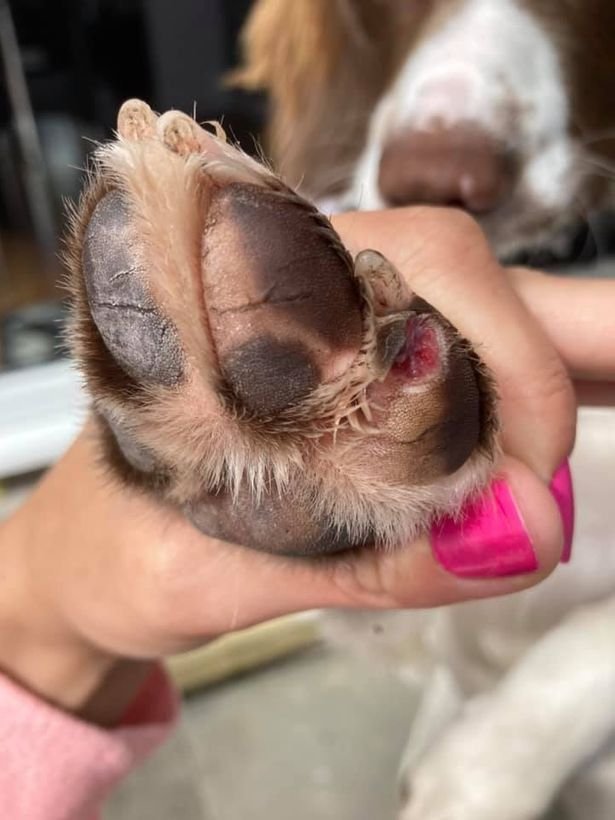
An interdigital cyst on a dog paw should not usually be treated by squeezing or lancing it at home. Many lesions called interdigital cysts are actually interdigital furuncles, a form of deep inflammation and infection that may require veterinary examination, topical treatment, pain control, and sometimes culture-guided prescription medication.
For dog owners in the United States, a painful lump between the toes is a reason to arrange a veterinary evaluation, particularly if the paw is swollen, draining, bleeding, or causing limping. Veterinary dermatology references note that interdigital furuncles are often not true cysts at all. They commonly involve ruptured hair follicles, inflammation, and secondary bacterial infection, while true interdigital follicular cysts are a different diagnosis that may require biopsy to confirm.
Treatment depends on the underlying cause. A veterinarian may recommend gentle paw hygiene and topical antimicrobial therapy for localized disease, while dogs with multiple, painful, recurrent, or deep lesions may need additional diagnostics and prescription treatment. Finding the trigger, such as allergies, abnormal paw conformation, foreign material, parasites, or repeated trauma, is especially important when the problem keeps returning.
Source: dogsnaturallymagazine.com
What Is an Interdigital Cyst on a Dog Paw?
An interdigital cyst is a lump or lesion that develops in the skin between a dog’s toes. However, the term is often used loosely. Merck Veterinary Manual explains that many lesions described as interdigital cysts are actually interdigital furuncles, which are painful areas of deep pyoderma involving ruptured hair follicles and inflammatory tissue.
True interdigital follicular cysts and comedones can also occur. These lesions may cause thickened skin, hair loss, clogged follicles, draining tracts, and lameness. A biopsy may be needed to distinguish a true cyst or comedonal disorder from interdigital furunculosis and other conditions.
The distinction matters because the treatment is not identical. A simple superficial irritation may improve with appropriate topical care, while deep or recurrent disease may require veterinary diagnostics and longer-term management.
Source: c8.alamy.com
Interdigital furuncle
A painful, inflamed lesion associated with ruptured hair follicles and often complicated by bacterial infection.
True follicular cyst
A cystic lesion associated with a hair follicle that may require biopsy for definitive diagnosis.
Foreign-body lesion
A localized reaction caused by material such as a grass awn or splinter becoming embedded in the paw.
Underlying skin disease
Allergic skin disease, parasites, or other dermatologic problems can promote licking, inflammation, and recurrent interdigital lesions.
What Does an Interdigital Cyst Look Like?
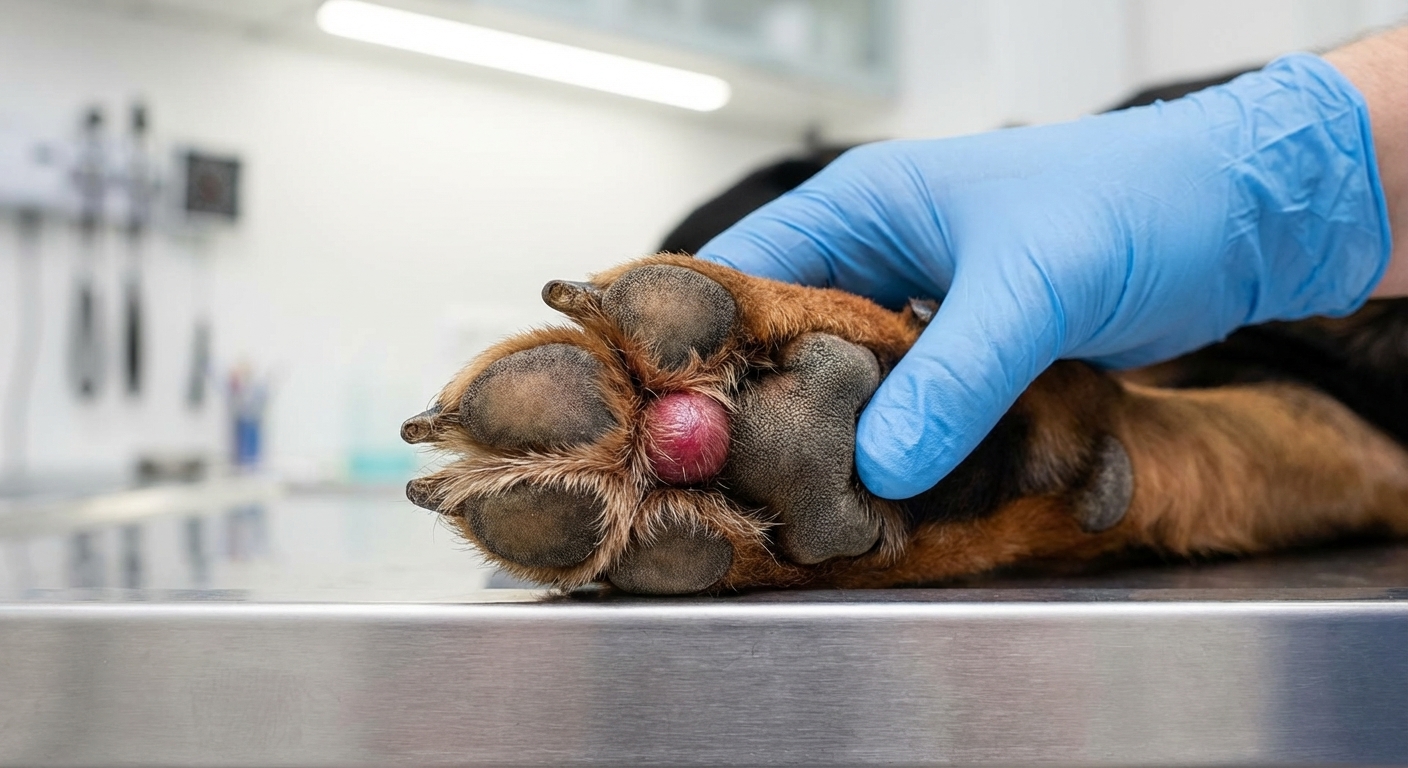
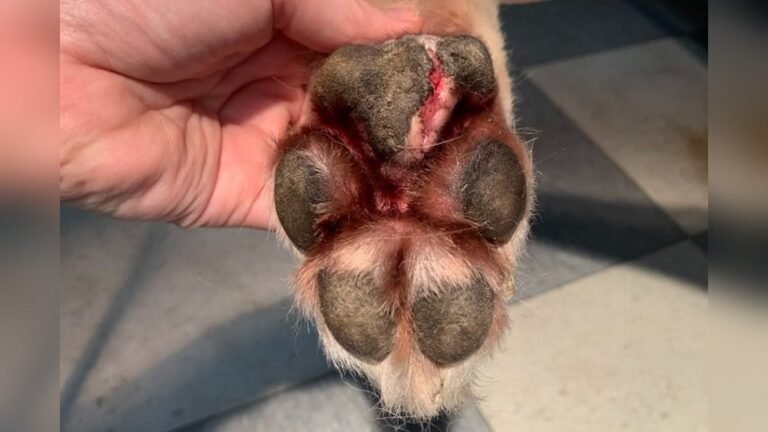
An affected dog may have a red, swollen, shiny, or purple-red lump between the toes. The area can be painful, and some dogs lick or chew the paw repeatedly or develop a noticeable limp. A lesion may drain bloody or cloudy fluid if it ruptures.
Multiple lesions, thickened skin, hair loss, recurring drainage, or lesions affecting several paws suggest that a veterinarian should investigate an underlying cause rather than treating the visible lump alone.
Common signs
Redness, swelling, a raised nodule, licking, chewing, tenderness, drainage, and limping.
Signs of recurrence
New nodules appearing on different toes or paws, repeated drainage, thickened skin, or symptoms returning after treatment.
What Causes Interdigital Cysts and Furuncles in Dogs?
The most common mechanism behind interdigital furunculosis is trauma and inflammation involving hair follicles, followed by bacterial infection. Short hairs in the webbing between the toes can be pushed backward into follicles as a dog walks. The resulting inflammatory reaction can rupture the follicle and create a painful lesion.
Conformation can also influence risk. Dogs with prominent interdigital webbing, wider paws, or altered weight bearing may experience greater pressure and friction between the toes. Excess body weight or lameness elsewhere can further change how pressure is distributed across the paw.
Recurrent cases deserve additional attention because an infection may be only part of the problem. Allergic skin disease, Demodex mites, chronic licking, foreign bodies, rough surfaces, and other dermatologic or systemic conditions can contribute to repeated lesions.
Source: kingsdale.com
Allergic skin disease
Environmental or food-related allergies can cause itching and licking, which damages the skin and can promote interdigital inflammation.
Foreign material
Grass awns, splinters, burrs, or other material can become embedded and trigger a persistent localized reaction.
Paw conformation
Certain paw shapes and prominent webbing can increase friction, pressure, moisture, and follicular trauma.
Parasites
Demodicosis can contribute to interdigital furunculosis and may need separate veterinary treatment.
Environmental trauma
Repeated contact with rough, abrasive, wire, or concrete surfaces can contribute to paw trauma and recurrence.
Why Do Interdigital Cysts Keep Coming Back?
Recurrence commonly means that the underlying trigger has not been fully addressed. Possible contributors include persistent allergies, continued licking, an embedded hair or foreign body, resistant bacteria, anatomic pressure, parasites, or an incorrect initial diagnosis.
Repeated lesions should therefore be evaluated rather than repeatedly drained or treated with leftover medication. Veterinary testing can help determine whether infection is present and whether the dog needs treatment for an underlying skin disorder.
Repeated infection
The bacterial organism may not be susceptible to an empirically selected antimicrobial.
Unresolved inflammation
Ongoing allergies or self-trauma can continue damaging the interdigital skin.
Persistent foreign body
An embedded plant material or other object can maintain inflammation until it is identified and removed.
How to Treat an Interdigital Cyst on a Dog Paw
The safest treatment approach is to have a veterinarian determine whether the lesion is an interdigital furuncle, true cyst, foreign-body reaction, or another paw disorder. Home care can support healing, but owners should not attempt to cut, puncture, squeeze, or surgically drain a painful interdigital lump.
For a localized lesion, a veterinarian may recommend daily paw cleaning or antimicrobial bathing and a suitable topical antimicrobial product. Merck Veterinary Manual describes chlorhexidine-based antimicrobial hygiene as an important component of management. The exact product, concentration, frequency, and duration should follow veterinary instructions because the appropriate treatment depends on the dog’s lesion and diagnosis.
When lesions are multiple, deep, painful, or associated with significant infection, prescription systemic treatment may be required. Culture and antimicrobial susceptibility testing can help guide antibiotic selection, especially in recurrent disease or when resistant bacteria are suspected. Treatment for deep lesions can take several weeks, so stopping medication early simply because the paw looks better can contribute to relapse.
If a foreign body is suspected, the veterinarian may need to explore the lesion and remove the material. Persistent or unusual lesions may require biopsy to rule out a follicular cyst, neoplasia, or another condition. Some chronic follicular cyst disorders can be treated with procedures such as laser ablation, but these decisions belong with the treating veterinarian.
Source: smartlasertherapy.com
Step 1: Arrange an examination
Have a veterinarian assess a painful, swollen, draining, recurrent, or persistent lesion rather than assuming every interdigital lump is a simple cyst.
Step 2: Prevent further licking
Use a veterinarian-approved method to prevent licking and chewing because continued self-trauma can delay healing.
Step 3: Keep the paw clean
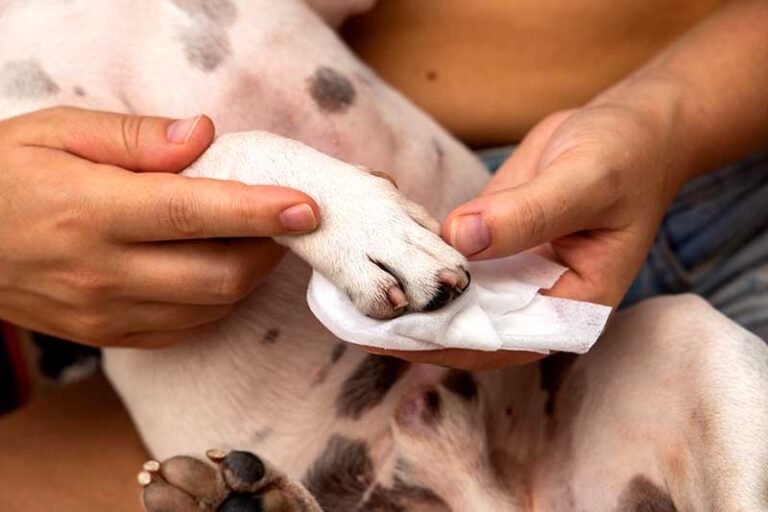
Follow veterinary instructions for gentle cleansing or antimicrobial paw bathing and dry the paw carefully afterward.
Step 4: Use prescribed treatment correctly
Give or apply prescription medication exactly as directed and do not substitute leftover antibiotics or human medications.
Step 5: Address the cause
If allergies, parasites, foreign material, conformation, or environmental trauma are contributing, treating that factor is essential for reducing recurrence.
Safe Home Care While Waiting for the Veterinarian
Until the dog can be examined, keep the paw clean and dry and prevent persistent licking or chewing. A gentle warm-water soak may be recommended in some cases, but additives should not be used unless a veterinarian has advised them. After cleaning, dry carefully between the toes.
Do not squeeze the lump to force material out. Do not use human pain medicines, leftover antibiotics, harsh disinfectants, or unprescribed steroid creams. These measures can cause toxicity, irritate damaged tissue, mask important symptoms, or contribute to inappropriate antimicrobial use.
Helpful
Gentle cleaning, careful drying, reduced licking, and veterinary-directed topical treatment.
Avoid
Squeezing, cutting, puncturing, aggressive scrubbing, and giving human medications without veterinary direction.
When Does a Dog Need Veterinary Treatment?
A veterinary visit is particularly important when an interdigital lesion is painful, swollen, draining, recurrent, or causing limping. Deep infections can be difficult to resolve with topical care alone, and the visible lump may not reveal the actual cause.
Seek prompt veterinary attention if the swelling is rapidly worsening, the dog is unable to bear weight, there is significant bleeding or discharge, the dog seems unusually unwell, or several paws are affected. A solitary lesion can also warrant examination when a foreign body such as a grass awn is possible.
During the examination, the veterinarian may use cytology to look for inflammatory cells, bacteria, or yeast. Skin scrapings or hair examination can help investigate parasites. Bacterial culture and susceptibility testing may be recommended when systemic antimicrobial therapy is needed or the condition is recurrent. Biopsy is useful for unusual lesions or suspected true follicular cysts and other noninfectious disorders.
Source: i.ytimg.com
Urgent assessment
Rapidly increasing swelling, severe pain, inability to bear weight, substantial bleeding, or signs of systemic illness warrant prompt veterinary attention.
Routine appointment
A persistent lump, recurrent lesion, draining tract, or repeated paw licking should be evaluated even if the dog otherwise seems well.
Further diagnostics
Cytology, culture, parasite testing, biopsy, or imaging may be appropriate depending on the appearance and history.
What Happens If the First Treatment Does Not Work?
If the lesion fails to improve as expected or returns after treatment, the next step should be reassessment rather than simply repeating the same medication. The veterinarian may need to confirm the diagnosis, perform bacterial culture, search for a foreign body, investigate allergies or parasites, or obtain a biopsy.
Deep interdigital disease can require prolonged management. A lesion that appears better on the surface may still have inflammation or infection deeper in the tissue, which is one reason treatment duration should be determined by the veterinarian rather than by appearance alone.
No improvement
Recheck the diagnosis and determine whether infection, foreign material, allergy, parasites, or another condition is maintaining the lesion.
Repeated recurrence
Investigate underlying dermatologic or mechanical factors instead of relying on repeated short courses of treatment.
How to Prevent Interdigital Cysts From Coming Back
Preventing recurrence starts with identifying why the lesion developed. If allergies are driving paw licking, managing the allergic skin disease can reduce self-trauma. If a foreign body is responsible, removing it is necessary. Dogs exposed to abrasive surfaces may benefit from changes to their exercise or housing environment.
Keep the paws clean after outdoor activity and inspect between the toes for burrs, grass material, cuts, or swelling. If your veterinarian recommends regular antimicrobial bathing for recurrent disease, follow the schedule consistently rather than using treatments only when a new lump becomes visible.
Avoid unnecessary clipping or shaving of the interdigital hair with electric clippers. Merck Veterinary Manual notes that clipper-related microtrauma may contribute to traumatic implantation of hair shafts. If hair needs trimming, follow veterinary or professional grooming guidance and avoid traumatizing the skin.
Recurrence is not necessarily a sign that treatment was ineffective. Interdigital furunculosis can be multifactorial, and successful long-term control may require managing infection together with allergies, conformation, licking, parasites, or environmental trauma.
Source: designermixes.org
Inspect the paws
Regularly check between the toes and around the pads for redness, swelling, foreign material, discharge, or new lumps.
Control licking
Work with your veterinarian to identify and manage the cause of persistent paw licking.
Manage allergies
Dogs with recurrent interdigital disease may need evaluation and treatment for allergic skin disease.
Reduce environmental trauma
Limit repeated exposure to rough or abrasive surfaces when they appear to contribute to paw irritation.
Follow the treatment plan
Complete veterinary-directed treatment and attend recommended rechecks even when the paw appears substantially improved.
Can Laser or Light Therapy Help?
Some veterinary dermatology practices use light-based therapies as an adjunct for interdigital furunculosis. Clinical research has reported improved healing outcomes when fluorescent light energy was added to conventional management, including a randomized controlled trial involving dogs with interdigital furunculosis. These therapies should be considered veterinary treatment options rather than replacements for diagnosing and addressing infection or the underlying cause.
Because the evidence applies to specific veterinary protocols and patient groups, owners should discuss whether such treatment is appropriate with their veterinarian instead of attempting to reproduce a clinic-based protocol at home.
Potential role
Light-based treatment may be used as an adjunct in selected cases under veterinary supervision.
Important limitation
Adjunctive light therapy does not eliminate the need to investigate infection, foreign bodies, allergies, parasites, or other causes when those factors are present.
Frequently Asked Questions
Q
Can I pop an interdigital cyst on my dog?
No. Popping, squeezing, or puncturing a painful interdigital lump can damage tissue and may worsen inflammation or infection. A veterinarian should determine whether the lesion is an interdigital furuncle, true cyst, foreign-body reaction, or another condition and decide whether drainage or another procedure is appropriate.
Q
Can an interdigital cyst go away on its own?
Some small inflammatory lesions may improve, but a painful or persistent interdigital lump should not be assumed to be harmless. Deep interdigital furuncles can involve infection and inflammation below the surface, and recurrent lesions often have an underlying trigger that needs treatment.
Q
How long does it take for an interdigital cyst to heal?
Healing time varies substantially with the cause and depth of the lesion. Localized superficial disease may improve sooner, while deep or multifocal interdigital furunculosis can require several weeks of treatment. Recurrent disease may take longer if allergies, foreign material, parasites, or mechanical factors are not controlled.
Q
Are interdigital cysts in dogs caused by allergies?
Allergies can contribute to recurrent interdigital lesions because itchy dogs often lick and traumatize their paws. Allergic skin disease is not the only possible cause, however. Bacterial infection, follicular trauma, foreign bodies, parasites, paw conformation, and environmental irritation can also contribute.
Q
Should I use antibiotics for my dog’s interdigital cyst?
Do not start leftover or human antibiotics without veterinary direction. Deep interdigital lesions may require prescription antimicrobial treatment, but the appropriate medication depends on the diagnosis and, in recurrent or significant cases, bacterial culture and susceptibility testing can help guide treatment. Using antibiotics incorrectly can contribute to treatment failure and antimicrobial resistance.
✦ Wrapping Up
Conclusion
The best way to treat an interdigital cyst on a dog paw is to identify what the lump actually represents before attempting to treat it. Many lesions called interdigital cysts are interdigital furuncles involving deep follicular inflammation and secondary bacterial infection, while true follicular cysts, foreign bodies, allergies, parasites, and other disorders can produce similar signs.
For mild localized disease, veterinarian-directed paw hygiene and topical antimicrobial treatment may be enough. Painful, deep, multiple, recurrent, or draining lesions may require prescription treatment and diagnostic testing. The long-term goal is not simply to make the visible lump disappear but to control infection and remove the underlying trigger that allows the lesion to return.
💡 Key Takeaway
If your dog has a painful lump between the toes, keep the paw clean and prevent licking while arranging a veterinary examination. Do not squeeze, puncture, or medicate the lesion with leftover or human medicines. Recurrent or nonhealing lesions deserve further investigation for infection, allergies, parasites, foreign bodies, or other underlying disease.
Learn how to protect dog paws from hot sand with practical beach safety tips, paw protection methods, warning signs of burns, and summer paw care strategies.
Learn how to treat scraped dog paws safely at home, when to see a veterinarian, how to prevent infection, and how to help your dog recover comfortably.
Learn why your dog’s paws may be red and itchy, including allergies, infections, parasites, irritation, and injuries, plus safe home care and when veterinary treatment is needed.
Learn how to clean white dog paws safely and effectively. Remove dirt, grass stains, mud, and discoloration while keeping your dog’s paws healthy and bright.
Learn how to tell if a dog’s paw is broken, recognize fracture symptoms, understand when veterinary care is urgent, and learn how broken paw injuries are diagnosed.