For a minor dog paw pad injury, gently clean the paw, remove only loose debris that is easy to reach, control bleeding with steady pressure, protect the wound with a nonstick dressing and properly fitted bandage, and restrict activity. Because paw pads bear weight and can reopen easily, deeper cuts, punctures, burns, large tears, persistent bleeding, or signs of infection should be evaluated by a veterinarian.
In the United States, dog paw pad injuries are a common concern after walks on hot sidewalks, rough pavement, sharp debris, icy surfaces, or contaminated ground. Paw pads provide cushioning and traction while protecting the underlying tissues from mechanical stress, so an injury can make even ordinary walking painful. A dog that suddenly limps, licks one paw repeatedly, or refuses to put weight on a foot deserves a careful paw inspection.
Initial first aid can help protect a minor injury while veterinary care is arranged, but it should not replace professional evaluation when the wound is deep, contaminated, painful, or failing to improve. Veterinary guidance recommends cleaning superficial wounds, controlling bleeding with pressure, protecting the paw from further trauma, and seeking veterinary attention for significant wounds or complications. Paw pad wounds can be particularly stubborn because every step places pressure on the injured tissue.
Source: healthyhomemadedogtreats.com
What Is a Dog Paw Pad Injury?
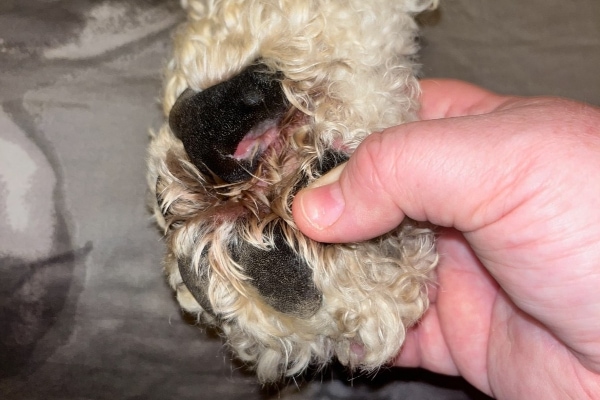
A dog paw pad injury is damage to one or more of the thick, specialized pads on the underside of the foot. Injuries can include cuts, punctures, abrasions, cracks, torn tissue, burns, chemical irritation, or trauma caused by foreign objects. Because the pads absorb impact and provide traction, even a relatively small injury can interfere with walking.
Common causes include broken glass or metal, sharp rocks, rough pavement, hot asphalt or concrete, ice and deicing materials, chemical irritants, and excessive friction. A dog may also injure a pad while running, jumping, or catching the edge of a surface.
Sudden licking or chewing focused on one paw can be a useful warning sign. However, persistent licking of multiple paws may indicate a skin or inflammatory condition rather than a simple traumatic wound, so the pattern and appearance of the paws matter.
Source: jugdog.co.uk
Cuts and punctures
Sharp objects can penetrate or slice the pad. Deep punctures may hide foreign material or deeper tissue damage.
Tears and flaps
A portion of the pad may split or partially detach. Weight-bearing can repeatedly pull the injured tissue apart.
Abrasions
Repeated friction against rough surfaces can remove or damage the outer pad surface.
Burns
Hot pavement, sand, heated surfaces, extreme cold, or corrosive chemicals can damage paw pads.
Signs Your Dog May Have an Injured Paw Pad
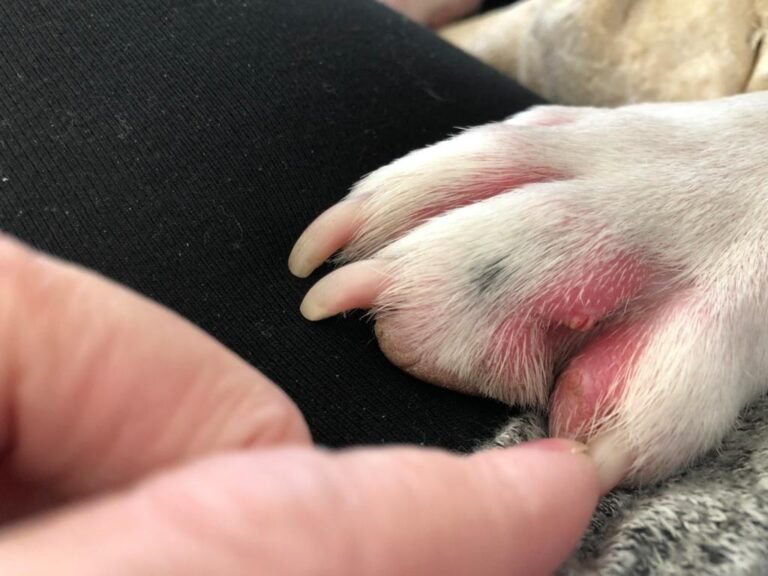
Look for limping, reluctance to walk, sudden paw licking, bleeding, visible cracks, a flap of pad tissue, discoloration, swelling, tenderness, or a wound on the underside of the foot. Separate the toes gently and inspect between the pads because foreign objects and irritation can be hidden from view.
Sudden limping
A sudden change in weight-bearing can indicate pain from a cut, puncture, burn, foreign object, or another paw problem.
Repeated licking
Focused licking can signal pain or irritation, particularly when it starts suddenly after outdoor activity.
Visible damage
Cracks, cuts, torn tissue, exposed underlying tissue, bleeding, or abnormal discoloration should be taken seriously.
How to Treat a Minor Dog Paw Pad Injury at Home
Home first aid is most appropriate as temporary care for a superficial injury when your dog is otherwise stable and the wound is not deeply contaminated, severely painful, or heavily bleeding. If you are uncertain about the severity, contact a veterinarian rather than repeatedly manipulating the injured paw.
Before handling the paw, remember that pain can cause even a normally gentle dog to bite. Keep your face away from the dog’s mouth and ask another person to help restrain the dog safely if needed. If handling the paw is unsafe, stop and seek veterinary assistance.
Source: d2zp5xs5cp8zlg.cloudfront.net
1. Inspect the paw
Look at the pads, between the toes, around the nails, and the top of the foot. Check for cuts, punctures, torn tissue, swelling, burns, and visible foreign material.
2. Flush away contamination
For a superficial wound, gently rinse the paw with clean water to remove dirt and small loose particles. Avoid aggressive scrubbing because damaged pad tissue is sensitive.
3. Remove only easily accessible debris
If a tiny object is loose and can be grasped without digging into the tissue, it may be removed carefully. Do not probe deeply for glass, metal, thorns, or other embedded material.
4. Control bleeding
Place clean gauze or a clean cloth over the wound and apply steady direct pressure. If bleeding does not stop after about 10 to 15 minutes of continuous pressure, seek emergency veterinary care.
5. Protect the wound
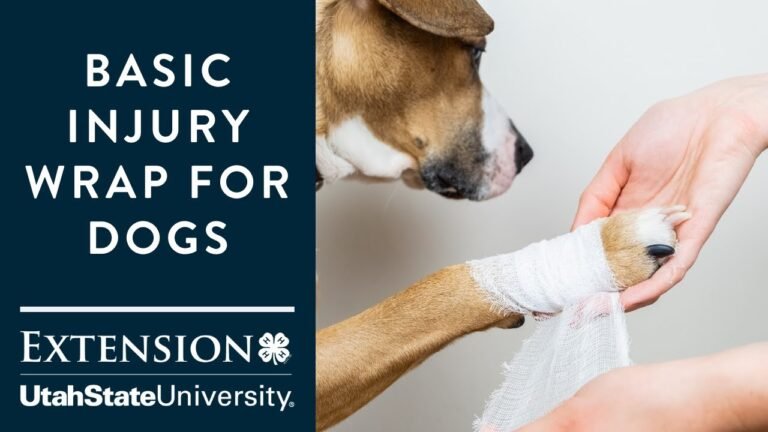
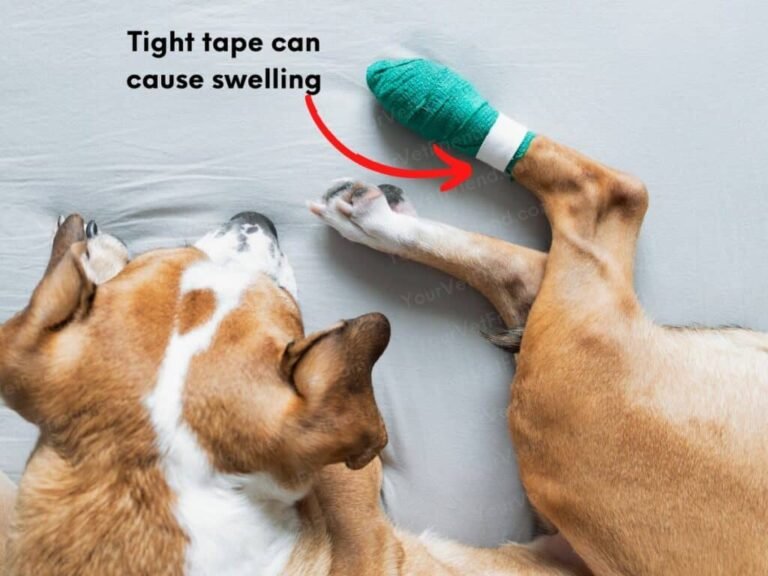
Use a nonstick dressing over the injured area and a properly fitted bandage to protect it from dirt and repeated trauma. The bandage should be secure but never tight enough to interfere with circulation.
6. Restrict activity
Keep walks brief and controlled while the wound heals. Avoid running, jumping, rough play, swimming, and surfaces that can contaminate or reopen the injury.
7. Prevent licking
Use an appropriate protective collar or other veterinarian-approved method if your dog repeatedly licks or chews the injured paw. Licking can contaminate and traumatize the wound.
How to Bandage an Injured Paw Safely
A paw bandage should protect the wound without restricting circulation. Place a non-adherent dressing over the injury, add cushioning if appropriate, and secure the dressing with a veterinary bandage material. The bandage should extend far enough to stay in place without creating excessive pressure around the foot or leg.
Check the exposed toes and the bandage regularly. Swollen toes, increasing discomfort, a wet or slipping bandage, foul odor, discharge, or blood soaking through the bandage are reasons to contact a veterinarian promptly. A veterinary professional should provide specific instructions when a significant wound requires ongoing bandaging.
Keep it dry
Moisture can contaminate the wound and damage the bandage. Protect the bandage during necessary outdoor trips and remove temporary protection afterward.
Check circulation
The toes should not become increasingly swollen, cold, unusually discolored, or painful after bandaging.
Change as directed
For veterinary-managed wounds, follow the veterinarian’s schedule. A dirty, wet, slipping, or damaged bandage should be addressed promptly.
How to Treat a Burned or Chemically Irritated Paw Pad
Paw pad burns require a different first-aid approach from a simple cut. Hot sidewalks, asphalt, sand, or other heated surfaces can damage pads, while corrosive chemicals can cause chemical burns. If your dog develops sudden limping or paw licking after walking on a very hot surface, inspect the pads and stop further exposure.
For a suspected thermal injury, cool the paw with room-temperature water rather than using extreme cold. If a paw contacts a corrosive substance, rinse it thoroughly with running water and use mild soap when appropriate, while protecting your own skin from the substance. Significant burns, discoloration, exposed tissue, or severe pain require veterinary evaluation.
Source: littlehappypaw.com
Stop the exposure
Move your dog away from hot pavement, chemicals, ice, salt, or another suspected source of injury.
Cool thermal injuries appropriately
Use room-temperature water to soothe a heat-injured paw. Avoid extreme cold or ice directly on damaged tissue.
Rinse chemical exposure
For corrosive material, thoroughly rinse the paw with running water and follow veterinary guidance for further decontamination.
Seek veterinary care for significant burns
Discolored tissue, exposed tissue, severe pain, blistering, extensive damage, or worsening symptoms should be assessed by a veterinarian.
Preventing Repeat Paw Pad Burns
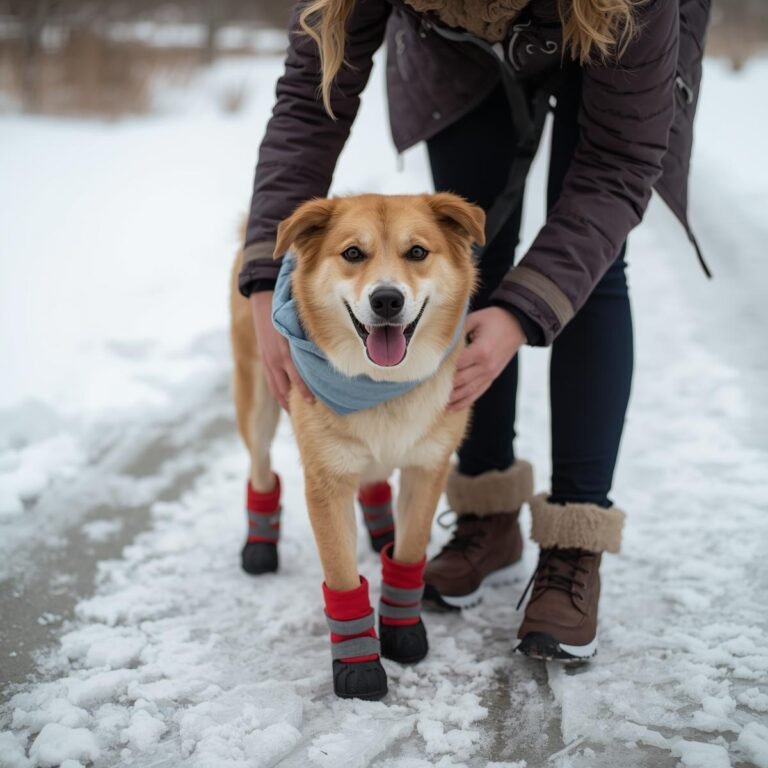
In hot U.S. weather, choose cooler walking times and avoid surfaces that feel excessively hot. In winter, inspect paws after walks where road salt, deicing products, ice, or freezing surfaces may cause irritation. Cleaning and drying the paws after outdoor exposure can help remove irritating material.
Check the walking surface
Avoid routes with unusually hot pavement, sharp debris, or visible chemical contamination.
Inspect after walks
Look between the toes and around the pads for debris, redness, cracks, or tenderness.
When Should a Dog With a Paw Pad Injury See a Veterinarian?
A veterinarian should evaluate significant paw pad injuries rather than relying on home treatment alone. Paw wounds are repeatedly exposed to pressure during walking, and deeper injuries may require professional cleaning, pain control, medication, foreign-body removal, or other treatment.
Seek urgent veterinary care when bleeding remains uncontrolled despite sustained direct pressure, when the wound is deep or gaping, when a foreign object is deeply embedded, or when your dog has severe pain or cannot stand or walk normally. Burns and bite wounds also warrant veterinary assessment.
Source: toegrips.com
Persistent bleeding
If bleeding has not stopped after approximately 10 to 15 minutes of continuous pressure, treat it as an emergency.
Deep or gaping wound
Deep cuts, large tears, exposed underlying tissue, or extensive pad damage need professional assessment.
Embedded foreign object
Do not dig into the paw to remove deeply lodged glass, metal, thorns, or similar material.
Severe pain or lameness
A dog that refuses to bear weight, appears very painful, or becomes increasingly lame should be examined.
Possible infection
Increasing redness, swelling, heat, foul odor, pus or other discharge, worsening pain, or deterioration rather than improvement can indicate infection or another complication.
Significant burn
Discoloration, exposed tissue, extensive damage, or severe pain after heat or chemical exposure requires veterinary attention.
What a Veterinarian May Do
Treatment depends on the injury. A veterinarian may examine the depth and location of the wound, clean contaminated tissue, identify and remove a foreign object, provide pain relief, determine whether medication is appropriate, and establish a bandaging or activity-restriction plan. More severe wounds may require sedation or additional procedures.
Assess the wound
The veterinarian determines whether the injury is superficial or extends into deeper tissues.
Treat contamination
Embedded debris or contaminated wounds may require more thorough cleaning and professional management.
Manage pain and healing
Veterinary treatment can include appropriate pain control and wound-care instructions based on the individual injury.
What Not to Do for a Dog Paw Pad Injury
Several common approaches can make paw injuries worse. The goal is to protect damaged tissue, reduce contamination, and avoid repeated trauma while arranging appropriate veterinary care when necessary.
Do not forcefully pull out deeply embedded objects, repeatedly scrub damaged tissue, allow the dog to run on an injured pad, or leave a wet or excessively tight bandage in place. Avoid using household wound products unless a veterinarian has confirmed they are appropriate for the specific injury.
Source: toegrips.com
Do not dig for embedded objects
Probing can enlarge the wound, increase pain, and cause additional bleeding.
Do not use hydrogen peroxide or rubbing alcohol
These substances can damage healthy tissue and interfere with wound healing.
Do not let the dog keep licking
Licking can introduce bacteria, disrupt healing tissue, and reopen the wound.
Do not overexercise the dog
Running and jumping increase pressure on the injured pad and can cause a healing wound to split open again.
Do not ignore worsening symptoms
Increasing pain, swelling, discharge, odor, bleeding, or lameness means the injury needs reassessment.
Human Pain Medicines Need Veterinary Guidance
Do not give your dog human pain medication on your own. Dogs can respond differently to medications, and some human medicines can be dangerous at inappropriate doses or in particular medical conditions. Ask a veterinarian which pain-control option is appropriate.
Use veterinary guidance
A veterinarian can select medication and dosing based on the dog’s size, health status, other medications, and type of injury.
How to Tell Whether a Dog Paw Pad Injury Is Healing
A healing paw should gradually become less painful and less inflamed, while your dog becomes more willing to use the affected foot. The wound should not develop an increasingly foul odor, abnormal discharge, worsening swelling, or progressively severe pain.
Because paw pads experience pressure with every step, healing can be slower or more complicated than owners expect. If the injury repeatedly opens, continues to bleed, or is not showing improvement over the following days, contact your veterinarian rather than continuing home treatment indefinitely.
Source: canadapetcare.com
Improving comfort
Your dog gradually becomes more comfortable and less focused on licking or protecting the paw.
Improving weight-bearing
Limping should generally lessen rather than become more pronounced.
No worsening discharge or odor
Foul odor, pus, or new drainage is not a normal sign of uncomplicated healing.
No increasing swelling
Progressively increasing swelling, redness, or pain warrants veterinary assessment.
How Long Does a Paw Pad Injury Take to Heal?
There is no single healing time for every dog paw pad injury. A shallow abrasion may improve sooner than a deep cut, puncture, burn, or torn pad. Healing also depends on wound size, contamination, infection, continued weight-bearing, and whether the underlying cause has been addressed. A veterinarian can provide a more useful prognosis after examining the actual injury.
Minor abrasions
These may improve with protection and activity restriction, provided there is no deeper injury or infection.
Deep wounds or tears
These can take longer and may need repeated professional wound care.
Complicated wounds
Infection, retained foreign material, burns, or repeated reopening can significantly prolong recovery.
How to Prevent Future Dog Paw Pad Injuries
Prevention starts with checking the surfaces your dog walks on and inspecting the paws after outdoor activity. In the United States, seasonal hazards can vary considerably: hot pavement and sand can injure pads during summer, while ice, salt, and deicing products can irritate them during winter.
Regular paw checks can also reveal cracks, foreign material, irritated skin, or early signs of inflammation before they become more serious. If your dog repeatedly develops paw problems, ask a veterinarian to investigate underlying causes rather than treating each episode as an isolated injury.
Source: jugdog.co.uk
Avoid extreme surfaces
Choose safer walking surfaces during very hot or very cold weather and avoid areas containing sharp debris.
Inspect paws after walks
Check the pads, between the toes, and around the nails for debris, irritation, cuts, or cracks.
Clean and dry paws
After exposure to dirt, salt, or other irritants, gently clean the paws and dry them thoroughly.
Address recurring problems
Repeated licking, redness, swelling, or paw injuries can be associated with allergies, infections, foreign bodies, or other medical conditions that need diagnosis.
A Simple Paw-Check Routine
After walks, briefly inspect each foot in good light. Separate the toes, look at the underside of every pad, check the nails, and feel for obvious swelling or tenderness. Early detection can make it easier to address small problems before a dog continues walking on an injury.
After hot-weather walks
Check for redness, tenderness, cracks, peeling, or other evidence of heat-related injury.
After winter walks
Check for ice, salt, chemical residue, cracks, or irritation around the pads and between the toes.
Frequently Asked Questions
Q
Can I treat a minor dog paw pad injury at home?
A superficial, minor injury may receive basic first aid while you monitor it or arrange veterinary advice. Gently clean the area, control bleeding with direct pressure, protect it with a nonstick dressing and appropriate bandage, and restrict activity. Deep wounds, significant burns, persistent bleeding, severe pain, or worsening symptoms should be evaluated by a veterinarian.
Q
Should I bandage my dog’s injured paw?
A properly fitted bandage can protect an injured paw from contamination and repeated trauma, but an incorrectly applied bandage can cause swelling or circulation problems. Use a nonstick dressing and avoid wrapping tightly. If you are unsure how to bandage the injury safely, ask a veterinarian to demonstrate the technique.
Q
What should I put on a dog’s injured paw pad?
For first aid, the priority is gentle cleaning, bleeding control, and protection rather than applying a long list of household products. Avoid hydrogen peroxide and rubbing alcohol because they can damage healthy tissue. For medication or ointments, follow veterinary guidance based on the specific wound.
Q
How do I know if my dog’s paw pad injury is infected?
Warning signs include increasing redness or swelling, worsening pain, foul odor, pus or other discharge, continued bleeding, and deterioration rather than improvement. If any of these develop, contact your veterinarian promptly.
Q
Why is my dog still limping after a paw pad injury?
Limping can persist when the pad remains painful, the wound repeatedly reopens from weight-bearing, a foreign object remains embedded, infection develops, or the original diagnosis was incorrect. Persistent or worsening lameness should be assessed by a veterinarian.
✦ Wrapping Up
Conclusion
Treating a dog paw pad injury starts with determining whether the wound is minor enough for temporary first aid or serious enough to require veterinary care. For a superficial injury, gently flush away contamination, control bleeding with direct pressure, protect the wound with a nonstick dressing and suitable bandage, and limit activity while monitoring the paw.
Paw pad injuries can be deceptively difficult to heal because the affected tissue bears weight with every step. Deep cuts, punctures, large tears, significant burns, embedded foreign objects, uncontrolled bleeding, severe pain, or signs of infection should not be managed as a simple home wound. When in doubt, veterinary assessment is the safer choice.
💡 Key Takeaway
If your dog has a paw pad injury now, keep the dog off the injured paw as much as practical, gently clean superficial contamination, apply steady pressure to active bleeding, protect the wound, prevent licking, and contact a veterinarian promptly if the injury is deep, severe, contaminated, repeatedly reopening, or not improving.
Learn how to treat a sprained dog paw with safe home care, activity restriction, cold therapy, warning signs, and guidance on when your dog needs a veterinarian.
Learn how to tell if your dog sprained his paw, recognize common signs of a sprain, distinguish it from fractures and paw injuries, and know when veterinary care is needed.
Learn how to keep dog paws warm in snow with proven winter paw care strategies, protective gear, grooming tips, and safety advice for cold-weather walks.
Learn why your dog’s paws may be red between the toes, including allergies, infections, irritation, injuries, and interdigital furuncles, plus when veterinary care is needed.
Learn how to protect dog paws from hot sand with practical beach safety tips, paw protection methods, warning signs of burns, and summer paw care strategies.