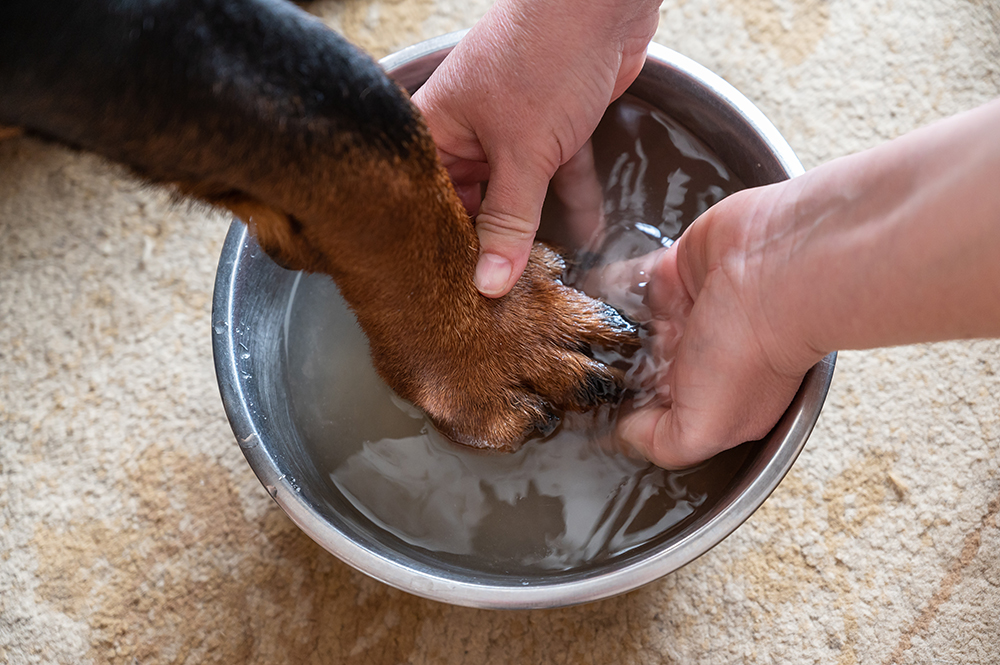
Most dogs can safely soak a paw in an Epsom salt solution for 5 to 10 minutes at a time.
Across the United States, dog owners commonly use Epsom salt soaks as a home-care measure for minor paw irritation, swelling, small wounds, and discomfort caused by debris or environmental exposure. The goal is to clean the area, reduce mild inflammation, and support healing while monitoring for signs that require veterinary care.
For most dogs, a soak lasting 5 to 10 minutes once or twice daily is generally sufficient. Longer soaking sessions can soften skin excessively, increase irritation, or make it harder for the paw to stay dry afterward. Any dog with severe pain, heavy bleeding, deep wounds, or suspected infection should be evaluated by a veterinarian.
Source: www.dogster.com
How Long Should a Dog Paw Stay in an Epsom Salt Soak?
The recommended soaking time for most dogs is between 5 and 10 minutes. This duration allows the paw to be exposed to the solution long enough to help loosen debris and provide mild soothing effects without overhydrating the skin.
Small dogs, puppies, and dogs with sensitive skin often do well with shorter sessions around 5 minutes. Larger dogs with mild swelling may tolerate closer to 10 minutes if the paw remains comfortable throughout the soak.
Source: www.pinterest.com
5 minutes
Suitable for sensitive dogs, mild irritation, or routine paw cleaning.
10 minutes
Common maximum duration for mild swelling or minor paw discomfort.
More than 10 minutes
Usually unnecessary and may increase skin softening or irritation.
How Often Can You Repeat the Soak?
Most veterinarians recommend one to two soaks daily for minor issues. If symptoms persist beyond several days or worsen, professional evaluation is appropriate.
Once daily
Often adequate for mild irritation.
Twice daily
May be used for temporary swelling or minor discomfort when advised by a veterinarian.
When an Epsom Salt Paw Soak May Help
An Epsom salt soak is often used as supportive home care for minor paw issues. It is not a cure for infections, fractures, foreign bodies, or serious injuries.
Dog owners commonly use paw soaks when a dog has mild swelling, redness, soreness after outdoor activity, or irritation from dirt and debris.
Source: www.pinterest.com
Minor swelling
May help soothe mild inflammation.
Small abrasions
Can assist with gentle cleaning.
Paw discomfort
May provide temporary relief after activity.
Situations That Need Veterinary Attention
Deep punctures, severe limping, embedded objects, excessive bleeding, pus, fever, or rapidly worsening swelling require professional care rather than home treatment alone.
Severe symptoms
Seek prompt veterinary assessment.
How to Prepare an Epsom Salt Paw Soak
Use a clean bowl or container large enough for the affected paw. Fill it with warm water that feels comfortably warm to the touch but never hot.
Mix the Epsom salt thoroughly until dissolved. Keep the dog calm and supervised throughout the process.
Source: www.pinterest.com
Use warm water
Comfortable temperatures help dogs tolerate the soak.
Dissolve completely
Undissolved crystals can irritate sensitive skin.
Monitor constantly
Prevent drinking or splashing the solution.
Signs the Soak Is Working
The paw may appear cleaner, swelling may gradually reduce, and the dog may show less discomfort during walking.
Reduced irritation
A positive sign when symptoms improve over several days.
Common Mistakes to Avoid
The most common mistake is soaking for too long. Extended exposure can leave the skin overly soft and more vulnerable to irritation.
Another mistake is failing to dry the paw afterward. Moisture trapped between the toes can contribute to ongoing skin problems.
Source: www.pinterest.com
Excessive soaking
Avoid sessions longer than necessary.
Poor drying
Pat the paw dry, including between the toes.
Ignoring worsening symptoms
Persistent problems should be examined by a veterinarian.
Can Dogs Drink Epsom Salt Water?
Dogs should not intentionally drink Epsom salt solutions. Ingestion can cause digestive upset and other complications depending on the amount consumed.
Supervision
Keep the dog’s head away from the soaking container.
Decision Guide for Dog Paw Soaks
A simple decision framework can help determine whether a home soak is appropriate. Mild irritation and minor swelling often respond to supportive care, while serious symptoms require veterinary evaluation.
If there is uncertainty about the cause of the paw problem, professional advice is safer than repeated home treatment.
Source: petshun.com
Mild redness
A short soak may be reasonable.
Moderate swelling
Monitor closely and consider veterinary guidance.
Open wounds or pus
Veterinary care is recommended.
What to Do if the Soak Does Not Help
If there is no improvement after several days, or if symptoms worsen at any point, schedule a veterinary examination to identify the underlying cause.
Persistent symptoms
Professional diagnosis may be needed.
Frequently Asked Questions
Q
Can I soak my dog’s paw longer than 10 minutes?
Longer sessions are generally not necessary. Most dogs receive the intended benefit within 5 to 10 minutes, and prolonged soaking may soften the skin excessively.
Q
How many times a day can I soak my dog’s paw in Epsom salt?
One or two daily sessions are commonly used for minor paw issues. Follow veterinary advice if your dog has a diagnosed condition.
Q
Should I rinse the paw after the soak?
Many owners simply dry the paw thoroughly after soaking. If advised by your veterinarian or if residue remains, a gentle rinse may be appropriate.
Q
Can Epsom salt cure a paw infection?
No. A soak may provide supportive care, but infections often require veterinary diagnosis and treatment, including medication when necessary.
Q
What if my dog will not keep its paw in the water?
Use treats, calm handling, and a shallow container. Shorter sessions may help initially, but do not force a distressed dog to continue.
✦ Wrapping Up
Conclusion
For most dogs, the answer to how long to soak dog paw in epsom salt is 5 to 10 minutes per session. This time frame is usually enough to provide gentle cleaning and temporary soothing without unnecessarily exposing the skin to prolonged moisture.
Home paw soaks can be useful for minor irritation and swelling, but they are not a substitute for veterinary care when symptoms are severe, persistent, or worsening.
💡 Key Takeaway
Soak the affected paw for 5 to 10 minutes, dry it thoroughly afterward, and contact a veterinarian if symptoms fail to improve or become more serious.
Learn how to protect dog paws from hot sand with practical beach safety tips, paw protection methods, warning signs of burns, and summer paw care strategies.
Learn how to treat a sprained dog paw with safe home care, activity restriction, cold therapy, warning signs, and guidance on when your dog needs a veterinarian.
Learn how to soak dogs paws safely with warm water or veterinarian-approved solutions, when paw soaks help, what to avoid, and when to call a veterinarian.