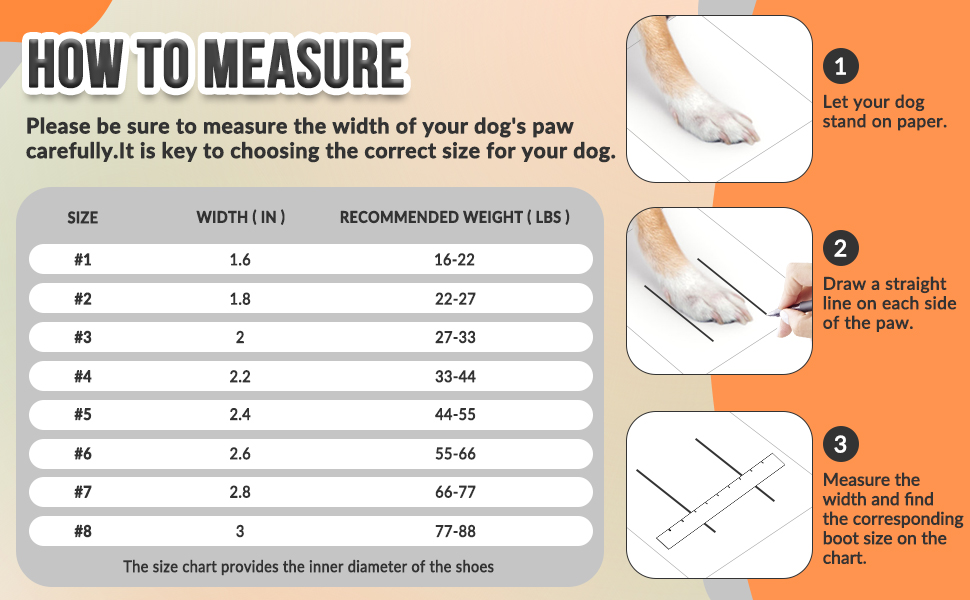
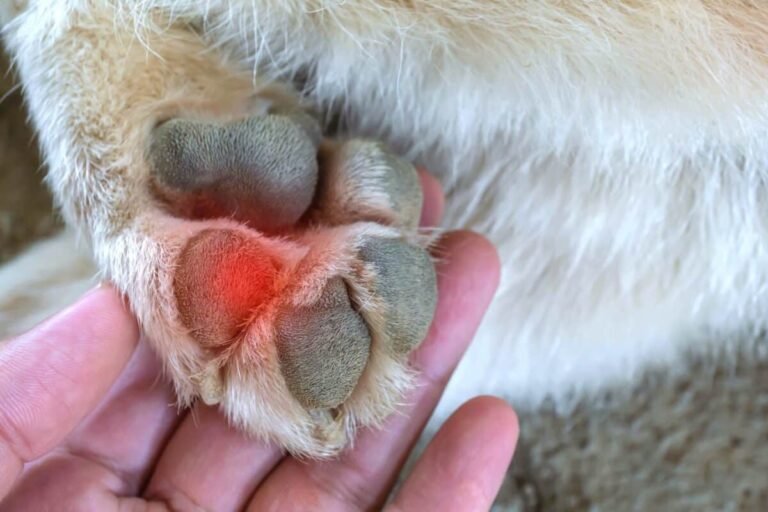
To measure your dog’s paws for boots, place the paw on paper while your dog is standing and bearing weight, mark the widest part of the paw, and measure the distance between the marks. Measure all four paws because front and rear paws can differ, then compare the measurements with the specific boot manufacturer’s size chart.
For dog owners in the United States, accurate paw measurements are the best starting point when buying protective boots for walks, hiking, snow, ice, or hot surfaces. Dog boot sizes are not standardized across brands, so your dog’s weight or breed alone is not enough to select a reliable size.
Most boot sizing systems use paw width, usually measured across the widest part of the paw while the dog is standing. A practical measurement method uses paper, a pen or pencil, and a ruler or tape measure. Ruffwear and the American Kennel Club both describe methods based on the paw’s weight-bearing shape, although the exact sizing rule depends on the boot manufacturer.
Source: gear.tripawds.com
What You Need to Measure a Dog’s Paw
You only need a few household items to measure a dog’s paws for boots. The simplest setup is a sheet of paper, a pen or pencil, and a ruler or measuring tape. A firm, level surface also helps your dog stand naturally.
Choose a time when your dog is calm and able to stand comfortably. If your dog repeatedly pulls the paw away, have another person gently keep the dog steady rather than forcing the paw into position.
Source: storage.googleapis.com
Paper
Use a sheet large enough for the entire paw to rest on it without the toes extending beyond the edges.
Pen or pencil
Use a writing tool that lets you make clear marks at the widest points of the paw.
Ruler or tape measure
Measure in inches or millimeters and use the same unit shown by the manufacturer’s sizing chart.
A helper
A second person can keep your dog standing calmly while you position the paper and make the measurement.
Why paw width matters more than breed or weight
Boot manufacturers generally size boots according to the dimensions of the paw rather than the dog’s breed or body weight. Two dogs with similar body weights can have different paw shapes, so breed-based estimates can lead to an unreliable fit.
Use actual measurements
Treat your dog’s measured paw width as the starting point for sizing.
Check the brand’s chart
A measurement that corresponds to one brand’s size may correspond to a different size in another brand.
How to Measure Dog Paws for Boots Step by Step
The most useful measurement is the width across the widest part of the weight-bearing paw. Follow the same procedure for each paw so that your measurements are comparable.
Before starting, make sure your dog is standing normally rather than sitting, lying down, or lifting the paw. A weight-bearing position better represents the paw’s shape during ordinary movement.
Source: animalia-life.club
Step 1: Place the paper on the floor
Put the paper on a firm, level surface where your dog can stand naturally. Avoid thick carpet because it can make the paw sink into the surface.
Step 2: Position one paw on the paper
Have your dog place the paw fully on the paper while standing. The toes should be naturally positioned rather than tightly curled.
Step 3: Mark the widest points
Hold the pen or pencil vertically and mark the paper at the left and right edges of the widest part of the paw. Keeping the writing tool straight helps reduce measurement error.
Step 4: Measure between the marks
Use a ruler or tape measure to determine the distance between the two marks. Record the result in the unit used by the boot manufacturer’s chart.
Step 5: Repeat for every paw
Measure both front paws and both rear paws. Record each result rather than relying on a single paw.
An alternative paper-tracing method
Another practical approach is to trace or mark the outline of the paw while it is pressed onto paper. The American Kennel Club describes pressing the paw onto paper to mimic the natural splay of the foot during walking, then measuring across the widest part of the resulting outline. This can be useful when the edge of the paw is difficult to identify visually.
Whichever method you use, keep the measurement consistent with the manufacturer’s instructions. Do not add extra length or width unless the specific sizing instructions tell you to do so.
Keep the paw weight-bearing
The dog should stand naturally during the measurement rather than having the paw held in the air.
Measure the widest area
The measurement should span the widest portion of the paw, not the narrowest portion near the leg.
How to Choose the Correct Dog Boot Size
Once you have the measurements, compare each paw with the manufacturer’s sizing chart for the exact boot you intend to buy. Do not assume that a small, medium, or numbered size has the same dimensions across different brands.
Some manufacturers provide separate front and rear boot selections. For example, Ruffwear’s current sizing guidance instructs owners to measure all paws and notes that rear paws can be smaller than front paws. Its boot sizing system is based on paw width measured while the dog is bearing weight.
Source: animalia-life.club
Use the exact product chart
Check the size chart for the specific boot model because different products from the same company can have different construction or fit requirements.
Match front and rear measurements
If the manufacturer offers different sizes for front and rear paws, use the appropriate measurement for each.
Follow the brand’s between-size rule
If your measurement falls between listed sizes, follow that manufacturer’s instructions rather than automatically sizing up or down.
Do not size by breed alone
Breed and weight can provide context but cannot replace an actual paw measurement.
Example of converting a measurement into a boot size
Suppose a hypothetical dog’s front paw measures 2.5 inches across its widest point and the rear paw measures 2.25 inches. If the selected manufacturer’s chart lists those measurements as separate available sizes, the front and rear boots may need different sizes. If the manufacturer requires one size for all four paws, follow its stated sizing rule using the measurements it specifies.
The example demonstrates why recording all four measurements is more useful than measuring only one front paw.
Hypothetical front measurement
2.5 inches across the widest part of the weight-bearing paw.
Hypothetical rear measurement
2.25 inches across the widest part of the weight-bearing paw.
Decision
Use the exact boot chart to determine whether separate front and rear sizes are available or whether the product requires one size.
How to Check Whether Dog Boots Fit Correctly
Measuring gets you to the correct starting size, but a physical fit check is still necessary. A boot can match the listed measurement and still feel unsuitable because dogs have different paw shapes, toe positions, and movement patterns.
The American Kennel Club recommends a supervised indoor test run after purchasing boots. Watch whether the paws remain securely inside the boots and whether the boot follows the natural shape of the paw. Start with a short session rather than immediately using new boots for a long outdoor activity.
Source: storage.googleapis.com
The boot stays in place
The boot should remain positioned on the paw during normal walking without repeatedly slipping off or rotating substantially.
The paw is secure
The paw should not slide excessively inside the boot.
Movement remains natural
Your dog should be able to walk without obvious restriction caused by the boot.
No obvious rubbing
Check the paw and lower leg after removing the boot for signs of rubbing or irritation.
Your dog tolerates the boots
Some initial unfamiliarity is normal, but persistent distress, limping, repeated attempts to remove the boots, or apparent pain means the fit and situation should be reassessed.
Why an indoor test matters
A short indoor test lets you identify a poor fit before exposing the boots to snow, ice, pavement, trails, or other outdoor conditions. Check the boots during and after the test rather than assuming that a correctly measured size will automatically be comfortable.
Start briefly
Use a short supervised session so you can observe your dog’s gait and behavior.
Inspect after removal
Look for areas of rubbing, redness, pressure, or other signs that the boot is not working well for your dog.
Common Mistakes When Measuring Dog Paws
Most sizing errors come from measuring the paw in the wrong position, measuring only one foot, or using a generic size chart that does not apply to the boot being purchased. Correcting these errors is usually straightforward.
Source: storage.googleapis.com
Measuring while the paw is lifted
A lifted paw can have a different shape from a weight-bearing paw. Measure while the dog is standing when the manufacturer’s instructions call for a weight-bearing measurement.
Measuring only one paw
Front and rear paws can differ, so one measurement may not represent all four boots.
Measuring the paw’s length when the chart asks for width
If the manufacturer specifies width across the widest part, do not substitute a front-to-back length measurement.
Adding extra room automatically
A larger boot is not necessarily safer or more comfortable. Extra space can allow the paw to move inside the boot or make the boot less secure.
Ignoring the manufacturer’s instructions
Sizing methods vary, so use the instructions supplied for the exact boot model instead of applying a universal formula.
Skipping the fit test
A numerical measurement cannot reveal every fit problem. Observe the boots on your dog before using them for an extended outing.
What to Do If the Measurement Does Not Work
If the boots seem too loose, too tight, or difficult for your dog to walk in despite following the measurement instructions, remeasure the paws and verify that you used the correct product chart. A second measurement can catch errors caused by the dog’s position or unclear marks.
If the same problem remains, consider whether the boot design suits your dog’s paw shape. Different closures, openings, sole shapes, and boot constructions can fit differently even when their nominal measurements appear similar.
Source: thefavpet.com
Remeasure
Repeat the measurement with the dog standing naturally and confirm that you measured the widest part requested by the manufacturer.
Check the size chart again
Make sure the chart belongs to the exact boot model rather than a different product from the same brand.
Reassess the boot design
If the measurement is correct but the boot still does not stay secure or appears uncomfortable, the design may not suit your dog’s paw shape.
Stop if your dog appears painful
Do not continue using boots that appear to cause pain, significant irritation, or an abnormal gait.
When a paw problem needs veterinary attention
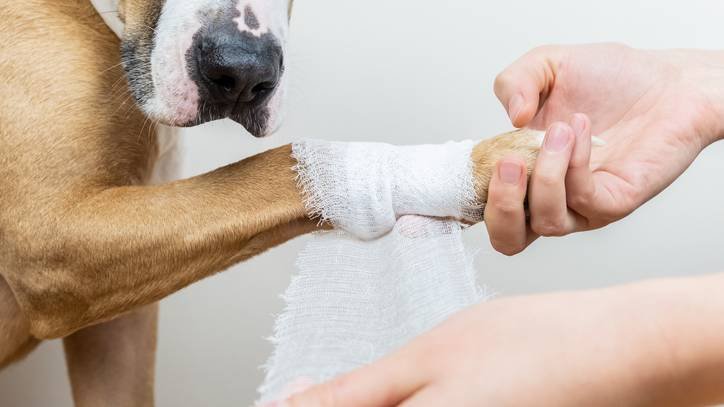
Boots are protective equipment, not a substitute for treating an injured paw. If your dog has significant swelling, bleeding, an obvious wound, persistent lameness, severe tenderness, or another concerning change, seek veterinary guidance rather than trying to solve the problem by changing boot size.
Persistent limping
A dog that continues to limp after the boots are removed may have a paw or limb problem that needs assessment.
Visible injury
A wound, significant swelling, or other obvious abnormality should be evaluated appropriately rather than covered with a boot without addressing the cause.
Frequently Asked Questions
Q
How do I measure my dog’s paws for boots at home?
Place a sheet of paper on a firm surface and have your dog stand naturally with one paw on the paper. Mark the widest points of the paw with a pen held vertically, then measure the distance between the marks. Repeat for all four paws and compare the results with the boot manufacturer’s size chart.
Q
Should my dog be standing when I measure the paw?
Yes, when the manufacturer’s instructions call for a weight-bearing measurement, your dog should stand naturally with the paw resting on the measuring surface. This better represents the paw’s shape during ordinary walking.
Q
Do all four dog paws need to be measured for boots?
It is best to measure all four paws. Front and rear paws can have different widths, and some boot manufacturers provide separate front and rear sizing. Recording all four measurements gives you more information when choosing a size.
Q
Should I choose a larger dog boot if my measurement is between sizes?
Do not automatically choose the larger size. Different manufacturers use different sizing rules, and some specifically recommend sizing down when a measurement falls between sizes. Follow the instructions for the exact boot model you are buying.
Q
How can I tell if dog boots are too big?
A boot may be too large if the paw moves excessively inside it, the boot repeatedly slips or rotates, or your dog cannot walk normally while wearing it. Perform a short supervised indoor test and inspect the fit before using the boots outdoors.
✦ Wrapping Up
Conclusion
The most reliable way to measure dog paws for boots is to measure the width of each weight-bearing paw at its widest point, record the results, and compare them with the manufacturer’s sizing chart for the exact boot. Paper, a pen, and a ruler are usually enough to obtain a useful measurement.
Accurate sizing is only the first step. Test the boots under supervision, make sure they stay secure without restricting normal movement, and stop using them if they cause apparent pain or significant irritation. When a paw is injured or your dog remains lame, veterinary evaluation is more appropriate than relying on protective footwear alone.
💡 Key Takeaway
Measure all four paws while your dog is standing, write down each width, use the exact manufacturer’s size chart, and complete a short supervised indoor fit test before an extended outdoor walk.
Learn how to clean dog paws naturally using water, gentle homemade solutions, and simple grooming techniques. Keep your dog’s paws clean, healthy, and comfortable after walks.
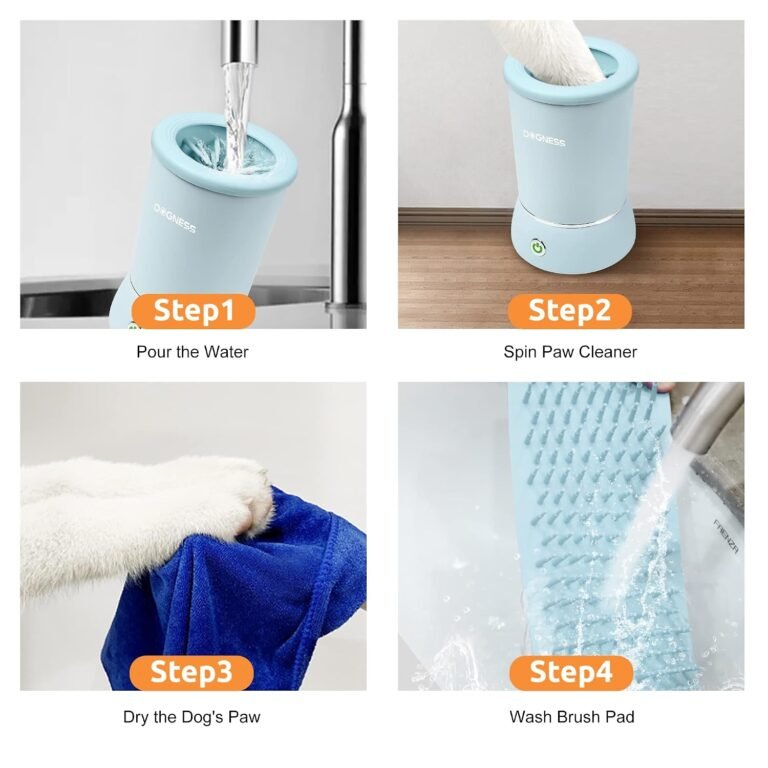
Learn how to use a dog paw cleaner safely and effectively. Follow simple steps for washing muddy paws, drying them, cleaning the device, and avoiding common mistakes.
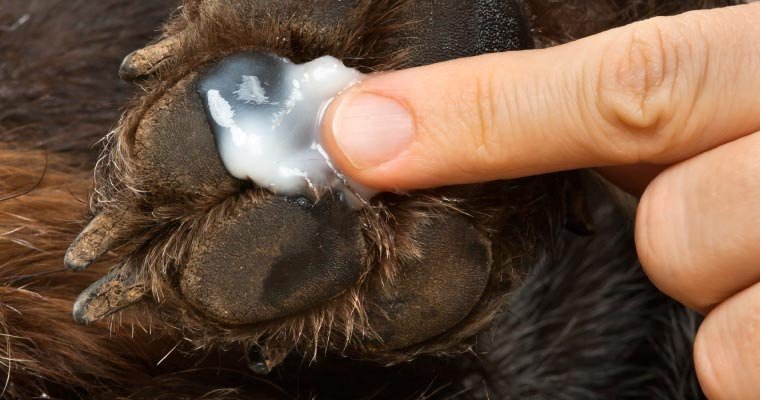
Learn how to treat sore dog paws between toes with safe home care, cleaning steps, paw protection tips, and guidance on when veterinary treatment is needed.
Learn how to treat red irritated dog paws safely. Discover common causes, step-by-step care, prevention tips, and signs that require veterinary attention.