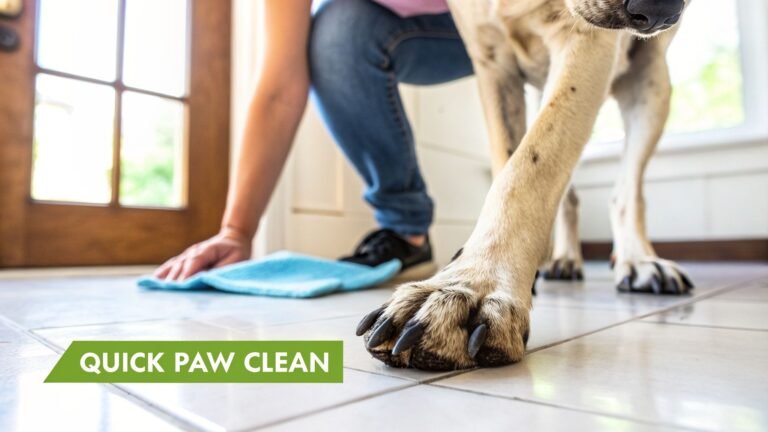
Clean the paws, identify the cause, prevent licking, and seek veterinary care if redness persists or worsens.
Across the United States, dogs commonly develop red irritated paws from allergies, hot pavement, environmental irritants, infections, injuries, and excessive licking. Early treatment can reduce discomfort and help prevent more serious skin problems.
Understanding how to treat red irritated dog paws starts with identifying the underlying cause. While mild irritation may improve with basic home care, persistent redness, swelling, bleeding, discharge, or limping should be evaluated by a veterinarian.
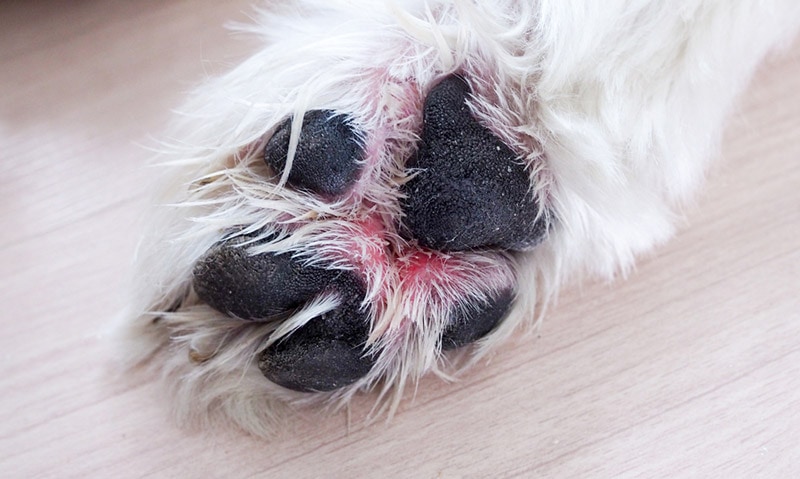
Source: animalia-life.club
What Causes Red Irritated Dog Paws?
Redness is a symptom rather than a diagnosis. The most effective treatment depends on what is causing the inflammation. Many dogs develop red paws after exposure to allergens, rough surfaces, chemicals, or excessive moisture.
Repeated licking can make mild irritation worse. As the skin barrier becomes damaged, bacteria or yeast may take advantage of the inflamed tissue and create secondary infections.
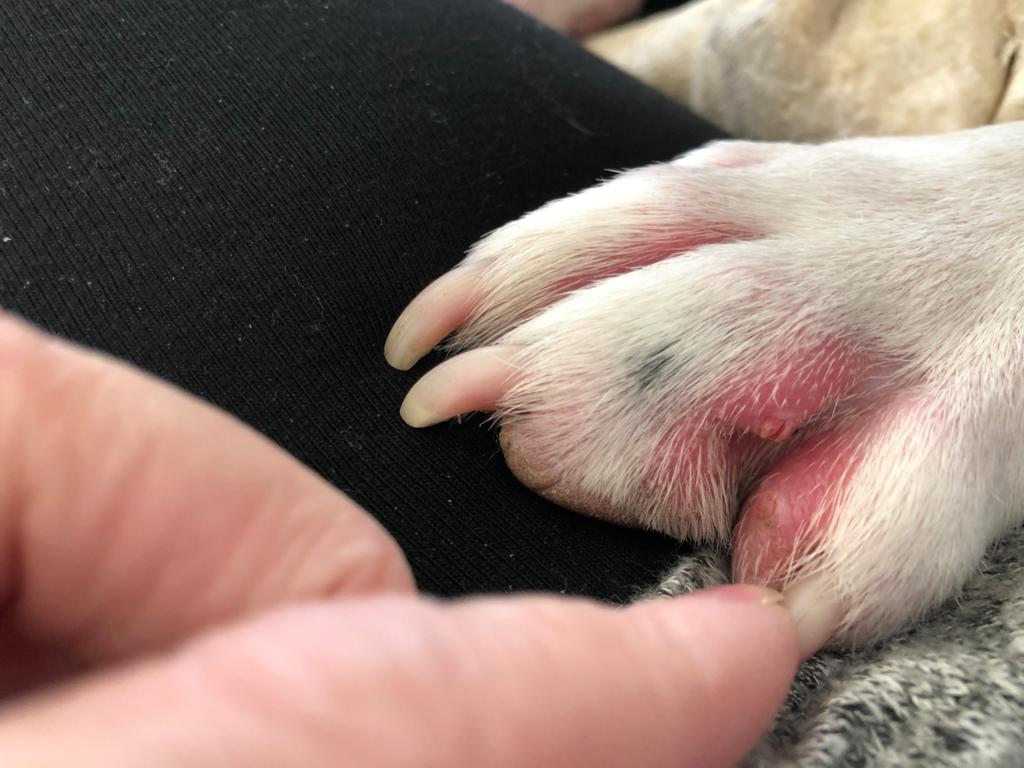
Source: animalia-life.club
Environmental Allergies
Grass, pollen, mold, and dust mites commonly trigger paw irritation.
Contact Irritants
Road salt, lawn chemicals, cleaning products, and de-icing agents may irritate the skin.
Infections
Bacterial and yeast infections can cause redness, odor, swelling, and licking.
Physical Injury
Cuts, scrapes, splinters, and abrasions may inflame the paws.
Common Symptoms That Accompany Red Paws
Dogs with irritated paws may lick constantly, chew between the toes, limp, or show sensitivity when their feet are touched. Some dogs develop hair loss, swelling, crusting, or dark staining from saliva.
Excessive Licking
Often indicates itching, pain, or discomfort.
Swelling
May suggest injury, infection, or severe inflammation.
How to Treat Red Irritated Dog Paws at Home
If the irritation appears mild and your dog is otherwise healthy, basic home care may help reduce inflammation. The goal is to remove irritants, protect the skin, and prevent additional trauma from licking.
Before beginning treatment, inspect each paw carefully. Check between the toes, around the nail beds, and across the paw pads for debris, cuts, or foreign objects.
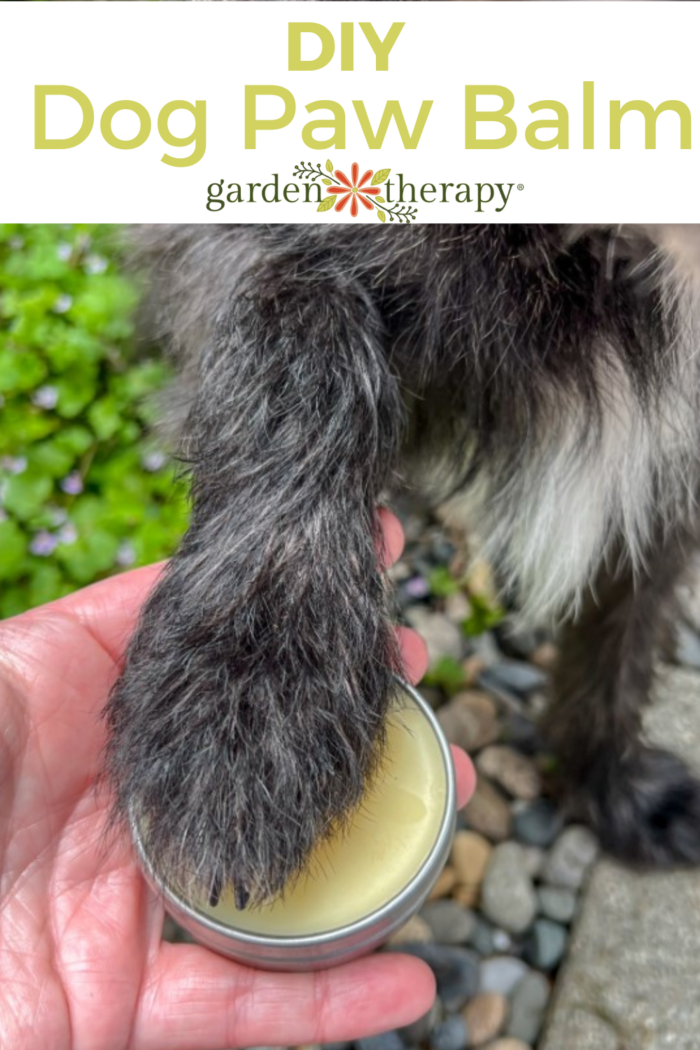
Source: info-welt.com
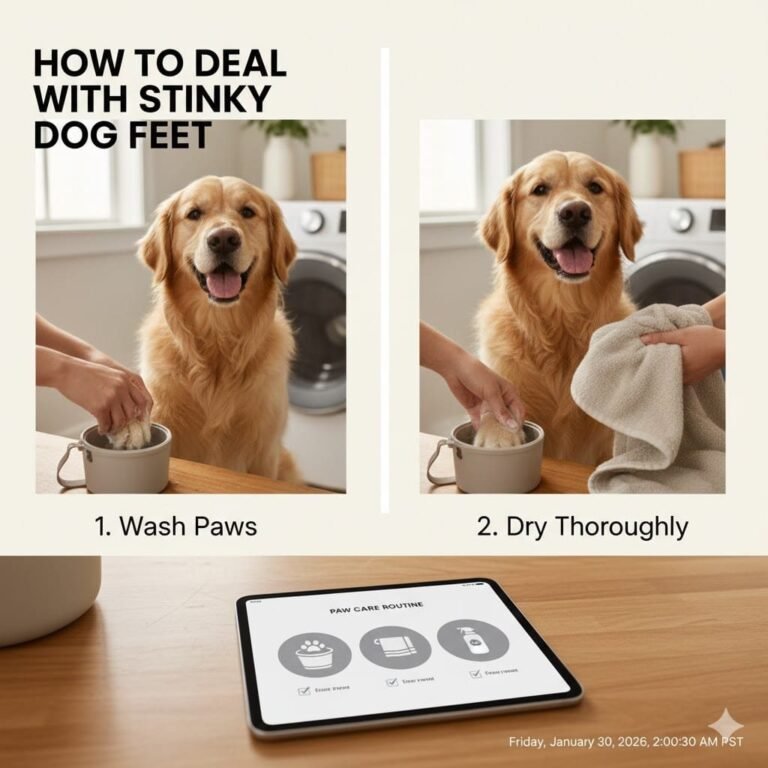
Rinse the Paws
Wash away pollen, dirt, chemicals, and other irritants with lukewarm water.
Dry Thoroughly
Moisture trapped between toes can worsen irritation and promote infection.
Use Protective Gear
Dog boots may help prevent further exposure to rough surfaces or allergens.
Step-by-Step Treatment Process
Gently clean the paws, remove visible debris, pat the feet dry, and monitor for worsening symptoms. Prevent licking by using an Elizabethan collar or other veterinarian-approved barrier if necessary.
If redness improves within a few days and no other symptoms develop, continue monitoring while avoiding known irritants.
Inspect
Look for cuts, splinters, burns, or swelling.
Protect
Keep the paws clean and avoid harsh outdoor conditions.
When Red Paws May Signal a More Serious Problem
Some cases require professional diagnosis because the redness is linked to infection, chronic allergies, autoimmune disease, parasites, or deeper injuries. Delaying treatment can allow the condition to worsen.
Veterinarians may perform skin tests, allergy evaluations, cytology examinations, or other diagnostic procedures to identify the underlying cause.
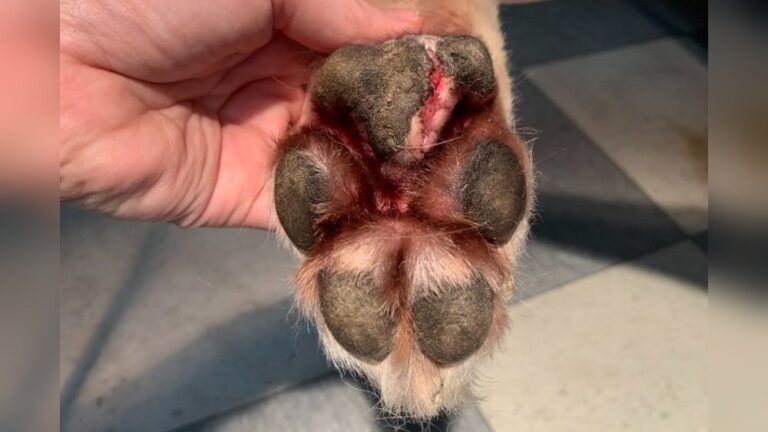
Source: ar.inspiredpencil.com
Persistent Symptoms
Redness lasting more than several days should be evaluated.
Discharge or Odor
These signs often indicate infection.
Limping
Pain while walking may signal injury or severe inflammation.
Signs That Require Veterinary Care
Seek veterinary attention if the paw is bleeding, swollen, producing discharge, developing open sores, or causing significant pain. Dogs that repeatedly lick or chew their paws despite treatment also need further evaluation.
Open Wounds
Require prompt medical assessment.
Severe Swelling
May indicate infection or deeper tissue involvement.
How to Prevent Red Irritated Dog Paws
Prevention is often easier than treatment. Regular paw inspections help identify minor problems before they become serious. Dogs that frequently walk on hot pavement, rough trails, or treated surfaces benefit from extra paw protection.
Routine grooming and cleaning can reduce allergen buildup and make it easier to spot changes in skin health.
Source: medikurin.com
Check Paws Daily
Look for redness, debris, cuts, and swelling.
Avoid Hot Surfaces
Pavement can burn paw pads during warm weather.
Rinse After Walks
Removes allergens and chemical residues.
Dogs at Higher Risk
Dogs with allergies, sensitive skin, or a history of paw infections often experience recurring redness. These dogs may benefit from more frequent monitoring and preventive care.
Allergic Dogs
More likely to develop chronic paw inflammation.
Active Outdoor Dogs
Experience greater exposure to environmental irritants.
Treatment Guide by Symptom and Cause
Matching symptoms with likely causes can help owners understand when home care may be appropriate and when veterinary attention is necessary.
This guide is not a replacement for diagnosis, but it can help prioritize the next step.
Source: animalia-life.club
Redness After Walks
Often linked to environmental irritants or allergens.
Redness With Odor
May indicate yeast or bacterial infection.
Redness and Limping
Can suggest injury, burns, or foreign objects.
Signs of Successful Recovery
Healing paws typically show reduced redness, less licking, normal walking behavior, and healthier skin between the toes. Improvement should continue steadily over time.
Less Licking
Indicates reduced irritation.
Normal Activity
Suggests the paws are becoming more comfortable.
Frequently Asked Questions
Q
Why are my dog’s paws red between the toes?
Redness between the toes is commonly associated with allergies, yeast infections, bacterial infections, or irritation from excessive licking. A veterinary examination may be needed if the condition persists.
Q
Can allergies cause red irritated dog paws?
Yes. Environmental and food allergies are among the most common causes of chronic paw redness, itching, and licking in dogs.
Q
How long does it take for irritated dog paws to heal?
Minor irritation may improve within a few days, while infections, allergies, and deeper injuries can take much longer and may require veterinary treatment.
Q
Should I stop my dog from licking red paws?
Yes. Excessive licking can worsen inflammation, delay healing, and increase the risk of infection. Addressing the underlying cause is important.
Q
When should I take my dog to the veterinarian for red paws?
Seek veterinary care if redness is severe, lasts more than several days, causes limping, produces discharge, develops sores, or continues to worsen despite home care.
✦ Wrapping Up
Conclusion
Learning how to treat red irritated dog paws begins with identifying the underlying cause and taking prompt action. Cleaning the paws, preventing excessive licking, and monitoring symptoms can help many mild cases improve.
However, persistent redness, swelling, discharge, pain, or recurring irritation often requires veterinary diagnosis and treatment. Early intervention helps protect your dog’s comfort and long-term paw health.
💡 Key Takeaway
Inspect your dog’s paws today, remove potential irritants, and schedule a veterinary visit if redness persists or worsens.
Learn how to moisturize dog paws naturally using safe ingredients, step-by-step care methods, prevention tips, and signs that your dog may need veterinary attention.
Learn how to treat dogs paw pads peeling, including common causes, safe home care, warning signs, veterinary treatment, and ways to prevent recurring paw pad damage.
Learn how to treat a deep cut on dog paw with safe first aid steps, bandaging tips, infection warning signs, and guidance on when emergency veterinary care is needed.
Learn how to clean muddy dog paws safely and effectively. Follow simple steps, prevent muddy messes, protect paw health, and keep your home cleaner after walks.
Learn how to prevent foxtails in dogs’ paws with U.S.-focused tips for avoiding risky areas, grooming paws, checking between toes, and knowing when to call a veterinarian.
Learn how to treat smelly dog paws, including safe cleaning, drying, odor causes, yeast and bacterial infection signs, prevention, and when veterinary care is needed.