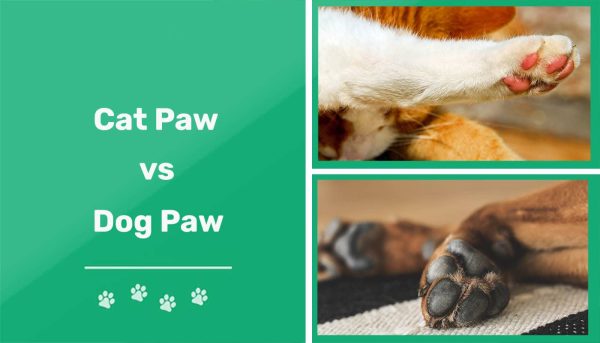
Dog and cat paws are adapted for movement, traction, shock absorption, sensing, protection, and species-specific behaviors.
For dogs and cats living in the United States, paws are the primary contact point between the body and the ground during walking, running, jumping, climbing, and play. Their structure reflects different lifestyles. Dog paws are built largely for weight-bearing movement across varied surfaces, while cat paws combine traction and cushioning with highly mobile claws that support climbing, hunting, and other behaviors.
Paw pads, toes, claws, skin, connective tissues, and the underlying bones work together rather than serving one isolated purpose. The exact shape and proportions also vary by breed, individual anatomy, age, and activity. Understanding these adaptations helps owners recognize why healthy paws matter and why injuries can affect normal movement.
Source: www.pinterest.com
What Are Dog and Cat Paws Adapted For?
Dog and cat paws are adapted primarily for controlled movement and interaction with the ground. They provide a combination of support, traction, cushioning, protection, and sensory feedback. Their shared basic design reflects their common mammalian ancestry, but important differences reflect how dogs and cats use their limbs.
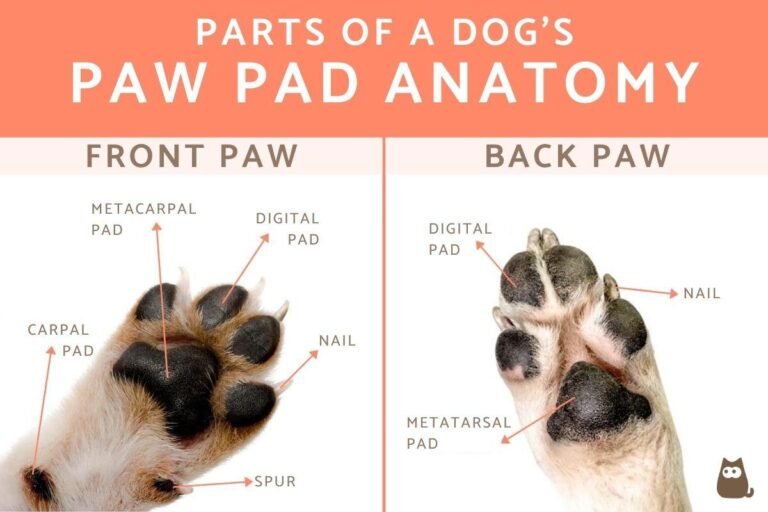
A dog’s paw is strongly associated with sustained locomotion. Dogs walk, trot, run, dig, turn, jump, and carry their body weight through their feet. Thick paw pads help absorb forces and improve grip, while the nails can contribute to traction and assist with digging.
A cat’s paw is more specialized for quiet, agile movement. Cats can spread and flex their toes, use their claws for gripping and climbing, and place their feet with considerable control. Their paws also participate in hunting, grooming, marking, and exploration.
Source: kritterkommunity.com
Traction
Paw pads and claws help dogs and cats maintain contact with surfaces and reduce slipping during movement.
Shock absorption
The tissues of the paw help cushion repeated loading during walking, running, landing, and other movements.
Protection
Paw pads provide a tough external surface that helps shield deeper tissues from routine contact with the ground.
Sensation
Sensory structures in the skin and deeper tissues provide information that contributes to coordinated movement and awareness of body position.
Why Dogs and Cats Have Different Paw Adaptations
Dogs and cats are both members of the order Carnivora, but their paws reflect different movement strategies and behaviors. Domestic dogs also show substantial variation in paw shape because selective breeding has produced many body sizes and limb conformations.
Cats generally rely more heavily on climbing, stalking, pouncing, and precise foot placement. Dogs show broader variation in locomotion, from companion dogs that mainly walk on sidewalks and floors to working and sporting dogs that run over demanding terrain.
Dogs
Dog paws support weight-bearing locomotion and can help with traction, digging, turning, running, and movement across uneven terrain.
Cats
Cat paws support quiet movement, climbing, gripping, hunting, scratching, grooming, and precise placement of the feet.
What Are Dog Paws Adapted For?
Dog paws are adapted for efficient weight-bearing movement, traction, cushioning, and protection. The paw pads are thick areas of specialized skin that contact the ground and help absorb forces generated by normal movement.
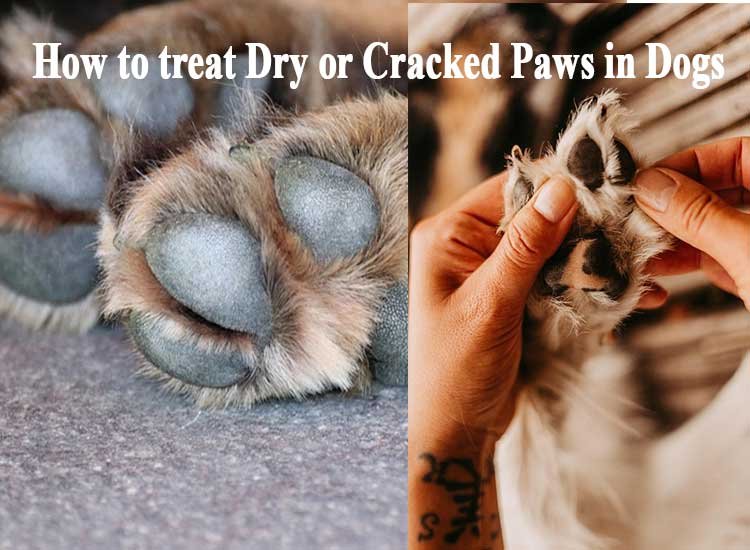
Dogs can travel across grass, soil, pavement, gravel, and other surfaces. Their paws are durable enough for routine activity, but the pads can still be injured by hot pavement, ice, chemicals, sharp objects, rough surfaces, or excessive activity.
Dog nails also contribute to paw function. They can provide additional traction and are useful for behaviors such as digging. The dewclaws have a different position and function from the main weight-bearing toes, and their importance varies with anatomy and activity.
Source: co.pinterest.com
Weight bearing
The toes and pads support the dog’s body as weight moves from one limb to another.
Traction
The textured surface of the pads and contact from the nails help a dog maintain grip during movement.
Shock absorption
Paw tissues cushion some of the forces produced when a dog walks, runs, jumps, and lands.
Terrain protection
The thick outer surface of the pads helps protect the foot during ordinary contact with rough or uneven ground.
Digging
Dogs can use their toes and nails to move soil, scratch surfaces, and perform digging behaviors.
How Dog Paw Pads Help With Movement
Dog paw pads act as both protective and mechanical structures. They provide a relatively durable contact surface while helping distribute forces through the foot. This combination supports normal walking and more forceful activities such as running and jumping.
Paw pads are not equivalent to protective boots. They can tolerate routine contact, but extreme temperatures and abrasive or sharp surfaces can still cause burns, abrasions, cuts, or punctures.
During walking
Pads provide a stable contact surface and help distribute loading as the dog steps.
During running
Pads contribute to traction and help cushion repeated impact as the limbs contact the ground.
On uneven ground
The flexible foot and soft tissues allow the paw to maintain contact with irregular surfaces.
What Are Cat Paws Adapted For?
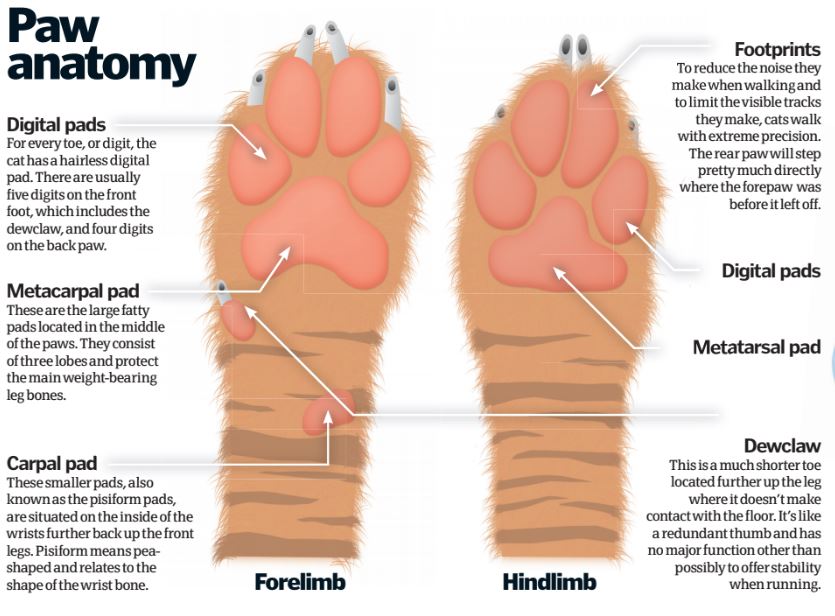
Cat paws are adapted for precise movement, traction, climbing, hunting, cushioning, and manipulation of the environment. Their flexible toes and retractable claws give cats control over how they interact with surfaces.
Cats are digitigrade animals, meaning they normally walk with the heel elevated rather than placing the entire foot flat on the ground. This limb posture supports their characteristic style of movement and helps them place their feet with precision.
Cat claws are especially important adaptations. When relaxed, many claws can retract so the sharp tips are protected during ordinary walking. When needed, claws can extend for climbing, gripping, hunting, scratching, and defense.
Source: storage.googleapis.com
Climbing
Extended claws can help a cat grip suitable surfaces while climbing.
Hunting
Flexible toes and claws help cats grasp and control prey during close-range hunting behavior.
Quiet movement
The paw’s soft tissues and controlled placement help cats move with relatively little noise.
Grooming
Cats use their paws during grooming and can manipulate fur and debris with their toes and claws.
Scratching and marking
Scratching helps cats maintain their claws and can also deposit scent from glands associated with the paws.
Why Cat Claws Are So Important to Paw Function
A cat’s claws are more than weapons. They are part of a movement system that helps the animal grip surfaces and perform natural behaviors. Scratching also removes older claw sheaths and provides scent-marking opportunities.
Because claws affect normal paw use, problems such as overgrown nails, broken claws, or injuries can interfere with walking and other behaviors. Regular observation can help owners notice changes before they become more serious.
Claw extension
Cats can extend their claws when additional grip or contact is useful.
Claw retraction
Retraction keeps the sharp tips out of contact with the ground during much of normal movement.
Claw maintenance
Scratching and grooming help cats manage the outer portions of their claws.
How Paw Pads Protect Dogs and Cats
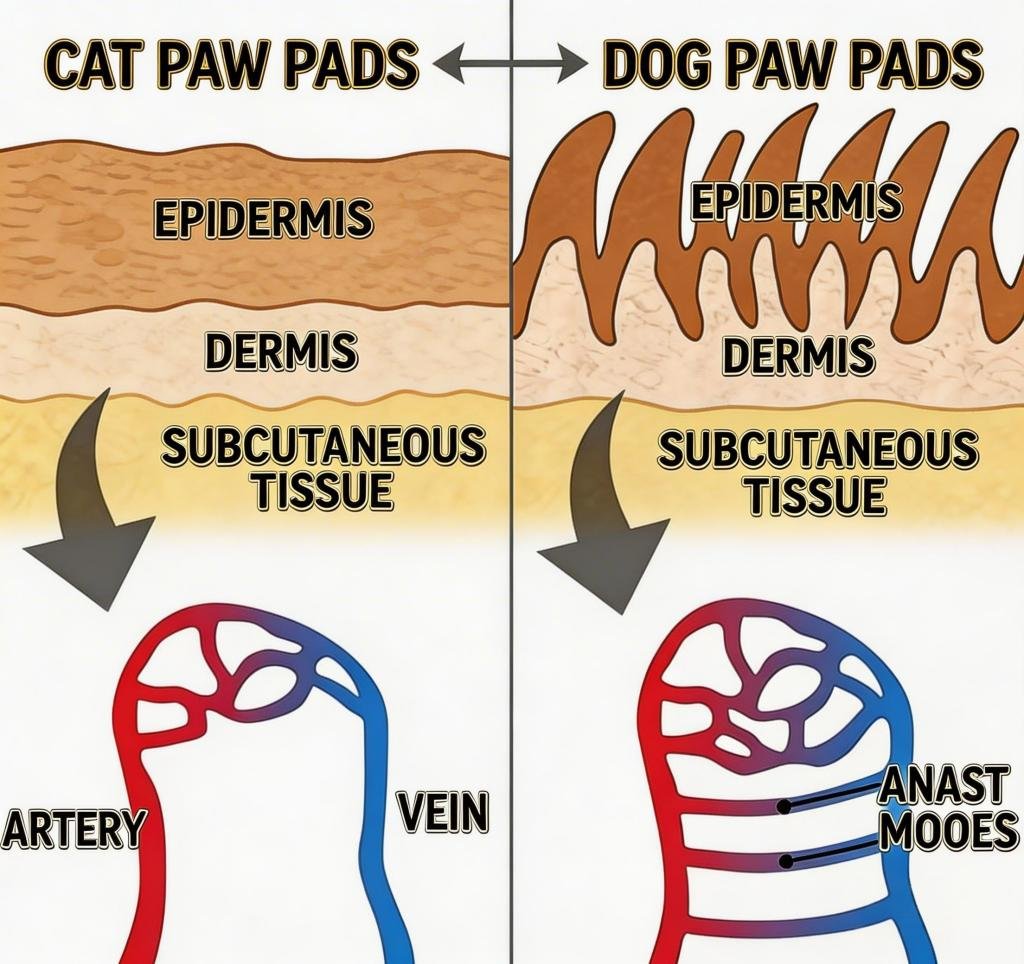
Paw pads provide a durable interface between the foot and the ground. In dogs, veterinary guidance describes the pads as cushioning structures that absorb forces, provide traction, and help insulate the feet from hot and cold surfaces. Similar protective and cushioning roles are important in cats.
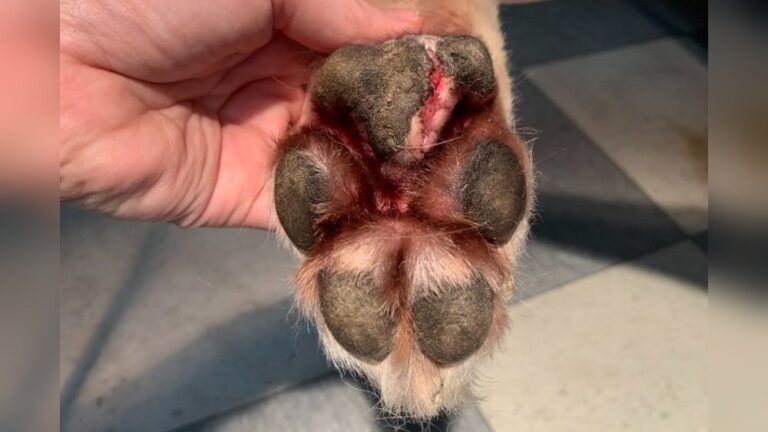
The pads are made from specialized, tough skin over underlying tissues. They are designed for repeated mechanical stress, but that adaptation has limits. A pad can be cut by a sharp object, burned by a hot surface, damaged by ice or chemicals, or irritated by repeated friction.
A healthy paw should therefore be viewed as a working biological structure, not as an indestructible surface. Sudden licking, limping, reluctance to walk, bleeding, swelling, or visible tissue damage can indicate a paw problem that needs attention.
Source: catcarelife.com
Cushioning
The paw’s soft tissues help reduce the mechanical effects of repeated contact with the ground.
Insulation
Paw tissues provide some protection against environmental temperatures, although they do not prevent cold injury or burns in extreme conditions.
Surface durability
The outer pad surface is specialized to tolerate routine friction and pressure.
Traction
Pad texture and flexibility help the foot maintain contact with the surface.
Are Paw Pads Completely Resistant to Heat and Cold?
No. Paw pads are adapted to tolerate environmental contact, but they can still be injured by extreme temperatures. A dog or cat may develop a paw injury even when the rest of the body appears comfortable.
In the United States, summer pavement can become much hotter than the surrounding air, while winter conditions may expose paws to ice, freezing temperatures, and deicing substances. Avoiding dangerous surfaces and checking the paws after exposure are safer than assuming the pads will provide complete protection.
Hot surfaces
Limit exposure to surfaces that are hot enough to cause pain or burns, particularly during periods of strong sun.
Cold surfaces
Watch for prolonged exposure to freezing conditions, ice, and snow, especially when a pet shows discomfort.
Chemical exposure
Rinse and inspect paws after contact with substances that may irritate or damage the skin.
How Dog and Cat Paws Help With Balance and Body Awareness
Paws are part of a larger sensory and movement system that helps dogs and cats coordinate their limbs. Sensory receptors in the skin, muscles, tendons, joints, and other tissues provide information to the nervous system about limb position and movement.
This body-position awareness is called proprioception. It helps an animal coordinate steps without needing to look directly at each paw. When proprioception or limb function is impaired, an animal may stumble, place a paw incorrectly, drag a foot, or show other changes in gait.
The paw therefore does more than support body weight. It participates in a continuous feedback system that connects the surface under the foot with the nervous system and the muscles controlling movement.
Source: storage.googleapis.com
Surface feedback
Sensory information from the foot helps the nervous system respond to contact with the ground.
Limb position
Proprioceptive information helps an animal know where its limbs are without constantly watching them.
Movement control
Sensory feedback contributes to coordinated walking, turning, jumping, and other movements.
How Dog and Cat Paw Adaptations Differ
Dogs and cats share several basic paw functions, but their paws are not interchangeable in purpose. Dogs generally use their feet for sustained, varied locomotion and weight bearing, while cats combine movement with highly specialized climbing, gripping, hunting, and scratching behaviors.
A simple comparison helps explain why a cat’s paw often appears more compact and flexible while a dog’s paw may look broader or more weight-bearing. Individual breeds can differ substantially, so appearance alone does not determine every functional trait.
The most useful distinction is behavioral rather than cosmetic. A paw should be understood in relation to how the animal moves and what the animal needs to do.
Source: fity.club
Primary movement role
Dogs are strongly adapted for walking, running, turning, jumping, and other weight-bearing activities.
Climbing and gripping
Cats have flexible toes and retractable claws that provide specialized control for climbing and gripping.
Digging
Dogs commonly use their toes and nails for digging, although individual interest varies.
Scratching
Cats use their paws and claws for scratching, claw maintenance, exercise, and scent marking.
Cushioning
Both species rely on paw tissues to cushion and protect the feet during ordinary movement.
Do All Dogs Have the Same Paw Adaptations?
No. Dog breeds have been selected for different body shapes, sizes, working roles, and environments, so paw shape and limb mechanics vary. A small companion dog and a large working dog may place different demands on their feet even though both have the same basic paw components.
For owners, this means there is no single paw shape that defines a healthy dog. The more useful question is whether the individual dog’s paws function normally and remain free of pain, injury, or persistent changes in gait.
Breed variation
Paw size and shape can vary considerably among dog breeds.
Activity variation
A working or sporting dog may place different mechanical demands on its paws than a dog with a mostly sedentary lifestyle.
What Paw Problems Can Overcome These Natural Adaptations?
Natural paw adaptations reduce routine mechanical stress, but they do not eliminate the risk of injury. Dogs and cats can develop cuts, punctures, burns, torn nails, inflamed tissues, foreign bodies, or other conditions that interfere with normal paw function.
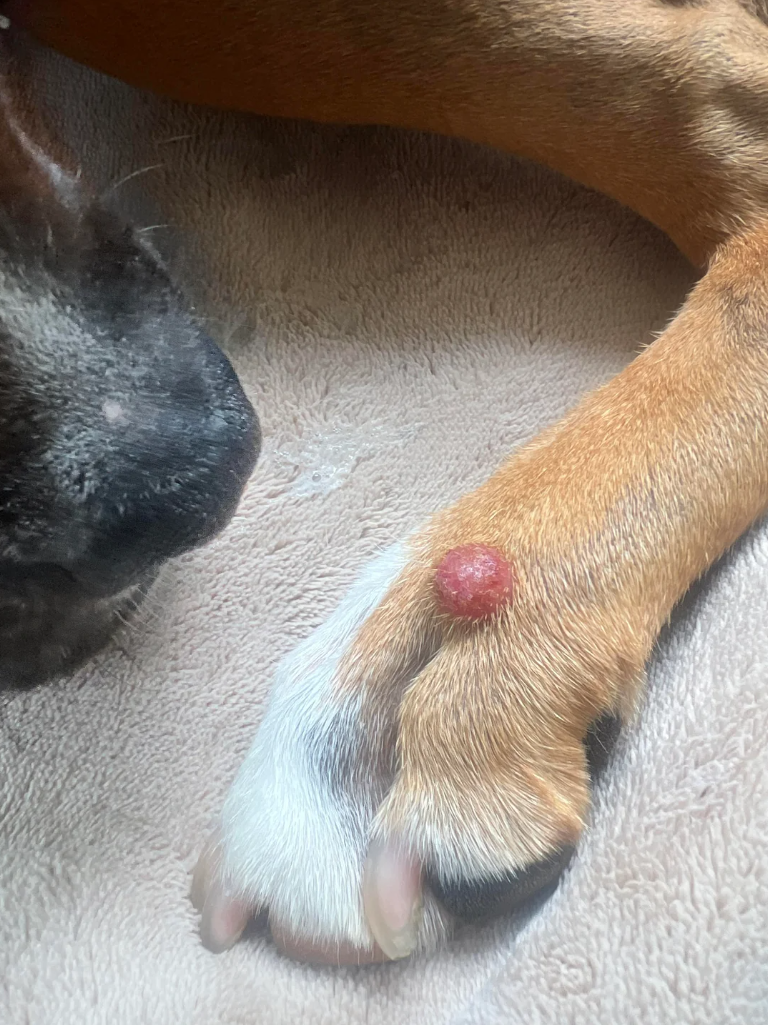
Owners should pay attention to changes in behavior and movement. Persistent licking or chewing of a paw, limping, reluctance to walk, swelling, bleeding, a visible wound, or sudden sensitivity can indicate a problem rather than a normal response to the environment.
Do not assume that a tough paw pad means an injury is minor. Deeper wounds, embedded foreign objects, significant burns, and wounds that continue bleeding may require veterinary treatment.
Source: www.pinterest.com
Limping
A change in weight bearing can indicate pain or injury in the paw, limb, or another part of the musculoskeletal system.
Persistent licking
Repeated attention to one paw may signal irritation, pain, a wound, infection, or another problem.
Bleeding
Bleeding from a paw should be assessed promptly, particularly when it is heavy, persistent, or associated with a deep wound.
Swelling
Swelling can occur with inflammation, injury, infection, or other conditions and may warrant veterinary assessment.
When Should a Dog or Cat See a Veterinarian?
Veterinary evaluation is appropriate when a paw injury is deep, bleeding does not stop with appropriate pressure, the animal cannot bear weight, a foreign object is embedded, there is substantial swelling, or the animal appears significantly painful. Prompt assessment is also appropriate when a paw problem does not improve or keeps returning.
Avoid cutting deeply into a wound or attempting to remove a deeply embedded object yourself. These actions can increase tissue damage and pain. A veterinarian can determine how deep the injury is and whether additional treatment is needed.
Seek prompt care
Contact a veterinarian for significant wounds, persistent bleeding, severe pain, marked swelling, or inability to use the limb normally.
Avoid aggressive home treatment
Do not dig into a paw to search for a deeply embedded object or perform procedures that could worsen an injury.
Frequently Asked Questions
Q
What are dog and cat paws adapted for?
Dog and cat paws are adapted for movement, traction, cushioning, protection, and sensory feedback. Dogs generally use their paws for weight-bearing locomotion and varied terrain, while cats have additional adaptations for climbing, gripping, hunting, and scratching.
Q
What are dog paw pads adapted for?
Dog paw pads are adapted to provide traction, cushion the feet during movement, protect deeper tissues, and tolerate routine contact with the ground. They can still be injured by extreme heat or cold, sharp objects, chemicals, and excessive friction.
Q
What are cat paw pads adapted for?
Cat paw pads help cushion the feet, provide traction, protect deeper structures, and support controlled movement. Their flexible toes and claws add specialized abilities for gripping, climbing, hunting, and scratching.
Q
Why do cats have retractable claws?
Retractable claws allow cats to keep the sharp claw tips protected during much of ordinary walking while extending them when additional grip is useful. Cats use their claws for climbing, hunting, scratching, and defense.
Q
Can dogs and cats feel through their paw pads?
Yes. Sensory structures in the feet and limbs provide information about contact, movement, and body position. This information contributes to coordinated movement and balance.
Q
Are dog and cat paws resistant to hot pavement?
No. Paw pads are durable, but they are not immune to burns. Hot pavement and other heated surfaces can injure the pads, so pets should be kept away from surfaces that are dangerously hot.
Q
Do paw pads protect dogs and cats from cold weather?
Paw pads provide some insulation and are adapted for environmental contact, but they do not make an animal immune to cold injury. Prolonged exposure to freezing surfaces, ice, and snow can still cause paw problems.
✦ Wrapping Up
Conclusion
Dog and cat paws are highly functional structures adapted to the demands of each species. Both provide traction, cushioning, protection, and sensory information, but dogs emphasize stable weight-bearing movement while cats combine paw function with specialized climbing, gripping, hunting, and scratching abilities.
These adaptations make normal movement possible across many environments, but they have limits. Hot pavement, freezing conditions, sharp debris, chemicals, wounds, and other hazards can damage even healthy paws. Regularly checking the feet and responding to changes in walking, licking, swelling, or pain can help protect normal paw function.
💡 Key Takeaway
Check your dog or cat’s paws regularly, especially after outdoor activity, and contact a veterinarian for significant wounds, persistent limping, bleeding, swelling, or obvious pain.
Learn how to treat dry dog paws safely with moisturizing care, paw protection, and prevention strategies. Discover causes, home remedies, and when to contact a veterinarian.
Learn whether dogs’ front paws are bigger than their back paws, why this difference exists, how anatomy affects movement, and when paw size differences may signal a problem.
Learn why your dog’s paws may be red and itchy, including allergies, infections, parasites, irritation, and injuries, plus safe home care and when veterinary treatment is needed.
Learn why your dog’s paws may be pink, from normal puppy pigmentation and saliva staining to allergies, irritation, infection, and paw injuries. Find out when veterinary care is needed.
Learn how to treat a deep cut on dog paw with safe first aid steps, bandaging tips, infection warning signs, and guidance on when emergency veterinary care is needed.