The most common signs of a foxtail in a dog’s paw are sudden or persistent licking between the toes, limping, localized swelling or redness, tenderness, and a small draining wound or bump. If your dog has recently walked through dry grass or an area with foxtails in the United States, inspect between the toes and around the paw pads. A deeply embedded foxtail should be evaluated by a veterinarian rather than pulled at home.
Foxtails are barbed grass seed heads found throughout the United States, with the greatest risk often occurring after seed heads dry and harden. Dogs can pick up these awns while walking through fields, vacant lots, trails, yards, and other grassy areas. The barbed structure can allow an awn to become embedded in tissue rather than simply falling away.
A foxtail in a paw may be difficult to see. The awn can lodge between the toes or beneath the skin and cause a localized inflammatory response. Veterinary and animal-health guidance identifies paw swelling, limping, focused licking, redness, draining wounds, and persistent discomfort as important warning signs. These signs are not specific to foxtails, so exposure history and a veterinary examination may be needed to confirm the cause.
Source: storage.googleapis.com
What Does a Foxtail in a Dog’s Paw Look Like?
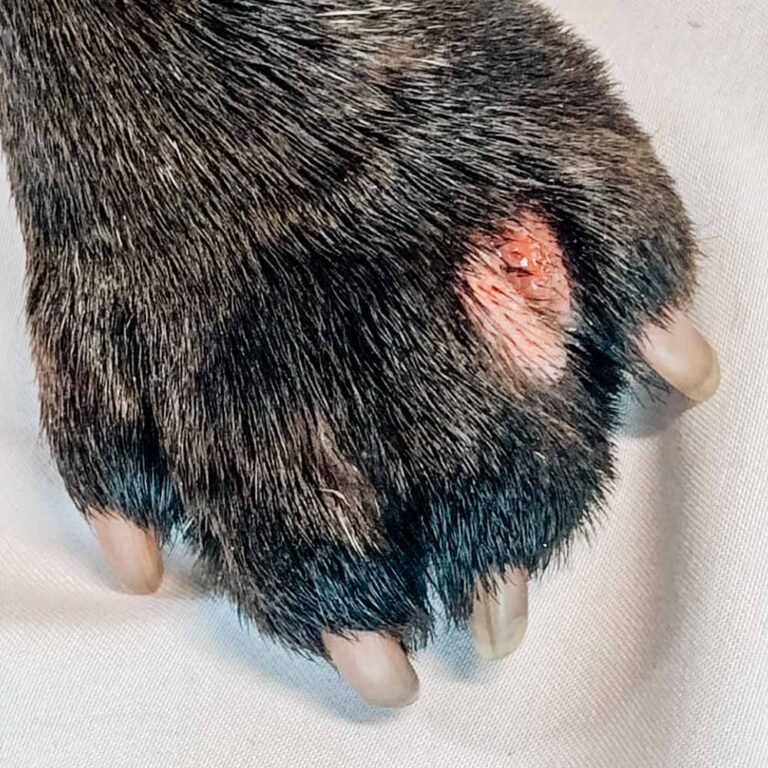
A foxtail in a dog’s paw may appear as a small, stiff grass awn caught in the fur, lodged between the toes, or partly visible at the skin surface. Once it becomes embedded, however, the foxtail may no longer be visible. The surrounding tissue can become red, swollen, tender, or moist.
Foxtail awns are particularly concerning because their barbed structure can make backward movement difficult. An awn that enters soft tissue may therefore continue moving farther into the tissue instead of naturally working its way out.
Source: germanshepherdcountry.com
Visible awn
A dry, pointed grass seed may be caught in the hair around the toes or sitting on the surface of the skin.
Small bump
An embedded awn may produce a localized bump or swelling, particularly in the webbing between the toes.
Red or irritated skin
The skin around the entry site may become red, tender, or inflamed.
Draining area
A persistent wound or area that drains fluid can occur when a foreign body has caused inflammation or a secondary infection.
Where Should You Check?
Start with the spaces between the toes because foxtails can become lodged in the soft tissue there. Also examine the fur around the toes, the sides of the paw, and the areas immediately around the paw pads. Compare the affected paw with the opposite paw so you can notice differences in swelling, redness, or sensitivity.
Between the toes
Check the webbing carefully for a grass awn, small puncture, swelling, redness, or a tender bump.
Around the paw pads
Look for trapped plant material, punctures, unusual swelling, or a painful area.
Toe and paw fur
A foxtail can remain caught in hair before penetrating the skin.
Signs Your Dog May Have a Foxtail in Its Paw
The strongest clue is usually a combination of recent grass exposure and a localized paw problem. A dog may suddenly start licking or chewing one foot, limp, or resist having the paw handled. As inflammation develops, swelling or a small bump may become easier to see.
These symptoms do not prove that a foxtail is present. Allergies, splinters, small wounds, insect bites, infections, and other foreign bodies can produce similar paw problems. The pattern and timing of symptoms help determine how urgently the paw should be examined.
Source: seattlevetassoc.com
Persistent licking or chewing
Repeated attention to one paw, especially the same space between the toes, can indicate pain or irritation from a foreign body.
Limping
A dog may favor the affected leg because an embedded awn can make walking painful.
Swelling between the toes
A localized swollen area in the interdigital space is a recognized sign of possible foxtail or another foreign body.
Redness or tenderness
Inflamed tissue around the suspected entry point can become red and sensitive.
A bump or draining wound
A persistent lump, puncture, or draining area can occur when an embedded foreign body causes inflammation or infection.
Sudden symptoms after outdoor exposure
A new paw problem after walking through dry grass, fields, trails, or weedy areas increases suspicion of a grass awn.
Why One-Paw Symptoms Matter
When only one paw suddenly becomes painful or inflamed, a localized problem such as a foreign body may be more likely than a condition affecting multiple paws. However, this is only a clue, not a diagnosis. Dogs with allergies or skin disease can also develop paw irritation, and veterinary evaluation may be necessary if the problem persists.
Localized problem
One painful or swollen paw after outdoor exposure can raise suspicion of a foreign body such as a foxtail.
Multiple affected paws
Problems involving several paws may have other causes, including allergies, infection, or broader skin disease.
How to Check Your Dog’s Paw for a Foxtail
If your dog is calm and the paw can be examined safely, visually inspect it in good lighting. The goal is to identify a foxtail that is loose or clearly sitting on the surface without pushing anything farther into the tissue.
Start by looking at the fur and skin around the toes. Gently separate the toes enough to see the webbing and compare the affected paw with the matching paw on the other leg. Stop if your dog shows significant pain, tries to bite, or becomes distressed.
Source: craigrd.com
1. Review the exposure
Think about whether your dog recently walked, ran, or played in dry grass, fields, weeds, or other areas where grass awns may be present.
2. Examine the entire paw
Check the fur, toes, interdigital spaces, paw pads, and visible skin for plant material, redness, swelling, punctures, or discharge.
3. Compare both paws
Comparing the affected paw with the opposite paw can make localized swelling or redness easier to recognize.
4. Stop if the awn appears embedded
Do not dig into swollen tissue or repeatedly probe a suspected foxtail that is beneath the skin.
5. Arrange veterinary care when needed
A deeply embedded awn, significant swelling, persistent pain, discharge, or ongoing lameness should be assessed by a veterinarian.
Can You Remove a Foxtail Yourself?
Veterinary guidance generally limits at-home removal to foxtails that are clearly visible and easily accessible on the surface. If an awn is partially embedded, difficult to grasp, or surrounded by swollen tissue, attempts to pull it out can push it deeper or leave part of the foreign material behind.
Do not cut into the paw, use a needle to dig for an awn, or repeatedly probe a painful area. A veterinarian can determine whether the suspected foreign body needs professional removal and whether the surrounding tissue has developed an infection.
Potentially suitable for simple removal
A loose foxtail sitting visibly on the surface of the fur or skin may be removed carefully without digging into tissue.
Better handled by a veterinarian
A partially embedded or invisible foxtail, painful swelling, draining wound, or persistent limp requires professional assessment.
When a Suspected Foxtail Requires a Veterinarian
A veterinarian should evaluate a dog when a foxtail appears embedded, cannot be safely removed, or is associated with significant inflammation or a wound. Professional evaluation is especially appropriate when symptoms persist or worsen instead of improving after the dog comes indoors.
Foxtails can migrate through tissue, so the absence of a visible awn does not rule out an embedded foreign body. If your dog has a recurring or non-healing wound between the toes after foxtail exposure, tell the veterinarian about the exposure because that information can help guide the examination.
Source: pawsbro.com
Significant swelling
Increasing swelling around or between the toes should be evaluated rather than repeatedly manipulated at home.
Persistent or worsening limp
Continued lameness after outdoor exposure can indicate a retained foreign body or another paw injury.
Drainage or a non-healing wound
A draining or repeatedly reopening wound can be associated with infection or a retained foreign body.
Severe pain
A dog that cannot comfortably place the paw down or strongly resists examination needs professional assessment.
Unable to locate the source
If symptoms strongly suggest a foxtail but you cannot see one, do not assume there is nothing embedded.
Other Signs That May Mean the Foxtail Is Not in the Paw
Foxtails can enter other parts of a dog’s body. After known exposure, repeated sneezing, nasal discharge, coughing, head shaking, ear discomfort, eye redness, eye discharge, or persistent face rubbing can indicate a grass awn in another location. Breathing difficulty is an emergency and requires immediate veterinary attention.
Nose or airways
Persistent sneezing, nasal discharge, coughing, or breathing problems after grass exposure require prompt veterinary attention.
Eyes
Squinting, redness, discharge, or repeated pawing at an eye can indicate an ocular foreign body and should be assessed promptly.
Ears
Head shaking, ear scratching, or discomfort after exposure can occur when a grass awn enters the ear.
Foxtail or Something Else? Common Paw Problems With Similar Signs
Licking, swelling, and limping are not unique to foxtails. Dogs can develop similar signs from splinters, thorns, small cuts, insect bites, allergies, bacterial or yeast infections, and other forms of pododermatitis. This is why the presence of a visible grass awn or a clear history of exposure can be useful, but neither alone should replace a veterinary examination when symptoms are significant.
A single swollen area between the toes after a walk through dry grass is more suggestive of a localized foreign-body problem than generalized irritation affecting multiple paws, but this distinction is not definitive.
Source: blog.ferplast.com
Possible foxtail
Sudden localized pain, licking, swelling, or a draining spot after exposure to dry grass can fit a foxtail injury.
Possible splinter or thorn
Another plant fragment or sharp foreign material can cause nearly identical localized symptoms.
Possible allergy
Allergic paw irritation often causes itching and may affect multiple paws rather than creating one focal puncture or swelling.
Possible infection
Bacterial or yeast-related inflammation can cause redness, swelling, licking, odor, and discomfort.
Why You Should Not Assume Every Swollen Paw Contains a Foxtail
Foxtails are a common concern in areas where they grow, but a swollen paw has many possible causes. Treating the wrong problem at home can delay appropriate care. If the paw does not improve, develops discharge, or becomes increasingly painful, a veterinarian should determine the underlying cause.
What to Do After a Walk in Foxtail-Prone Areas
The safest approach is to find and remove loose grass awns before they become embedded. After walks through dry grass or weedy areas, inspect the paws, especially the spaces between the toes, and check the rest of the coat and body for attached plant material.
Regular post-walk checks are particularly useful during periods when foxtail seed heads are dry and rigid. Avoiding areas with abundant foxtails is the most reliable way to reduce exposure.
Source: storage.googleapis.com
Inspect the paws
Check between the toes, around the paw pads, and through the fur for visible grass awns.
Check the rest of the dog
Look around the ears, face, eyes, and coat because foxtails can attach to or enter several body areas.
Remove loose plant material promptly
Visible awns that are still loose are easier to address than those that have become embedded.
Avoid high-risk areas
Choose maintained paths and areas with less dry, overgrown grass when practical.
Consider paw protection when appropriate
Protective dog boots can reduce direct paw exposure during activities where avoiding foxtail-heavy areas is difficult, provided the dog tolerates them safely.
Common Mistakes to Avoid
The biggest mistake is assuming that a foxtail is harmless because it is small or because no seed is visible. A barbed awn can be difficult to see once it enters tissue. Another common mistake is repeatedly probing a swollen paw in an attempt to locate the object, which can increase tissue trauma or push a foreign body farther inward.
Do not use home remedies or medications to mask pain while waiting indefinitely for a suspected embedded foxtail to resolve. If symptoms are significant or persistent, the underlying cause needs to be assessed.
Source: blogspot.com
Do not dig into swollen tissue
Searching for an invisible awn with sharp objects can cause additional injury.
Do not assume no visible foxtail means no foxtail
An awn can become embedded beneath the skin and may no longer be visible.
Do not ignore persistent symptoms
Continued licking, limping, swelling, drainage, or a non-healing wound deserves veterinary attention.
Do not rely on symptoms alone
Several paw conditions can mimic a foxtail injury, so persistent or severe cases require proper diagnosis.
Frequently Asked Questions
Q
How can I tell if my dog has a foxtail between its toes?
Look for focused licking or chewing, limping, redness, swelling, a small tender bump, or a draining spot between the toes, especially after your dog has walked through dry grass. A foxtail may not be visible once it becomes embedded, so symptoms can sometimes be the main clue.
Q
Can a foxtail come out of a dog’s paw on its own?
An embedded foxtail should not be expected to work its way out safely. Its barbed structure can encourage forward movement through tissue, which is why a suspected embedded awn should be evaluated rather than repeatedly manipulated at home.
Q
Is a swollen paw always a sign of a foxtail?
No. Swelling can result from a foxtail or another foreign body, but allergies, infections, insect bites, trauma, and other paw conditions can cause similar signs. The timing of symptoms and recent outdoor exposure can provide useful clues, but they do not establish a diagnosis.
Q
Should I take my dog to the vet for a suspected foxtail?
Veterinary care is appropriate when the foxtail is embedded or difficult to remove, when the paw is significantly swollen or painful, when your dog is persistently limping, or when there is a draining or non-healing wound. If you cannot see the suspected awn but symptoms continue, a veterinary examination is also warranted.
Q
What other symptoms can foxtails cause besides paw problems?
Foxtails can affect the ears, eyes, nose, skin, and other tissues. Depending on the location, signs may include head shaking, ear scratching, eye redness or discharge, repeated sneezing, nasal discharge, coughing, or breathing difficulty. Breathing problems require immediate veterinary attention.
✦ Wrapping Up
Conclusion
The clearest way to tell if your dog may have a foxtail in its paw is to combine recent exposure to dry or foxtail-heavy grass with localized symptoms such as persistent licking, limping, swelling between the toes, redness, tenderness, or a draining wound. A visible grass awn is helpful evidence, but an embedded foxtail may be hidden beneath the skin.
Inspect your dog’s paw carefully without digging into painful or swollen tissue. If the suspected foxtail is embedded, cannot be safely removed, or symptoms are worsening or persistent, have a veterinarian examine the paw. Early evaluation can help prevent a small foreign-body problem from becoming a more complicated injury or infection.
💡 Key Takeaway
After your dog has been around dry grass, check between the toes and around the paw pads. If you see a deeply embedded foxtail or notice persistent swelling, pain, limping, or drainage, stop trying to find it at home and contact your veterinarian.
Learn how to measure dog paws for socks using width, length, and circumference measurements. Get accurate sizing, avoid common mistakes, and improve sock fit.
Learn how to protect dogs paws when hiking with practical trail safety tips, paw conditioning, boot fitting advice, first aid guidance, and prevention strategies for every season.
Learn how to treat dog paws burn from pavement with safe first aid steps, recovery tips, warning signs, and prevention methods to protect your dog’s paw pads.
Learn how to clean dog paws naturally using water, gentle homemade solutions, and simple grooming techniques. Keep your dog’s paws clean, healthy, and comfortable after walks.
Learn how to use a clean sock as temporary protection for a dog’s paw, when it is appropriate, how to secure it safely, and when to see a veterinarian.
Learn how to treat an interdigital cyst on a dog paw, recognize interdigital furunculosis, provide safe home care, and know when veterinary treatment is needed.