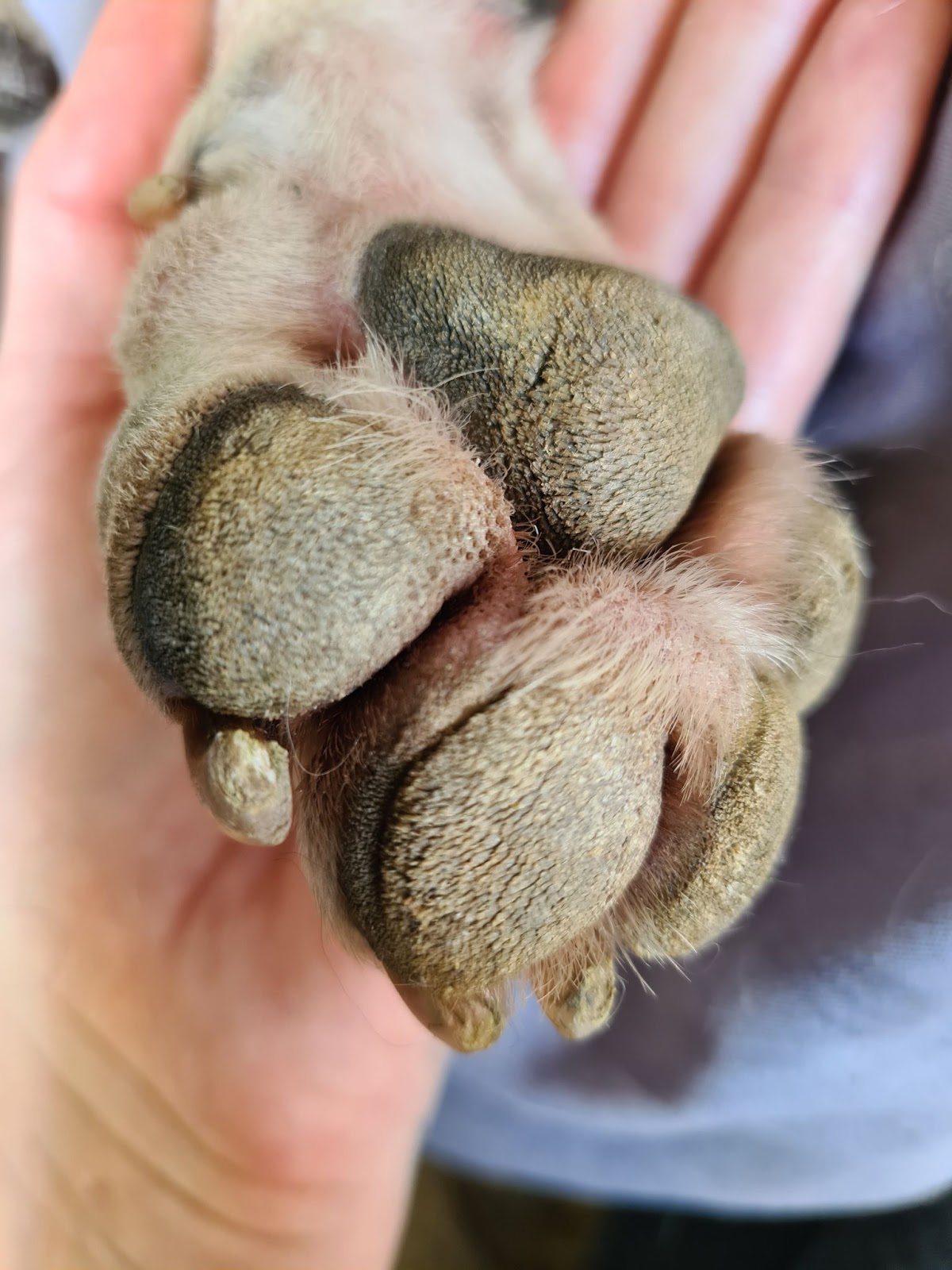
Your dog’s paws can feel rough because healthy paw pads naturally have a thick, textured outer layer, but unusually rough, dry, cracked, crusty, or painful pads can also result from weather exposure, rough surfaces, irritation, allergies, infection, injury, or excessive keratin buildup.
For dog owners in the United States, rough paw pads are often noticed after walks on hot pavement, concrete, rocky trails, or during periods of very dry or cold weather. A certain amount of texture is normal because paw pads are specialized, thick skin designed to provide traction, absorb impact, and protect the feet. The key question is whether the texture has changed or whether your dog has other signs such as licking, chewing, limping, redness, swelling, cracks, odor, discharge, or pain.
If all four paws are mildly rough but your dog is comfortable and the pads are intact, environmental wear may be contributing. If the roughness appeared suddenly, affects one paw, becomes severe, or occurs with itching, inflammation, wounds, or other skin changes, an underlying medical problem should be considered. Veterinary evaluation is especially appropriate when the pads are cracked, bleeding, ulcerated, discolored, or painful.
Source: www.pinterest.com
Are Rough Dog Paws Normal?
Yes, a dog’s paw pads are normally much tougher and more textured than the skin elsewhere on the body. The pads contain thick layers of specialized skin that help absorb impact, provide traction, and protect the tissues underneath during walking and running.
Normal paw pads can feel firm and slightly rough without being dry or damaged. Healthy pads should not generally be painful, actively peeling, bleeding, ulcerated, or covered with new crusts. A change from your dog’s usual paw texture is more informative than texture alone.
The appearance of a paw also varies with activity and environment. A dog that regularly walks on rough outdoor surfaces may develop more wear than a mostly indoor dog. That does not automatically mean the pads are unhealthy, but sudden or excessive changes deserve closer attention.
Source: pangopets.com
Usually normal
Firm, textured pads without significant redness, cracks, bleeding, swelling, discharge, or pain.
Worth monitoring
Increasing dryness, flaking, mild surface changes, or roughness that follows increased activity or environmental exposure.
Needs veterinary attention
Deep cracks, bleeding, ulcers, marked swelling, severe discoloration, persistent licking, obvious pain, or limping.
What makes paw pads naturally tough?
Paw pads are built to withstand repeated mechanical stress. Their thick outer skin and specialized structure help distribute pressure and protect the feet from uneven ground. Because the pads repeatedly contact the ground, they should not be expected to feel as soft as the skin on a dog’s abdomen or ears.
Traction
The textured surface helps dogs maintain grip while walking and running.
Cushioning
Pad tissue helps absorb forces generated when the dog moves.
Protection
The thick tissue helps shield deeper structures from ordinary environmental contact.
Why Are My Dog’s Paws So Rough?
The most useful way to understand rough paws is to consider both the appearance of the pads and what your dog is doing. Mild roughness without other symptoms may reflect normal wear, while roughness combined with itching, inflammation, pain, or lesions points toward a possible medical or environmental cause.
Several causes can overlap. For example, allergies can make a dog lick its feet, and repeated licking can damage the skin barrier and contribute to secondary infection. Similarly, a rough walking surface can cause mechanical irritation that becomes more noticeable when the pads are already dry or inflamed.
Source: animalia-life.club
Normal wear and activity
Frequent walking, running, or contact with abrasive surfaces can increase mechanical wear on the outer layer of the pads.
Hot surfaces
Hot pavement and other heated surfaces can injure paw pads. Pain, discoloration, exposed tissue, or blistering should not be treated as ordinary dryness.
Cold and dry conditions
Cold weather, dry air, ice, snow, and deicing materials can contribute to irritation or damage depending on exposure.
Contact irritation
Cleaning chemicals, lawn products, salt, deicing substances, and other environmental materials can irritate the paws.
Allergies
Environmental or food-related allergic disease can cause itchy feet, leading to repeated licking or chewing and secondary skin changes.
Infection
Bacterial or yeast-related skin disease can cause licking, redness, odor, scaling, discharge, or thickening.
Hyperkeratosis
Hyperkeratosis means excessive thickening of the outer keratinized layer of skin. When it affects paw pads, the pads may become unusually thick, hard, dry, or fissured.
Injury or foreign material
A cut, puncture, burn, embedded debris, or other injury can change the appearance of one paw and may cause licking or limping.
How allergies can make paws rough
Allergies commonly cause itching rather than roughness by itself. Dogs with allergic skin disease may lick or chew their feet repeatedly. That self-trauma can damage the skin barrier and may contribute to redness, scaling, hair loss, thickening, or secondary bacterial or yeast infections.
If rough paws occur alongside recurrent ear problems, facial rubbing, seasonal itching, or persistent licking of multiple feet, allergic skin disease becomes more relevant. A veterinarian can distinguish allergies from parasites, infections, irritants, and other causes.
Seasonal pattern
Symptoms that repeatedly worsen during particular seasons can be associated with environmental allergens, although seasonality alone does not establish the diagnosis.
Year-round itching
Persistent symptoms can have several causes, including environmental allergies, food reactions, parasites, or infection.
When Rough Paw Pads May Mean Hyperkeratosis
Hyperkeratosis is excessive thickening of the keratinized outer layer of the skin. When it affects a dog’s paw pads, the pads can look unusually thick, hard, dry, or crusty and may develop fissures as the tissue becomes more difficult to flex.
Some cases are associated with inherited disorders, while other cases occur secondary to broader skin disease or systemic problems. Familial footpad hyperkeratosis is documented in certain breeds, including Irish Terriers and Dogues de Bordeaux, and severe cases can produce cracks, secondary infection, pain, and lameness.
Because several different diseases can produce thickened or crusty paw pads, appearance alone cannot establish the cause. A veterinarian may use the dog’s age, breed, medical history, distribution of lesions, and additional diagnostic tests to determine what is happening.
Source: storage.googleapis.com
Possible hyperkeratosis pattern
All or several paw pads may become unusually thick, hard, or excessively keratinized rather than simply mildly textured.
Cracking matters
Fissures can become painful and can provide opportunities for secondary infection.
Breed and age can matter
Some inherited keratinization disorders have characteristic breed or age patterns, so those details are useful during a veterinary examination.
Why you should not simply remove the thick tissue
It may be tempting to sand, cut, peel, or aggressively file thick paw-pad tissue. That can cause trauma and may expose vulnerable tissue. If the pads are significantly thickened, cracked, painful, or crusted, treatment should focus on identifying the underlying cause rather than mechanically removing the problem at home.
Avoid aggressive trimming
Do not cut into the pad or try to remove thick tissue with sharp tools.
Treat the cause
Veterinary treatment may involve moisturizing or keratolytic care, management of infection, control of inflammation, or treatment of an underlying disorder depending on the diagnosis.
How to Tell Whether Rough Paws Need Veterinary Care
Look beyond texture. The most useful warning signs are pain, inflammation, tissue damage, persistent licking or chewing, and changes that do not improve after reducing environmental irritation. A dog that suddenly develops a problem in one paw deserves a different level of attention than a dog with long-standing, mild roughness on otherwise healthy feet.
Check each paw in good light, including the pads, spaces between the toes, nails, and surrounding skin. Compare the affected paw with the other paws and note whether the changes are symmetrical.
Source: animalia-life.club
Check for cracks
Small surface dryness is different from deep fissures that split the pad or cause bleeding.
Look for redness or swelling
Inflammation can indicate irritation, allergy, infection, or injury.
Notice odor or discharge
An unpleasant odor, pus, or other discharge can indicate infection and warrants veterinary assessment.
Watch movement
Limping, reluctance to walk, or repeatedly lifting a foot suggests discomfort.
Track licking
Persistent licking or chewing is often more clinically significant than mild roughness alone.
When to seek prompt veterinary attention
Contact a veterinarian promptly if your dog has a deep or bleeding crack, significant swelling, an open wound, a burn, a suspected embedded foreign object, pus or other discharge, severe pain, marked discoloration, or persistent lameness. Burns and deep paw injuries can worsen when a dog continues walking on the affected foot.
If bleeding from a paw injury cannot be controlled with appropriate pressure, or if the injury is severe, veterinary care should not be delayed.
Possible burn
Pain after walking on a hot surface, pad discoloration, blistering, or exposed tissue should be evaluated.
Possible infection
Increasing redness, swelling, warmth, discharge, odor, or pain can signal infection.
Possible foreign body
A sudden problem affecting one paw, especially after outdoor activity, can be associated with debris or another foreign object.
What You Can Do for Mildly Rough Dog Paws
For paws that are only mildly rough and have no wounds, swelling, significant redness, discharge, or pain, basic paw care can reduce unnecessary irritation. The goal is to protect the existing pad rather than trying to make it artificially soft.
After outdoor walks, inspect the pads and between the toes for debris. If the paws are dirty, gently rinse them with clean, lukewarm water and dry them thoroughly. Reduce exposure to surfaces that appear to be causing irritation, particularly if the roughness began after a change in walking routine.
A veterinarian may recommend a paw-safe emollient or other topical treatment when dryness or hyperkeratosis is present. Use only products appropriate for dogs and follow veterinary or label directions. Dogs frequently lick their paws, so human creams and medications can create an exposure risk if swallowed.
Source: storage.googleapis.com
Inspect regularly
Check the pads and spaces between the toes after outdoor activity, especially when your dog has a history of paw problems.
Clean gently
Remove dirt and potential irritants with clean water and dry the paws afterward.
Manage the environment
Avoid excessively hot, abrasive, or chemically contaminated surfaces when possible.
Use dog-appropriate topical products
If a moisturizer or other treatment is needed, choose one intended for dogs or specifically recommended by your veterinarian.
What not to put on rough dog paws
Avoid assuming that a human moisturizer, pain cream, medicated ointment, essential-oil preparation, or other household topical product is safe for a dog. Dogs may lick products from their feet, and some human topical medicines can be harmful when ingested. If a topical product is needed, ask your veterinarian which active ingredients and formulations are appropriate.
Do not use human medication casually
Human topical medications can contain ingredients that are unsafe for pets if licked or swallowed.
Do not peel damaged tissue
Pulling at peeling or cracked pad tissue can enlarge an injury.
Do not hide a worsening problem
A balm may temporarily change the surface appearance without addressing an allergy, infection, burn, or other underlying condition.
How a Veterinarian Diagnoses Persistent Rough Paws
A veterinarian generally starts by determining when the paw changes began, whether one or multiple paws are affected, whether the dog is itchy or painful, and whether there are skin or health problems elsewhere. The pattern of the lesions can provide useful clues.
Depending on the findings, diagnostic testing may include examination of skin cells, skin scrapings, hair sampling, or other tests for bacteria, yeast, parasites, inflammatory disease, or systemic conditions. Some cases require additional testing or a biopsy when the diagnosis cannot be established from the initial examination.
This matters because treating only the rough surface may not resolve the problem. For example, a dog repeatedly licking its feet because of allergies may continue damaging the skin unless the underlying allergic or infectious problem is addressed.
Source: dogvills.com
History
Age, breed, seasonality, activity level, previous episodes, diet, medications, parasite prevention, and environmental exposures can all provide useful diagnostic context.
Physical examination
The veterinarian assesses the pads, toes, nails, skin, ears, and other body areas for patterns that may point toward allergy, infection, injury, or systemic disease.
Skin testing
Cytology and other skin tests can help identify bacteria, yeast, inflammatory cells, or parasites when those conditions are suspected.
Additional diagnostics
Persistent, unusual, or severe lesions may require further testing to identify an underlying skin, immune-mediated, metabolic, or inherited disorder.
Why the number of affected paws matters
A problem affecting one paw can raise concern for localized trauma, a foreign body, or another local disorder. Changes affecting several paws may fit better with environmental irritation, allergic skin disease, infection, or a condition affecting the skin more broadly. This is not a diagnosis by itself, but distribution is an important part of the veterinary assessment.
One paw
Consider localized injury, foreign material, or another problem restricted to that foot.
Several paws
Consider broader skin disease, environmental exposure, allergies, infection, or a disorder affecting paw pads more generally.
Frequently Asked Questions
Q
Why are my dog’s paws rough but not cracked?
Mildly rough pads can be normal because dog paw pads naturally have a thick, textured outer layer. Increased activity, rough walking surfaces, or environmental exposure can also make the surface feel rougher. If the pads remain intact and your dog is comfortable, monitoring and gentle paw care may be reasonable. New or worsening roughness accompanied by itching, redness, odor, swelling, or pain should be evaluated.
Q
Can allergies cause rough dog paws?
Yes. Allergies commonly cause itching, and the feet are frequently affected. Repeated licking or chewing can damage the skin and contribute to redness, scaling, thickening, or secondary infection. Rough paws accompanied by persistent foot licking, recurrent ear problems, or seasonal itching warrant veterinary evaluation.
Q
Are rough paw pads a sign of dehydration?
Rough paw pads by themselves do not establish dehydration. Paw texture can change for many local and medical reasons, including normal wear, environmental irritation, allergies, infection, injury, and hyperkeratosis. If your dog has other signs of illness or dehydration, contact a veterinarian rather than using paw texture alone as a diagnostic test.
Q
How can I soften my dog’s rough paws?
If the paws are mildly rough but otherwise healthy, gentle cleaning, thorough drying, environmental protection, and a dog-appropriate paw moisturizer recommended by your veterinarian may help maintain the skin barrier. Do not aggressively file or cut the pads, and do not use human topical medicines without veterinary guidance.
Q
When should I take my dog to the vet for rough paws?
Seek veterinary care when roughness is persistent or worsening, or when it occurs with deep cracks, bleeding, redness, swelling, discharge, odor, significant licking or chewing, ulcers, discoloration, or limping. Burns, deep punctures, embedded foreign objects, and severe pain should be assessed promptly.
✦ Wrapping Up
Conclusion
Rough dog paws are not automatically a sign of disease. Paw pads are naturally thick and durable, and normal activity can make them feel firm and textured. The more concerning pattern is a noticeable change accompanied by cracking, inflammation, itching, licking, pain, discharge, or difficulty walking.
Start by examining all four paws, considering recent changes in surfaces or activity, and keeping the feet clean and dry. If the problem persists or the pads look damaged, thickened, infected, or painful, a veterinarian can determine whether the cause is environmental irritation, allergy, infection, injury, hyperkeratosis, or another condition.
💡 Key Takeaway
If your dog’s paws are only mildly rough and otherwise healthy, monitor them and reduce environmental irritation. If roughness is severe, worsening, painful, cracked, inflamed, or associated with persistent licking or limping, arrange a veterinary examination instead of trying to remove the thickened tissue yourself.
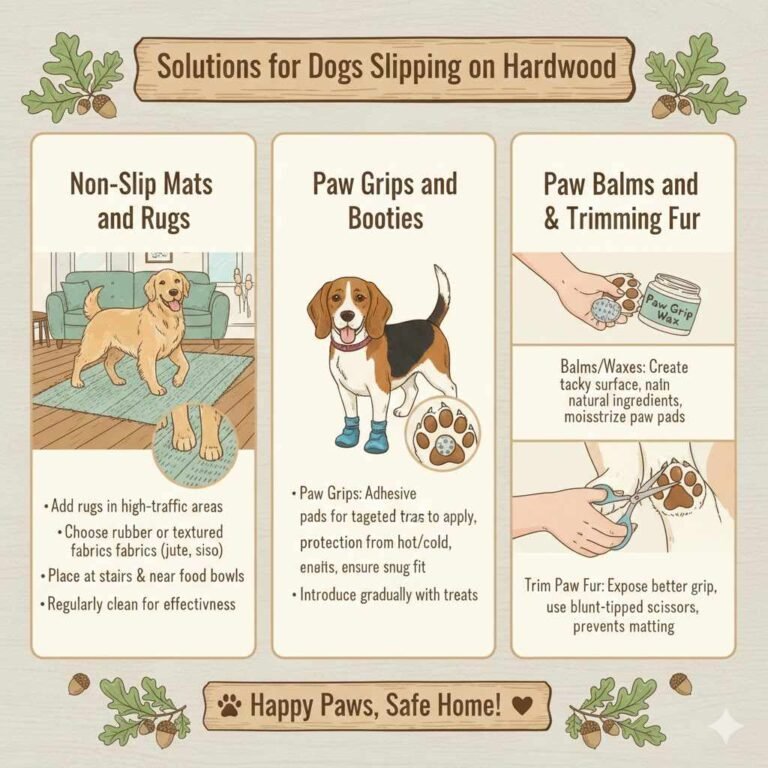
Learn how to stop dogs paws from slipping on hardwood, tile, and other smooth floors with proven traction tips, paw care, grip products, and home adjustments.
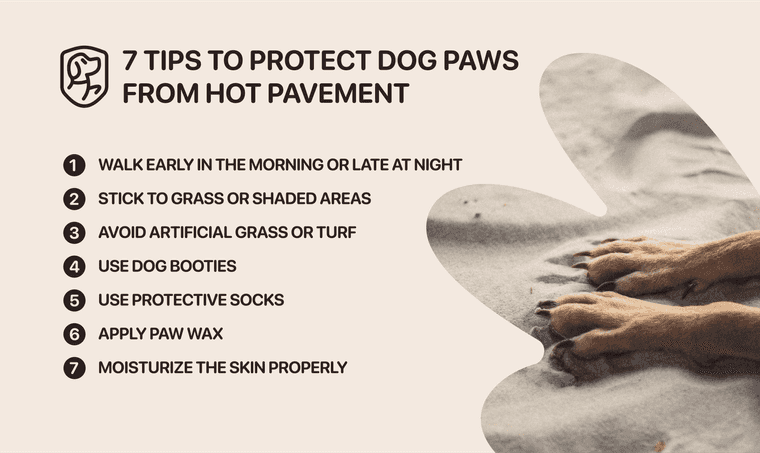
Learn how to protect dog paws from hot pavement with practical safety tips, temperature checks, dog boots, walking schedules, and paw care advice for summer walks.
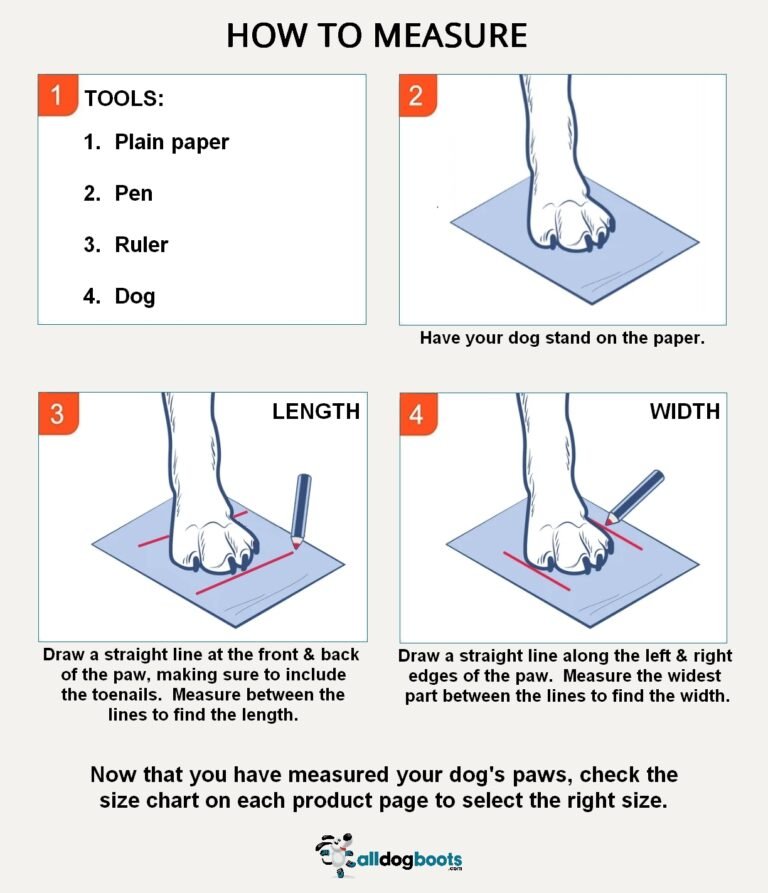
Learn how to measure dog paws for socks using width, length, and circumference measurements. Get accurate sizing, avoid common mistakes, and improve sock fit.
Learn how to stop dog from licking paws home remedy coconut methods safely. Discover causes, application steps, limitations, and when to contact a veterinarian.