Yes. In most dogs, the front paws are slightly larger and wider than the back paws.
Across the United States, dog owners often notice that their dog’s front feet appear larger than the rear feet. In most cases, this observation is correct and reflects normal canine anatomy rather than a health problem.
When asking are dogs front paws bigger than back, the answer is usually yes because a dog’s front limbs support a greater percentage of body weight. Larger front paws help absorb impact, provide stability, and assist with balance during walking, running, and jumping.
Source: petcareclub.com
Are Dogs Front Paws Bigger Than Back Paws?
Yes, in most healthy dogs the front paws are larger and broader than the rear paws. This difference is usually subtle but becomes more noticeable in large breeds, working dogs, and puppies.
The front half of a dog’s body supports a greater share of its weight. Because the front legs handle more impact during movement, the paws often develop a larger surface area to distribute force efficiently.
Source: texaswolfdogproject.org
Normal Anatomy
A modest size difference between front and rear paws is expected in most dogs.
Purpose
Larger front paws improve stability and weight distribution.
How Much Bigger Are Front Paws?
The difference varies by breed and individual dog. Some dogs show only a slight increase in width, while others have visibly larger front feet designed for strength and support.
Breed Variation
Large and working breeds often show a more noticeable difference.
Why Are Front Paws Usually Larger?
A dog’s front limbs act as the primary support system during standing and movement. Many dogs carry roughly 60 percent of their body weight on the front end, which increases demand on the front feet.
Larger front paws help absorb shock when a dog lands after jumping, changes direction quickly, or runs across uneven ground. The extra surface area improves traction and reduces stress on joints.
Source: 68.media.tumblr.com
Weight Support
Front paws help support most of the body’s weight.
Impact Absorption
Larger paws spread forces across a wider area.
Role During Movement
Front limbs function like shock absorbers, while rear limbs provide much of the propulsion. This difference helps explain why front paws often appear larger and sturdier.
Front End
Focuses on braking, balance, and impact management.
Do All Dog Breeds Have Larger Front Paws?
Not every breed shows the same degree of difference. Some breeds have nearly equal-sized paws, while others display noticeably larger front feet.
Body proportions, intended working purpose, and genetics all influence paw shape and size. Breeds developed for pulling, carrying weight, or navigating rough terrain may have more robust front paws.
Source: i.pinimg.com
Working Breeds
Often have strong, wide front paws for support.
Light-Framed Breeds
May show less obvious differences between front and rear feet.
Puppies Versus Adults
Puppies can appear to have oversized front paws because their feet often grow before the rest of the body catches up. As they mature, proportions become more balanced.
Growth Stage
Large puppy paws do not always predict giant adult size.
When Is a Paw Size Difference a Concern?
A normal size difference between front and rear paws is not a medical issue. However, sudden swelling, pain, limping, or enlargement of one paw should be investigated.
Injuries, infections, allergic reactions, growth abnormalities, and joint conditions can cause a paw to appear larger than expected. Changes that occur rapidly deserve veterinary attention.
Source: thepuppymag.com
Seek Veterinary Care
If a paw becomes swollen, painful, or difficult to bear weight on.
Monitor Changes
Compare both sides of the body for symmetry.
Warning Signs
Persistent limping, redness, bleeding, excessive licking, and heat around the paw are signs that a medical evaluation may be needed.
Urgent Symptoms
Severe swelling or inability to walk normally requires prompt attention.
How to Compare Your Dog’s Front and Back Paws
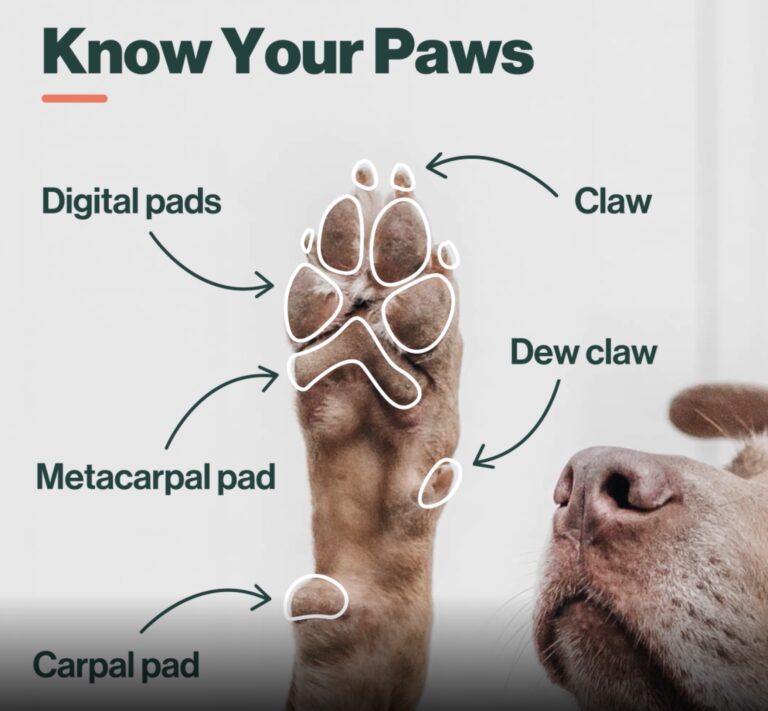
Place your dog on a flat surface and observe the paws while standing naturally. Look at both width and overall footprint rather than toe length alone.
Many owners find that the front paws appear wider and more rounded, while the rear paws look slightly narrower and more streamlined for propulsion.
Source: thefarmersdog.com
Use a Flat Surface
Standing posture provides the most accurate comparison.
Compare Shape
Front paws are often broader while rear paws are more compact.
Simple Home Check
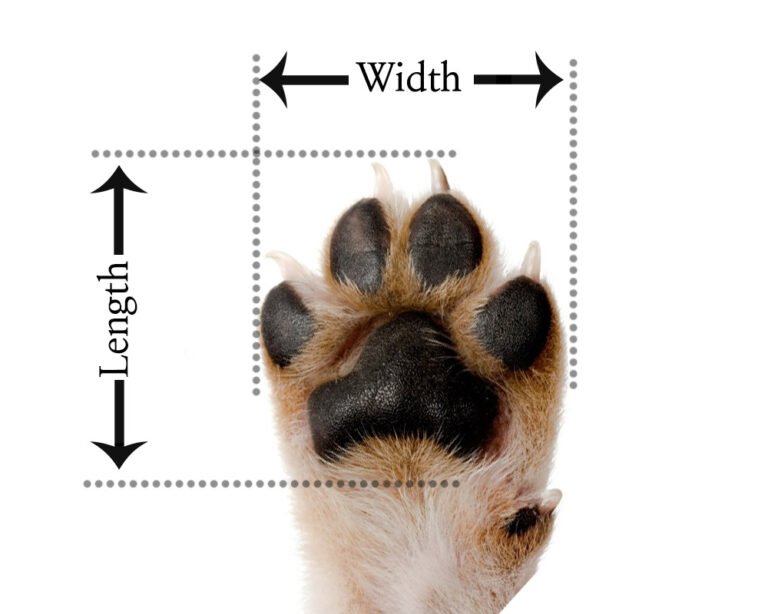
You can trace each paw on paper and compare the outlines. This method helps reveal subtle differences that may not be obvious during casual observation.
Easy Measurement
Compare width and length between front and rear paw prints.
Frequently Asked Questions
Q
Are larger front paws normal in dogs?
Yes. Most dogs naturally have front paws that are slightly larger because the front limbs support more body weight and absorb more impact.
Q
Do puppies have oversized front paws?
Many puppies appear to have oversized paws during growth phases. Their feet often develop before the rest of the body reaches adult proportions.
Q
Why do my dog’s back paws look smaller?
Rear paws are commonly narrower because the hind limbs are designed more for propulsion and forward movement than weight-bearing support.
Q
Can paw size indicate how big a dog will get?
Paw size can provide a rough clue in puppies, but it is not a reliable predictor of adult size. Genetics and breed characteristics are more important.
Q
Should I worry if only one paw is larger?
A single enlarged paw may indicate swelling, injury, infection, or another medical issue. If the change is new or accompanied by discomfort, contact a veterinarian.
✦ Wrapping Up
Conclusion
For most dogs, the answer to are dogs front paws bigger than back is yes. Front paws are typically wider and stronger because they support more weight and help absorb impact during movement.
A modest size difference is usually normal and reflects healthy canine anatomy. Monitoring for sudden changes, swelling, or pain is more important than focusing on natural front-to-back differences.
💡 Key Takeaway
Compare your dog’s paws while standing naturally. Slightly larger front paws are generally normal, but sudden enlargement or discomfort should be evaluated by a veterinarian.
Learn how to treat smelly dog paws, including safe cleaning, drying, odor causes, yeast and bacterial infection signs, prevention, and when veterinary care is needed.
Learn how to treat dogs paw pads peeling, including common causes, safe home care, warning signs, veterinary treatment, and ways to prevent recurring paw pad damage.
Learn what to do when a dog’s paw swells under a bandage, how to recognize circulation problems, when to contact a veterinarian, and how to prevent a bandage from becoming too tight.
Learn how to use a clean sock as temporary protection for a dog’s paw, when it is appropriate, how to secure it safely, and when to see a veterinarian.
Learn why dogs tuck their paws when lying down, sitting, or resting. Discover normal behavioral reasons, possible health concerns, and signs that require veterinary attention.