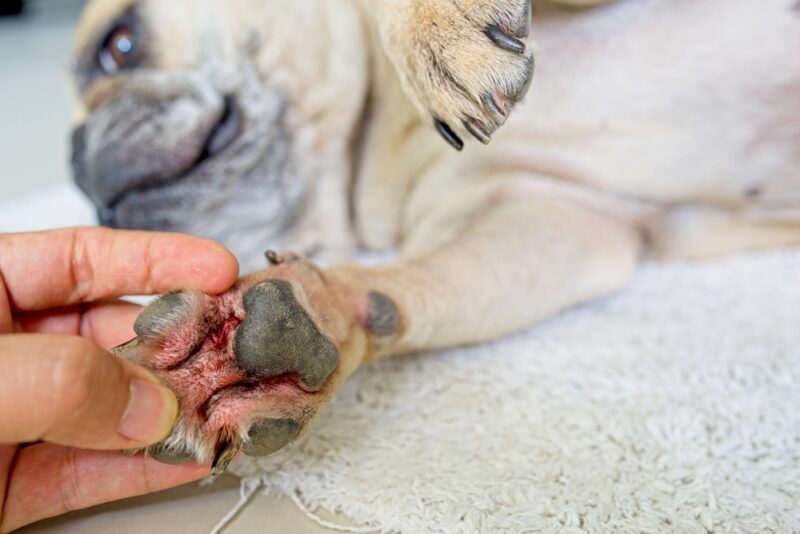
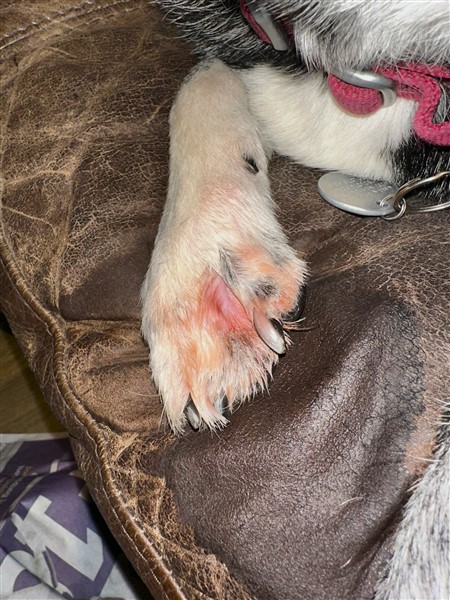
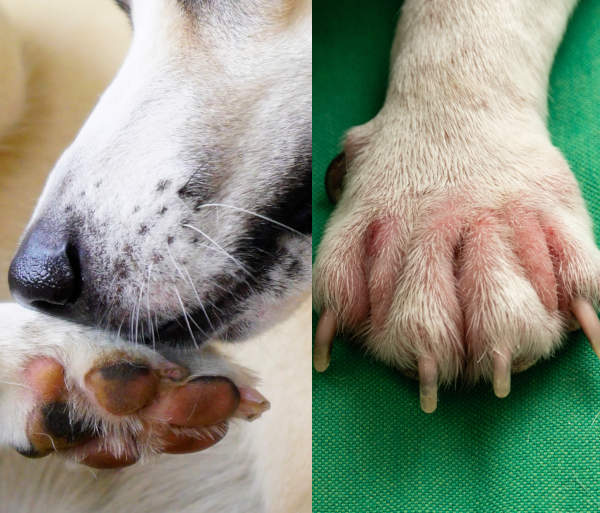
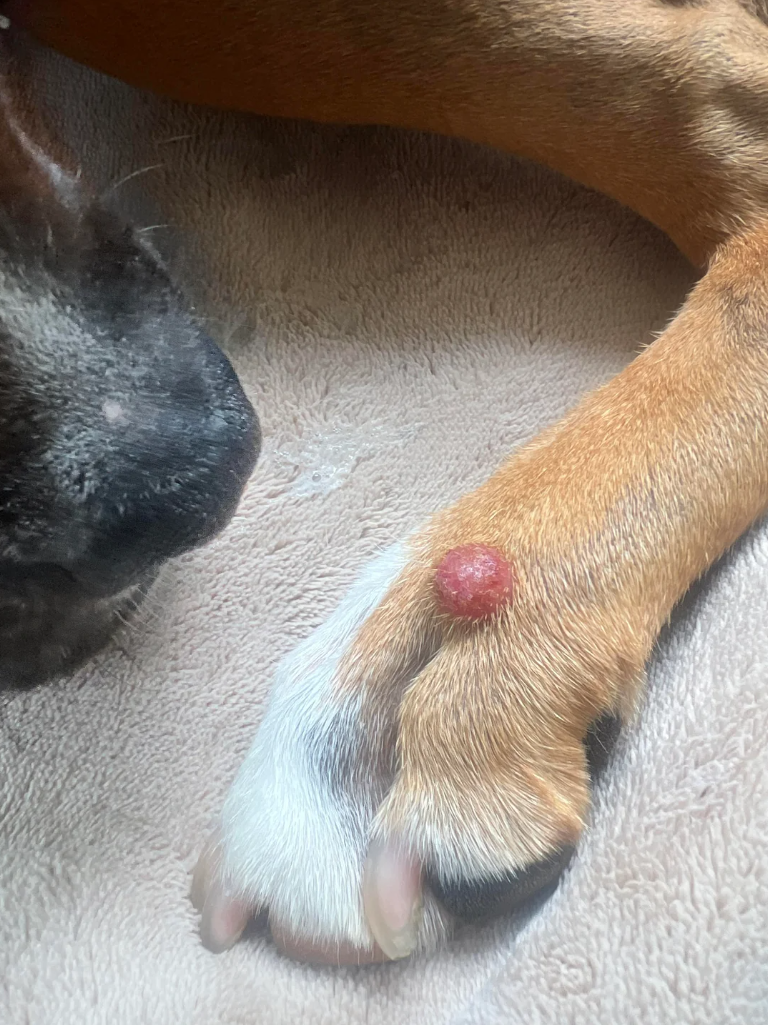
A yeast infection on a dog’s paws often causes red, irritated, itchy, darkened, or thickened skin with a musty odor.
For dog owners in the United States, a paw that suddenly looks red, swollen, or unusually dark can have several possible causes. Yeast overgrowth is one possibility, but allergies, bacteria, parasites, foreign bodies, injuries, and contact irritation can create similar signs.
A common yeast involved in canine skin disease is Malassezia pachydermatis. It normally lives on a dog’s skin, but excessive growth can cause inflammation. On the paws, this may lead to persistent licking, redness between the toes, brown staining of the fur, odor, scaling, and skin thickening. A veterinarian usually needs to examine the paw and test a sample to confirm that yeast is actually involved.
Source: blogspot.com
What Does a Yeast Infection Look Like on Dogs Paws?
A yeast infection on a dog’s paws commonly appears as red or inflamed skin, especially between the toes and around the paw pads. The dog may lick or chew the paws frequently, and the fur may become stained brown or reddish brown from saliva. Some dogs also develop greasy or scaly skin and a noticeable musty odor.
With ongoing inflammation, the skin can become darker and thicker. Hair loss may occur where the dog repeatedly licks or chews. More severe inflammation can produce swelling, crusts, sores, or secondary bacterial infection. These signs can be uncomfortable, but they are not specific enough to diagnose yeast by sight alone.
Source: animalia-life.club
Redness
The skin may look pink, bright red, or inflamed, particularly between the toes or around the paw pads.
Brown staining
Fur around the toes can turn reddish brown from repeated licking and saliva exposure. This staining can occur with allergies as well as yeast overgrowth.
Darkened skin
Chronic inflammation can cause hyperpigmentation, making the skin appear brown, gray, or nearly black.
Thickened skin
Long-standing irritation can make affected skin thicker and rougher than normal.
Scaling or crusting
Some dogs develop flaky, scaly, greasy, or crusty skin around affected areas.
Musty odor
A strong musty or unusual odor can occur with yeast dermatitis, although odor alone cannot identify the cause.
Where Does Yeast Usually Affect the Paw?
Yeast-related inflammation can affect the skin between the toes, the tops of the paws, areas around the nail beds, and other moist or irritated parts of the feet. Dogs that repeatedly lick their paws can keep the skin damp and traumatized, which may worsen inflammation and create conditions that favor microbial overgrowth.
Between the toes
Look for redness, moisture, swelling, staining, or irritation in the spaces between the toes.
Around the pads
The skin surrounding or between paw pads may become inflamed, thickened, scaly, or discolored.
Around the nails
Inflammation can sometimes involve skin around the nail beds, especially when a broader paw disorder is present.
Common Signs That May Occur With Paw Yeast Overgrowth
The appearance of a yeast-affected paw varies with the duration and severity of inflammation. Early disease may look like mild redness and itching, while chronic disease can cause darker, thicker, hairless, or crusty skin.
Dogs often show behavioral signs before the paw looks dramatically different. Persistent licking, chewing, rubbing, or reluctance to let someone handle the foot can indicate that the paw is uncomfortable.
Source: animalia-life.club
Persistent paw licking
Repeated licking is common with itchy or painful paws and can further damage the skin.
Chewing between the toes
Dogs may chew or nibble at inflamed areas, especially between the toes.
Hair loss
Repeated licking and inflammation can cause broken or missing hair around affected areas.
Swelling
Inflamed feet can become swollen, particularly when infection or significant irritation is present.
Unusual odor
A musty odor may accompany yeast dermatitis, especially when the skin is greasy or moist.
Dark or thick skin
Chronic irritation can produce hyperpigmentation and thickening that may remain even after active inflammation improves.
Why Does the Fur Turn Brown?
Brown or reddish-brown paw fur is often caused by repeated licking rather than yeast itself. Saliva contains pigments that can discolor light-colored fur over time. Dogs with allergies commonly lick their feet, so staining can occur with allergic disease even when yeast is not the primary problem.
For that reason, brown fur should be treated as a clue rather than a diagnosis. A veterinarian may need to check the skin for yeast, bacteria, parasites, or other causes of paw inflammation.
Licking-related staining
Repeated saliva exposure can gradually discolor the hair around the paws.
Underlying itch
Allergies and other itchy conditions can trigger the licking that produces staining.
Possible secondary infection
Yeast or bacteria may multiply in skin that has been repeatedly irritated or inflamed.
Yeast Infection Versus Other Causes of Red Dog Paws
A red or itchy paw does not automatically mean a yeast infection. Pododermatitis is a broad term for inflammation of the feet, and it can result from yeast, bacteria, allergies, parasites, irritants, trauma, foreign material, immune-mediated disease, hormonal disorders, and other problems.
The pattern can provide clues, but appearance alone is not reliable enough to identify the cause. For example, allergies commonly cause paw licking and reddish-brown staining, while bacterial infections can cause swelling, pustules, crusts, discharge, or painful lesions.
Source: hepper.com
Yeast overgrowth
Often associated with itching, redness, odor, scaling, greasy skin, darkening, or thickening.
Bacterial infection
May cause painful redness, swelling, pustules, crusts, ulcers, discharge, or draining lesions.
Allergies
Can cause chronic paw licking, chewing, redness, and brown staining, sometimes with secondary yeast or bacterial infections.
Parasites
Some mites and other parasites can cause intense itching, inflammation, hair loss, and secondary infection.
Foreign body or injury
A splinter, grass awn, cut, burn, or other injury can cause localized pain, swelling, licking, or a draining lesion.
Why Appearance Alone Cannot Confirm Yeast
Yeast organisms can normally live on canine skin without causing disease. The key question is whether abnormal yeast growth is contributing to the dog’s clinical signs. Veterinary cytology can help answer that question by examining material from the affected skin under a microscope.
A veterinarian may also look for bacteria and inflammatory cells because mixed infections can occur. If the paw problem keeps returning, the veterinarian may investigate allergies, parasites, hormonal disease, immune problems, or other underlying causes.
Cytology
A sample from the skin can be examined under a microscope for yeast, bacteria, and inflammatory changes.
Skin examination
The veterinarian evaluates the paws, nails, skin, and other body areas for patterns that may suggest an underlying disorder.
Additional testing
Depending on the case, skin scrapings, cultures, allergy evaluation, blood testing, or other diagnostic work may be appropriate.
What Causes Yeast Infections on Dogs Paws?
Yeast dermatitis develops when yeast that normally lives on the skin grows excessively or contributes to inflammation. Changes in the skin environment can make overgrowth more likely. Allergic skin disease is a common underlying factor in dogs with recurrent skin and paw problems.
Moisture, skin inflammation, increased oil production, and repeated self-trauma can also contribute to a cycle of irritation. Some dogs are more prone to recurrent yeast dermatitis because of their breed, skin characteristics, allergies, immune status, or another underlying medical condition.
Source: happynaturaldog.com
Allergic skin disease
Allergies can cause chronic itching and inflammation and may be associated with secondary yeast or bacterial overgrowth.
Moist or irritated skin
Repeated licking and inflammation can alter the local skin environment and worsen paw irritation.
Seborrhea
Dogs with oily or scaly skin conditions can be more susceptible to secondary yeast overgrowth.
Immune suppression
Some diseases and immune-suppressing medications can make it harder for the body to control microbial overgrowth.
Underlying disease
Recurrent skin infections can sometimes occur alongside hormonal, allergic, immune, or other medical disorders.
Why Do Yeast Paw Problems Keep Coming Back?
When a paw yeast problem repeatedly returns, treating the yeast alone may not solve the underlying cause. Dogs with allergies can continue to itch and damage their skin, allowing secondary infections to recur. Repeated episodes should therefore prompt a veterinary reassessment rather than repeated treatment based only on appearance.
The veterinarian may consider the dog’s history, seasonality, other skin or ear symptoms, previous treatment response, parasite exposure, diet, medications, and general health when looking for the reason for recurrence.
Recurring allergies
Ongoing allergic inflammation can repeatedly damage the skin and promote secondary infections.
Incomplete diagnosis
A paw can have more than one problem, such as yeast plus bacteria or an underlying allergy.
Persistent underlying disease
Hormonal or immune disorders can contribute to chronic or recurrent skin infections in some dogs.
How Veterinarians Confirm a Yeast Infection
A veterinarian usually confirms suspected yeast involvement by examining a sample from the affected skin. Cytology can identify yeast organisms and inflammatory changes and can also help detect bacterial involvement.
The examination matters because treatment depends on the actual cause. A paw that looks like yeast could instead involve bacteria, allergies, parasites, a foreign body, trauma, or another form of pododermatitis. Testing can prevent the owner from treating the wrong problem.
Source: thepetlabco.ca
History
The veterinarian may ask when the problem started, whether it is seasonal, whether other skin areas are affected, and what treatments have already been tried.
Physical examination
The paws and the rest of the skin are examined for redness, swelling, lesions, hair loss, odor, thickening, and other clues.
Cytology
A swab, tape preparation, or impression sample can be examined microscopically for yeast and bacteria.
Further testing
Persistent or unusual cases may require additional skin testing, cultures, allergy evaluation, or investigation for an underlying disease.
When Should You See a Veterinarian?
Arrange a veterinary examination when paw redness, itching, odor, swelling, or licking persists or keeps returning. Prompt evaluation is especially appropriate when the dog appears painful, develops open sores, has pus or other discharge, becomes lame, or the condition is rapidly worsening.
Do not assume that every red or brown paw is a yeast infection. Accurate diagnosis is particularly important when home care has not helped or when the dog has repeated episodes.
Persistent symptoms
Ongoing itching, redness, odor, or discoloration deserves evaluation rather than repeated guessing.
Pain or lameness
A painful paw or difficulty walking can indicate a more serious infection, injury, foreign body, or another condition.
Open or draining lesions
Ulcers, pus, bleeding, or draining sores require veterinary attention.
Repeated infections
Frequent recurrence may indicate an underlying allergy or other condition that needs treatment.
How Are Yeast Infections on Dog Paws Treated?
Treatment depends on the severity, location, and cause of the infection. Veterinarians may use topical antifungal therapy for localized disease and may prescribe oral antifungal medication for more severe, persistent, or widespread cases. The exact medication and duration should be selected by a veterinarian.
Treatment may also need to address bacterial infection or the underlying condition that allowed yeast to overgrow. For example, controlling an allergic skin disorder may be essential when recurrent infections are linked to allergy-driven inflammation.
Source: seniortailwaggers.com
Topical therapy
Veterinary-directed antifungal products may be used directly on affected skin, depending on the diagnosis and location.
Oral antifungal medication
More severe or persistent cases may require prescription antifungal treatment under veterinary supervision.
Treatment for bacterial infection
A confirmed secondary bacterial infection may require a separate treatment plan.
Underlying disease management
Addressing allergies or another underlying condition can reduce the risk of repeated skin infections.
What Not to Do at Home
Avoid diagnosing a paw infection solely from a photograph or odor. Do not use leftover prescription medication, human antifungal products, antibiotics, steroids, or other treatments unless a veterinarian has advised you to use that specific product for your dog.
Keep the paws reasonably clean and dry, but avoid aggressive scrubbing or irritating substances. Excessive cleaning can further damage an already inflamed skin barrier.
Do not squeeze lesions
Squeezing bumps or swollen areas can cause additional tissue damage and may worsen inflammation.
Do not use random medications
The wrong medication can delay correct diagnosis or be unsafe for a particular dog.
Do not ignore recurrence
Repeated infections should lead to investigation of possible underlying causes rather than repeated unsupervised treatment.
Frequently Asked Questions
Q
What color is a yeast infection on a dog’s paw?
Yeast-related inflammation may make the skin red, pink, brown, or darker than normal. Chronic irritation can cause hyperpigmentation and thickened skin. Brown fur staining is also common with repeated licking, but it does not prove that yeast is present.
Q
How can I tell if my dog’s paws have yeast?
Redness, persistent licking, itching, odor, scaling, darkened skin, and thickening can suggest yeast involvement. However, these signs overlap with allergies, bacterial infections, parasites, injuries, and other causes of pododermatitis. A veterinarian can use cytology to check for yeast and other organisms.
Q
Do yeast-infected dog paws smell?
They can. A musty or unusual odor is a recognized sign of yeast dermatitis, especially when the skin is greasy or inflamed. Odor alone cannot distinguish yeast from other causes of an unpleasant-smelling paw.
Q
Why are my dog’s paws red and brown?
Redness usually reflects inflammation, while brown staining of the fur often develops from repeated licking and saliva exposure. Allergies are a common reason dogs lick their paws, and yeast or bacteria can sometimes develop as secondary infections. A veterinary examination can help determine the cause.
Q
Can a yeast infection make a dog’s paws dark?
Yes. Chronic inflammation and itching can cause hyperpigmentation, which makes affected skin darker. Darkening can also occur with other long-term skin conditions, so it should be interpreted along with the dog’s other signs.
Q
Can a dog have yeast and a bacterial paw infection at the same time?
Yes. Yeast and bacterial infections can occur together, particularly when the skin has been chronically inflamed or damaged. Cytology can help a veterinarian determine whether yeast, bacteria, inflammatory cells, or a combination are present.
Q
When is a dog paw infection an emergency?
Seek prompt veterinary care when a paw is severely painful, rapidly swelling, bleeding, producing pus, developing deep or open sores, or causing significant lameness. A rapidly worsening condition may involve a deeper infection, foreign body, injury, or another problem that should not be managed by appearance alone.
✦ Wrapping Up
Conclusion
A yeast infection on a dog’s paws often looks like red, irritated, itchy, darkened, thickened, or scaly skin. Brown staining around the toes, persistent licking, and a musty odor can also occur. Still, these signs are not unique to yeast, and several common paw disorders can look similar.
If your dog’s paw is persistently irritated or the problem keeps returning, a veterinarian can examine the skin and use cytology to determine whether yeast is involved. Finding and treating an underlying allergy, bacterial infection, parasite, injury, or other condition may be necessary when paw problems recur.
💡 Key Takeaway
If your dog’s paws are red, itchy, smelly, darkened, swollen, or repeatedly licked, arrange a veterinary examination instead of diagnosing yeast from appearance alone.
Learn what to put on dogs paws for dryness, cracks, irritation, and protection. Discover safe paw balms, moisturizers, and care tips for healthy dog paw pads.
Learn how to measure dog paws for socks using width, length, and circumference measurements. Get accurate sizing, avoid common mistakes, and improve sock fit.
Learn how to treat red irritated dog paws safely. Discover common causes, step-by-step care, prevention tips, and signs that require veterinary attention.
Learn what dog paw medicine is made of, including common ingredients in balms, ointments, antiseptics, and medicated treatments used to protect and heal dog paw pads.