When a dog is limping, gently inspect the affected paw from the toes upward for foreign objects, cuts, punctures, torn nails, swelling, heat, redness, or other abnormalities, but stop if your dog shows significant pain or resistance.
For dog owners in the United States, a sudden limp can have a simple explanation such as a thorn or damaged nail, but it can also result from a sprain, fracture, joint problem, tendon injury, or another condition that cannot be diagnosed by looking at the paw alone. A careful visual and gentle hands-on check can help you identify an obvious paw problem and give your veterinarian useful information.
The safest approach is to keep the examination brief and gentle. Start with the paw and work upward only as tolerated. Do not force a joint to bend, manipulate a limb that looks deformed, or continue if your dog becomes distressed. Veterinary examination is necessary when the cause is unclear, the limp is severe or persistent, or there are signs of a potentially serious injury.
Source: greatpetcare.com
What to Check Before Examining the Paw
Before handling the paw, watch your dog stand and take a few steps on a safe, nonslip surface. Look for reduced weight bearing, a shortened stride, reluctance to move, or an obvious difference between the affected and unaffected limbs. If your dog is comfortable enough to walk, a short video can also help a veterinarian assess the gait later.
Limping is a sign rather than a diagnosis. The source can be in the paw, lower leg, joint, muscle, tendon, bone, or even the nervous system. That is why a normal-looking paw does not necessarily mean there is no injury.
Source: caninejournal.com
Identify the affected leg
Note whether the limp involves a front or rear leg and whether your dog consistently avoids putting weight on it.
Observe the severity
A dog that refuses to use the limb or appears very painful needs more cautious handling and may require prompt veterinary assessment.
Choose a safe location
Use a quiet area with good footing so your dog is less likely to slip or become frightened during the examination.
When You Should Not Examine the Paw Yourself
Skip a hands-on examination and contact a veterinarian when the limb is visibly deformed, dangling, severely swollen, bleeding substantially, or extremely painful. A painful dog may bite even if it normally has a gentle temperament. If your dog becomes agitated or tries to escape during the examination, stop rather than forcing restraint.
Obvious deformity
Do not attempt to straighten or reposition a limb that has an abnormal angle or appearance.
Severe pain
Whining, snapping, repeated attempts to withdraw the limb, or intense resistance are reasons to stop the examination.
How to Check a Dog’s Paw When Limping
Once your dog is calm and willing to cooperate, examine the paw from the toes upward. Start with observation before applying gentle touch. Compare the affected paw with the corresponding paw on the opposite side because asymmetry can make subtle swelling, redness, or changes in temperature easier to notice.
The goal is not to diagnose the underlying condition at home. The goal is to identify an obvious paw problem, avoid making an injury worse, and collect useful observations for your veterinarian.
Source: fidoseofreality.com
1. Look at each toe
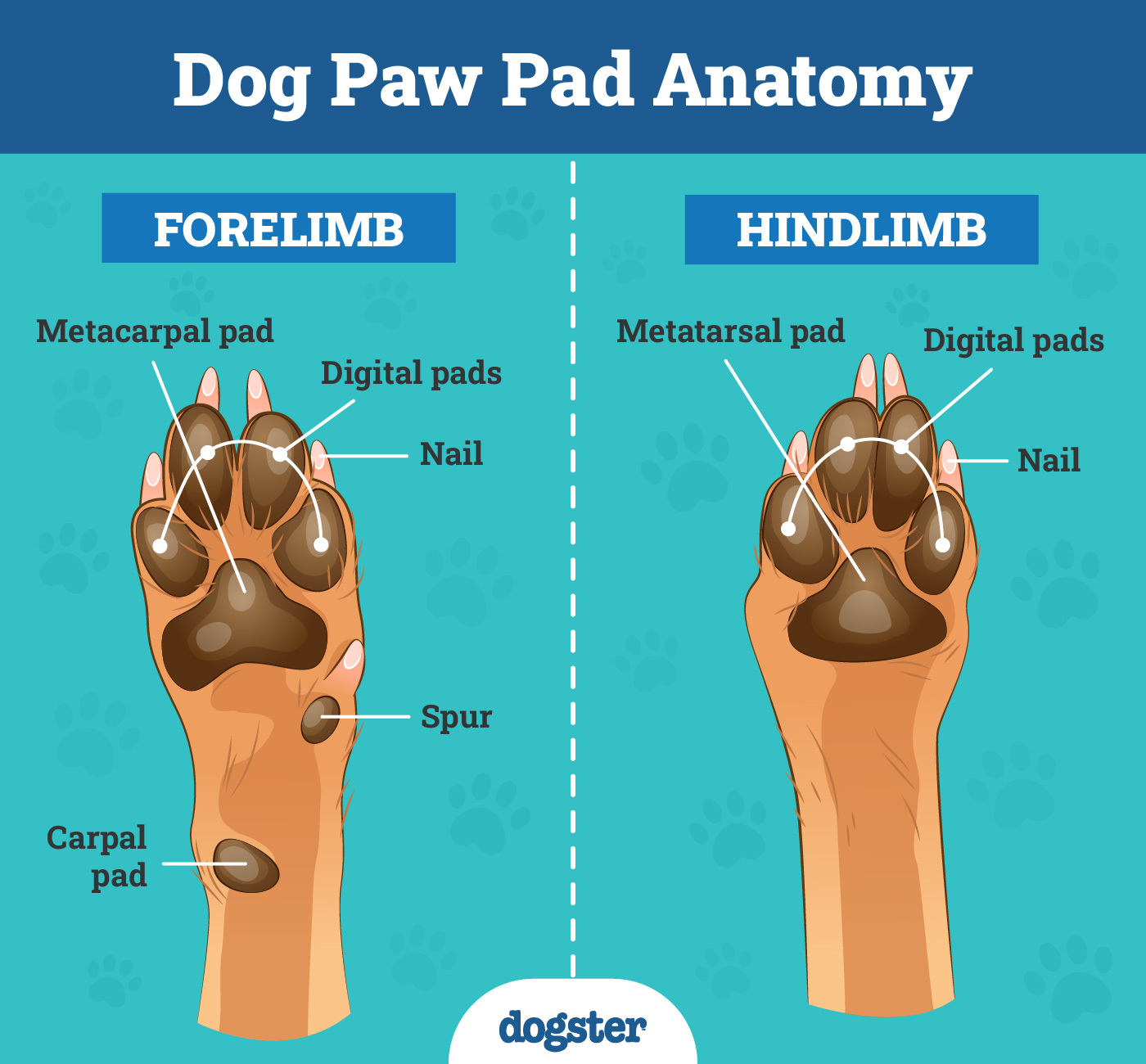
Check each toe for swelling, redness, cuts, punctures, unusual positioning, or debris. Compare the toes with those on the opposite paw.
2. Check between the toes
Look carefully in the spaces between the toes for grass awns, thorns, splinters, burrs, stones, or other foreign material.
3. Inspect the paw pads
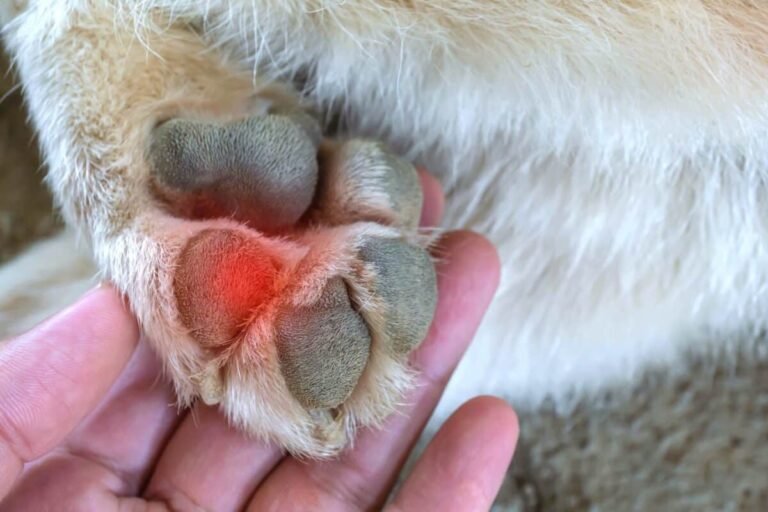
Look for cuts, punctures, abrasions, cracks, burns, bleeding, swelling, or material stuck to the pad.
4. Examine every nail
Check for broken, split, loose, bleeding, discolored, or otherwise abnormal nails and look at the surrounding nail tissue.
5. Gently feel the paw
If your dog remains relaxed, use light pressure to compare the paw and individual toes with the opposite side. Stop if your dog reacts strongly.
6. Continue upward only if tolerated
If the paw looks normal but your dog is still limping, gently observe and feel higher on the limb for swelling or tenderness without forcing joints through their range of motion.
What a Normal Paw Should Look Like
A healthy paw should not have an obvious foreign object, fresh wound, unexplained swelling, significant bleeding, or a clearly damaged nail. The toes and pads should appear reasonably symmetrical with the corresponding paw, although normal anatomy can vary between individual dogs.
Pads
Look for intact surfaces without fresh cuts, punctures, or unusual swelling.
Toes
Look for normal alignment without a newly swollen or visibly displaced toe.
Nails
Check for intact nails without obvious splitting, bleeding, or injury at the nail base.
What Different Paw Findings May Mean
A visible paw abnormality can narrow the possibilities, but it does not establish a diagnosis. For example, a torn nail may directly cause pain and limping, while a completely normal paw may occur with a sprain, ligament injury, joint disorder, or problem farther up the leg.
Use the findings as information to share with your veterinarian rather than trying to match one symptom to a specific diagnosis.
Source: modernvet.com
Foreign object between the toes
A thorn, splinter, grass awn, or similar object can irritate tissue and cause localized pain and limping.
Cut or puncture
A damaged pad or toe can cause pain, especially when the dog places weight on the paw.
Broken or damaged nail
A torn or split nail can be painful and may cause a dog to avoid bearing weight normally.
Swelling or heat
New swelling or increased warmth can indicate inflammation or injury and warrants closer veterinary consideration, particularly when the dog is painful.
Normal-looking paw
A normal paw does not rule out injury. Problems involving bones, joints, ligaments, tendons, muscles, or nerves may occur higher on the limb.
When a Paw Problem May Not Be the Real Source
If you cannot find anything abnormal on the paw, do not keep squeezing or manipulating it in an attempt to find the cause. Veterinary lameness examinations evaluate gait, limb position, bones, joints, muscles, and soft tissues because the painful structure may be outside the paw. Depending on the findings, a veterinarian may recommend diagnostic imaging or other tests.
The limp continues despite a normal paw
Arrange veterinary evaluation rather than assuming the dog is fine.
Pain appears higher on the limb
Do not repeatedly flex or test the joint at home. Your veterinarian can perform a controlled orthopedic examination.
How to Check the Paw Without Making the Injury Worse
The safest home examination is a visual inspection followed by gentle touch only when the dog remains comfortable. Veterinary guidance recommends caution because pain can cause a normally friendly dog to bite, and forceful manipulation can worsen an injury.
If you find a foreign object that is superficial and easy to grasp without digging into tissue, removal may be possible in a non-emergency situation. If the object is embedded, difficult to reach, or associated with substantial bleeding or pain, veterinary care is safer than probing the wound.
Source: petietec.com
Keep the examination brief
Stop once you have enough information to describe what you see. Repeated handling can increase stress and pain.
Use gentle touch
Lightly compare the affected area with the opposite limb instead of squeezing or pressing hard.
Do not force joint movement
Do not repeatedly bend or straighten a painful joint to test its range of motion.
Do not attempt orthopedic tests
Specialized stability and range-of-motion tests are better performed by veterinary professionals because incorrect manipulation can cause additional pain or injury.
If You Find a Small, Easily Accessible Foreign Object
If a small foreign object is clearly superficial and can be removed easily without digging into the paw, gently remove it and clean the affected area appropriately. Monitor the paw afterward. If the object is embedded, the area is infected-looking, the wound is deep, or the dog remains lame, contact a veterinarian.
Do not dig into tissue
Probing for a hidden object can push material deeper or cause additional tissue damage.
Monitor the limp
Continued pain or limping after an obvious superficial problem is addressed means the dog may need veterinary evaluation.
When a Limping Dog Needs a Veterinarian
A dog should receive veterinary attention when the limp is severe, persists, repeatedly returns, or occurs with signs suggesting a significant injury. Immediate evaluation is particularly important when there is an obvious fracture or dislocation, a markedly abnormal limb position, substantial swelling, or severe pain.
Even when a dog can still walk, persistent lameness should not automatically be dismissed as a minor paw problem. Veterinary examination can localize the source of pain and determine whether imaging or other diagnostic testing is appropriate.
Source: pawpaws.ie
Seek urgent veterinary care
Do so for an obvious fracture or dislocation, an abnormal limb angle, a dangling limb, major swelling, severe pain, or inability to use the limb.
Arrange an appointment for persistent limping
A limp that does not resolve or keeps returning deserves professional assessment even when the paw looks normal.
Contact a veterinarian for an injured paw
Deep wounds, punctures, embedded objects, significant bleeding, or suspected infection should be assessed rather than repeatedly treated at home.
Be especially cautious with other symptoms
Weakness, stumbling, loss of coordination, unusual behavior, or other signs of illness can indicate that the problem is not limited to the paw.
What Your Veterinarian May Do
A veterinary lameness evaluation generally begins with a history and observation of the dog’s gait, followed by a physical and orthopedic examination. The veterinarian may examine all four limbs and other relevant areas rather than focusing only on the paw that appears painful. If the source cannot be determined from the examination, diagnostic imaging such as radiography or ultrasonography may be considered.
History
Your veterinarian may ask when the limp began, whether it followed an injury, and whether the severity changes with activity or rest.
Gait evaluation
Walking and other controlled movements can help localize the affected limb and characterize the lameness.
Physical examination
The veterinarian can assess swelling, tenderness, joint movement, limb position, and other abnormalities more safely and systematically.
Diagnostic testing
Radiographs, ultrasound, or other tests may be recommended when the cause cannot be identified through examination alone.
Common Mistakes to Avoid When Checking a Limping Dog’s Paw
The most common mistake is treating a home paw check as a substitute for a veterinary examination. A visible paw problem can explain a limp, but many causes are located elsewhere. Another mistake is continuing to manipulate a painful limb because the first inspection did not reveal an obvious answer.
Avoid giving human pain medication unless a veterinarian specifically directs you to do so. Human medications can be unsafe for dogs, and choosing a drug or dose without veterinary guidance can create an additional medical problem.
Source: www.dogster.com
Do not force the paw open
Forcing toes apart or squeezing a painful area can increase discomfort and may worsen tissue damage.
Do not force a joint through movement
A painful joint should not be repeatedly flexed or extended as a home diagnostic test.
Do not assume a normal paw means no injury
Lameness can originate in the bones, joints, muscles, tendons, ligaments, or nervous system.
Do not delay care for serious signs
An abnormal limb position, severe swelling, severe pain, or inability to bear weight should take priority over further home examination.
What Information to Give Your Veterinarian
Record when the limp started, whether it appeared suddenly or gradually, what your dog was doing beforehand, which leg seems affected, and what you found during the paw inspection. If your dog walks differently at home than at the clinic, a short video recorded safely on a nonslip surface may also be useful.
Timing
Note the approximate start of the limp and whether it is getting better, worse, or staying the same.
Activity before the limp
Mention running, jumping, rough play, outdoor walks, or any known trauma.
Paw findings
Describe any foreign material, wound, swelling, nail damage, redness, or tenderness you observed.
A Simple Paw-Check Decision Guide
Use the following sequence to decide what to do after noticing a limp. The decision is based on visible findings and your dog’s comfort, not on trying to diagnose the underlying condition at home.
Source: bouldervet.com
Your dog will not bear weight or has severe pain
Stop the home examination and seek prompt veterinary care.
The limb looks deformed or abnormally positioned
Do not manipulate it. Seek urgent veterinary care.
A superficial foreign object is easy to remove
If your dog remains calm and the object is clearly accessible, it may be removed gently. Contact a veterinarian if limping persists or the wound is significant.
There is a cut, puncture, damaged nail, or swelling
Assess the severity without repeatedly manipulating the area and contact your veterinarian for appropriate guidance.
The paw looks normal but the limp continues
Arrange a veterinary examination because the source may be higher on the limb or outside the musculoskeletal system.
The limp improves quickly and your dog acts normally
Continue to restrict strenuous activity and monitor closely. Contact your veterinarian if the limp returns, persists, or new signs develop.
Signs That the Examination Went Well
A useful home check should leave you with clear observations without causing additional distress. You should know which paw appears affected, whether there is an obvious surface injury or foreign object, and whether your dog tolerated gentle inspection. If you cannot safely obtain that information, stop and let a veterinary professional perform the examination.
Your dog remains calm
The dog allows a brief visual inspection and gentle touch without significant resistance.
You identify a clear observation
You can accurately describe a wound, foreign object, nail problem, swelling, or lack of visible paw abnormalities.
Frequently Asked Questions
Q
How do I know which paw is hurting when my dog is limping?
Watch your dog walk on a safe, level surface and note which limb receives less weight or has a shortened stride. A front-leg limp can produce a noticeable head movement during weight bearing, while hind-limb lameness can produce changes in hip movement. These observations can help your veterinarian, but they do not replace a physical examination.
Q
What should I look for between my dog’s toes when it is limping?
Look for foreign material such as grass awns, thorns, splinters, burrs, or small stones, as well as redness, swelling, discharge, cuts, and punctures. Inspect both the top and underside of the paw if your dog tolerates it.
Q
Should I bend my dog’s paw or leg to find the painful spot?
Do not forcefully bend or repeatedly manipulate a painful limb. A veterinary orthopedic examination uses controlled techniques to assess bones, joints, and soft tissues while minimizing the risk of worsening an injury. At home, visual inspection and gentle touch are safer.
Q
What if my dog’s paw looks normal but the dog is still limping?
A normal-looking paw does not rule out an injury. Limping can originate in a joint, bone, ligament, tendon, muscle, or nervous system. If the limp continues, worsens, or returns, a veterinarian should evaluate the dog rather than relying on repeated paw checks.
Q
When should I take my limping dog to an emergency veterinarian?
Seek urgent care for an obvious fracture or dislocation, a dangling or abnormally positioned limb, severe swelling, severe pain, or an inability to use the limb. Other concerning signs such as marked weakness, stumbling, loss of coordination, or serious trauma also warrant prompt professional assessment.
✦ Wrapping Up
Conclusion
Checking a dog’s paw when limping is mainly a careful inspection, not an attempt to diagnose the injury. Start by observing the gait, then inspect the toes, spaces between the toes, pads, and nails before gently checking for obvious tenderness or swelling. Compare findings with the opposite paw whenever practical.
If you cannot find a paw problem, do not assume the limp is harmless. Lameness can originate higher in the limb or from a musculoskeletal or neurological condition that requires professional evaluation. Stop the examination if your dog becomes painful or distressed, and seek veterinary care for severe, persistent, or unexplained limping.
💡 Key Takeaway
Keep your dog quiet, perform only a gentle visual and tactile paw check, document what you observe, and contact a veterinarian when the limp is severe, persistent, recurrent, or associated with swelling, deformity, significant pain, or inability to bear weight.
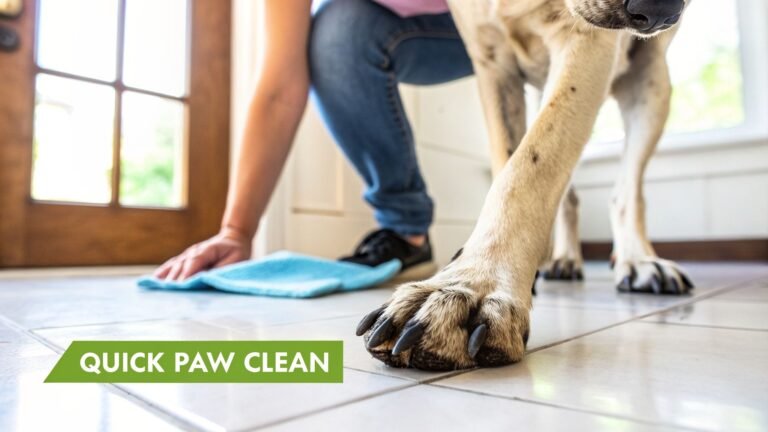
Learn how to clean dog paws after walk safely and effectively. Follow simple steps to remove dirt, mud, salt, allergens, and debris while protecting your dog’s paw health.
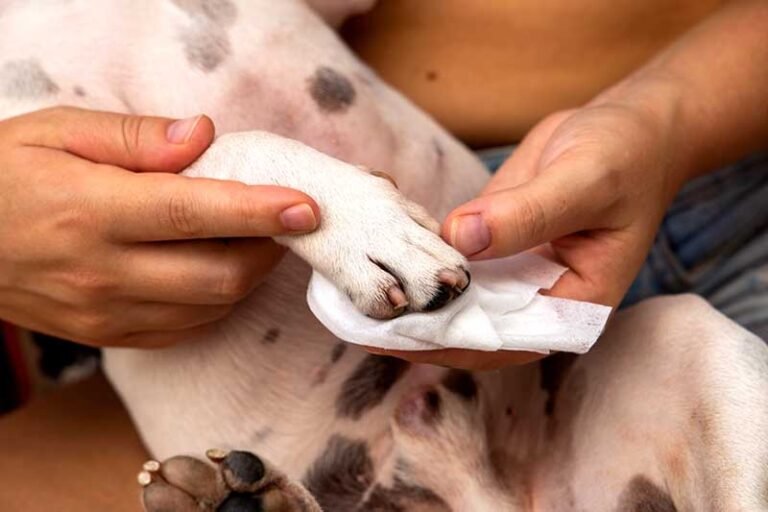
Learn how to clean in between dogs paws using safe, vet-informed methods. Remove dirt, debris, allergens, and moisture to help keep your dog’s paws healthy.
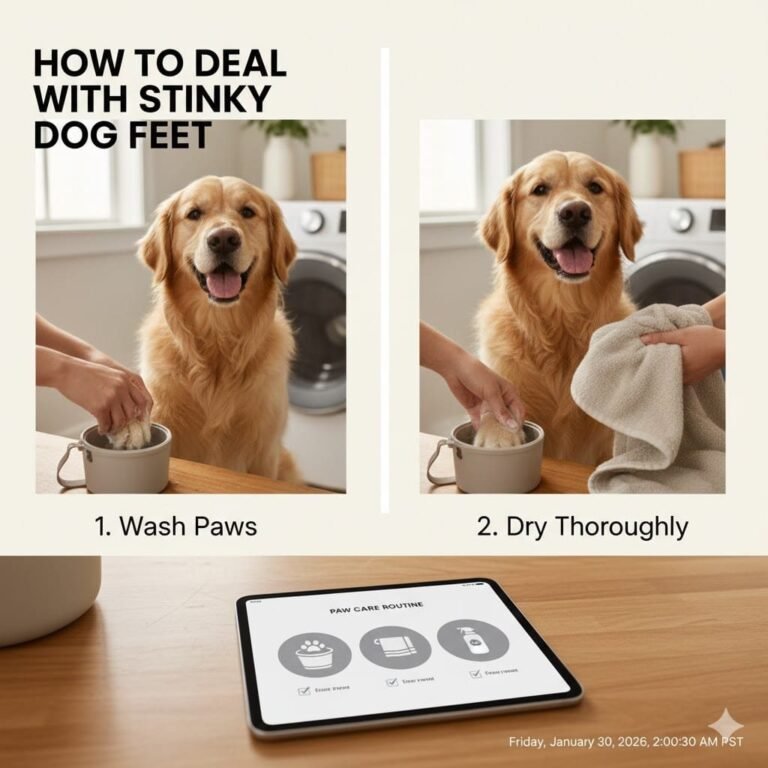
Learn how to treat smelly dog paws, including safe cleaning, drying, odor causes, yeast and bacterial infection signs, prevention, and when veterinary care is needed.
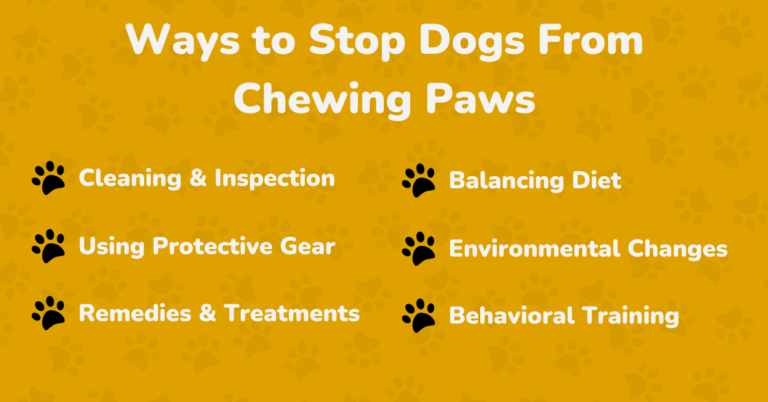
Learn how to stop my dog from chewing his paws with practical steps, common causes, home care tips, and guidance on when veterinary treatment is needed.